Breaking the Circle: Domestic AI Coding Models Redefine Industry Competition
 08/10 2026
 480
480

"Expanding the Market Through Innovation, Building a Solid Foundation with Integrity"
Author | Liu Guo
Produced by | Jixin
In late July, the domestic AI coding sector witnessed a surge of open-source releases. Coding models like Zhipu's GLM-5.2, Xiaomi's MiMo Code, and Yuezhi's Kimi K3 have all been made open-source, complete with free commercial licenses. Some of these models have even secured top rankings in global evaluations, signaling a pivotal moment for domestic code models to capture market share. Numerous small and medium-sized software teams have started experimenting with these local tools, marking a significant phase in the industry.
While this "open-source trend" seems dynamic, several critical questions arise: Why are companies rushing to open source now? How will they monetize afterward? What concrete benefits can this bring to everyday developers and SMEs?
1. Precise Strategic Positioning
To comprehend this wave of open-source releases, it's crucial to understand the broader context: overseas leading models are increasingly moving towards closed systems, driving up domestic usage costs. Meanwhile, the coding capabilities of domestic models are rapidly closing the gap with their international counterparts.
Zhipu's GLM-5.2 is tailored for long-duration tasks, enabling AI to work continuously for hours, much like a human, and complete large-scale projects independently. In authoritative benchmarks such as FrontierSWE, GLM-5.2 trails the current leading overseas model, Claude Opus 4.8, by a mere 1% to 4%, making it the highest-ranking open-source model. By simply describing requirements in a single sentence, it can autonomously handle development, debugging, testing, packaging, and deployment, delivering a complete application within hours.

Xiaomi's MiMo Code, also open-sourced under the MIT license, boasts persistent memory capabilities, retaining project architecture and key design ideas across hundreds of dialogue rounds, ensuring seamless continuation even after interruptions. Meanwhile, Yuezhi's Kimi K3, a 2.8-trillion-parameter open-source model and the world's first to exceed 2 trillion parameters, topped the Frontend Code Arena programming rankings, marking the first time an open-source model surpassed leading closed-source models.
With overseas models closing off and domestic cost advantages becoming evident, coupled with the shrinking technological gap between China and abroad, open-source and free models have emerged as the optimal choice for domestic vendors. GLM-5.2 is released under the most permissive MIT license, allowing free use, modification, and even commercialization, and is compatible with multiple domestic computing platforms such as Huawei Ascend, T-Head, and Moore Threads. Kimi K3 directly discloses its complete model parameters and technical reports.
This is not an act of "charity" but a strategic move by domestic AI to carve out a space amid overseas blockades and closures—seizing market share first, then monetizing later.
2. How to Monetize After Going Free?
While "open-source and free" sounds appealing, vendors incur operational costs and cannot sustain endless spending. Overseas markets have already provided a relatively mature solution.
Semi Analysis data shows that in Q2 2026, approximately 15% to 20% of Anthropic's annual recurring revenue came from indirect sales via cloud platforms like AWS Bedrock and Azure Foundry. Enterprise customers can use multiple models under a single cloud contract, avoiding lengthy vendor review processes. Model vendors distribute their models through cloud platforms and earn revenue based on token usage.
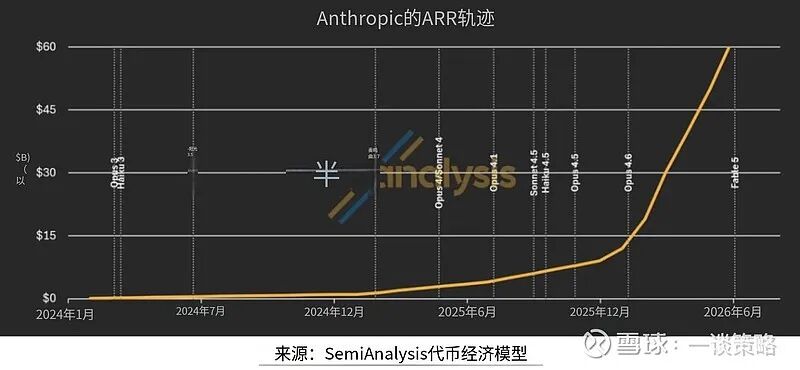
This model is also gaining traction domestically. Reports indicate that token service revenue could reach 5 to 10 times that of traditional computing rental, with gross margins exceeding 50%. Critically, domestic models' API pricing has begun to "climb." Kimi K3's API pricing now ranks among the highest in China, with Goldman Sachs research interpreting this as a pivotal shift toward pricing power for Chinese large models.
By open-sourcing today, model vendors are betting on future token-based revenue from global developers' model usage. As long as the models are sufficiently capable and widely adopted, this business model can succeed.
3. What Does This Mean for Developers and SMEs?
For end-users, the changes brought by this open-source trend are tangible.
For everyday developers, the biggest advantage is the zero-barrier entry. GLM-5.2 is open-sourced immediately upon release, allowing developers to freely download and use it on platforms like Hugging Face and ModelScope. Previously, accessing top-tier AI coding capabilities required either paying for Copilot subscriptions or navigating complex configurations—now, developers can dive right in.
For SMEs, software development costs have dropped significantly. Traditionally, developing a complete application required a team working for weeks; now, AI can handle the entire process from development to deployment autonomously. More importantly, open-source eliminates "vendor lock-in"—businesses can switch providers freely or even build upon open-source code for secondary development, offering unparalleled flexibility.

The deeper impact lies in reshaping software development paradigms. AI coding tools are evolving from "code completion" to "autonomous engineering." Developers are no longer just "coders" but "AI reviewers." As one developer put it, development efficiency now hinges not on AI's capabilities but on humans' ability to keep pace with AI output.
4. The Gap Remains, but the Landscape Has Changed
Admittedly, domestic models still lag behind top overseas counterparts. While GLM-5.2 approaches Opus 4.8's level, it shows clear shortcomings in testing ultra-long software projects. The Kimi K3 team also admits that certain benchmarks still require technical breakthroughs.
But the landscape has indeed shifted. For the first time, domestic models have entered the global top tier in coding capabilities, transitioning from "catching up" to "competing on equal footing." More importantly, this open-source wave is not mere imitation but follows a proven commercial path—gathering developers through open source, monetizing via usage services, and ultimately building a complete ecosystem.
For everyday developers and SMEs, the most pragmatic approach is to test these products firsthand to see if they truly fit their needs. As for which vendors will emerge victorious, that is a battle for industry players to fight. Users should focus on the tools' inherent value while avoiding over-reliance on any single product.
This wave of concentrated open-sourcing by domestic coding models marks a critical turning point: Chinese AI is transitioning from technological catch-up to ecosystem leadership. Against a backdrop of overseas models closing off and raising barriers, domestic vendors are leveraging open source to build ecosystems and affordability to scale, supported by mature token-based business models and domestic computing power, officially joining the global top tier in AI coding. While a slight gap remains compared to overseas leaders, the industry's competitive landscape has been rewritten. Going forward, embracing domestic open-source tools and flexibly harnessing AI for efficiency gains will be the core confidence for practitioners navigating industry transformation.
-
![]()
Why I'm Not Optimistic About Meituan?
-
![]()
Tencent Goes All In on WorkBuddy: The Battle for AI Office Entry Points Has Just Begun
-
![]()
950 Million Users Fail to Rescue Gemini
-
![]()
Weekly Stock Review | Auto Industry: Profit Margins Thinner Than Factory Work Pay, Thousands of Investors Caught Unawares
-
![]()
Kimi's Valuation Rockets to $50 Billion Amidst Frenzy of Secondary Share Sales! Who's Exiting, Who's Buying?
-
![]()
SAIC-GM Signs 20-Year Contract Extension, Yet Chevrolet Falters at Third Decade’s Dawn
-
![]()
Charging Costs Climb to Parity with Fueling, Will Electricity Prices Reach European Levels?
-
![]()
Tax and Fee Restructuring: The End of 'Special Perks' for Electric Vehicles?