Why I'm Not Optimistic About Meituan?
 08/10 2026
 533
533
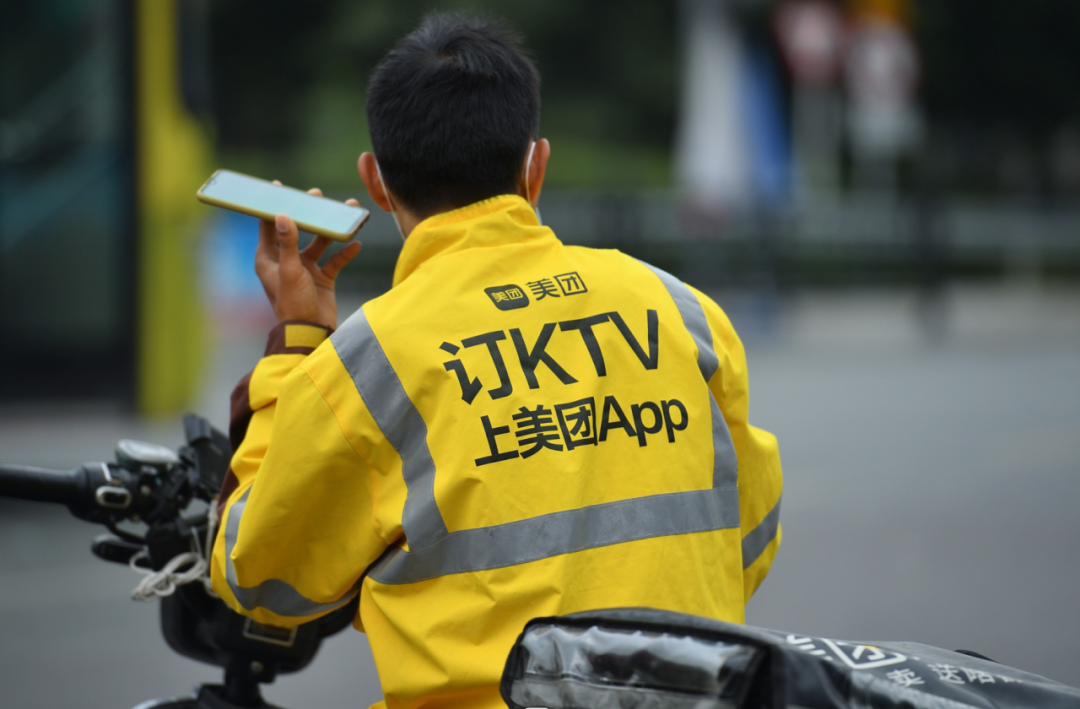
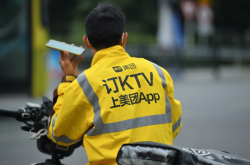
By the summer of 2026, the food delivery industry finally caught its breath after more than a year of relentless subsidy wars.
Regulators stepped in to halt cutthroat price competition, prompting platforms to scale back investments as the sector appeared to return to rationality.
But in my view, the issues exposed by this battle run far deeper than mere market share disputes.
Meituan's core contradiction isn't about losing a single battle—it's that the business logic underpinning its survival is being systematically dismantled.
With Taobao Flash Sales advancing and Doushengsheng closing in, Meituan faces enemies on both fronts. Its once-vaunted competitive barriers are now being dismantled piece by piece under this pincer attack.
1
Profit Engine Stalls
In 2024, Meituan reported a record annual net profit of RMB 35.8 billion.
Capital markets viewed it as a high-certainty local services profit machine—dominating food delivery, enjoying 43% profit margins in hotels and tourism, and maintaining clear narratives for money-burning new ventures.
Just a year later, the picture changed completely.
In 2025, Meituan posted a net loss of RMB 23.4 billion and an operating loss of RMB 17 billion. Its core local commerce segment swung from a RMB 52.4 billion profit in 2024 to a RMB 6.9 billion loss. Operating cash flow collapsed from positive RMB 57.1 billion in 2024 to a net outflow of RMB 13.8 billion in Q4 2025—the first annual negative figure since listing.
These numbers reveal: Meituan isn't just temporarily unprofitable—its entire blood-making system has been drained in short order.
More concerning, this loss doesn't stem from natural business decline.
Meituan still maintains over 60% GTV market share, with growing user numbers and transaction frequencies hitting new highs.
In other words, Meituan is still working hard—but can't make money anymore.
This is fatal: when a company "works harder but loses more," it signals fundamental business model flaws rather than market demand issues.
2
Dual Strangulation by Taobao Flash Sales and Doushengsheng
The market previously valued Meituan highly for its "barriers."
It had the densest rider network for delivery and Dianping's decade-plus accumulation of merchant data and user reviews—together forming seemingly impregnable moats.
But events since 2025 systematically prove these moats aren't as deep as imagined.
Consider food delivery first. JD Delivery entered in February 2025, followed by Taobao Flash Sales, both pouring real money into the market. Meituan had to match them, painfully. While it defended over 60% GTV share and maintained over 70% in high-value orders above RMB 30, the cost was staggering.
Xue Bing, Meituan Delivery GM, admitted at the 2025 Catering Industry Conference: "Subsidies are like a gust of wind—creating not healthy growth but huge bubbles."
Data shows that during the subsidy war, orders under RMB 15 surged from 20-30% to nearly 40% of total volume. Among incremental orders, 45% were beverages, with 75% paying under RMB 15.
Meituan burned massive funds for low-quality, low-ticket, price-sensitive orders. These users vanished when subsidies stopped, with extremely low retention. In investor terms: high customer acquisition costs, low lifetime value, and terrible ROI.
Moreover, the war's "damage ratio" was uneven.
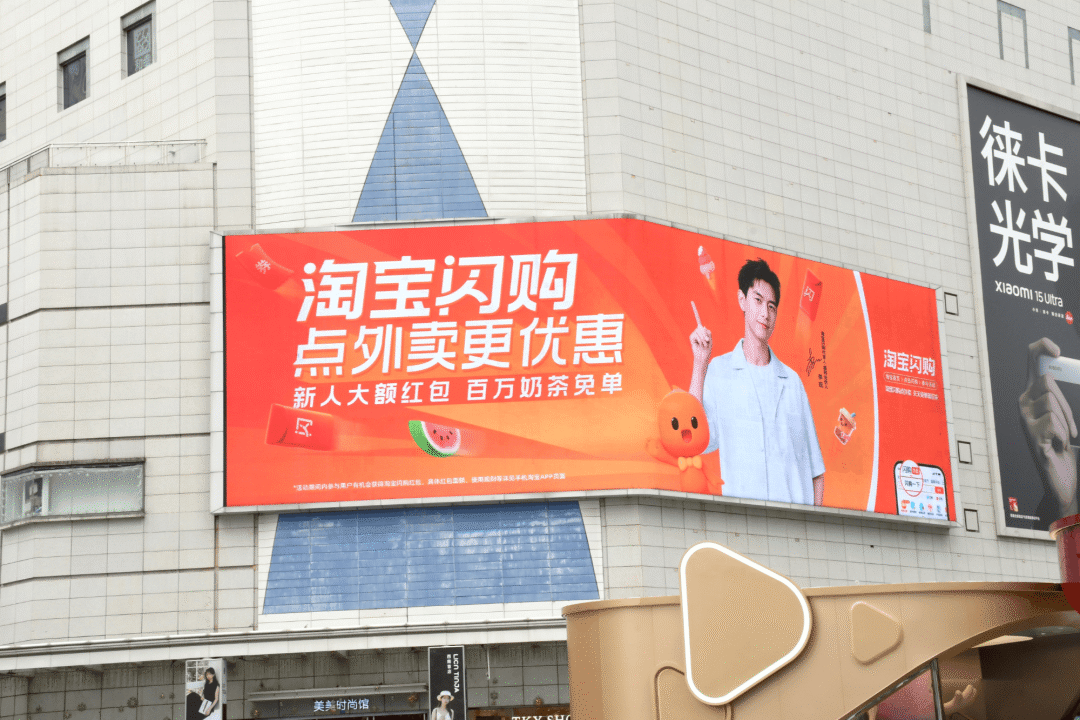
As the defender, every subsidy dollar Meituan spent was pure loss. Taobao Flash Sales, the attacker, benefited from Alibaba's e-commerce ecosystem synergy—instant retail boosted Taobao's activity, strengthened its super-app positioning, and accelerated Hema and Tmall Supermarket developments.
Meituan lost pure profits; Alibaba spent strategic investment. The "pain" felt was vastly different.
Now consider in-store services. Douyin aggressively entered local services in 2023, leveraging short video and live-stream traffic to rapidly erode Meituan's in-store share. Industry data shows Douyin's 2025 payment GMV exceeded RMB 850 billion, targeting 50% growth in 2026. More alarmingly, its new standalone group-buying app "Doushengsheng" reached 16 million DAU.
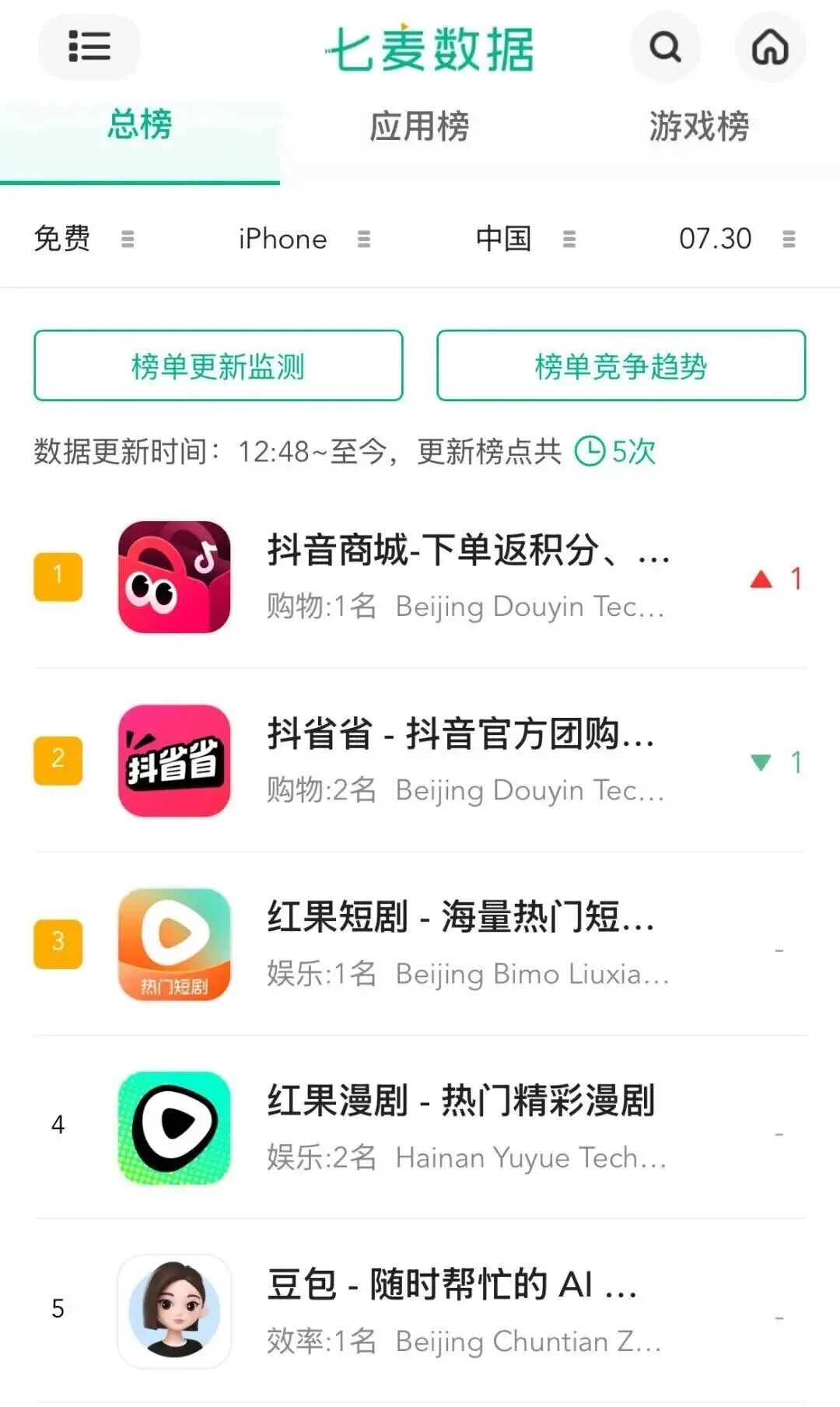
What does this mean? Douyin no longer settles for being Meituan's "traffic gateway"—it's building its own closed loop (closed loop). Doushengsheng's emergence marks Douyin's evolution from a "content seeding + Meituan redirect" parasitic model to a "content seeding + self-owned transactions" independent ecosystem.
Meituan's in-store hotel and tourism profit margins have collapsed from 43% to 25-30%—structurally, not temporarily. Douyin's content-driven model naturally stimulates impulse buying better than Meituan's "search-compare-buy" approach, with far lower traffic costs.
Combined, the pincer attack becomes clear: in food delivery, Taobao Flash Sales wages a war of attrition using e-commerce ecosystem synergies, bleeding Meituan daily; in in-store services, Doushengsheng uses content traffic and closed loops to replace Meituan's tool-like utility.
Both fronts bleed cash, and Meituan's cash flow can't sustain prolonged two-front warfare.
3
Why Meituan's Barriers Are Failing
Meituan's past barriers boiled down to three things: rider network, merchant coverage, and user habits.
The rider network was the heaviest layer. Meituan operates China's largest instant delivery network, with millions of riders covering thousands of cities. Built over a decade with hundreds of billions in investment, replicating this from scratch is prohibitively expensive.
But JD has Dada, Alibaba has Fengniao, and Douyin can use third-party logistics for now. In other words, delivery networks are "expensive" but not "exclusive." When rivals spend money, this barrier's exclusivity diminishes.
Merchant coverage was the second layer. Meituan and Dianping's decade-plus accumulation of merchant data, user reviews, and transaction records formed a vast information repository.
But Doushengsheng bypasses this—users don't "search-compare-buy" anymore; they're seeded by content while scrolling shorts and transact directly.
Merchant rating systems carry less weight in impulse buying scenarios than planned consumption ones. Dianping's core assets are revalued under Douyin's content logic.
User habits formed the third layer. Previously, users opened Meituan for food delivery and Dianping for restaurants—this mental positioning was Meituan's greatest intangible asset.
But the AI era shakes this foundation. When users tell AI assistants, "Order me a Huangmen chicken," traffic gets intercepted before reaching Meituan's app.
If Meituan can't become the "one-sentence solution" gateway, it degrades from a "local services super-app" to a "offline logistics provider"—platform value compressed to delivery capacity and supply matching, with sharply reduced bargaining power.
All three barriers are under siege: one weakened by rival capital, one bypassed by new consumption scenes, and one undermined by technological disruption.
This isn't about a single defense line (defense line) being breached—the entire defensive system is under simultaneous pressure.
4
Structural Disadvantages in the AI Era
If food delivery wars and in-store competition are "visible enemies," the AI era poses a structural challenge Meituan may be powerless to address.
At a March 2026 management meeting, Wang Xing admitted that facing AI, "the only choice is to embrace it more aggressively—even if it's like learning to swim by drowning, we must jump in."
But the "pool" Meituan jumped into is too deep.
Meituan's AI deployments remain "tool-like"—smart dispatching, food safety monitoring, rider route optimization. These boost physical fulfillment efficiency but don't alter Meituan's business model or create new traffic gateways.
Meanwhile, Alibaba built a "chip-cloud-model" full-stack AI capability, investing RMB 380 billion over three years in infrastructure. ByteDance's AI spending also reaches tens of billions. Meituan's 2025 R&D investment of RMB 26 billion not only lags far behind the top tier but faces sustainability questions after free cash flow turned negative.
The deeper crisis lies in gateways.
When users tell AI assistants, "Order me Huangmen chicken," traffic gets intercepted before reaching Meituan's app. If Meituan can't become the "one-sentence solution" gateway, it degrades from a "local services super-app" to a "offline logistics provider"—platform value compressed to delivery capacity and supply matching, with sharply reduced bargaining power.
One vivid analogy: AI-equipped giants are building highways, power grids, and engines, while Meituan merely runs rickshaws on these roads. The roads, electricity, and engines belong to others. When roads charge tolls and electricity prices rise, Meituan faces immediate shocks.
5
Meituan's "Impossible Trinity"
Meituan's greatest dilemma can be summarized as an "impossible trinity": domestic competition, overseas expansion, and AI investment all demand massive funds simultaneously, but its cash flow can no longer support three-front warfare.
Domestically, while competition cooled in H1 2026, Taobao Flash Sales has secured significant market share, shifting the industry from "monopoly" to "duopoly." Meituan can't return to past high-margin monopoly days.
Overseas, Keeta has entered Hong Kong, Saudi Arabia, UAE, Qatar, Kuwait, Bahrain, and Brazil. While performing well in Hong Kong, other markets require huge infrastructure investments, and regulatory environments vary widely—costs can't be quickly diluted through scale as in China.
AI-wise, RMB 26 billion in annual R&D is pocket change for giants, and AI investment requires sustainability costs—not one-time projects but ongoing inference, training, and iteration expenses.
In February and March 2026, Moody's and S&P downgraded Meituan's outlook from "stable" to "negative," implying higher financing costs. If market confidence in Meituan's future erodes and financing channels tighten, "tight balance" could quickly become liquidity crisis.
I'm not saying Meituan will "die." It still operates China's largest instant delivery network, densest merchant coverage, and richest local services data. These assets won't vanish overnight.
But "not dying" and "worth betting on" are different.
Meituan's past decade of success rested on "high-frequency beating low-frequency" app gateway logic and "scale diluting costs" fulfillment models.
Now, the former is threatened by AI-era gateway restructuring, while the latter erodes under Taobao Flash Sales and Doushengsheng's pincer attack.
With e-commerce giants waging wars of attrition through ecosystem synergies and content platforms building closed loops with traffic advantages, Meituan's competitive barriers are being dismantled piece by piece.
When Wang Xing reviewed the past five years, he admitted two strategic mistakes: late overseas expansion and flaws in Meituan's group-buying model. But I believe the real issue runs deeper—Meituan's core contradiction is that it's an "operations-heavy, technology-light" company in an era increasingly reliant on technological barriers and ecosystem synergies. Its competitive edge is being systematically diluted.
In business, no king reigns forever.
Meituan transformed from a RMB 35.8 billion annual profit machine in 2024 to a RMB 23.4 billion annual loss-maker in 2025. This reversal speed alone shows its moats aren't as deep as the market imagined.
I'm not optimistic about Meituan not because of its current state, but because the challenges it faces tomorrow likely exceed what its current business model can handle.
Note: Article materials and images sourced from the internet. For copyright issues, please message privately for handling. Content does not constitute investment advice.
-
![]()
Why I'm Not Optimistic About Meituan?
-
![]()
Tencent Goes All In on WorkBuddy: The Battle for AI Office Entry Points Has Just Begun
-
![]()
950 Million Users Fail to Rescue Gemini
-
![]()
Weekly Stock Review | Auto Industry: Profit Margins Thinner Than Factory Work Pay, Thousands of Investors Caught Unawares
-
![]()
Kimi's Valuation Rockets to $50 Billion Amidst Frenzy of Secondary Share Sales! Who's Exiting, Who's Buying?
-
![]()
SAIC-GM Signs 20-Year Contract Extension, Yet Chevrolet Falters at Third Decade’s Dawn
-
![]()
Charging Costs Climb to Parity with Fueling, Will Electricity Prices Reach European Levels?
-
![]()
Tax and Fee Restructuring: The End of 'Special Perks' for Electric Vehicles?