Leading “AI Glasses” Manufacturers Gear Up for IPOs
 04/03 2026
 486
486
The “iPhone Moment” for AI Glasses is on the Horizon
By VR Top
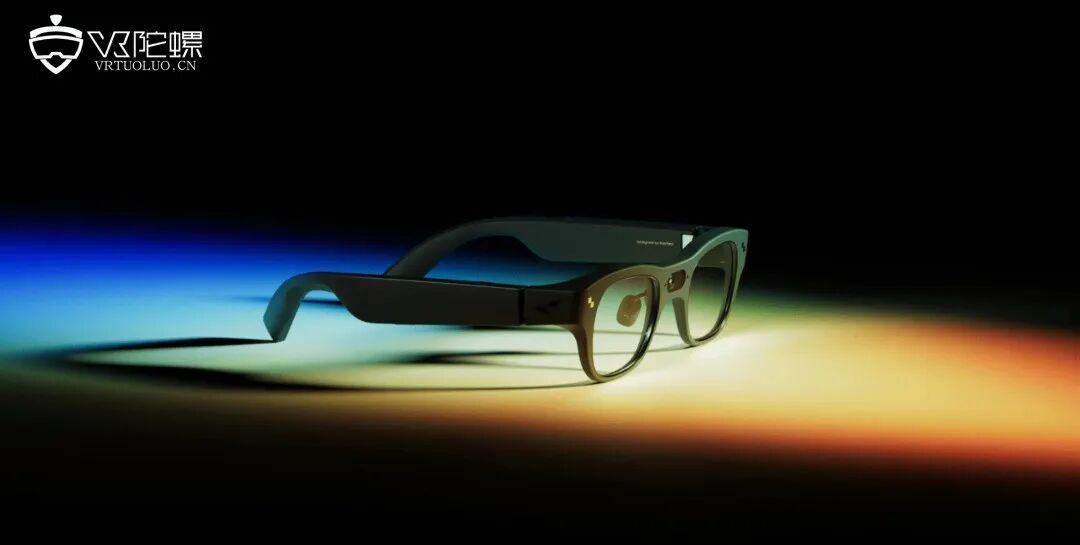
China’s premier AI glasses manufacturers are actively preparing for Initial Public Offerings (IPOs).
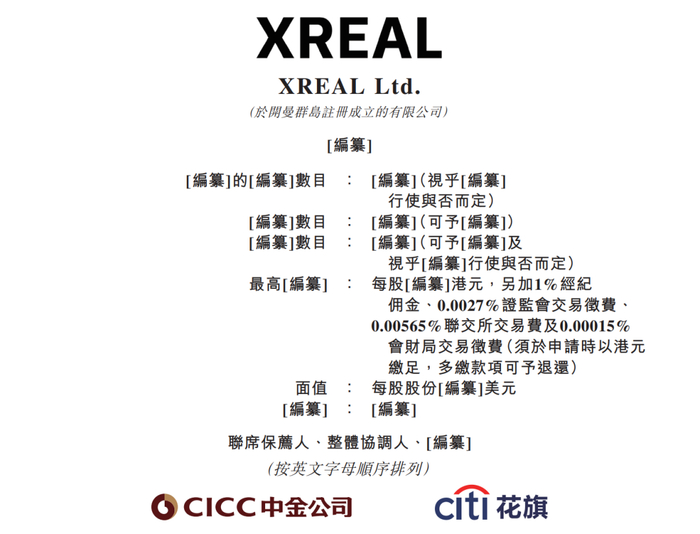
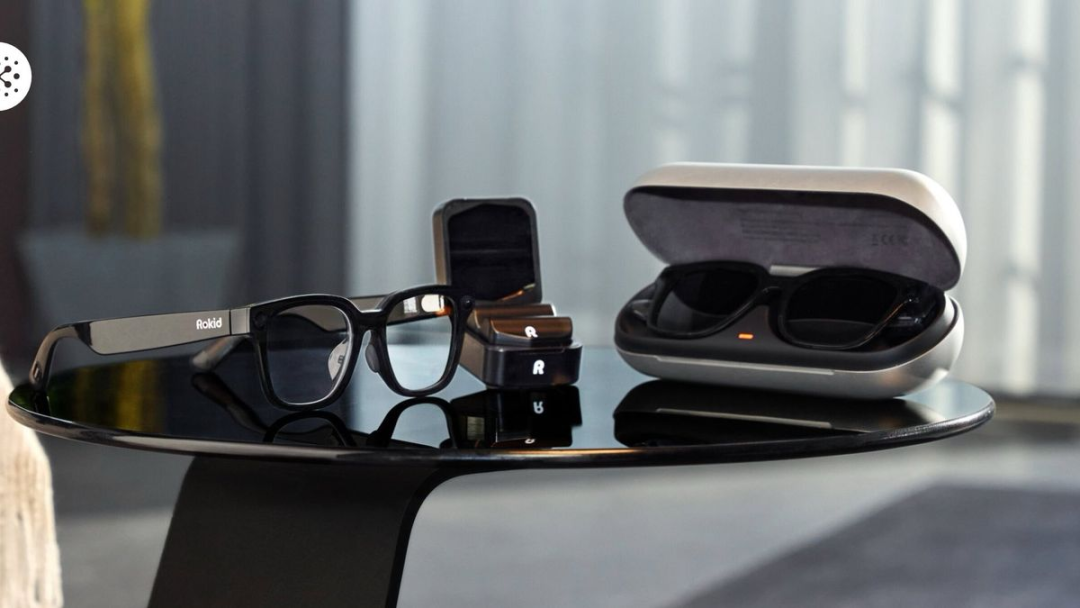
On April 1st, according to filings with the Hong Kong Stock Exchange, AI glasses company XREAL Ltd. submitted its listing application, with CICC and Citigroup acting as joint sponsors. Meanwhile, AI glasses manufacturer Rokid completed its share reform in March of the same year—a move widely regarded as a strong indicator of impending IPO preparations.
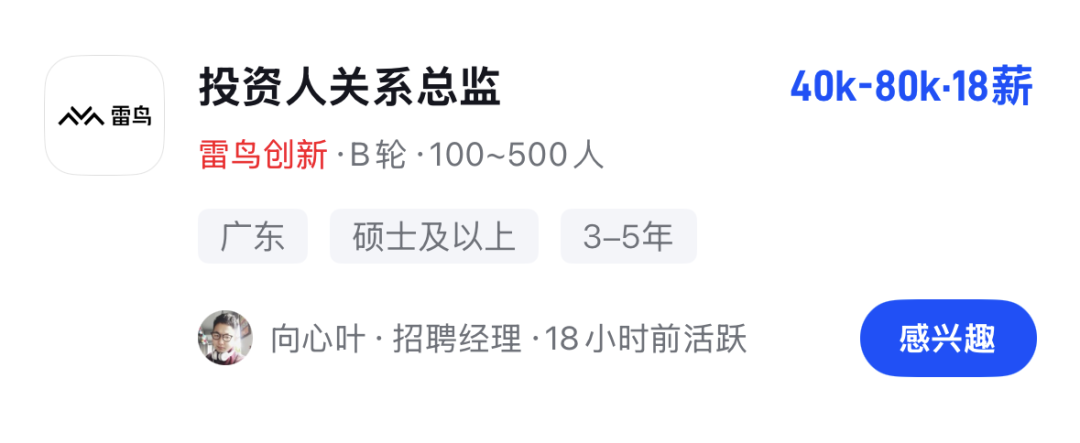
Thunderbird Innovation is also on the path to an IPO. Job listings reveal that Thunderbird Innovation is seeking a “Director of Investor Relations,” with a specific requirement for experience in leading a company through a successful IPO and establishing a comprehensive IR system. Furthermore, VR Top has learned from reliable sources that VITURE is also gearing up for an IPO, with potential plans to target the U.S. capital market.
01
Capital and Industry Reach Harmony as Leading Manufacturers Rush Toward IPOs
From an industry cycle and capital pathway perspective, a company’s decision to pursue an IPO is typically influenced by both industry maturity and capital cycles. For China’s leading AR manufacturers, their collective move toward IPO preparation is essentially an inevitable outcome of the industry’s transition from the technical verification phase to the large-scale shipment phase.
Significant changes have already occurred in the current market landscape. According to data from the Gyro Research Institute, global smart glasses shipments are expected to reach approximately 8.8 million units in 2025, representing a 376% year-over-year increase, with AR glasses shipments reaching about 930,000 units, a 121% year-over-year increase. These figures indicate that the AR sector has moved beyond the early small-scale trial phase and is now entering a stable period of mass shipments. This provides companies with clearer revenue models and growth expectations, while offering capital markets quantifiable valuation benchmarks.
Against this backdrop, the financing and capital activities of leading manufacturers have noticeably accelerated, reflecting a shift from “financing-driven” to “IPO-driven” growth.
XREAL has taken the lead in initiating the IPO process. On April 1st, the company officially submitted its prospectus to the Hong Kong Stock Exchange, becoming the first AR company to substantially advance its listing process. Financially, XREAL has demonstrated a certain level of scalability: its revenue reached RMB 390 million, RMB 394 million, and RMB 516 million from 2023 to 2025, respectively, with a 30.8% year-over-year increase in 2025. Its gross margin has continuously improved to 35.2%, while losses have narrowed annually to RMB 456 million.
In terms of revenue structure, AR glasses and accessories account for over 90%, indicating a highly hardware-focused business model. Additionally, the company has raised over USD 430 million in cumulative financing, attracting a diverse shareholder base that includes Alibaba-affiliated entities, Shunwei Capital, Yunfeng Capital, and industry chain manufacturer Luxshare Precision, providing strong capital endorsement for its IPO.
Similarly, Thunderbird Innovation, while not yet having officially submitted its prospectus, has sent clear signals of its intention to go public. On one hand, the company completed over RMB 1 billion in financing in early 2026 from operators like China Mobile and China Unicom, as well as industrial capital. On the other hand, its public recruitment for an Investor Relations Director (IR) indicates that internally, it has entered the IPO preparation phase. From a business perspective, according to Counterpoint data, Thunderbird held a 27% global AR market share in 2025, possessing the foundation in terms of shipment scale and channel capabilities to enter the capital markets.
Rokid is in a more typical “pre-IPO counseling” phase. In March 2026, the company completed its share reform and renamed itself “Lingban Technology (Hangzhou) Co., Ltd.,” a move typically regarded as a standard step before an IPO, signifying that the company has completed early business model validation and entered a phase of standardized operations. Financially, the company has raised over RMB 3.5 billion in cumulative financing and recently secured RMB 180 million in investment from Conant Optics, with its valuation exceeding USD 1 billion, joining the ranks of unicorns. Such companies often initiate the formal listing process after organizing their structure and financial systems.

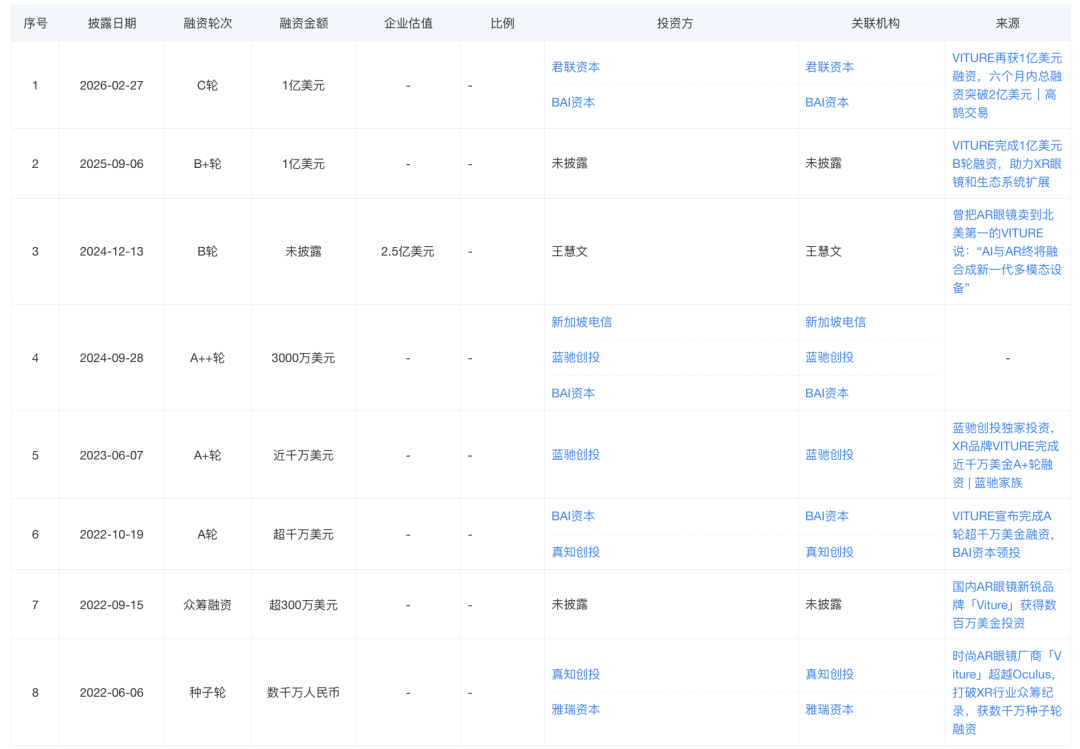
VITURE is also in the mid-to-late stages of rapid expansion financing, with its capital rhythm similarly showing a trend toward transitioning to an IPO. From September 2025 to February 2026, the company raised over USD 200 million in cumulative financing within six months, supported by institutions such as Meridian Capital and Bertelsmann. On the product side, VITURE has entered the niche market of “handheld gaming + immersive viewing” through its Luma series and Beast XR. On the channel side, it is accelerating its entry into North American offline retail systems (e.g., Best Buy). Such a strategy of targeting niche markets and rapidly expanding global channels is typically an important tactic for companies to enhance their valuation and market recognition before an IPO.
Overall, from XREAL taking the lead in submitting its prospectus to Thunderbird Innovation initiating IR system construction, and then to Rokid completing its share reform and VITURE accelerating financing and expansion, China’s leading AR manufacturers have formed a clear “IPO echelon.”
02
Securing Capital to Compete Against Apple and Meta: China’s AR Enterprises Enter Maturity
From a long-term industry perspective, the collective move of China’s leading AR manufacturers toward IPOs at the same time window signifies that China’s AR industry has officially entered a phase of large-scale maturity driven by capital and technology.
The most direct effect of an IPO is to inject sustained and stable capital into companies. Whether it is XREAL’s narrowing losses, Thunderbird Innovation’s and Rokid’s continuous investments in core technologies and supply chains, or Viture’s global channel and product matrix expansion, all essentially require long-term, high-intensity capital support. Compared to relying on multiple rounds of private financing in the past, post-IPO financing channels are more diversified and cost-effective, enabling companies to accelerate iteration in critical areas and hasten the AR industry’s transition from the current batch shipment phase to true large-scale consumer adoption.
More importantly, the involvement of capital markets will significantly boost confidence and resource allocation efficiency across the entire industry. Once leading companies establish clear valuation systems and growth logics through IPOs, a more efficient collaboration will form throughout the industrial chain, both upstream and downstream. This capital transmission mechanism, “anchored by leading companies,” is often a crucial hallmark of an emerging hardware industry’s maturity.
On the other hand, the emergence of landmark IPO companies within an industry is itself an important signal of industrial maturity. Throughout the history of consumer electronics, nearly every round of industrial upgrading has been accompanied by capitalization milestones for leading companies. This signifies that the industry has completed the critical leap from technological exploration and product validation to commercial viability, entering a new phase of capital recognition, rule formation, and global competition.
For a long time, Meta has been the leader in the XR industry, dominating supply chain technology development directions and content ecosystem discourse through its Quest series and Ray-Ban Meta series. Now, with China’s leading AI glasses companies on the verge of going public and more resources being allocated, Meta’s absolute industry and market position may be disrupted.
Additionally, according to foreign media reports, Apple has also shifted its resources fully toward AI glasses projects. Its first AI glasses (internal codename Project Atlas) are expected to be released by the end of 2026, with mass production slated for 2027. Positioned as lightweight, screenless devices (approximately 40g), they will focus on daily wearability, low power consumption, and be based on a customized Apple Watch S-series chip. They will integrate large-model AI capabilities through a new version of Siri and deeply link with the iPhone. Apple’s entry will further propel the industry toward the next market scale.
03
Final Thoughts
Google Glass was once the dream starting point for many Chinese AR entrepreneurs. As early as 2012, Google experimented with smart glasses for consumers. Although the project ultimately fizzled out due to various issues such as privacy, battery life, and user experience, it directly inspired a group of engineers, including Rokid founder Zhu Mingming, to embark on AR entrepreneurship.
More than a decade later, with the explosion of multimodal AI large models and the gradual maturation of AR technology, Chinese manufacturers have secured an absolute advantage in the global consumer-grade AI glasses market. The dual fermentation of capital and technology has transformed the “iPhone Moment for AI Glasses” from a distant prophecy into a verifiable mid-term goal.
As XREAL submits its prospectus, Rokid completes its share reform, and Thunderbird Innovation and VITURE accelerate financing and plan for IPOs, the once-repeated prediction—that the “iPhone Moment” for AI Glasses is within reach—has now come tantalizingly close.
-
![]()
Registered Capital Slashed to 372 Million Yuan! Yutong Optical Finalizes Industrial and Commercial Change Registration
-
![]()
Zhuque-3 Successfully Lands, and 'Time Traveler' Secures Another ¥100 Million in Funding: China's Commercial Space Industry Experiences a 'Dynamic August'
-
![]()
Autohome Faces a Shrinking Window of Opportunity
-
![]()
Even a Titan Like Musk Has Faced Setbacks in Fulfilling Promises
-
![]()
AI Office: The End of the Racing Era, Context Becomes the Key to Success
-
![]()
Domestic Vehicle Chassis Revolution ②: The Steering Wheel Remains, But Mechanical Connections in the Steering System Are Decreasing
-
![]()
Exploring MiniMax Design: Can Video Editing Be as Simple as Speaking?
-
![]()
Why Can SenseTime Achieve Profitability While CloudWalk Still Faces Challenges, Despite Both Adopting Large Models?