The Silent Ice: The Covert AI Battle Among Alibaba, Douyin, and JD.com in the 618 Shopping Festival
 05/20 2026
 594
594

From the perspective of major platforms, rather than engaging in intense internal competition on a track with diminishing marginal returns, it is better to directly bring their distinct strategic pain points onto the stage of the 618 Shopping Festival.
Author | Yu Xi
Editor | Cindy
As the 618 Shopping Festival enters its 23rd year, there is an eerie sense of quietude that breeds a profound feeling of unfamiliarity.
Gone are the flood of battle reports and complex discount calculations, while the ritualistic all-night shopping frenzy has faded even earlier. Yet, this quietude does not signal a decline in consumption but rather foreshadows an unprecedented transformation in two decades of e-commerce.
In 2026, AI-driven e-commerce officially enters the deep waters of commercialization. The logic of stock game (stock game) shifts from a focus on scale to one on profit, technology, and consumer mindset.
Beneath the silent ice, Alibaba, Douyin, and JD.com—the three titans of Chinese e-commerce—each harbor their own ambitions, with undercurrents swirling. The 618 Shopping Festival is no longer a mere promotional event but has become a “pressure test” for these three giants to showcase their strategic resolve and address existential anxieties.
1
Three Strategic Anxieties for the Same 618
Opening the 2026 618 timeline reveals a peculiar phenomenon: few can pinpoint exactly when the event begins.
Taobao started preheat with the “520 Love Confession Season” on May 13 and officially launched 618 presales on May 21. JD.com led with a Mother's Day promotion on May 6 but waited until late May for its true kickoff. Douyin initiated early purchases on May 15, with its main event starting on May 27. The entire promotional cycle spans up to 45 days, stretching from early May to late June.
This itself directly undermines the logic of “event creation.” In the past, platforms set the rules, merchants followed the rhythm, and consumers calculated discounts. Everyone competed under the same set of rules to see who could offer lower prices or generate more traffic.
Now, the cycle has been stretched to a numbing length. Consumers have lost their sense of urgency to snatch up deals, merchants have lost their explosive sales momentum, and platforms have lost their ability to create buzz. From the platforms' perspective, rather than engaging in intense internal competition on a track with diminishing marginal returns, it is better to directly bring their distinct strategic pain points onto the stage of the 618 Shopping Festival.
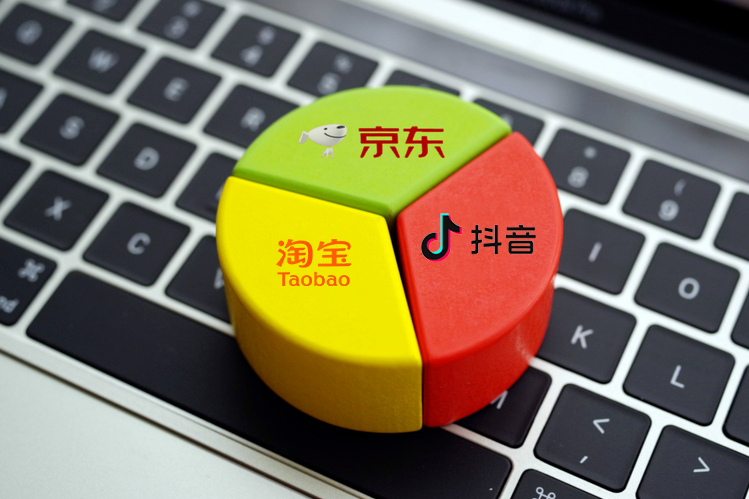
For Alibaba, its deepest anxiety stems from the migration of entry points. In recent years, under the sustained assault from Pinduoduo and Douyin e-commerce, Taobao's CMR (Customer Management Revenue) has experienced multiple quarters of slowing growth or even negative growth.
A more pressing issue is that Alibaba's valuation logic has shifted from “e-commerce profit-driven” to “AI + cloud growth-driven,” reflecting an irreversible industry trend—AI-era dialog boxes are replacing search boxes, and Doubao has already established a significant lead over Qianwen in monthly active users.
At the same time, Doubao's navigation bar has begun internal testing of shopping features, allowing users to add items to their cart, make payments, and handle after-sales directly within the Doubao app without redirecting to Douyin's main site. If Doubao takes the lead in defining user mindset for AI shopping, Taobao and Tmall's search-based shopping model could face the risk of being overtaken.
For JD.com, its core anxiety revolves around balancing “trust” and “efficiency.” JD.com's business model is built on the certainty of “3C products, logistics, and after-sales service.” In a consumer environment where “low prices are king,” this asset-heavy model faces growth pressure. Pinduoduo's billion-dollar subsidies run year-round, Douyin livestreams shout “lowest prices online” every day, and Taobao has reemphasized price competitiveness, making it increasingly difficult for JD.com's model to stand its ground among price-sensitive users.
However, over the past few years, during Double 11 and 618, the return rates for livestream-driven apparel sales have been rising, with many exceeding 80%, causing growing distress for merchants. Recently, Yingfeng Subdistrict in Xiaoshan District, Hangzhou, was restricted from placing orders by multiple brands' e-commerce backends, an incident that underscores how users' desire for “trust” has never disappeared.
While JD.com's model value has been reaffirmed, it must now answer a sharper question: How can it make the value of “certainty” more perceptible to users? How can it lower prices while maintaining service quality? On the eve of this year's 618, JD.com's home appliances and furniture procurement team publicly called out “Yu Hui Tong Xing”—attempting to bring procurement, price comparisons, and subsidies directly into the open.
For Douyin e-commerce, its anxieties are more complex. While the fan relationships cultivated in livestreams, the product selection capabilities forged in the content arena, and the long-term trust between hosts and users represent Douyin's strongest moat—far irreplaceable by mere price comparisons—a stark reality remains: the waning of traffic dividends has officially ushered e-commerce into a phase of internal strength competition.
Whoever can build core barriers in product quality control, service experience, and supply chain efficiency will stand firm and thrive in the second half of the industry competition.
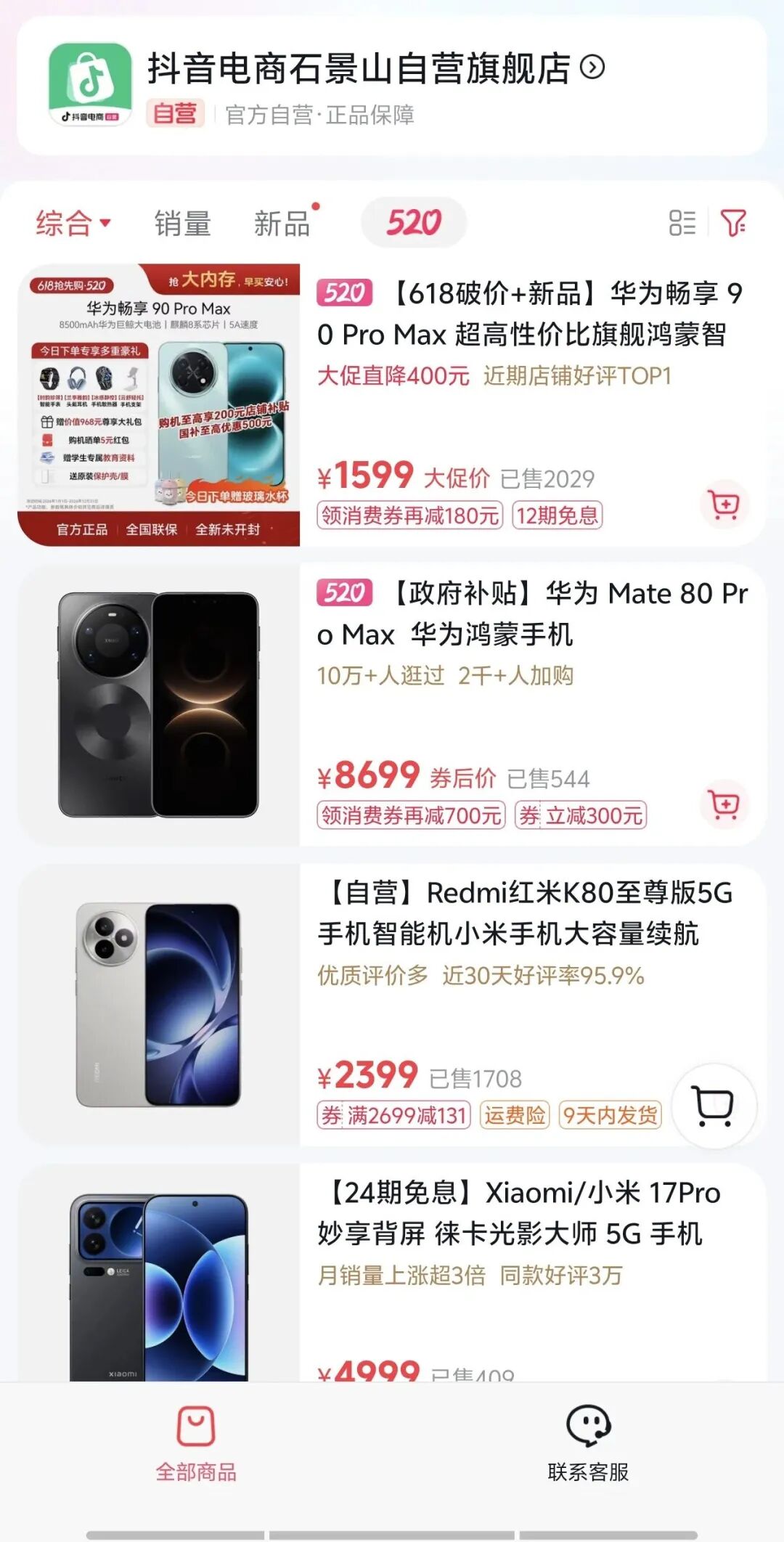
Thus, Douyin chose to launch self-operated flagship stores in key cities such as Beijing, Shanghai, Guangzhou, and Shenzhen on the eve of this year's 618. All self-operated stores clearly label themselves as “officially self-operated with genuine product guarantees,” with some items marked as “next-day delivery,” reinforcing official endorsement and addressing previous shortcomings in Douyin e-commerce's supply chain and logistics efficiency.
In simple terms, Douyin e-commerce is taking matters into its own hands, managing the entire e-commerce ecosystem from sourcing to quality control and after-sales. This foray from the “content arena” to the “shelf arena” is fundamentally about laying the groundwork for long-term development.
2
The Same AI, Each with Its Own Agenda
If competitive dynamics determine the “battlefield,” then AI is the “core weapon” in each player's arsenal. While all are touting AI, the missions Alibaba, Douyin, and JD.com assign to AI differ significantly.
Alibaba's AI strategy centers on “connection.” Thus, Alibaba chose to announce during 618 that Qianwen would be fully integrated with Taobao. Chatting with AI in the Qianwen app allows users to complete the entire shopping journey—from product selection and price comparisons to ordering, payment, and after-sales. A new “Qianwen AI Shopping Assistant” entry has been added to the message bar at the bottom of the Taobao app, with features like AI try-ons, AI discount calculations, AI low-price snatching, and one-click similar product searches all going live.
This Combination Fist (combined strategy) targets the very front of users' shopping decision chains. Previously, users had to search, compare, and read reviews themselves. Now, they only need to tell the AI, “I want to buy weight-loss cat food for my 7-year-old, 7.5 kg cat,” and the AI will break down the requirements, compare ingredients horizontally, and provide a purchase plan. Alibaba aims to keep users' vague needs, product comparisons, and purchasing decisions entirely within its ecosystem. The 618 traffic peak is the perfect “Normandy moment” to test this strategy.

The deeper significance lies in the redistribution of entry point rights. Whoever seizes AI as a super entry point first will stand atop the next generation of commercial ecosystems. According to Gartner, search engine traffic is projected to decline by 25% by 2026, with AI search potentially surpassing traditional search by 2028. From this perspective, Alibaba's AI strategy is both defensive and offensive—defending against Douyin e-commerce's cross-border encroachment while reclaiming user mindset through conversational scenarios.
JD.com's AI logic revolves around “cost reduction and efficiency enhancement,” but the goal is not cost-saving for its own sake. Instead, the saved resources are reinvested to benefit users and reinforce trust barriers.
This 618, JD.com announced that AI would be fully integrated across all scenarios and industries. On the consumer side, the focus is on upgrading digital human livestreaming capabilities, enabling AI hosts to independently handle planning, selling, and post-event reviews. On the logistics side, JD.com's logistics superbrain model is being deployed at scale, dynamically planning transportation routes for millions of orders to reduce empty vehicle trips and transfer costs. For merchants, an AI-powered smart operations assistant, “Jing Xiaotong,” handles strategy analysis, creative generation, and smart advertising placement.
This logic is direct and pragmatic. Digital humans cost one-tenth of human hosts, AI customer service saves about 70% in labor costs, and AI product selection reduces the workload for procurement teams. The savings can be funneled back into subsidizing instant retail, boosting user frequency on the JD.com app. For a platform like JD.com, which operates on heavy assets and thin margins, every efficiency gain directly translates into profit.
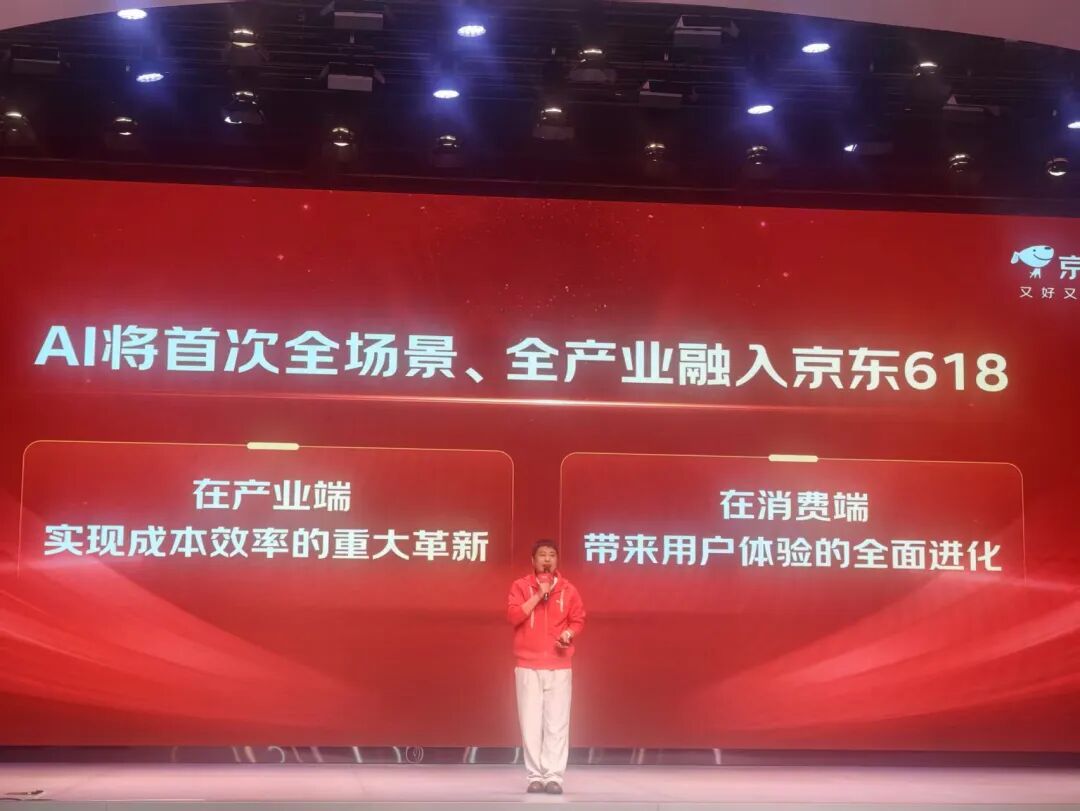
Unlike Alibaba, JD.com's AI does not seek to disrupt entry points but to fortify its moat. Cao Peng, Chairman of JD.com's Technical Committee and President of JD Cloud, stated that JD.com's AI-related investments would grow by over 200%, placing it in the industry's first tier. These investments ultimately aim to deliver two things: lower costs and better experiences for users, and higher operational efficiency and profit margins for JD.com. This 618 serves as a validation point for JD.com to prove that “AI is not just a concept but a tangible source of profit.”
Douyin e-commerce's AI strategy faces a dual mandate.
First, it must support self-operation. Self-operation requires product selection, inventory management, logistics, and after-sales—far more complex than livestreaming. Decisions depend on AI capabilities, with the launch of the “Ask Doubao Before Buying” feature—allowing users to express needs and select products through chat interactions—being one of its most critical decision-making tools.
Notably, ramping up AI and focusing on self-operation also help Douyin e-commerce build new product recommendation entry points, reducing reliance on top livestreamers. This trend continues from the previous year, as the GMV contribution from top livestreamers declined while shelves and malls grew faster than content fields.
Second, it must purify the ecosystem and empower merchants. The abuse of AI technology has enabled infringement and counterfeiting to enter a low-cost, mass-production phase. A few influencers use special effects to mimic well-known IPs or employ name variations for selling, attempting to “skirt the edges” of regulation. Douyin e-commerce's AI must identify and address these issues to protect quality merchants and user experiences.
In empowering merchants, Douyin has opened up AIGC technology tools to help merchants efficiently produce short videos, product images, and text. It upgraded the Qianchuan tool for smart product selection, content creation, audience targeting, and advertising placement, while strengthening after-sales retention tools to help merchants reduce return rates. This 618, Douyin also invested in billion-level computing resources, offering Feige AI customer service to merchants free of charge for a limited time.
Observers note that when Douyin e-commerce starts selling thousand-yuan phones and refrigerators, users seek not the adrenaline rush of “3, 2, 1, go!” in livestreams but the certainty of “genuine products, logistics, and after-sales.” AI's role here is to use algorithmic and technical means to filter out the most recommendable products, supporting self-operated businesses and long-term merchant operations.
Thus, the three platforms' AI strategies for this 618 differ because their battles differ. Alibaba fights for entry points, JD.com for trust, and Douyin for upgrading—all honing their “internal skills” in the new era of AI-driven e-commerce.
3
Will Consumers and Merchants Be the Winners?
AI is merely a weapon; strategy is the finger pulling the trigger. As giants clash beneath the ice, the core question emerges: In this AI-driven e-commerce revolution, will merchants and consumers ultimately benefit?
For consumers, the upside is unprecedentedly reduced decision-making costs. Users no longer need to wait for 618 to buy affordable goods or become “parameter experts” or “coupon hunters”—AI can select the best option in 30 seconds. This is especially helpful for elderly users or those with decision fatigue, as AI shopping assistants genuinely solve practical problems.
Yet, concerns persist.
Complexity hasn't disappeared; it has shifted from visible discount rules into opaque algorithms. Previously, users at least knew they didn't understand the rules. Now, they may not even realize that the products they see or the links they're recommended are calculated based on their browsing history, spending power, or even emotional state. What users think they want may simply be what AI predicts they want.
Media tests reveal that AI-recommended top products are highly concentrated among merchants with higher ad weights, while some high-value, cost-effective items with tens of thousands of sales and over 98% positive reviews are pushed to the middle or even bottom of AI recommendation lists. When users assume AI is an objective, neutral “butler,” it may merely be a more conceal (covert) “top salesperson.”

More alarmingly, this could mark the beginning of information cocoons. Traditional search allows users to find niche products via keywords, while AI recommendations offer only three to five options, narrowing user choice. When AI acts as both referee and player, who guarantees the fairness of recommendations? When every user utterance and preference becomes fodder for platform precision marketing, who pays for consumer privacy and choice? These questions demand sober answers.
For merchants, this is a ruthless “Darwinian” filter (selection), as AI-driven promotions reshape traffic allocation logic.
Industry observers note that for capable merchants with strong supply chains and quality products, AI acts as an amplifier. It helps them find more precise users, create better content, and manage inventory more efficiently.
However, for merchants relying on ad spending, information gaps, or “one-hit wonders,” AI may pose an existential threat—even compelling content may be flagged as “high-risk” and throttled by AI. This demands that merchants not only return to product and content fundamentals but also understand algorithms, AI, and even how to make their products “readable” by large models.
Regardless, this year's quiet 618 does not signal an era's end but a comprehensive escalation of competition in the AI age. Past e-commerce battles were overt price and marketing wars; today, the war has shifted beneath the ice into a technical Hidden War (covert battle) over entry points, trust, and efficiency. Alibaba, Douyin, and JD.com each harbor their own ambitions and lay their cards on the table. There are no permanent winners, only relentless evolution.
END
Presented by: Huang Qiangqiang
(Please indicate company and position)
Unique perspectives, independent attitudes
Witnessing the evolution, reshaping, and future of China's business ecosystem
-
![]()
Doubao Work Unveiled! Domestic AI Leaders Fully Commit to the 'Work' Sector
-
![]()
Who’s Sounding the Alarm on ‘Rushed Vehicles’?
-
![]()
Over 5.3 Billion Yuan in Losses Over Three and a Half Years! Can Yonyou Reverse Its Fortunes Through Streamlining and AI Transformation?
-
![]()
Baidu AI Adopts Free Model: A Strategic Maneuver in Traffic and Monetization
-
![]()
Silicon-Based OLED Pioneer Unveils Financial Results: H1 Shipments Outpace Entire 2025 Volume
-
![]()
AI's First "Lost Summer"
-
![]()
Zeiss Makes Another €2.2 Million Bet: Will Eye Tracking Be the Next Big Thing in the Smart Glasses Industry?
-
![]()
RUNTO Ranking | Global Top TV ODM Factories' Shipment Figures for July 2026