Li Jian's Vision, Honor's Reality
 05/20 2026
 540
540
In Sapiens: A Brief History of Humankind, Yuval Noah Harari presents a thesis that could rewrite our understanding of human history: Homo sapiens did not emerge victorious among all human species because we mastered fire, possessed greater muscle strength, or even had language.
Many animals possess language; for example, monkeys use screams to warn, 'Careful, there's an eagle!' Neanderthals also had language and even larger brain capacities than ours. However, the language of Homo sapiens underwent a mutation during the 'Cognitive Revolution' 70,000 years ago. We could not only describe objective reality but also discuss things that did not exist at all.
We could tell fictional stories and convince thousands of strangers—without any kinship or geographic ties—to believe in them together.
Tribes, nations, laws, companies—all grand products of human civilization are, in essence, products of 'shared imagination.'
You might ask: What does this have to do with business?
In fact, this logic has never been absent from the evolution of commercial society. The long-term growth of all leading enterprises is fundamentally the continuous realization of high-quality stories. Great companies rely on stories to build consensus and set direction; struggling companies often use stories merely to sustain valuations and mask reality.
Today, Honor stands at such a crossroads between fiction and reality.
In January 2025, Zhao Ming resigned as CEO of Honor, and Li Jian, a veteran honed in Huawei's battles for over two decades, took the helm. After taking over, he bluntly stated, 'Honor lacks a vision. People don’t know what they’re working for or its value.'
This statement was frank, but the underlying message was: Don’t worry—I’ll give you one.
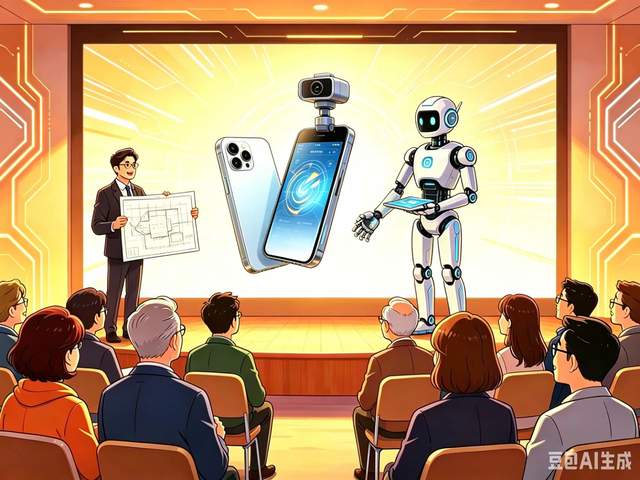
The title of this story is the 'Alpha Strategy'—Honor’s transformation from a smartphone manufacturer into a globally leading AI terminal ecosystem company, with over $10 billion invested over the next five years in three phases: building smartphones, constructing a smart ecosystem, and co-creating a smart world.
At the event, 'HONOR ALPHA PLAN' was projected on the screen behind Li Jian, with lighting, sound effects, and his stance all perfectly choreographed. Later, the Robot Phone arrived, followed by the humanoid robot 'Lightning,' which even won a championship at the Beijing Yizhuang Half Marathon.
A grand narrative about Honor’s future had begun.
But no matter how compelling the story, it ultimately comes down to a core question: Why should consumers choose Honor when they buy a new phone?
Li Jian: The Better Choice to Lead Honor to IPO
The succession of a company’s core leader is never a simple personnel change but a complete restructuring of strategic direction and development logic.
In early 2025, Zhao Ming, Honor’s iconic figure, stepped down as CEO, marking the official end of Honor’s 1.0 era—a period of pragmatic product development and hardware-driven breakthroughs. Li Jian’s takeover brought a fresh approach to the four-year-old independent company.
Soon after assuming office, Li Jian initiated reforms. His blunt admission that Honor 'lacked a vision' highlighted the company’s long-standing developmental shortcomings since independence. Having long relied on Huawei’s technological DNA, channel network, and brand dividends, Honor lost its original anchor point and fell into strategic confusion after Huawei’s strong return.
Li Jian’s core mission was to reshape Honor’s value proposition, reconstruct its narrative, and build a new development system capable of supporting its capital market valuation.
This was also the primary reason capital and shareholders chose Li Jian to lead Honor. Unlike Zhao Ming’s pragmatic style—focusing on product development, user experience, and offline channels—Li Jian excels in top-level strategic design, long-term value creation, and capital market communication.
At a critical juncture in Honor’s IPO preparations, these skills were far more scarce and valuable than short-term product iterations or sales growth.
From an industry perspective, Li Jian’s strategic transformation was not only a passive choice for Honor to break out of its slump but also the optimal solution.
According to IDC, China’s smartphone market shipped 285 million units in 2025, a slight 0.6% year-over-year decline, officially entering a phase of intense competition within a shrinking market. Headline brands now dominate with highly concentrated market shares: Huawei’s strong return, Apple’s continued dominance in the premium segment, and Xiaomi, OPPO, and vivo solidifying their positions. Industry competition has intensified, making it impossible to sustain high valuations through smartphone hardware sales alone.
More critically, Honor’s unique shareholding structure necessitated rapid capital value realization.
Since its spin-off from Huawei in 2020, Honor’s path to listing has been closely watched. In November 2022, Honor’s board first stated its intention to go public via an IPO. In December 2024, Honor completed its joint-stock transformation, renaming itself from 'Honor Terminal Co., Ltd.' to 'Honor Terminal Co., Ltd. (Joint-Stock).' In June 2025, Honor officially received IPO counseling registration, with Shenzhen Zhixin as its controlling shareholder, holding 49.55% directly. Its shareholder base included 23 entities, such as state-owned enterprises, supply chain partners, operators, distributors, and third-party capital. According to the counseling schedule, the IPO was originally planned for the first quarter of 2026. For these more than twenty capital backers, an IPO was not an option but a necessity—and a high valuation was the prerequisite.
With the smartphone industry reaching its growth ceiling and profit margins under continuous pressure, traditional hardware manufacturers faced valuation ceilings. Only by transitioning into AI ecosystems and deploying cutting-edge smart hardware could Honor break free from these constraints and deliver satisfactory results to the capital market.
Thus, in 2025, Honor officially launched the 'Alpha Strategy,' boldly declaring its full transformation from a smartphone manufacturer into a globally leading AI terminal ecosystem company, with plans to invest over $10 billion in AI technology, robotic terminals, and full-scenario ecosystems over the next five years.
In the eyes of industry insiders, this ambitious long-term strategy was largely tailored to Honor’s critical IPO timeline, representing a forward-looking strategic layout aligned with capital market valuation logic.
To bring this narrative to life, Li Jian initiated a comprehensive brand overhaul and product strategy. Unlike Honor’s previous tough, pragmatic, and low-key brand image, the Li Jian era saw Honor frequently reinforcement its technological edge through emotional speeches, tech concept launches, and exposure of cutting-edge products.
Simultaneously, Honor introduced concept products like the Robot Phone and the Lightning series of humanoid robots, breaking free from the traditional smartphone hardware category and constructing a brand identity centered on 'tech foresight and boundless ecosystems.'
These moves precisely addressed the capital market’s core demands. Capital never pays for mature markets—only for future growth potential.
For investors, smartphone sales fluctuations were merely short-term performance variations, while AI terminals, embodied intelligence, and full-scenario ecosystems represented the hottest valuation trends in the tech sector. Li Jian’s strategies seemed designed to elevate Honor’s valuation ceiling and pave the way for its IPO.
Admittedly, this strategic logic perfectly aligned with the development needs of the IPO phase. However, market balance dictates that resource allocation involves trade-offs.
When a company’s core strategy, R&D investment, and marketing resources revolve primarily around capital market valuation, consumer needs risk becoming secondary.
Honor now faces an invisible paradox: The future grander its narrative, the more it highlights the weakness of its current foundation; the more vigorously it depicts the infinite potential of AI ecosystems, the more it exposes the sluggish growth of its traditional smartphone business.
This IPO-centric strategic layout may have diverted attention from user engagement and core business refinement, potentially undermining Honor’s stable user base.
Can Blueprints Prevent Honor from Becoming an 'Other'?
The capital market favors romantic future narratives, while the consumer market only recognizes pragmatic current products.
Li Jian stabilized capital confidence with a flawless AI ecosystem narrative, but in the real end-user market, Honor’s growth pressures are gradually surfacing. Industry data and product performance have raised doubts about Honor’s grand blueprint: Can concept-driven innovation unrelated to its core business sustain the brand’s future, or will it accelerate the erosion of its foundation?
The most visible crisis comes from its declining market share. According to IDC’s 2025 China Smartphone Market Annual Report, Honor’s domestic market share fell to 13.4%, ranking sixth—the only top-tier brand with a double-digit year-over-year decline.
By the first quarter of 2026, IDC data showed Honor shipped 8.9 million units domestically, capturing about 13% of the market and ranking fifth behind Huawei, Apple, OPPO, and vivo. While this position was not poor—it reclaimed a top-five spot, surpassing Xiaomi—the concerning trend was that Honor’s shipments declined by 2% year-over-year, making it one of only two brands in the top five to shrink.
Once the domestic market leader and a consistent top-five player, Honor now lags noticeably behind the Top tier team (leading pack), even falling into the 'Others' category in some statistics.
The harsh reality of this performance is that it reflects a trend, not just short-term volatility. In contrast, Huawei reclaimed the top spot in domestic shipments with its Kirin chips and HarmonyOS ecosystem; Apple solidified its premium market base with surging sales despite industry headwinds; and Xiaomi, OPPO, and vivo maintained their shares through stable product iterations and precise market positioning. Only Honor struggled in the stock game (zero-sum competition), facing pressure from both above and below.
More thought-provoking is that Honor’s core innovation strategies seem misaligned with mainstream consumer demands, failing to reverse market decline. As the flagship product of the Alpha Strategy, the Robot Phone—billed as a 'disruptor of traditional smartphone form factors'—has been controversial since its unveiling.
A closer look reveals that this so-called AI robotic phone is essentially a conventional smartphone equipped with a movable mechanical gimbal. Its advertised features—360° auto-tracking, AI smart shooting, and contextual interactions—appear innovative but cater to an extremely niche audience. For most ordinary consumers, a phone’s core value remains communication, daily usability, portability, and battery life. Complex mechanical structures do not enhance the user experience; instead, they increase thickness, reduce durability, and raise costs.
This market situation mirrors NIO’s foray into smartphones. When NIO launched the NIO Phone, it emphasized seamless vehicle-phone integration and exclusive ecosystem adaptations, seemingly completing its brand ecosystem. However, this was ultimately a case of 'innovation for the sake of connection and intelligence.' The high-end crossover phone quickly faded from public interest, failing to gain Large scale market recognition (mass-market acceptance) and confirming a fundamental industry truth: Innovations detached from real user pain points, relying solely on conceptual hype, cannot win consumers or stabilize markets.
True product innovation never stems from blind accumulation of technology and concepts but from prioritizing user experience and genuine needs. Innovations lacking rigid demand, no matter how flashy, remain castles in the air.
Returning to Honor’s Robot Phone, some domestic tech bloggers joked that it would be more accurate to call it a 'gimbal phone.' Honor marketed it as an 'innovative species breaking from the straight-slab form factor pioneered by Steve Jobs,' but its marketability depends on consumer validation.
Media estimates suggest the Robot Phone’s price will likely exceed $1,500, while a DJI Osmo Pocket, an external gimbal, costs just over $300. Whether the 'robotic phone' gimmick justifies a $1,500+ price tag remains a huge question mark.
In contrast, mainstream brands like Huawei, Apple, and Xiaomi are engaging in a price war, using cost-effectiveness and hardcore product strength to compete for users. Honor’s insistence on launching a $1,500+ concept phone raises doubts about its strategic focus.
Beyond the conceptual layout of smartphones, Honor’s foray into humanoid robots also faces criticism of 'hype over substance.' At the 2026 Beijing Yizhuang Half Marathon, Honor’s 'Lightning' humanoid robot won the championship in 50:26, capturing public attention and boosting the brand’s tech profile. However, Honor admitted the robot was custom-built for the marathon, with limited scenario adaptability.
In comparison, industry leaders like Unitree Robotics and Ubtech have achieved multi-scenario mass production, completing commercial validations in industrial operations, home services, and intelligent inspections, with mature technologies and deployment capabilities.
Honor’s humanoid robot remains stuck in event marketing and scenario demonstrations, with unclear core technological barriers, mass-production capabilities, or commercialization paths. For now, it serves primarily as a showcase of the brand’s tech image, far from forming mature product competitiveness.
Beyond product gaps, Honor’s premiumization strategy seems to have lost sight of fundamentals. The core barrier of a premium brand lies not in marketing hype but in hardcore technology and long-term accumulation.
Huawei’s premium status stems from its self-developed Kirin chips and continuous iteration of HarmonyOS; Apple’s premium pricing relies on its iOS ecosystem, A-series chips, and seamless hardware-software integration. Top-tier premium brands maintain restraint and scarcity, building value through technological prowess.
In contrast, Honor—without differentiated technological advantages—has frequently engaged in crossover marketing, partnering with trendy IPs like Pop Mart and Zhang Xue Motorcycles to elevate its brand image through buzz. While such collaborations can quickly generate traffic and exposure, they cannot compensate for weak product strength or technological barriers.
Traffic may be acquired through crossovers, but premium reputation and market share cannot be built through marketing alone. Frequent collaborations have eroded Honor’s previous pragmatic and hardcore brand identity, sparking debates about 'prioritizing marketing over product.'
More critically, such paid resource-exchange marketing requires sustained investment, diverting R&D resources without addressing core user pain points, and thus failing to translate into tangible market growth.
Amid these challenges, Honor’s position grows increasingly precarious. Li Jian’s AI ecosystem blueprint is grand and compelling, perfectly aligning with capital market valuation logic, but it has yet to truly resonate with end consumers.
Market votes are always honest and ruthless. Consumers do not pay for distant visions—only for immediate product experiences.
When Honor allocates most of its resources to cutting-edge concepts, future narratives, and capital hype, the slow iteration, experience gaps, and weakened competitiveness of its core smartphone business become unavoidable realities.
Conclusion
Honor stands at a crossroads.
One path is to continue telling stories—through the Alpha Strategy, the Robot Phone, humanoid robots—until the IPO lands. The capital market needs stories, and Honor is crafting a sufficiently grand one.
Another path is to go back and make great phones. Let consumers truly remember an independent Honor, rather than 'that brand that split off from Huawei.'
For Li Jian today, this is a dual test. He needs to be both a 'capital storyteller' who is good at telling stories and can support the valuation, and a 'product doer' who can enable Honor phones to stand firm in the fierce competition for existing market share.
Both paths are indispensable. The former determines how high Honor can go, while the latter determines how far it can go.
We wish Li Jian and Honor all the best in truly finding their own path.
-
![]()
Kuaishou's 'Fundification' Strategy: Going All-in on Kling AI
-
![]()
"Tech Ferrari" Xiangjie RX: Yu Chengdong’s Glowing Review Sparks Wild Netizen Speculation: Is It the YU7?
-
![]()
Chery's 'Audi Suit Gangster' Makes Waves with Unbeatable Pricing. Netizens React: 'Is This the Aorui A6L?'
-
![]()
AITO Takes a Bold Leap, Forms Joint Venture with BMW and Mercedes-Benz
-
![]()
How Does the Cloud Data Engine Transform Physical Labor into Technical Work for Autonomous Driving Annotators?
-
![]()
Historic Strongest Mercedes-Benz GLE L Faces Intense Competition from Domestic 9 Series
-
![]()
Jeff Dean's First Entrepreneurial Venture After Leaving Google: Why Launch an AI Company 'Not Aiming to Make Money' at This Juncture?
-
![]()
Caught in the Traffic 'Web'