Apple Slashes Prices, Xiaomi Holds Clearance Sale, Huawei Surprises: Smartphone Titans Clash in 'Three Kingdoms Showdown' at 618 Shopping Festival
 05/20 2026
 790
790
Editor: Liu Zhicheng
Reviewer: Xu Xu
As the 618 shopping extravaganza looms, the smartphone sector finds itself at a crossroads of challenges and opportunities.
While the specter of escalating memory costs looms large, the battle to reduce terminal prices has already commenced.
Apple, Huawei, and Xiaomi have all taken up arms, announcing official price reductions in unison: the iPhone 17 Pro series sees a direct price drop of 1,000 yuan; the Xiaomi 15 Ultra is discounted by 1,500 yuan; meanwhile, Huawei is doubling down on the foldable screen market, with the Mate X7 seeing a 1,000 yuan reduction and the Mate X6 a staggering 3,000 yuan cut.
The smartphone industry's most gripping drama has finally unfolded on the eve of 618.
Just as the bugle sounds for upstream memory price hikes, the gunfire of downstream price reductions erupts. This round of price cuts seems somewhat out of the ordinary.
Is this price reduction extravaganza the prelude to a new price war, or merely a strategic feint before a fresh round of price increases?
Will more players join the fray after Apple, Huawei, and Xiaomi's price reductions?
This question merits deep contemplation.
Behind the smartphone price reductions, a covert battle for the high-end market rages on.
Apple's current price cuts come as no surprise.
A glance at the price reduction history of recent Pro models reveals that annual iPhone price reductions follow a predictable pattern.
Launched in September, the first significant price drop usually occurs during the 'Double 11' shopping spree. During this period, prices generally do not plummet drastically, but third-party subsidies on e-commerce platforms can cause the Pro models' prices to loosen for the first time.
More substantial price reductions occur during the annual 'Double 12' and Chinese New Year shopping festivals, with the latter often marking the first significant price drop of the year for iPhones, coinciding with New Year promotions.
Subsequently, after channel price adjustments during the off-peak season from March to April of the following year, 618 becomes the time for the year's most substantial price reductions. By this point, nine months have elapsed since the initial launch, and the release of the new generation of models is only three to four months away, making 618 the period with the largest price reductions.
This year is no exception.
For instance, the iPhone 17 Pro, which has seen the most significant price reduction, can drop by up to 2,000 yuan on JD.com after factoring in trade-in discounts.
Historically, Apple's price reductions may serve two purposes:
1. Annual routine inventory clearance to make room for the production capacity of this year's iPhone 18 series. 2. Amidst a rare memory price hike cycle, this round of price reductions objectively helps boost market share.
Especially when combined with national subsidies, trade-in discounts, and platform coupons, the iPhone's cost-effectiveness has never been higher.
On JD.com's 3C category, the lowest entry price for the iPhone 17 standard series can reach 4,499 yuan. For most users, the 6,000-yuan iPhone 17 standard version may be out of reach, but a 4,499-yuan iPhone is undeniably attractive. JD.com's 3C category supply chain advantages maximize the consumer experience brought by this round of price reductions.
The 4,499-yuan price point has entered the entry-level high-end market price range traditionally dominated by Xiaomi, OPPO, and Honor.
After this round of price reductions, coupled with the pressure of price hikes due to rising memory costs, Xiaomi, OPPO, and others may face a more intense market share assault from the iPhone standard version in the secondary high-end market.
Apple's price reduction objective is clear and direct: to seize users and market share amidst rising memory costs.
Huawei and Xiaomi's responses are equally intriguing.
Let's first examine Huawei. This round of Huawei's price reductions follows a different logic from Apple's.
Firstly, the models Huawei has reduced prices on are its higher-priced foldable screen series.
Before the price reductions, the starting prices of the Mate X6 and X7 were 12,999 yuan, firmly placing them in the high-end market. The memory price hike cycle may have little impact on the mid-range market. After the price reductions, the Mate X6's starting price drops to 9,999 yuan, and the X7's to 11,999 yuan.
This is interesting because the starting price of the iPhone 17 Pro Max is also 9,999 yuan.
Comparing the iPhone 17 Pro Max with Huawei's more premium and differentiated foldable screen series, the latter's cost-effectiveness becomes prominent.
Thus, Huawei's price reductions this time are likely aimed at Apple. Whether the iPhone 17 Pro Max can withstand the impact of foldable screens is a question worth observing.
Secondly, apart from targeting Apple, the Mate X6 and Mate X7 have been on the market for some time, and the Mate X8 may be released in the second half of the year. Price reductions are also a normal operation in this context.
What iterative upgrades will the Mate X8 bring in the second half of the year? Will there be further price hikes? This could be an excellent window to observe Huawei's response strategy during the memory price hike cycle.
Apart from Apple and Huawei, Xiaomi may be under the most pressure in this round of price reductions.
Let's examine Xiaomi's response.
Xiaomi's official Weibo account announced a direct price reduction of 1,500 yuan for the Xiaomi 15 Ultra. While the reduction is substantial, it's worth noting that the Xiaomi 15 Ultra is a previous flagship model that has completed its main sales cycle. Thus, the intention to clear inventory may be more apparent.
In terms of price, on JD.com, after participating in the JD.com Heartthrob Shopping Season discounts and national subsidies, the Xiaomi 15 Ultra's price drops to 4,499 yuan. This price falls within the iPhone 17 standard version's price range.
Using the previous-generation Ultra to compete with the iPhone standard version, a strategy of offering more for less, is also a way to counter Apple's competitive pressure.
Xiaomi's challenge lies in whether the inventory of the previous-generation Ultra can offset the market share pressure brought by the iPhone standard version's price reduction. After all, after this round of 618 price reductions, the pressure of rising memory costs will ultimately be passed on to BOM costs.
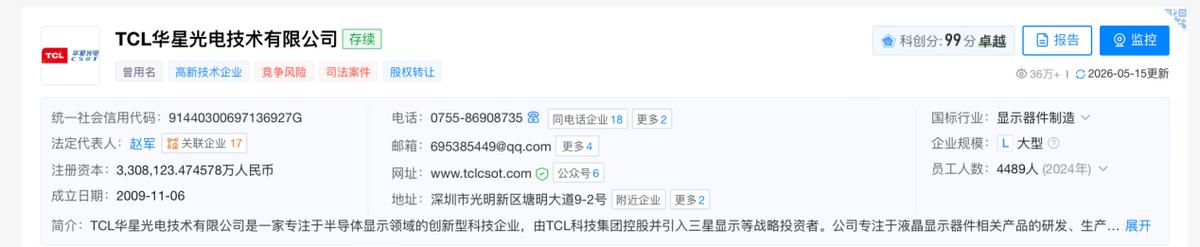
In reality, the Xiaomi 17 Ultra, with comprehensive upgrades in chip, screen, and imaging, is a highly competitive product. For example, the top-tier screens of the Xiaomi 17 Ultra and Xiaomi 17 Ultra Leica versions are supplied by CSOT. According to Tianyancha APP, CSOT is a veteran player in the semiconductor display industry.
Stacking core parameters may also mean limited room for substantial price reductions in the future.
Therefore, going forward, if the Xiaomi 15 Ultra's sales take off after the price reduction, can its production capacity sustain this price range's market share? This question is probably more critical.
Having discerned the logic behind the price reductions by Apple, Huawei, and Xiaomi, it's not hard to see that this round of price cuts is not a coincidence but a redistribution of high-end market share amidst cost and market constraints.
This redistribution also means that the high-end market is becoming increasingly fragmented. As price reductions continuously shake the market's price anchors, will the 'wait-and-see' consumers make a move, or will their ranks swell? Ultimately, the market will provide the answer.
Apple and Huawei Price Cuts Signal the First Shot in the 618 Shopping Festival Battle
Since the start of this year's 618, the landscape of the domestic high-end smartphone market amidst a memory price hike cycle is set to change.
Price reductions during 618 are customary and 'basic operations.' The market is keenly observing whether, following Apple, Huawei, and Xiaomi, other manufacturers like OPPO and Vivo will further follow suit when the major promotions begin.
This question warrants deep thought.
Firstly, it's certain that the fundamentals of the memory price hike cycle will not change, and smartphone manufacturers will continue to face upward pressure on BOM costs.
TrendForce data shows that DRAM prices rose by a staggering 80%-90% quarter-on-quarter in the first quarter of this year, while NAND flash memory prices increased by 80%-90% year-on-year. Lu Weibing of Xiaomi also admitted that the memory cost for a 12GB+256GB configuration has risen to $120-$130.
OPPO and Vivo have already implemented a round of price hikes in mid-March. OPPO's A series and K series have seen across-the-board price increases.
Next, will OPPO and Vivo follow suit with price reductions?
Corresponding actions have already been taken, but this round of OPPO and Vivo price reductions may be more strategic.
In reality, OPPO and others have roughly three strategic choices:
1. Use significantly discounted older flagship models as the mainstay for 618 promotions while maintaining the price stability of newer flagship models.
Just like the Xiaomi 15 Ultra's price reduction, the benefit lies in preserving the existing price system while participating in this round of price reductions, minimizing high-end market share losses.
However, the question remains: while focusing on selling older models may temporarily maintain sales volume, can the market share ultimately be preserved? This question can only be answered by actual sales data.
2. Fully leverage the policy dividends of e-commerce platform channels during major promotions.
The 618 shopping festival is the biggest variable in this round of high-end market reshaping.
Every year, JD.com offers the most substantial discounts during 618. Let's take JD.com as an example. During this year's 618, JD.com's 3C category offers triple subsidies: platform red envelopes, cross-store full-reduction discounts, and national trade-in subsidies. During the JD.com Heartthrob Shopping Season and the 3C category's major promotion, it becomes crucial to reach user groups at different times through changes in channel strategies.
Taking Apple and Huawei's price reductions as examples, JD.com focuses on marketing events for these price cuts. For instance, at the critical juncture of the Apple product JD.com self-operated flagship store's fan base surpassing 100 million, a '100 Million JD Coins Reward for Store Fans' event was launched, further releasing the growth dividends brought by the price reductions.
For Huawei, searching for 'Huawei Large Coupons' on the JD.com APP allows participation in drawing Huawei Pura X Max and 888 yuan Huawei Hongyun coupons.
During the 3C category's special promotion period, brands can stagger their efforts, concentrating on volume during the category's special promotion period to avoid direct competition with Apple and Huawei during the opening and climax periods, achieving efficiency through differentiated reach. Through national subsidy leverage and an extended promotion rhythm, domestic brands also have room for further growth.
3. Implement minor or selective price reductions to hold the line and engage in a 'protracted war' with differentiated products.
Short-term price reductions are inevitable, but the long-tail effects of the memory price hike cycle are just beginning to manifest, and the industry remains volatile.
In my view, extending the cycle and holding onto the high-end market still presents opportunities.
Firstly, while short-term price reduction trends are inevitable, the memory price hike cycle is far from over in the long run. Instead of obsessing over prices, it's better to dive into differentiated products and engage in a protracted war.
Secondly, in the entry-level high-end market, Apple and Huawei offer better cost-effectiveness. However, each brand also has its advantages in terms of actual product experience.
For example, Xiaomi's human-vehicle-home ecosystem brings a smart experience; OPPO excels in the fusion of imaging systems and design sense, along with the user habits brought by the ColorOS system; Vivo's self-developed Blueprint Imaging Chip V series offers imaging experience and long battery life advantages.
Finally, the user base is constantly changing, with Generation Z and Generation Alpha gradually becoming new growth drivers in the market. For younger users, the 'Apple myth' has already lost its luster.
Therefore, iPhone price reductions may not be a 'wildcard.'
Today, young people's consumption attitudes have undergone significant changes.
This generation of young people is more pragmatic in their consumption, seeking both emotional value and worth. They pursue not just cost-effectiveness but 'quality-to-price ratio.' In consumption, they are gradually shifting from 'paying for price' to 'paying for their genuine needs.'
In the past, Starbucks symbolized a 'bourgeois lifestyle,' but now young people directly opt for 9.9 yuan Luckin coffee for breakfast. Young people once enthusiastic about hyping sneakers and buying AJ, but today they prefer Bondi and On Running—not for show but for the 'squishy feeling' during their commute.
The same goes for smartphones.
Features like eye protection screens, longer real-world battery life, cool gaming experiences, and smoother system animations are genuine user needs.
In these aspects, domestic manufacturers have always held a comparative advantage.
Domestic manufacturers invest far more than Apple in technologies like high-frequency PWM dimming and natural light display. Today's young people spend over six hours a day facing screens, making a non-fatiguing screen more perceptible than a higher-scoring chip.
Vivo's 7000mAh Blue Ocean Battery and OPPO's 100W flash charging also address the most fundamental and genuine need: 'battery anxiety.'
This comparative advantage remains competitive even during price hike cycles.
Thus, Apple's price reductions may not necessarily be a bad thing.
The latest wave of counter-cyclical price cuts, while inflicting short-term price fluctuations on the market, has also exposed a significant trend: Apple's recourse to price reductions to sustain its competitive edge unequivocally signals that the product prowess of domestic manufacturers has escalated to a level that can no longer be overlooked by rivals.
For manufacturers, the crux of the matter does not hinge on whether to slash prices or the magnitude of such reductions. Rather, it lies in whether they have successfully identified their unique equilibrium between pricing and user experience.
Apple's price reductions, though aggressive in the short term, can be viewed as a defensive strategy in the long run. Conversely, the reactions of domestic manufacturers represent a short-term counteroffensive, yet they also serve as a litmus test for their dedication to the high-end market over the long haul. Only brands capable of retaining users through product differentiation will secure a place in the next market cycle.
For consumers, major promotional events during a period of rising memory prices may present an exceptional opportunity to make a purchase. Following this round of 618 price cuts, 'wait-and-see' consumers might find that there is no longer a need to delay their buying decisions.
-
![]()
Kuaishou's 'Fundification' Strategy: Going All-in on Kling AI
-
![]()
"Tech Ferrari" Xiangjie RX: Yu Chengdong’s Glowing Review Sparks Wild Netizen Speculation: Is It the YU7?
-
![]()
Chery's 'Audi Suit Gangster' Makes Waves with Unbeatable Pricing. Netizens React: 'Is This the Aorui A6L?'
-
![]()
AITO Takes a Bold Leap, Forms Joint Venture with BMW and Mercedes-Benz
-
![]()
How Does the Cloud Data Engine Transform Physical Labor into Technical Work for Autonomous Driving Annotators?
-
![]()
Historic Strongest Mercedes-Benz GLE L Faces Intense Competition from Domestic 9 Series
-
![]()
Jeff Dean's First Entrepreneurial Venture After Leaving Google: Why Launch an AI Company 'Not Aiming to Make Money' at This Juncture?
-
![]()
Caught in the Traffic 'Web'