Insta360's Profit Puzzle: Liu Jingkang Unveils the Strategy
 05/20 2026
 673
673

Author|Zhang Qian
Editor|Hu Zhanjia
Operations|Chen Jiahui
Produced by|LingTai LT (ID: LingTai_LT)
Header Image|Publicly sourced image from the internet
Revenue soars to 9.7 billion yuan, yet net profit dips.
The company boasts 2.9 billion yuan in inventory and poured 1.5 billion yuan into R&D within a year. Why would a camera company invest so heavily? The answer lies in its grand vision—it aspires not just to sell cameras but to evolve into a global imaging platform.
Only by grasping this ambition can we comprehend why it opts to forego (Note: Adjusted 'compress' to 'forego' for clearer meaning in this context) immediate profit to sustain investment.
 Where Did the Profit Vanish?
9.741 billion yuan.
This marked Insta360's revenue in 2025, surging by 75% year-over-year, just shy of the 10 billion yuan milestone. Among all firms listed on the Science and Technology Innovation Board, this growth rate ranks in the top tier. However, a glance at the profit statement reveals a contrasting narrative. Net profit attributable to the parent company stood at 929 million yuan, down 6.62% year-over-year. The first quarter of the year was even more striking, with revenue hitting 2.481 billion yuan, up 83%, yet net profit merely reaching 85 million yuan. The profit margin plummeted from 11.86% to 2.51%.
For every 100 yuan in sales, less than 2.6 yuan trickles down as profit. Many investors, upon encountering these figures, might question: Is this company in peril? Let's not jump to conclusions just yet.
Two plausible explanations exist for the profit decline: either operational inefficiencies where expenditures fail to yield returns, or strategic investments where funds are judiciously allocated. Which scenario applies to Insta360? Let's dissect the profit statement to trace the money trail before forming a judgment.
Upon analysis, it becomes evident that the funds were channeled into four key areas. The first is the decline in gross margin. Last year, it stood at 52.2%; this year, it dropped to 45.74%, a nearly 7-percentage-point decrease. On 9.7 billion yuan in revenue, a 7-point drop equates to over 600 million yuan in gross profit vanishing. Insta360's annual net profit is only 900 million yuan, so a gross margin fluctuation alone accounts for two-thirds of it. Yet, this isn't attributable to operational lapses. On one hand, cost pressures mounted as upstream memory chip prices surged, impacting the entire industry, not just Insta360. On the other hand, the company adjusted pricing strategies for certain product lines, opting for more consumer-friendly pricing to broaden its user base.
According to comprehensive media reports from Tianyancha, a common occurrence in the consumer electronics sector is that gross margin fluctuations are typical during periods of rapid product innovation. The crux is whether they can stabilize and rebound. First-quarter data offers a positive sign: gross margins held steady without further decline. This is an encouraging indicator. The second area is the doubling of expenses. Selling expenses soared to 1.679 billion yuan, and R&D expenses hit 1.530 billion yuan, both nearly doubling year-over-year.
An intriguing detail: for the first time, selling expenses surpassed R&D expenses, signaling Insta360's shift from a "product-centric" to a "market-centric" approach—the products are now refined, and the focus is on global consumer awareness and accessibility. This transition phase is marked by expenses outpacing revenue growth. Until the global distribution network stabilizes, expense growth will continue to outstrip revenue growth. However, once global channels are established, the marginal increase in expenses will slow, while marginal revenue from these channels will keep rising, paving the way for profit margins to recover.

R&D expenses nearly doubled, focusing on three fronts: continuous upgrades to existing product lines, development of new categories, and three self-developed imaging chips.
The move to self-developed chips is pivotal. For consumer electronics firms, transitioning from "relying on others' chips" to "using their own" is a significant leap from being an assembler to a technology brand. This path is arduous, but once achieved, it substantially enhances product differentiation and cost control capabilities.
Expense Items 2025 (100 million yuan) Year-over-Year Growth Explanation Selling Expenses 16.79 +103% Global channel expansion and brand promotion R&D Expenses 15.30 +97% Full-category iteration + new categories + self-developed chips Administrative Expenses 3.62 +68% Normal expansion with organizational growth Total 35.71 +97% Investment level during high-growth phase The third area is the inventory buildup.
Inventory stood at 2.919 billion yuan at the end of 2025, up 192% year-over-year. While this seems alarming, understanding the underlying business rhythm is crucial. The product lineup expanded from a single panoramic camera to five major categories, multiplying SKUs and necessitating higher safety stock levels. Several new products are slated for launch in 2026, including next-gen panoramic cameras and second-gen drones, requiring advance stocking. Additionally, global channel expansion demands corresponding overseas warehouse stocking. The key to managing large inventory levels lies in subsequent sales momentum.
If new products sell well, inventory levels will decline; only if sales fall short of expectations should there be concern. Currently, most inventory comprises newer models, with a low proportion of obsolete stock, keeping risks manageable. The fourth area is the launch of new ventures. Strategic investments of 762 million yuan were primarily allocated to the Insta360 plume A1 (Ling A1) drone. Developing a drone from scratch necessitates full in-house development of flight control systems, imaging systems, and obstacle avoidance algorithms, justifying the high investment. This isn't merely about launching a new product; it's about venturing into an entirely new technological domain.
According to comprehensive media reports from Tianyancha, the Ling A1 generated 30 million yuan in pre-sales within 48 hours of its launch, indicating positive market feedback and validating the product direction. The subsequent price reduction is a standard tactic in consumer electronics, aimed at rapidly expanding the user base while gathering feedback for next-gen products. First-generation products are rarely flawless; the key is whether they receive sufficient market feedback to guide iterations. From this perspective, the Ling A1's debut is satisfactory.
When these four expenditures are combined, the profit compression emerges as a logical outcome of high-growth expansion.
Each expenditure has a rational explanation: gross margin fluctuations stem from both industry and strategic factors; doubled expenses are necessary for channel expansion and product development; inventory growth aligns with business expansion pace; and new business investments represent startup costs for a second growth curve. When all four occur in the same fiscal year, the profit statement naturally comes under pressure.
Founder Liu Jingkang explains this as "sacrificing short-term profit for long-term barriers." This logic is straightforward—using today's profits to build tomorrow's competitive edge. Similar strategies are not uncommon among tech firms; Amazon operated at a loss for over two decades yet achieved a trillion-dollar valuation. Of course, Insta360's scale pales in comparison to Amazon's, but the underlying logic is the same: investing resources during a window of opportunity aligns more with long-term interests than pocketing profits.
But does this mean the money was squandered? The answer hinges on what assets these investments have created. A less-than-ideal profit statement doesn't necessarily imply a dearth of gains in the balance sheet or business portfolio.
 What Has Been Built?
While the profit statement is under pressure, Insta360 has amassed several noteworthy assets in its business portfolio.
The first asset is globalization.
Its products are sold in over 200 countries and regions, with stable channels and user bases in North America, Europe, Japan, South Korea, and Southeast Asia. The proportion of overseas revenue continues to rise, transforming the company from an "export-oriented" entity into a truly "globalized" enterprise.
The value of globalization extends beyond revenue scale. It diversifies risks from single-market pressures—when one regional market faces increased competition or economic slowdown, growth in other regions can offset it. It enables higher brand premiums—overseas mature markets offer greater consumer recognition and willingness to pay compared to domestic markets. For instance, the same panoramic camera commands higher prices and gross margins overseas. Most importantly, once channels are established, they become assets competitors find hard to replicate.
Consider this: a new brand aiming to enter global markets would need years of channel building and brand accumulation before consumers even recognize its name. The retail networks Insta360 has laid out in major global markets over the past two years, while reflected in short-term expense sheets, will become a formidable barrier competitors cannot easily surmount.
Imagine walking into an electronics retail store and seeing Insta360's panoramic cameras, action cameras, and thumb cameras on the shelves. Such coverage doesn't happen overnight. Purchase decisions for consumer imaging products heavily rely on in-person experiences and immediate availability, so channel density directly determines how many potential users a brand can reach. What seems like a cost in the short term becomes a competitive moat in the medium to long term.
The second asset is a comprehensive product matrix.
Insta360 is no longer just a panoramic camera company. Its X-series and RS-series panoramic cameras have strong reputations in consumer and professional markets, forming its foundational business. The Ace Pro series action cameras have carved out a niche with exceptional stabilization. The GO series thumb cameras introduced a new category, addressing the pain point of traditional cameras being "hard to pull out."
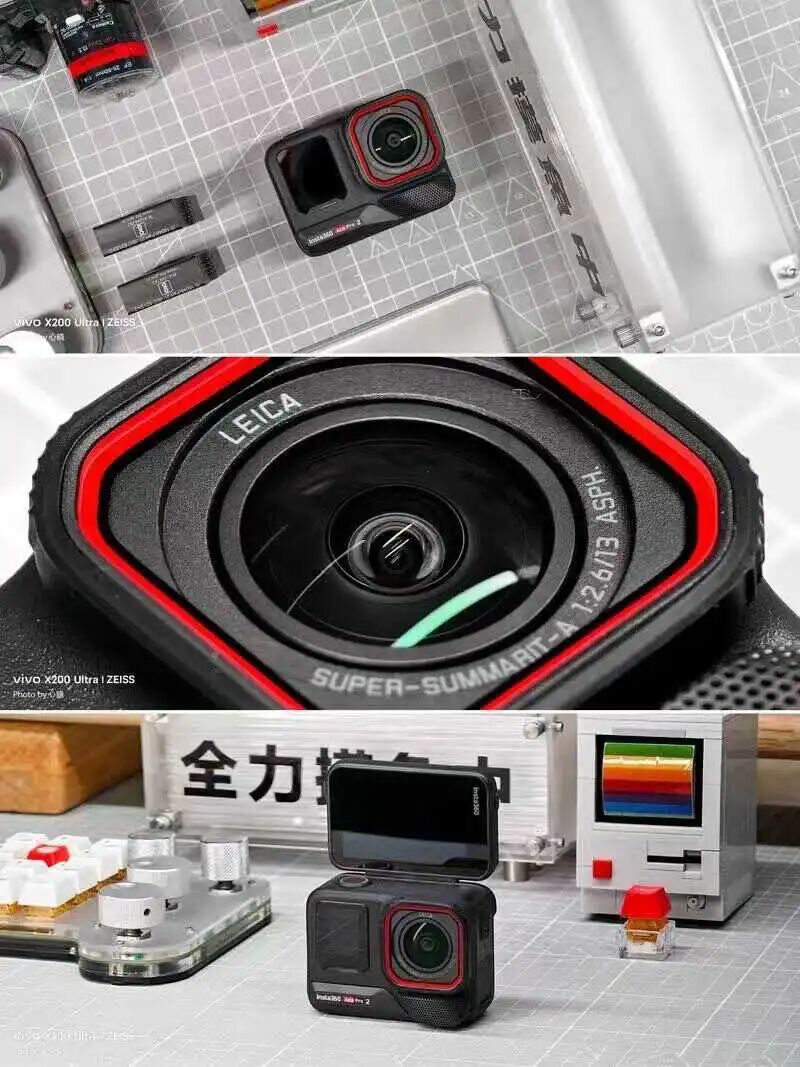
The strategic significance of a multi-category approach lies in three areas: diversified revenue streams, as different categories face varying competitive landscapes, smoothing out fluctuations; high channel reuse rates—negotiating with a retail partner to sell three products versus one involves similar maintenance costs but multiplies revenue contributions; and elevated user lifetime value, as customers who buy a panoramic camera for travel might later purchase a thumb camera for daily use, or those who buy an action camera for skiing might add a drone for aerial shots. Cross-selling opportunities across categories are advantages single-category brands lack.
Insta360's product strategy follows a clear thread: expanding application scenarios around its core capability of "spatial imaging." Each new category represents a natural extension of existing technologies, not an entry into entirely unfamiliar fields. This means Insta360 can leverage technical expertise, supply chain resources, and brand recognition when entering new categories, keeping trial-and-error costs much lower than starting from scratch.
The third asset is self-developed technology.
The 1.530 billion yuan in R&D investment isn't just burning money; it's building a competitive moat.
R&D operates on three levels: product-level, ensuring continuous iteration and competitiveness in each category; platform-level, with AI-powered smart editing algorithms and app ecosystems serving as key pillars of user experience; and chip-level, with three self-developed imaging chips entering the tape-out phase—the most critical and imaginative layer. Successful self-developed chips will not only reduce reliance on upstream suppliers but also enable differentiated imaging functions.
Insta360 can achieve imaging effects that others cannot.
These three levels form a technology stack: chips as the foundation, algorithms as the middleware, and products as the frontend. The depth of this stack determines how far Insta360 can go. The deeper the stack, the wider the moat. While Insta360 is still building this stack, adding layer upon layer, the direction is correct. Combined, these three assets point to three possible paths for Insta360's future.
The ideal scenario: barriers materialize. This has about a 30% probability. The drone business achieves significant volume in subsequent product generations, self-developed chips reduce costs and enable product differentiation, handheld camera categories maintain market share and grow steadily, and global channels continue to drive incremental revenue.
If most of these outcomes materialize, the new business will transition from the investment phase to the harvest phase by 2026–2027, with net profit margins potentially recovering to double digits. Insta360's valuation logic would then shift from a hardware company to an imaging platform, unlocking significant market cap potential. This scenario's probability is moderate, depending on execution precision and market alignment.
The most likely scenario: steady progress. This has about a 50% probability. New businesses contribute revenue but take time to deliver profits, handheld camera categories remain stable, and globalization continues but at a slowing growth rate. Net profit stabilizes in the 800 million to 1 billion yuan range. In this scenario, Insta360 remains a fundamentally solid company—with technology, brand, channels, and cash flow—but the "platform-level" imagination will take longer to materialize. This is the typical path for most growth-stage companies.
Less Probable Scenario: Gradual Advancement. This outcome carries roughly a 20% likelihood. For this scenario to unfold, several adverse factors would need to converge simultaneously. Nevertheless, even under these circumstances, Insta360's fundamental operations would remain resilient, boasting substantial cash reserves, a comprehensive product portfolio, and established brand presence across various markets.
No single adverse factor is likely to inflict a critical blow, given the company's sufficiently diversified business structure. Here's a breakdown of the scenarios:
- Barriers Materialize (30% probability): Drone sales surge + chip mass production commences + core business retention + globalization efforts intensify. Outcome: Net margin rebounds to over 15%, leading to a valuation re-rating.
- Steady Progress (50% probability): Revenue from new ventures grows + handheld camera sales stabilize + ongoing globalization. Outcome: Net profit reaches 800 million to 1 billion yuan, with a neutral valuation.
- Slow Progress (20% probability): Multiple factors underperform. Outcome: Profit release is delayed, exerting pressure on valuation.

Final Reflections
Having examined these figures and analyses, let's revisit the initial query: Where has Insta360's profit vanished to? The response is now evident.
A portion has been absorbed by escalating upstream costs, another by global channel expansion, yet another by R&D investments, and the remainder by venturing into new businesses. None of these expenditures have been futile. Upstream costs are a prevalent industry challenge; channel construction represents medium-to-long-term assets; R&D investments forge technological barriers; and investments in new businesses sow the seeds for a secondary growth trajectory.
Founder Liu Jingkang's strategy is unmistakable: retaining profits within the company to fuel R&D, new product development, and globalization. The verdict on whether this approach is judicious will be rendered by time. Over the forthcoming 12 months, several pivotal indicators will clarify—how sales of subsequent Ling A1 products fare, whether self-developed chips are integrated into next-generation products, and whether global revenue growth can be sustained at a relatively elevated level.
Institutional perspectives on Insta360 are varied. Huatai, CITIC, and Goldman Sachs maintain "buy" recommendations, believing Insta360 is transitioning from a hardware-centric to a platform-based model, with the initial profit compression being a typical phase of this transformation. UBS revised its target price downward, citing the need for additional time to absorb short-term performance pressures. Galaxy Securities issued a "cautiously recommended" rating, adopting a neutral stance.
Both viewpoints possess merit, with the core divergence lying in the assessment of the 'duration of the transition period'—optimists contend that two to three years will suffice for new businesses to contribute revenue, whereas pessimists anticipate a longer timeframe.
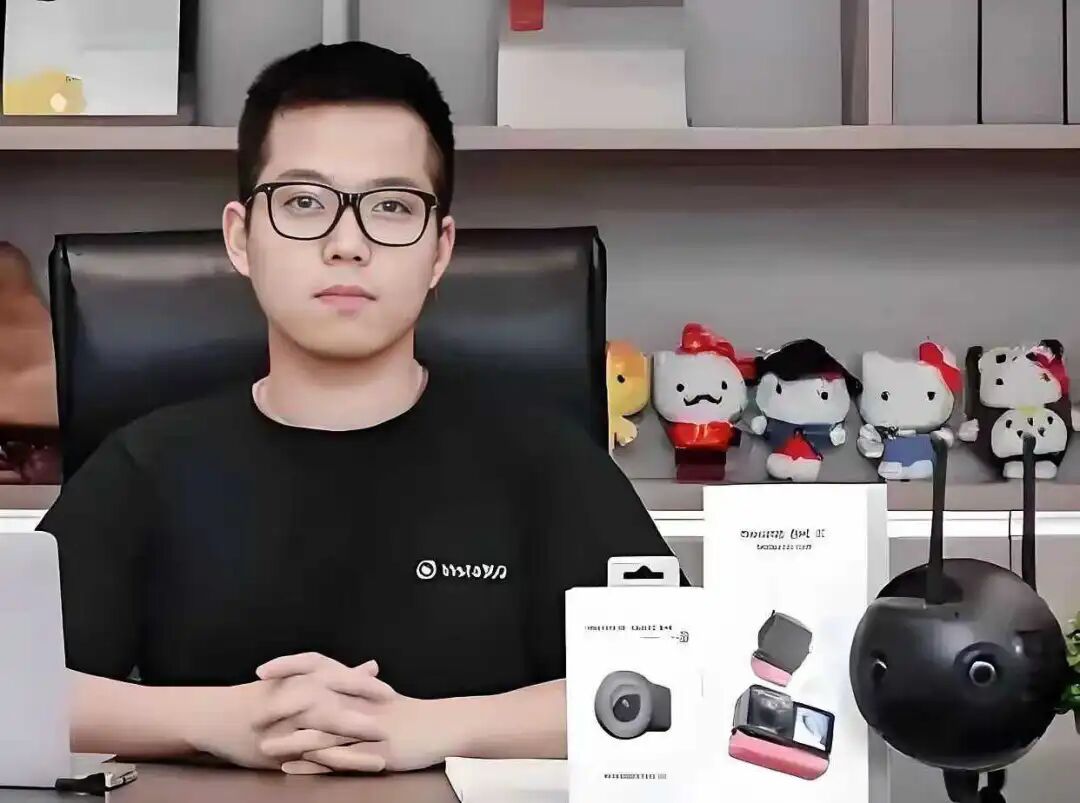
Insta360's 9.7 billion yuan revenue milestone signifies a fresh commencement. Transitioning from a singular product category to a comprehensive range, from the domestic to the global market, and from hardware assembly to self-developed core technologies—each stride demands time and investment, accompanied by inherent risks. Reflecting on the past, Insta360 has evolved from obscurity to a pivotal player in the global consumer imaging sector within a decade. Every critical decision made during this journey was arduous at the time. Some have already yielded returns, while others await validation.
The answers will gradually emerge over time.
Insta360's game is afoot, with all pieces in position and the match just commencing. For long-term investors, the focus should not be on the extent of profit growth in the upcoming quarter, but rather on the company's trajectory over the next three years. Will it evolve into a multi-category, multi-market imaging platform company bolstered by global channels? Or will it regress into a single-category hardware manufacturer amid the growing pains of transition? The crossroads lies in the forthcoming quarters.
Insta360 possesses a formidable hand—globalization, a diverse product matrix, and self-developed technology, each card holding significant value. However, the player must recognize that competitors will not remain idle. Market competition is fluid; today's leading market share may erode tomorrow, and today's invested technology may be surpassed in the future.
Insta360 must excel in three simultaneous endeavors: accelerating product iteration speed, deepening channel penetration, and enhancing technology conversion efficiency. Should any of these facets falter, the transition period's challenges will persist. The crux lies in how effectively and swiftly the company navigates this journey.
-
![]()
Kuaishou's 'Fundification' Strategy: Going All-in on Kling AI
-
![]()
"Tech Ferrari" Xiangjie RX: Yu Chengdong’s Glowing Review Sparks Wild Netizen Speculation: Is It the YU7?
-
![]()
Chery's 'Audi Suit Gangster' Makes Waves with Unbeatable Pricing. Netizens React: 'Is This the Aorui A6L?'
-
![]()
AITO Takes a Bold Leap, Forms Joint Venture with BMW and Mercedes-Benz
-
![]()
How Does the Cloud Data Engine Transform Physical Labor into Technical Work for Autonomous Driving Annotators?
-
![]()
Historic Strongest Mercedes-Benz GLE L Faces Intense Competition from Domestic 9 Series
-
![]()
Jeff Dean's First Entrepreneurial Venture After Leaving Google: Why Launch an AI Company 'Not Aiming to Make Money' at This Juncture?
-
![]()
Caught in the Traffic 'Web'