DJI’s Frank Wang: Embracing the World with Newfound Wisdom
 04/10 2026
 507
507
A decade ago, during an interview with China Entrepreneur magazine, Frank Wang made a bold statement that would be frequently echoed by the media: “The world is too stupid—unbelievably so.”
Those years marked a particularly tumultuous era in China’s business history, with everyone clamoring for attention, competing for the microphone, and crafting their own narratives. Yet, after that remark, Frank Wang chose silence—no speeches, no interviews, and virtually no public appearances.
As a result, the outside world’s perception of him became frozen in time. His words became an indelible label, attached not just to him but also to DJI, sparking both admiration and one-sided interpretations.
This year marks DJI’s twentieth anniversary and the moment when the company’s sales surpassed 100 billion yuan. At this pivotal juncture, the typically “mysterious” Frank Wang has taken the initiative to break his silence.
Wang explained that his decade-long silence was due to his ongoing transformation—like a soft-shelled crab, still undergoing molting. Recently, without realizing it, he has “shed his shell” and now feels it’s time to refresh the outside world’s perception of him.
He chose to engage in a candid dialogue, openly sharing his obsessions, misjudgments, insights, and reflections from the past twenty years.
This is not merely a narrative of a company’s success but rather a reflection on how an individual, over time, gradually comprehends the philosophy of business management and transforms into a more mature and complete version of themselves.
Fulfilling Talent, Bearing the Cost
Often, the boundaries of an entrepreneur’s cognition define the boundaries of the enterprise.
If an entrepreneur’s mind is chaotic and anxious, the organization’s strategy will inevitably waver, lacking a long-term vision. If an entrepreneur is arrogant and prone to complacency, the organization will likely succumb to bureaucracy and formalism.
Before “shedding his shell,” Frank Wang was an obsessive genius.
He possessed both an innate intuition and pure love for products and technology, as well as the arrogance and rebelliousness often seen in geniuses.
His rebellious and obsessive nature led him to disregard worldly rules like exams and formal education in his youth and to ignore his mentor’s advice when starting his business, instead betting everything on helicopters, which he had loved since childhood.
However, his genius made DJI unstoppable in “creation.”
In its early stages, while peers were still pondering their strategies, Wang had already led DJI on a relentless pursuit of product and technological excellence, planting the flag of Chinese innovation at the pinnacle of the global tech industry.
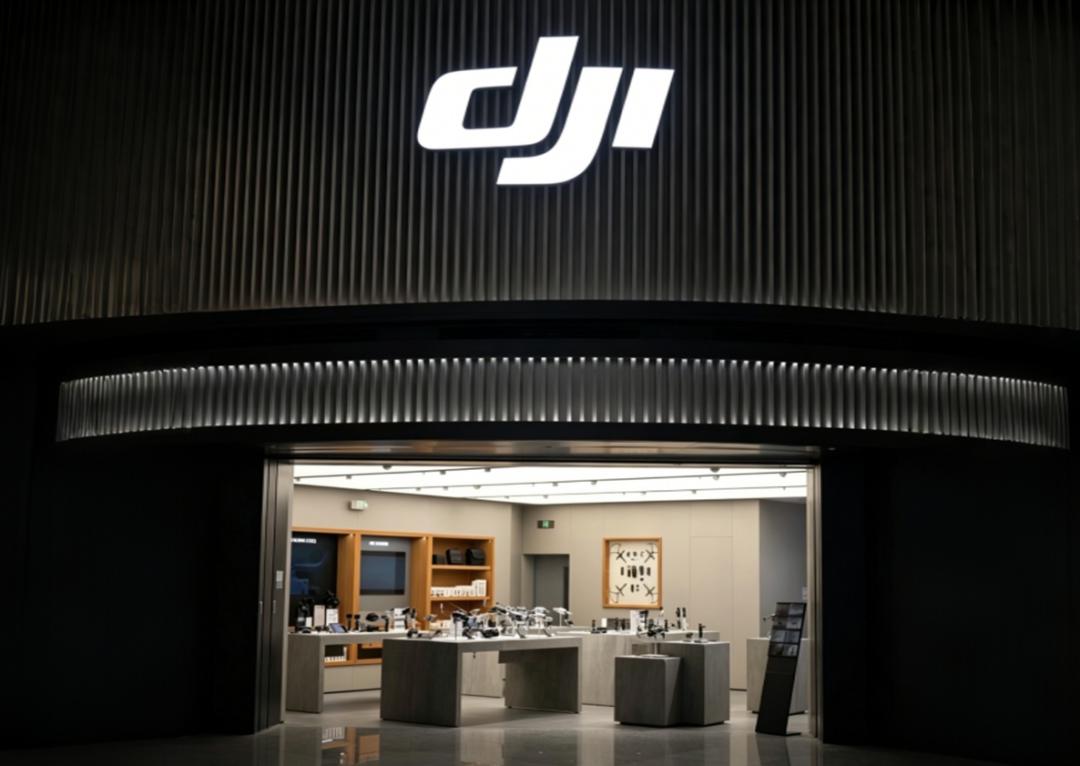
It’s worth noting that Wang viewed this achievement, worthy of being written into the annals of Chinese hardware innovation, as nothing particularly difficult.
And therein lay the problem—everything came too easily.
Success, for geniuses, can often be a “curse.”
The reason is that, whether facing success or failure, people instinctively seek attributions that align with their self-narrative.
Geniuses consistently achieve what most others cannot through their talent and judgment, with each positive feedback reinforcing their self-narrative. Founders who are geniuses must not only confront this cognitive inertia but also the natural information silos that form within their organizations.
Ultimately, this closed loop can become a prison, gradually eroding one’s ability to perceive the real world. This was true, to varying degrees, for early-stage Steve Jobs and “China’s Steve Jobs,” Lei Jun (Note: Huang Zhang is likely a misnomer; Lei Jun, founder of Xiaomi, is often compared to Steve Jobs).
Thus, in 2024, when NVIDIA CEO Jensen Huang returned to his alma mater, Stanford University, to speak, he advised the assembled geniuses: “I hope everyone here has the opportunity to endure significant pain and hardship.”
Looking back at Wang’s statement, “The world is too stupid, unbelievably so,” it resembles Jack standing at the bow of the Titanic, shouting, “I’m the king of the world!”—confident in his ability to conquer the world, unconcerned with superfluous rules or the mediocrity and roughness of reality.
He used this logic to drive himself and refine his products, also unconsciously applying it to measure the entire world.
However, just as Jack, standing against the wind, failed to foresee the iceberg lurking beneath the surface, Wang’s immature cognition eventually collided with the boundaries of reality.
At that time, DJI was a gathering place for geniuses. A series of victories led them to believe, “We can do anything,” while also masking underlying issues like ego clashes and management deficiencies.
This is a common problem for all companies—growth is the best “painkiller.” When business growth far outpaces organizational growth, risk awareness naturally diminishes. It’s only when the tide recedes and problems emerge that the long-ignored organizational and management shortcomings reveal themselves as crises, deeply ingrained.
Wang admitted, “We grew like herbaceous plants with abundant leaves, growing wildly (frenzied growth). Everyone wanted to be the shiny leaves, no one wanted to be the silent roots and stems. When the number and area of leaves exceeded the load-bearing capacity of the roots and stems, collapse was inevitable.”
This included Wang himself. In interviews, he revealed that he was once obsessed with product creation, nearly neglecting the “wild growth” within the company.
As Peter Drucker said, management is an organ of the organization. During this period of rapid expansion, DJI’s management system failed to keep pace, naturally leading to the costs that most growing companies experience.
At that time, DJI’s procurement, R&D, and sales departments operated as independent fiefdoms, with severe corruption—a “collapse of moral values.” The Wang who once “thought the world was too stupid” ultimately became part of this chaotic setup.
Fortunately, this growth pain did not sink DJI but instead doused Wang’s innate arrogance with cold water, serving as the starting point for his subsequent awakening and transformation.
Wang’s Transformation: From “Creator” to “Builder”
Around 2017, DJI had become the undisputed leader in the global consumer drone market, with Wang having more than achieved his initial goals of “winning.”
Yet, standing on the construction site of the newly commenced “Sky City,” Wang sensed that “something was wrong”—despite the company’s rapid progress, he felt the world was unreal, unworthy of his achievements. He wondered what an ideal company should look like and how one should live a fulfilling life.
This confusion may have marked the beginning of his awakening and evolution.
Philosopher Rupert Spira once noted that within the comfort zone of one’s cognitive boundaries, the ego feels secure. However, when cognition is surpassed or broken through, the ego perceives dissolution and extinction, leading to intense internal doubt and resistance.
Thus, it’s often said that the size of one’s ego is inversely proportional to the breadth of their knowledge—the more comprehensive and profound one’s understanding of the world, the more they recognize their own insignificance.
At that time, Wang seemed to be on the verge of such a cognitive breakthrough.
Previously, he had considered himself a genius, but then he realized that many seemingly great innovations were essentially forms of appropriation—there were no true geniuses who created ex nihilo, only “movers” who integrated, combined, and engineered existing technologies worldwide.
This shift in narrative, from heroes shaping the times to the times shaping heroes, is not a denial of the past but a deeper, more sober understanding of reality.
The company’s “wild growth” also revealed another harsh truth: without necessary oversight, rules, and a positive cultural guide, any genius team would disintegrate amidst “moral decay.”
Thus, this struggle was both a spiritual practice of shattering his own ego and the ultimate crossing a genius founder must make—from “creator” to “builder.”
Driven by this realization, Wang descended from the mountaintop back onto the path, confronting his own “inabilities”—starting from scratch to scale the peak of management.

This learning process spanned eight years.
Like when he disassembled helicopter models in his mind as a child, he dissected goals, processes, and systems, navigating uncharted waters, gradually examining and dismantling the company he had nurtured.
Outsiders interpreted some adjustments during this period as Wang’s consolidation of power and authoritarianism. However, in Wang’s view, he did not crave power or enjoy dominating others—“If I ‘need’ power, it’s because I want to get things done right.”
Even so, he acknowledged the difficulty of translating management theory into practice.
In his eyes, management was ten times harder than product development.
Twenty years ago, as a young Wang worked on his graduation project, hand-crafting hardware and etching PCBs, his sole ambition was to make his helicopter fly steadily on defense day. Now, having experienced the growing pains of organizational management, he had to admit that steadily running a company was far more challenging than preventing a machine from crashing.
“Product development is a 1 for me; management is a 10. Product skills came naturally to me in my twenties, basically peaking early. But management? We’ve had to learn it the hard way, at great cost.”
Behind this stark contrast lay two fundamentally different worldviews.
The product world is closed and deterministic, often having solutions, even optimal ones—as long as one is willing to persevere and pursue perfection, even through tens of thousands of “crashes” to explore all possible failure scenarios and iterate, one can eventually get it right.
The management world, however, is gray, lacking permanent solutions, only requiring phased, multi-objective trade-offs and balance.
A century ago, Frederick Taylor’s “Scientific Management Theory” pushed factory assembly line efficiency to its peak but also led to soaring worker turnover due to extreme exploitation, ultimately creating a labor crisis.
The reason is that organizations are not machines but pendulums swinging between chaos and order. The basic units driving everything are individuals with independent wills, flesh and blood.
This is why exceptional organizations often prioritize “people over tasks” as the core principle of organizational construction—only by finding individuals who resonate with the organization can friction and conflict be reduced and resolved.
Back then, Wang did not understand human nature or management and failed to grasp this point. He recruited many unsuitable people and, facing organizational disorder, sought to be the “Sun Wukong,” crushing “demons and monsters” with a single blow, intolerant of even a speck of dust, ultimately leaving everyone fearful and accumulating significant internal and external resentment.
After years of management experience, he now understands that the growth pains were not entirely due to people.
“If you offer others many temptations and opportunities but expect them to remain unmoved, that’s counter to human nature. When farmers thresh grain, birds fly down to peck at it—the birds don’t even have a concept of ‘stealing.’”
Now, he has gradually learned to coexist with human weaknesses, vulnerabilities, and the gray areas of management—even if he sees “demons and monsters” again, he first recites sutras to them.
On the other hand, he has also developed his own management philosophy: “I now view the company as a system continuously increasing in entropy and management as a process of continuously reducing entropy.”
From this perspective, Jensen Huang’s insistence on extreme flat organizational structures, with dozens of executives reporting directly to him, may also be an embodiment of forcibly reducing entropy through personal will.
The first cosmic velocity in physics is the minimum speed required for an object to overcome gravity and orbit the Earth stably. Wang’s so-called “first cosmic velocity of management” depends on organizational capability and represents the threshold for a company to transition from personal rule to self-driven operation.
He sets this threshold at 70 points. Once crossed, the organization enters a self-driven trajectory, capable of “net producing” senior managers, while the CEO can shed management burdens to focus on strategic direction and cultural foundations—reminiscent of the shift from “telling time” to “building a clock” in Built to Last.
After eight years, DJI’s organizational capability has gradually improved from 30 points to 65 points today.
They are one step away from escaping gravity, but as they approach that threshold, the required capabilities and costs multiply.
In Wang’s view, before the company reaches the “first cosmic velocity of management,” the primary source of entropy reduction is still the leader—in DJI’s case, himself.
However, this time, Wang no longer seeks to “resist” but to align himself with the company’s direction.
Letting Go of Ego is Freedom
From Steve Jobs and Elon Musk to Ren Zhengfei and Zhang Yiming, a founder’s innate talents primarily determine a company’s starting point. However, continuous self-iteration is the core variable determining how far a company can go and whether it can evolve.
Self-iteration involves not just exploring better organizational forms or management arts but also self-deconstruction and self-transcendence—a serene farewell to one’s immature self.
Yet, most founders never reach this stage.
After all, “dissecting” oneself is counterintuitive, requiring one to shatter the authority earned through countless successes, voluntarily acknowledge one’s flaws, ignorance, and limitations, and tear down the cognitive walls built by the ego that once provided shelter.
But Wang achieved it.
His transformation was driven both by DJI’s growth pains and his lifelong pursuit of inner fulfillment.
According to Wang, his moment of insight originated from a conversation between Zigong and Confucius. Zigong mentioned that he could attain a state of 'remaining unswayed by poverty, and unswayed by wealth,' yet Confucius pointed out that an even loftier state (realm) was to 'never harbor such thoughts in the first place.'
This conversation led Wang to recognize that human relationships could rise above the dynamics of poverty and wealth or the exchange of benefits, and instead, focus on the collective pursuit of truth.
Once he grasped the core principles of business and organizations, and his inner self became more mature and whole, he no longer relied on his ego as a shield and felt a greater sense of freedom.
In Wang's perspective, the first half of his life was propelled by an ego that craved being the best in the world and achieving victory. After gradually 'shedding his cocoon,' he came to realize that the egos of young people were actually of little value—'the 'I' in 'I create, I produce' is a poison.'
He also appended a note to his startling remark from a decade ago: 'The world is incredibly foolish, and so am I.'
Zhang Yiming once remarked that the antithesis of ego is vision.
Previously, Wang's perception of competition was almost entirely centered around 'winning,' which led him to make harsh statements such as 'not allowing competitors to profit.' Nowadays, despite external distractions, he remains focused on his own path, stating that competition is competition, but one should not hinder others.
This contrast reflects a more elevated perspective on competition—shifting from a two-dimensional plane of life-and-death struggle to a three-dimensional upward growth, surpassing one's former self.
Regarding employee departures, Wang's initial response used to be 'defense, blockade, resistance.' Now, he understands that talent is never the exclusive property of a company but a shared asset of society. Instead of building barriers, he acknowledges that the world's stage is broad enough to accommodate many exceptional individuals.
'People and organizations can never perfectly align. Only with the influx and outflow of people can an organization undergo metabolism. The key is whether the company can maintain this flow in a healthy equilibrium.'
Therefore, as the company is on the verge of surpassing the 100 billion mark, DJI has also embarked on large-scale talent recruitment since the second half of last year. Since the beginning of this year, DJI has even taken it a step further—internally nurturing projects and making external investments. Even for projects initiated by former employees, as long as their core aligns with DJI's vision, the company is willing to share its supply chain capabilities and even transfer talent.

In essence, Frank Wang, having set aside his ego, now stands on a higher plane, perceiving the essence of competition, the nature of human relationships, and the true essence of a company's growth.
At the same time, Wang has also come to the realization that a founder's greatest achievement is not crafting a classic product or driving company revenue to unprecedented heights, but truly aligning personal vision with that of the company.
For him, the cornerstone of this alignment is the shared quest for truth.
Once, he aspired to transform DJI into a utopia driven by geniuses. Now, that vision has evolved into a pyramid—where the pinnacle is not himself, but some form of 'truth.' He sees himself merely as a guide, ascending alongside all fellow travelers.
Ultimately, the growth of the organization and his personal growth have converged at this moment.
In the final analysis, reflecting on DJI's past two decades, Wang in the first half primarily sought external accomplishments—pushing technological boundaries, striving for product excellence, and pursuing leadership in every aspect.
In the latter half, while continuing to innovate, he gradually turned inward, seeking solutions in management, seeking inner peace, and pursuing universal truths.
He accomplished the path of external conquest in less than a decade, but the journey of scaling the heights of management, seeking inner growth, and pursuing truth has taken eight years and is still ongoing.
Even though the world remains chaotic, rough, and imperfect, he no longer insists on condemning its 'foolishness.' Instead, he chooses to make it a little better in his own unique way.
-
![]()
Registered Capital Slashed to 372 Million Yuan! Yutong Optical Finalizes Industrial and Commercial Change Registration
-
![]()
Zhuque-3 Successfully Lands, and 'Time Traveler' Secures Another ¥100 Million in Funding: China's Commercial Space Industry Experiences a 'Dynamic August'
-
![]()
Autohome Faces a Shrinking Window of Opportunity
-
![]()
Even a Titan Like Musk Has Faced Setbacks in Fulfilling Promises
-
![]()
AI Office: The End of the Racing Era, Context Becomes the Key to Success
-
![]()
Domestic Vehicle Chassis Revolution ②: The Steering Wheel Remains, But Mechanical Connections in the Steering System Are Decreasing
-
![]()
Exploring MiniMax Design: Can Video Editing Be as Simple as Speaking?
-
![]()
Why Can SenseTime Achieve Profitability While CloudWalk Still Faces Challenges, Despite Both Adopting Large Models?