Lenovo Capitalizes on the 'Shrimp Cycle'
 04/21 2026
 594
594

Author | Wu Kunyan
Editor | Wu Xianzhi
OpenClaw’s disciples extend beyond mere token-selling cloud platforms; they also include hardware manufacturers striving to carve out a niche in the AI cycle. Lenovo, keen to shed its former image as a mere 'assembly plant,' is one such contender.
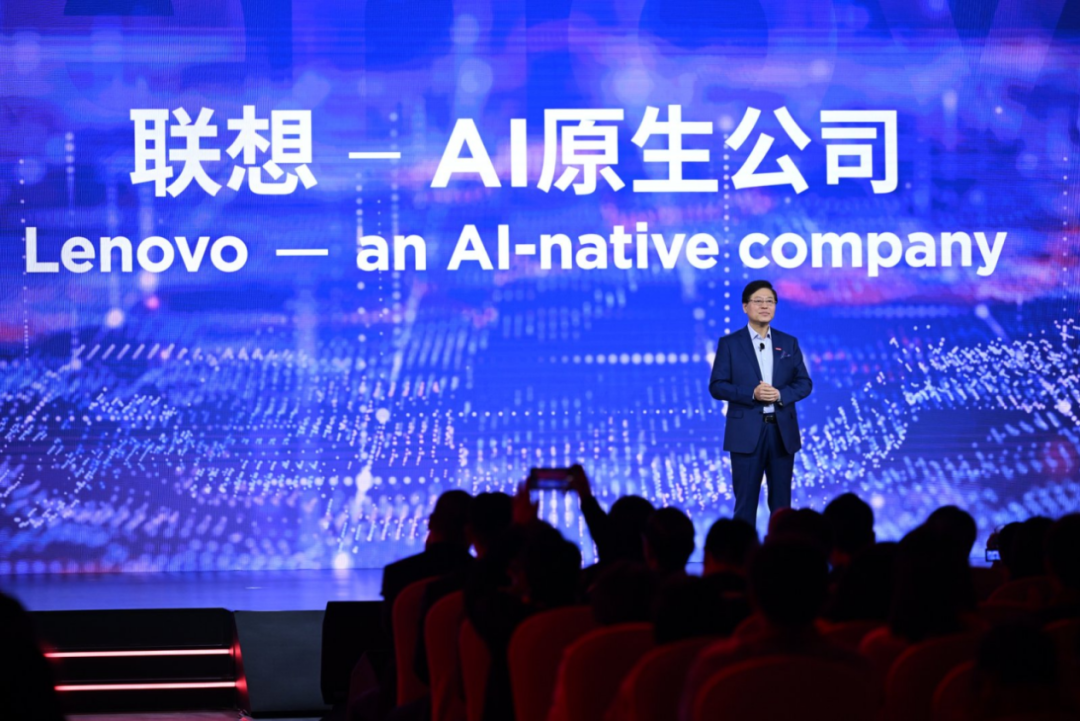
“From this moment onward, Lenovo is committed to becoming an AI-native enterprise,” declared Yang Yuanqing, Chairman and CEO of the Group, at the recent Oath-Taking Rally, charting the course for the Group's next decade. This hardware behemoth, traditionally reliant on scale, distribution channels, and supply chain prowess, seeks a transformative opportunity to redefine its identity.
Beyond the commonalities of this era, this sense of urgency also arises from the evolving market definition of hardware.
With the emergence of intelligent agent frameworks like OpenClaw, user interaction with AI is undergoing a paradigm shift. The focus is no longer solely on screens and interfaces; computing power, energy efficiency, and the ability to seamlessly collaborate between local and cloud environments are becoming paramount.
These capabilities do not align with a specific hardware form but are reshaping the essential features that hardware must possess.
The Mac mini, which has recently seen repeated sell-outs, epitomizes these changes to some extent. Beyond traditional desktop computing, users are increasingly willing to pay for local inference capabilities, edge deployment, and more accessible AI usage methods.
Amidst this transformation, the cyclical PC business continues to provide Lenovo with tangible support. Leveraging this wave, Lenovo buys time for its comprehensive AI transformation and aims to secure an 'AI enterprise' valuation premium, forming the crux of its current strategy.
Seizing the 'Shrimp' Cycle
In 2014, Windows XP reached its end-of-service. The cessation of updates for this operating system compelled enterprises and individual users to upgrade their devices, leading to a surge in demand and rapid depletion of channel inventory.
Software iterations drive the entire hardware industry chain and dictate the rhythm of manufacturers' profit extraction. When the replacement window opens, manufacturers maximize shipments through channels and supply chains; when demand subsides, they manage inventory and pacing to mitigate excessive fluctuations.
History repeats itself through the relay of cycles. Since Microsoft officially ended support for Windows 10 in October of the previous year, Lenovo has maintained a significantly higher shipment volume than the overall market. IDC data reveals that in the first quarter of 2026, the global PC market grew by 4.9% year-on-year, while Lenovo surged by 10.8%, capturing a 24.1% market share.
Beyond the replacement cycle, Lenovo's early completion of a full AI PC product line coverage also contributes to its market leadership.
PCs have undergone numerous form changes in recent years, from ultra-thin to 2-in-1s to gaming laptops, but most still revolve around combinations of display, performance, and portability—essentially internal modifications.
AI has ushered in disruptive changes to hardware beyond the conventional realm. More and more products are being designed around the needs of agents rather than 'human device usage needs,' such as constant online connectivity, local data processing, and edge-cloud collaboration. These products, along with new devices tailored for agent operations, are still exploring their stable forms.
Traditional PC manufacturers like Lenovo can be viewed as 'reformists.' Building on existing product lines like ThinkPad and Yoga, they emphasize NPU performance and diverse AI capabilities integrated through self-developed intelligent agents for unified scheduling.
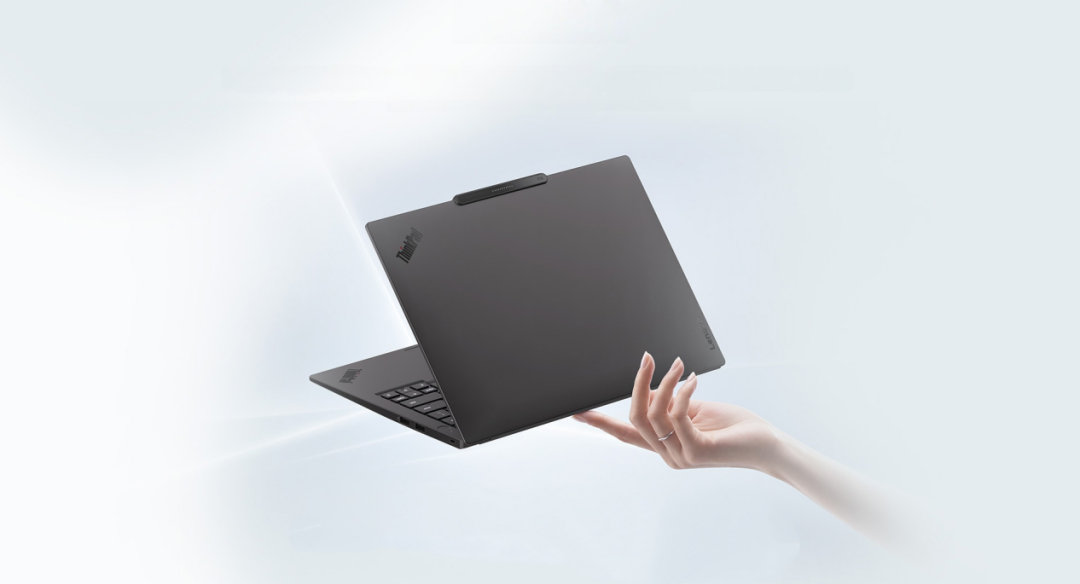
The advantage of this approach lies in maximizing the reuse of existing product lines and mature supply chains. It also preserves the traditional PC desktop interaction experience for users, reducing migration costs and enabling Lenovo to extend its pre-AI era advantages.
In contrast, newcomers following the path of the Mac mini, which completely abandons screens and traditional interfaces, can be considered 'radicals.' They no longer aim to be multifunctional tools under human control but to become exclusive habitats for intelligent agents.
These products come in various forms—some are standalone units connected via HDMI to conventional computer hosts for local AI computing; others are built entirely around agent operations, abandoning interaction functions, and allowing users to interact remotely via interfaces on other devices.
The core logic of these newcomers is that when intelligent agents need to process local data and cloud calls around the clock, screens become a burden on power consumption. Hardware evolution prioritizes computing power, low power consumption, and extreme cost control.
With external boxes, agent hosts, and mini terminals running in parallel, the question of which will become the next-generation personal AI node and which will become a transitional form remains unanswered by the market. As an industry giant, Lenovo must maintain the scale advantage of its IDG (Intelligent Devices Group), safeguard the cash flow of its PC business, which accounts for two-thirds of its revenue, while also securing a foothold for the next generation of hardware forms.
At CES 2026, Lenovo unveiled a plethora of conceptual products, including AI glasses, AI keyboards, and AI workstations, covering almost all possible terminals for hosting agents in the market.
This 'scattergun' approach to layout reflects Lenovo's reluctance to miss any potential entry points. Rather than betting heavily on a single form, Lenovo seems more inclined to await the emergence of a standard answer.
Sequels and New Chapters
Regardless of the diversity of hardware forms, they remain containers for software. If we consider the 2023 launch of AI PC concept machines equipped with personal assistants as a node, Lenovo's exploration of software forms in the AI era began almost concurrently with internet companies.
Three years on, the once-complex generative functions have been 'integrated' into a unified Tianxi AI ecosystem. Official news states that version 4.0 of the multi-terminal intelligent agent Tianxi will be released on May 19, emphasizing autonomous task orchestration, scheduling capabilities, and long-term memory.
Lenovo, now in its 40th year, understands better than anyone that traditional hardware profits are highly contingent on component costs and consumer sentiment. At every new product launch, it reserves ample space for software ecosystems represented by intelligent agents.
This relentless investment easily recalls the competition among traditional PC manufacturers based on the 'cross-device' concept around 2019.
At that time, smart devices surged after mobile phones. Lenovo attempted to break through the underlying barriers between Windows and Android through 'super interconnection,' enabling seamless co-screening and file sharing between mobile phones and PCs.
As we all know, cross-device universal functions were quickly diluted by cloud transmission on the application side, mobile phones, and even native Windows support. With the decline in 5G tariffs, this ecosystem construction based on cross-device connectivity was soon validated as a phased form, internalized into OS as a standard basic capability.
Is Agent Core a sequel to the cross-device competition back then, or is it truly a new chapter opened by Lenovo?
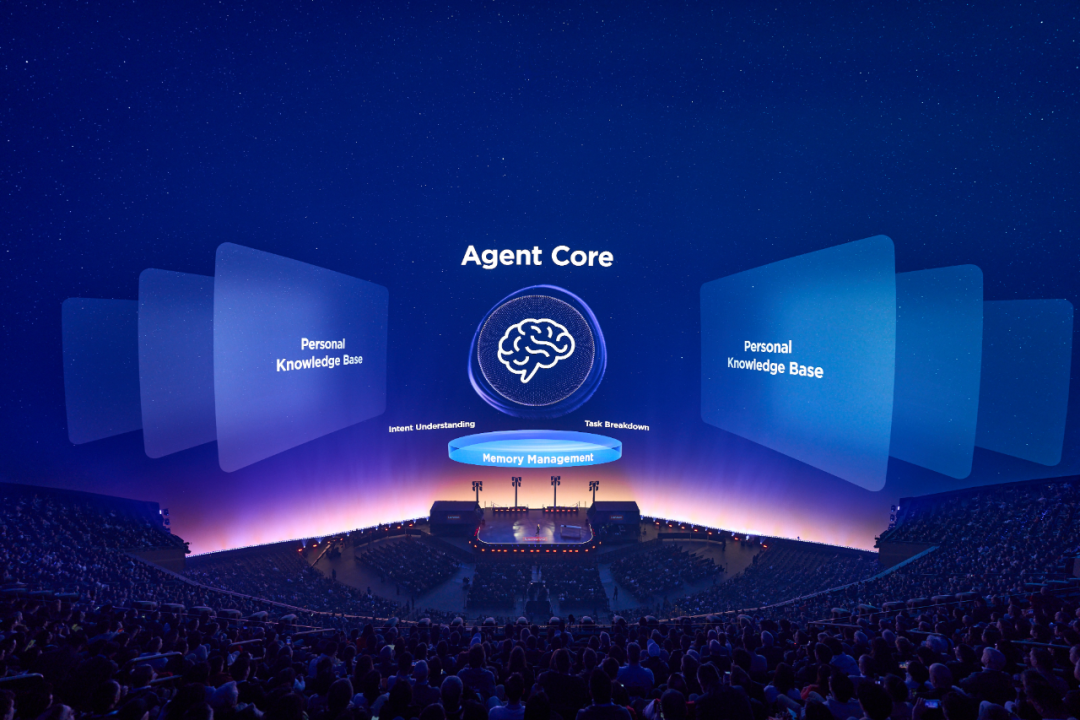
On the surface, cross-device integration is efficiency- and ecosystem-oriented, similar to Lenovo's current multi-terminal intelligent agent core (Agent Core). However, what flowed between devices in the past was specific graphical interface data; now, it is context and tasks. Both may face the limitation of being mere 'movers.'
More importantly, today's intelligent agents, compared to cross-device connectivity, possess the understanding and perception capabilities of a model 'brain.' To put it another way, cross-device collaboration is like 'building roads' for data, scheduling local and cloud models for collaboration, while intelligent agents that orchestrate tasks are 'agents'—one is instruction-driven, the other is intention-driven.
This endows Lenovo with the ability to construct deeper services. Take Skill as an example: within this extensible execution system, Lenovo can pre-install high-quality general capabilities such as creation and system organization, as well as open them up to third-party partners and developers to complement long-tail scenarios.
While cross-device capabilities, as basic functions in the past, lacked the ability to generate subscription revenue, intelligent agents can call model APIs through Skill and charge 'intermediary fees' for consumed tokens.
On the other hand, Lenovo's strength also lies in the physical carrier itself. For example, data desensitization and isolation across endpoints, edges, and clouds, as well as AI's understanding of the user's surrounding environment—hardware manufacturers hold system-level permissions for cameras, microphones, sensors, etc. From this perspective, the 'scattergun' approach to hardware layout is Lenovo searching for a broader experimental field for its software ecosystem.
Lenovo's breakthrough logic is now clear. Using hardware as an entry point, it intercepts user intentions through intelligent agents and ultimately completes a commercial closed loop through service consumption of tokens.
In this context, the market needs to assess whether Lenovo can transform software from a mere附属品 (ancillary item) of hardware shipments into a sustainable revenue source. However, since the effectiveness of intelligent agents still relies on external cloud resources, it may impact the profitability of this business model.
One More Anchor Point
While Lenovo attempts to reshape its IDG through intelligent agents, the other pole of its valuation is sustained by its 'second curve,' primarily composed of SSG (Solution Services Group).
Whether software or solutions, they are all components of the services through which Lenovo seeks to capture AI dividends. For the Group, the significance of the 'service foundation' is straightforward—it does not rely on consumer sentiment for revenue, and its profit margins are not affected by fluctuations in component costs.
As the asset most resembling a software company, SSG has performed impressively in Lenovo's past few fiscal years. Compared to the cyclical IDG, which maintains long-term profit margins in the low single digits, SSG's operating profit margin has consistently hovered around 20%.
In Lenovo's vision, SSG provides enterprise-level AI solutions based on computing power infrastructure, achieving a leap from 'selling hardware' to 'selling services.' However, this significantly growing 'second curve' also faces challenges from its hardware DNA.
When evaluating AI companies, there is a relative emphasis on scalable revenue with marginal costs tending toward zero, such as SaaS subscriptions and token revenue. Currently, a significant portion of SSG's core revenue comes from project-based solution integration, such as hardware maintenance and solution implementation.
This means that the business's revenue is positively correlated with ISG (Infrastructure Solutions Group) and often corresponds to labor-intensive customized consulting. In the eyes of the market, this resembles IBM-style long-tail profits from hardware business rather than an independent AI-driven growth engine.
In the past two years, Lenovo has continuously promoted AI automation in its SSG business to enhance project delivery margins.
On April 17, it released solutions such as Tianxi AI Pro, Token Factory, and Enterprise Lobster Lake, and announced an investment of 1 billion yuan in resources for the new fiscal year to comprehensively upgrade its government and enterprise partner system.
Only when SSG can deliver standardized, high-frequency subscription-based software services from a truly multi-terminal intelligent agent ecosystem can AI relevance enter the market's calculator.
Lenovo is not only racing against the cycle but also against the market's stereotypical definition of an 'AI company.' The outcome will determine whether Lenovo ultimately maintains a vast hardware empire or truly ascends to the coordinate system of the AI era.
-
![]()
Registered Capital Slashed to 372 Million Yuan! Yutong Optical Finalizes Industrial and Commercial Change Registration
-
![]()
Zhuque-3 Successfully Lands, and 'Time Traveler' Secures Another ¥100 Million in Funding: China's Commercial Space Industry Experiences a 'Dynamic August'
-
![]()
Autohome Faces a Shrinking Window of Opportunity
-
![]()
Even a Titan Like Musk Has Faced Setbacks in Fulfilling Promises
-
![]()
AI Office: The End of the Racing Era, Context Becomes the Key to Success
-
![]()
Domestic Vehicle Chassis Revolution ②: The Steering Wheel Remains, But Mechanical Connections in the Steering System Are Decreasing
-
![]()
Exploring MiniMax Design: Can Video Editing Be as Simple as Speaking?
-
![]()
Why Can SenseTime Achieve Profitability While CloudWalk Still Faces Challenges, Despite Both Adopting Large Models?