Who Is Apple’s New Chief, John Ternus?
 04/21 2026
 665
665
The most buzzworthy news in the tech world today is undoubtedly Apple’s official announcement: Tim Cook will step down as CEO, with hardware VP John Ternus taking the helm.
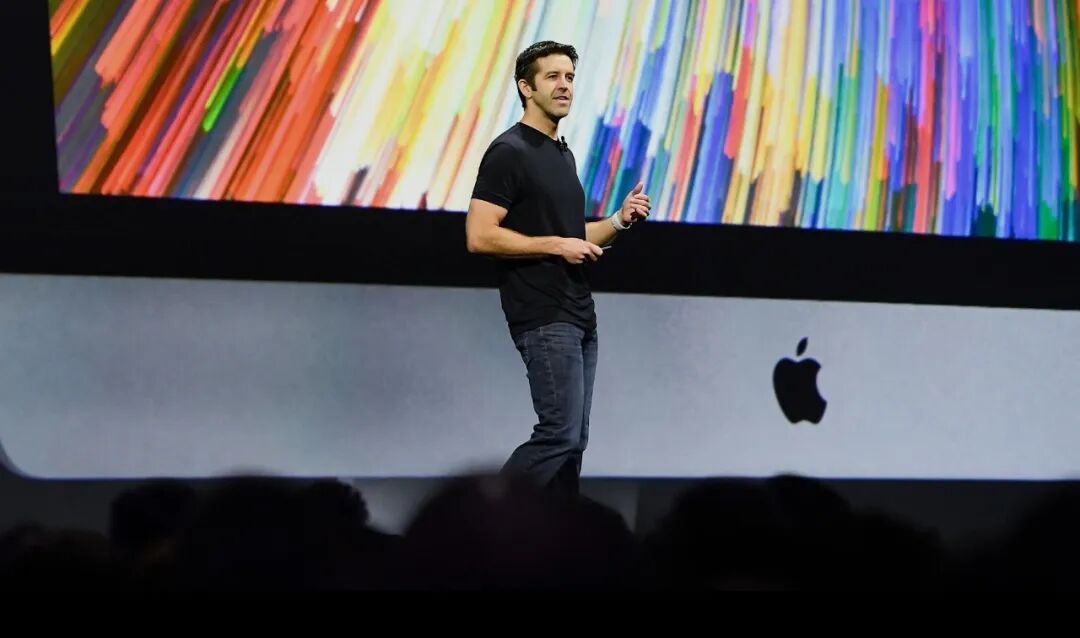
Apple is getting a new CEO, but not many people—including me—are familiar with him. So, I’ve compiled information from various sources to paint a clearer picture of who he is.
Public records show that Ternus has been with Apple for 25 years, overseeing hardware engineering for all key products over the past five years—from iPhones, iPads, Macs, Apple Watches, and AirPods to the Vision Pro. He’s widely regarded as the person who understands Apple’s products best, earning him the internal nickname "Little Jobs."
At first glance, his resume might not seem particularly remarkable. Let’s dive deeper into his background.
Born in 1975, Ternus graduated in mechanical engineering from the University of Pennsylvania.
During his university years, he was a standout member of Penn’s men’s swimming team and an Ivy League-level athlete. Swimming, as a sport, builds immense discipline and resilience—traits that likely influenced his later career trajectory at Apple over two decades.
After graduating in 1997, his first job was as a mechanical engineer at a small firm called Virtual Research Systems, where he worked on VR headsets—yes, the same "metaverse" technology that’s now a hot-button issue.
Apple’s Vision Pro has invested billions but still hasn’t fully cracked the product experience, largely due to the challenges of integrating spatial computing with hardware.
It requires solving complex optical, electronic, structural, and thermal integration issues within a compact form factor—precisely the kind of challenge Ternus later tackled as head of hardware engineering at Apple.
In 2001, leveraging his hardware expertise, Ternus joined Apple’s product design team, with his first project being the Apple Cinema Display.
Back then, Apple wasn’t the tech giant it is today. The company was struggling to stay afloat. The iPod hadn’t yet taken off, the iPhone was still five years away, and Steve Jobs had only just returned three years earlier. Everything was being rebuilt from the ground up.
Within Apple, Ternus steadily climbed the ranks, becoming VP of Hardware Engineering in 2013 and Senior VP in 2021, making him the youngest member of Apple’s executive team.
For over a decade after joining Apple, he remained largely unknown outside the company, with minimal media attention until around 2020, when he began to emerge as a key figure.
Ternus truly cemented his legend during the 2020–2022 transition to Apple’s in-house M chips.
Apple decided to replace Intel processors across its entire Mac lineup with its custom M-series chips, a complete overhaul of the computing architecture.
Software had to be recompiled, ecosystems rebuilt, and accessories re-engineered. Any misstep could have resulted in massive user backlash.
But Ternus led the hardware engineering team to complete the transition for all MacBook Air, MacBook Pro, iMac, and Mac mini models in just two years.
The New York Times praised: "Without Ternus, this migration wouldn’t have been so seamless."
At the March 2026 event, Ternus personally unveiled the new MacBook Neo, solidifying his reputation as the media’s top pick for CEO successor.
By putting an iPhone chip into a computer, he created a highly cost-effective machine that outperformed comparable Windows PCs.
The market response was overwhelmingly positive, with immediate sellouts after launch. Some estimates put annual shipments at 4–5 million units, with production targets set to rise to 10 million.
Internally at Apple, he’s known as "Little Jobs." Colleagues say that during product reviews, if you present a merely "good enough" solution, he’ll grill you with tough questions without holding back.
Those who know him well say: "Ternus doesn’t spare feelings during reviews, but his critiques are always about the work, never the person."
This trait does echo Jobs’ notorious style of pushing engineers to their limits during product reviews.
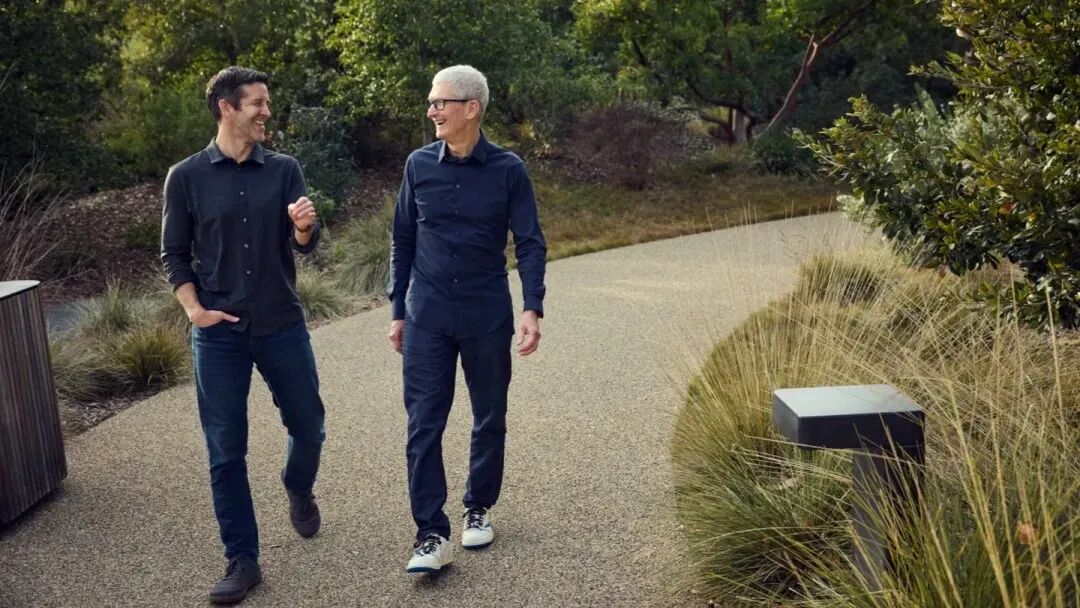
Cook will officially step down on September 1 this year. Compared to the foundation Jobs left for Cook, the one Cook is leaving for Ternus is even stronger.
Under Cook’s 15-year tenure, Apple’s market value soared 24-fold to $4 trillion, with annual revenue surpassing $400 billion.
In his public letter, Cook said: "John Ternus has the mind of an engineer, the soul of an innovator, and the integrity of a leader."
When Cook took over as CEO, he was around 50—similar to Ternus’s current age. Perhaps this is the ideal age for a smooth leadership transition at Apple.
In the AI era, will Ternus continue to lead Apple to new heights, or will it fall behind? Only time will tell.
-
![]()
Registered Capital Slashed to 372 Million Yuan! Yutong Optical Finalizes Industrial and Commercial Change Registration
-
![]()
Zhuque-3 Successfully Lands, and 'Time Traveler' Secures Another ¥100 Million in Funding: China's Commercial Space Industry Experiences a 'Dynamic August'
-
![]()
Autohome Faces a Shrinking Window of Opportunity
-
![]()
Even a Titan Like Musk Has Faced Setbacks in Fulfilling Promises
-
![]()
AI Office: The End of the Racing Era, Context Becomes the Key to Success
-
![]()
Domestic Vehicle Chassis Revolution ②: The Steering Wheel Remains, But Mechanical Connections in the Steering System Are Decreasing
-
![]()
Exploring MiniMax Design: Can Video Editing Be as Simple as Speaking?
-
![]()
Why Can SenseTime Achieve Profitability While CloudWalk Still Faces Challenges, Despite Both Adopting Large Models?