Summary of the Online Voice Recorder Market in Q1 2026: A Touchstone for AI Integration into Hardware, with Initial Signs of Ecosystem-Based Competition Emerging
 05/12 2026
 581
581
The growth logic of the voice recorder market in 2026 underwent a fundamental transformation. The habit of efficient online collaboration on a global scale, cultivated post-pandemic, persisted, making online meetings a norm for professionals. There was an urgent need for tools to convert scattered voice recordings into structured text assets. Relying solely on smartphone recording could no longer meet demands such as summarizing meeting minutes and distinguishing speakers, creating a significant incremental market for AI voice recorders. Previously constrained by the portability upgrades of digital products, the industry now sees hybrid work becoming normalized and large models being implemented as twin engines driving market expansion. The core driver of the market has shifted from hardware to services.
I. Industry Scale Analysis: Average Prices Rise Steadily, Mid-to-High-End Products Become the Market Mainstream
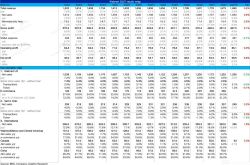
According to AVC online retail monitoring data for voice recorders, in Q1 2026, the online market achieved retail sales of RMB 140 million and retail volume of 394,000 units, with an average price of RMB 361. Monthly performance showed a "V-shaped" trend in Q1, primarily influenced by seasonal factors. In February, the Spring Festival holiday led to logistics shutdowns and cautious consumer spending, causing a natural market decline; in March, demand was released, leading to a concentrated outbreak (outbreak, or surge) in demand. Notably, the average price steadily increased from RMB 334.8 in January to RMB 386.3 in March, reflecting a clear trend of consumption upgrading and an increase in the proportion of mid-to-high-end products.
According to AVC online retail monitoring data for voice recorders, channel performance in Q1 2026 showed significant differentiation. Platform e-commerce ranked first with retail sales of RMB 62.121 million and a 43.7% share, retail volume of 197,000 units and a 50.1% share, and an average price of RMB 315.4, following a mass-market route. Professional e-commerce achieved retail sales of RMB 40.432 million and a 28.5% share, retail volume of 105,000 units and a 26.8% share, and an average price of RMB 383.9, focusing on quality consumption. Content e-commerce channels had retail sales of RMB 39.537 million and a 27.8% share, retail volume of 91,000 units and a 23.2% share, and an average price of RMB 433.4, showing a trend toward high-end content e-commerce.
II. Brand Analysis: DingTalk Leads the Market, with Significant Differences in Channel Distribution
According to AVC online retail monitoring data for voice recorders, brand competition in Q1 2026 showed a concentration at the top. DingTalk ranked first with retail sales of RMB 32.439 million and a 22.83% share; iFLYTEK ranked second with retail sales of RMB 14.975 million and a 10.54% share; PLAUD ranked third with retail sales of RMB 10.376 million and a 7.3% share; Anker ranked fourth with retail sales of RMB 9.177 million and a 6.5% share; Newman ranked fifth with retail sales of RMB 7.9091 million and a 5.6% share. The top 5 brands accounted for over 50% of the market, indicating high market concentration.
There were significant differences in channel distribution among brands. From the perspective of brands' own channel sales structures, DingTalk accounted for 54.5% of sales in the content e-commerce channel, reflecting the brand's successful reach of young consumer groups through live-streaming sales strategies. iFLYTEK accounted for 55.2% in content e-commerce and 44.3% in professional e-commerce, showing a dual-channel distribution characteristic. PLAUD accounted for 59.0% in platform e-commerce, with an average price higher than the market level, positioning itself in the high-end market. Anker accounted for 61.9% in platform e-commerce, clearly targeting the mass market. Newman had a relatively balanced distribution in professional and platform e-commerce, with a robust (stable) channel strategy.
III. Store Analysis: Low Store Concentration, Significant Market Fragmentation
According to AVC online retail monitoring data for voice recorders, among the top 10 stores in Q1 2026, the DingTalk Official Flagship Store ranked first with retail sales of RMB 16.053 million and an 11.3% share; the ANKER Official Flagship Store ranked second with retail sales of RMB 9.166 million and a 6.4% share; the iFLYTEK Flagship Store ranked third with retail sales of RMB 8.521 million and a 6.0% share; the PLAUD Flagship Store ranked fourth with retail sales of RMB 8.4251 million and a 5.9% share; the DingTalk JD.com Self-Operated Zone ranked fifth with retail sales of RMB 6.080 million and a 4.3% share.
According to AVC research, store concentration was low across all channels, with the market showing fragmented characteristics. The top 5 stores in platform e-commerce accounted for 18.9% of the market, with a total of 163 stores, indicating fierce competition. The top 5 stores in professional e-commerce accounted for 13.8% of the market, with a total of 196 stores, showing obvious (obvious) low concentration. The top 5 stores in content e-commerce accounted for 17.3% of the market, with a total of 130 stores, indicating a long-tail distribution. All three channels showed low concentration characteristics, reflecting sufficient market competition and significant development space for emerging stores.
IV. Product Analysis: AI Intelligence Features Dominate, with Initial Signs of Ecosystem-Based Competition Emerging
According to AVC online retail monitoring data for voice recorders, the DingTalk DingTalk A1 Smart Voice Recorder ranked first with an average price of RMB 825; the Anker AI Voice Recorder ranked second with an average price of RMB 835; the Mobvoi TicNote AI Voice Recorder ranked third with an average price of RMB 1,114. According to AVC research, the voice recorder category showed three major development trends: first, AI intelligence accelerated penetration, with real-time transcription, intelligent translation, and meeting minute generation becoming standard features; second, ecosystem-based competition began to emerge, with office platforms like DingTalk and Feishu launching hardware products to form "hardware + software + service" ecosystem closures; third, the trend toward high-end products became clear, with consumers willing to pay for functional innovation and intelligent experiences. Traditional voice recorder brands faced transformation pressure and needed to upgrade toward intelligence and ecosystem integration.
Original article by AVC. Unauthorized reproduction or scraping of this content by any organization or individual for purposes such as training AI large models is prohibited.
-
![]()
The Vala Pro, Based on the Pure Electric Ruisheng Ace M7 and Priced at 268,000 Yuan—Is It a Worthwhile Purchase?
-
![]()
Which Brands Will Be the First to Skip the Next Chengdu Motor Show?
-
![]()
Walmart: Steady Performance Marred by Overvaluation Concerns
-
![]()
Can Domestic Autos Still Hold Their Own Against Joint Venture Brands?
-
![]()
Domestic Cars Priced Above 300,000 Yuan Are Gaining Ground in Chengdu
-
![]()
Sedans Face an Uphill Battle in Sales
-
![]()
BBA Takes a Leap of Faith: No Sales, No Tomorrow
-
![]()
Chengdu Unfaded: BYD and Geely Vie for Championship While the Weak Exit