Trendy Transformation of Smart Products: Business Growth or Smart Waste?
 05/21 2026
 565
565
Author | Yaqin
Disclaimer | The featured image is sourced from the internet. This original article by Jingzhe Research Institute requires permission for reprinting.
Today's smart products seem to all have a "trendy heart."
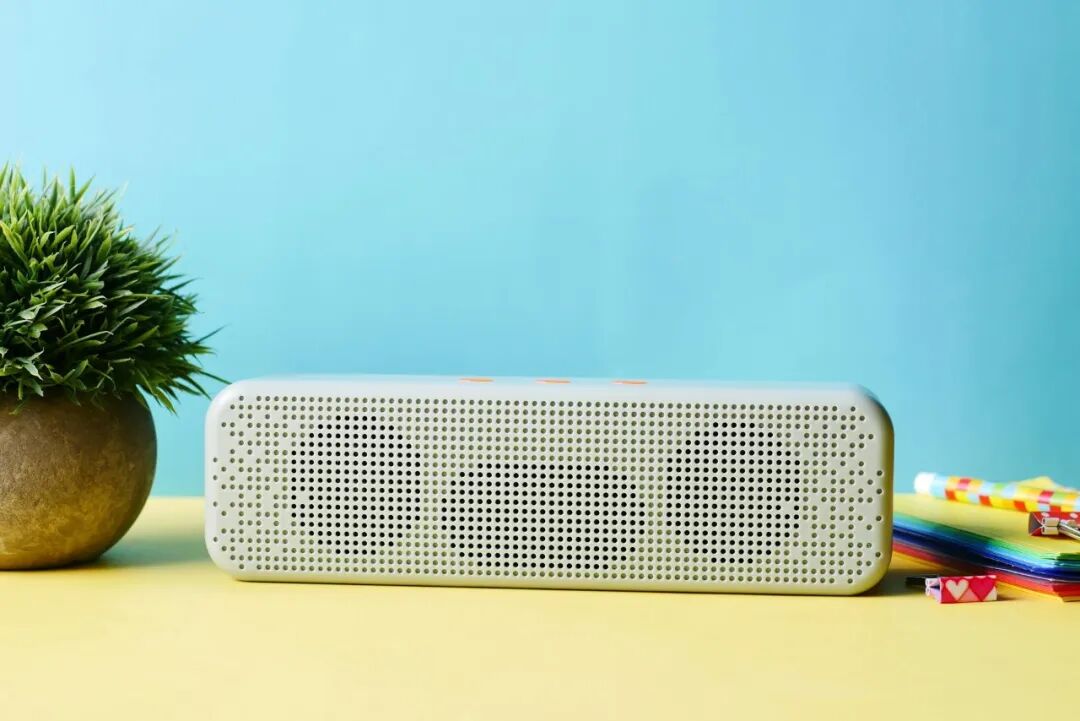
Honor collaborated with Pop Mart to launch a trendy smartphone, Baidu introduced a trendy building block-style smart speaker, and Huawei launched a plush chat companion robot... Even more interestingly, Pop Mart itself began venturing into home appliances, launching a LABUBU refrigerator originally priced at 5,999 yuan per unit, which was resold in the secondary market for 99,000 yuan, a 16-fold markup.
On one hand, smart products are actively seeking breakthroughs in design, emotion, and playability; on the other, trendy brands are attempting to reshape traditional home appliances with toy logic. These two paths, though opposite in direction, point to the same signal: smart products are collectively undergoing a trendy transformation.
But can this path paved by trendy logic truly succeed? Or is it just the beginning of the next round of intense competition?
Smart Products: Hitting a Wall
When smart products first emerged, "smart" itself was the hardest selling point. Smartphones revolutionized the interaction logic of feature phones, smartwatches redefined wrist devices, smart speakers enabled ordinary speakers to understand commands and perform operations, followed by smart door locks, robotic vacuum cleaners, and dishwashers.
Their commonality lies in breaking through original physical boundaries: phones are no longer just for calls, watches are no longer just for telling time, and speakers are no longer just for playing music. Smart technology redefined what a device could do.
As smart products truly entered households, their value focus shifted from expanding capabilities to reducing burdens, meaning greater efficiency, convenience, and peace of mind. However, at some point, this narrative began to lose its effectiveness.
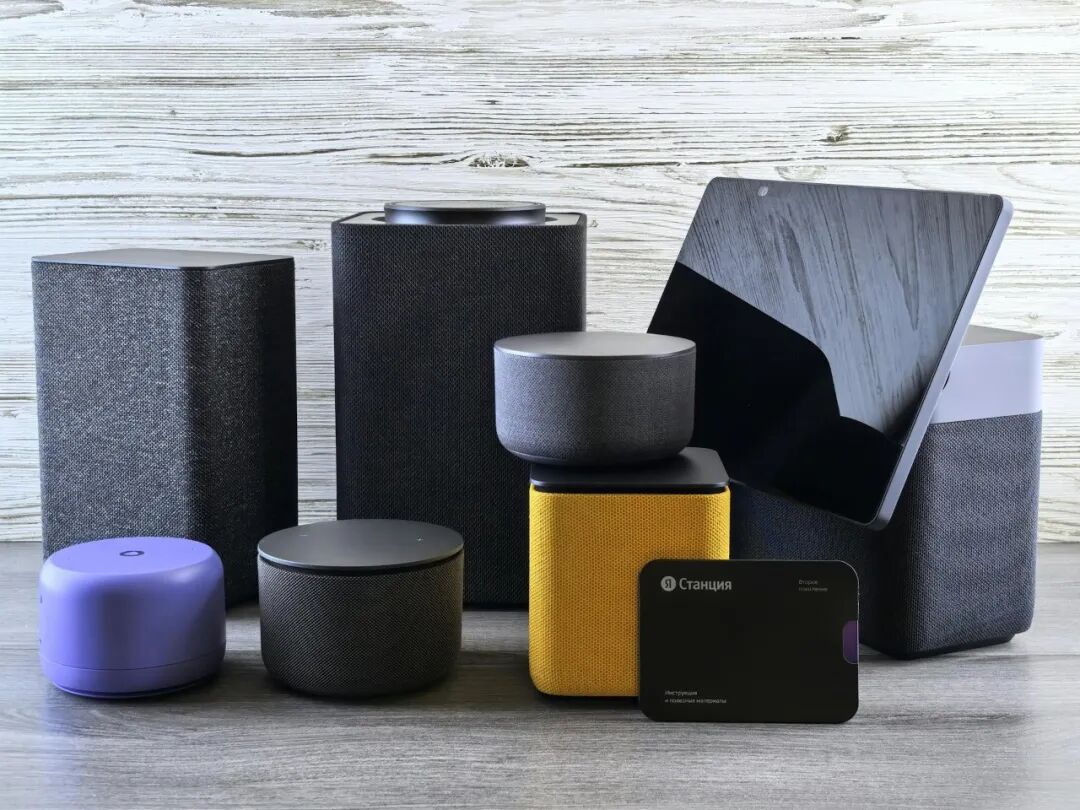
More and more products are becoming intelligentization (smart) for the sake of it, especially home appliances. Blindly stacking voice interaction and APP control is common, yet in practice, lights often fail to turn on, air conditioners don't respond, and any network fluctuation renders the so-called smart features useless, ultimately reverting to manual operation.
For products like dishwashers, APP remote control sounds novel but is rarely useful in practical scenarios—after all, a button press can start washing directly. Remote operation risks program failure if the network is unstable. These seemingly novel interactions fail to substantially enhance the experience and instead increase usage burdens.
Consumers feel this more directly. At the AWE (China Home Appliances and Consumer Electronics Expo) in March this year, some attendees told Jingzhe Research Institute that many smart home appliances are underwhelming. Some argued that a refrigerator's core functions are cooling and capacity, yet certain smart models cram in unnecessary features, driving up prices without adding value. Another attendee felt that many products merely added fixed-command voice dialogue without integrating true AI capabilities, inflating costs with just a few dollars' worth of mechanical components—a case of misplaced priorities.
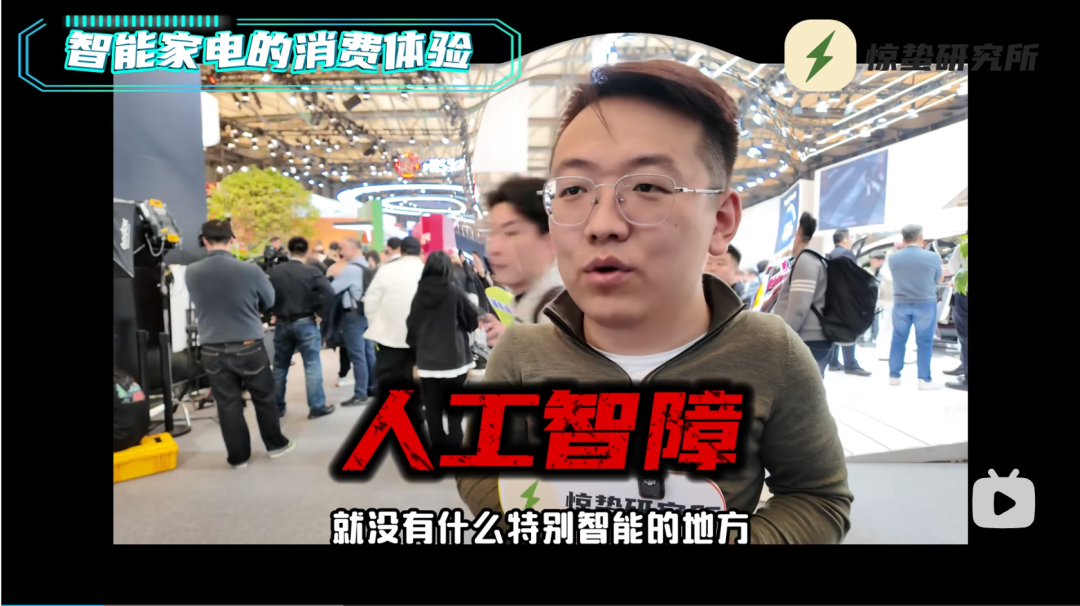
In other words, consumers don't resent smart technology itself but pseudo-smart products that stack features without solving real problems.
An undeniable fact is that many smart products have fallen into a growth slump. Take smart speakers: according to a Loctek Technology report, China's smart speaker market sold 15.7 million units in 2024, a 25.6% year-on-year decline—the fourth consecutive year of decline. In Q4 last year, Loctek predicted 2025 sales at around 14.2 million units, a narrower but still significant 9.6% drop.
After the generative AI boom, manufacturers quickly pivoted to "AI features" as a new differentiation path, introducing concepts like AI companion robots, AI glasses, and AI phones. However, history repeatedly shows that every technological wave eventually leads to technological democratization. When everyone has AI, either technological iteration has hit a bottleneck or implementation has become threshold (threshold)-free.
Currently, smart products face sustained challenges in form innovation due to market pressure. Since functional innovation in manufacturing relies heavily on overall supply chain development, manufacturers struggle to differentiate on functionality alone in the short term. Yet competition persists, forcing firms to find new narratives beyond features. The rise of the trendy economy offers a fresh approach—users are willing to pay a premium for emotional value. If functional competition has stalled, leveraging emotional value becomes a viable alternative.
Thus, tech giants are taking action: Baidu launched a trendy building block-style smart speaker, Honor collaborated with Pop Mart on a MOLLY limited-edition phone, and Huawei introduced a plush AI chat robot named "Smart Hanhan." Smart products are shifting toward design, emotion, and playability, attempting to reignite consumer desire through trendy logic.
Trendy Transformation: The Lowest-Threshold Differentiated Competition
Undoubtedly, trendy transformation is a "shortcut"—possibly the easiest and fastest-acting differentiation tactic at this stage.
Firms need not alter core functions or develop proprietary technologies; a redesigned exterior or IP collaboration suffices to create a "new product." In an era of saturated competition, this approach is nearly irresistible.
A recent example is Gree. Once mocked online for its "rose-themed air conditioner" as "tacky," this veteran home appliance maker has shifted gears. According to public information, Gree will soon launch several cute-themed air conditioners: hanger models shaped like cats and clouds; cabinet models resembling rabbits (with interchangeable heads) and cacti.
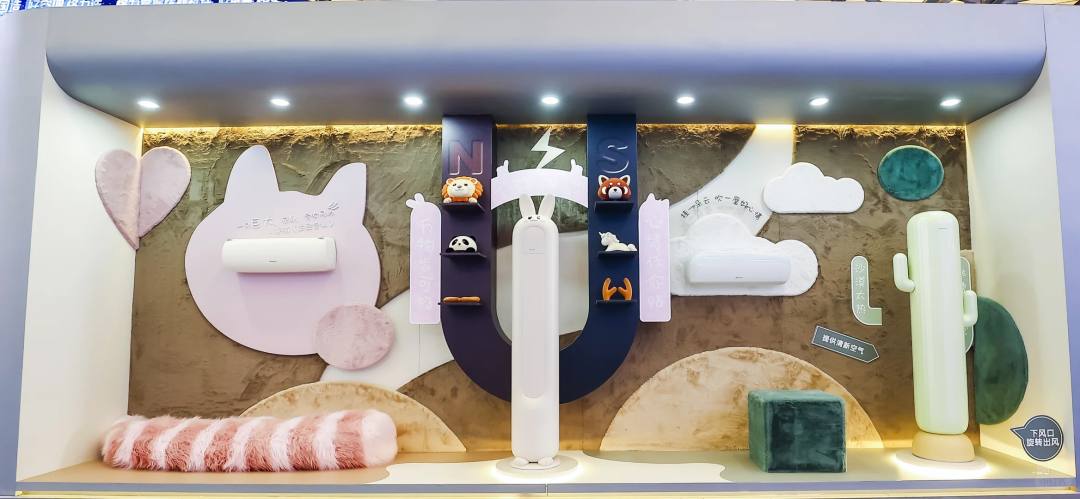
*Image source: Gree Home Air Conditioners' Xiaohongshu account
Though these products haven't officially launched, young people on social media are already praising them. Some netizens say they now understand Gree: it designs roses for mothers' generation and cat-themed ACs for youth. Others directly request panda-headed rabbit cabinet models. Some voices, from a home decoration perspective, argue the market needs more decorative appliances.
From universal mockery to youth acceptance, the power of emotional value is evident. Thus, the core commercial value of smart products' trendy transformation may lie in blurring the line between tools and toys, creating previously nonexistent intermediate categories.
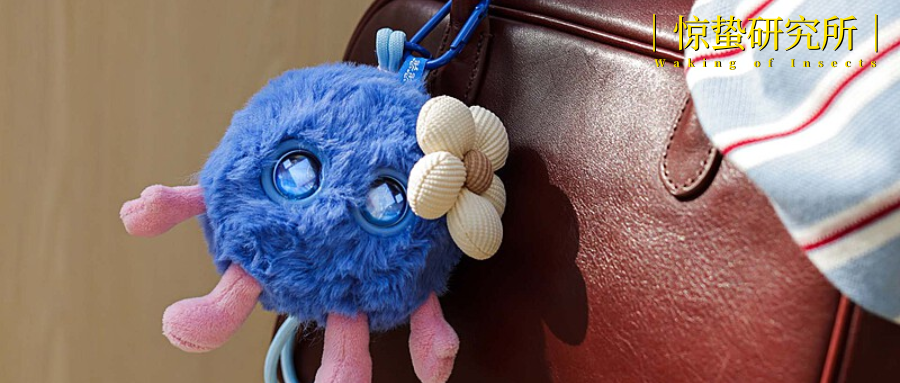
A case in point: Huawei's 399-yuan plush chat robot, "Smart Hanhan," sold over 100,000 units in its first pre-sale week and commands a 25%-40% premium on secondary platforms. Users' initial motivation clearly extends beyond mere functionality.
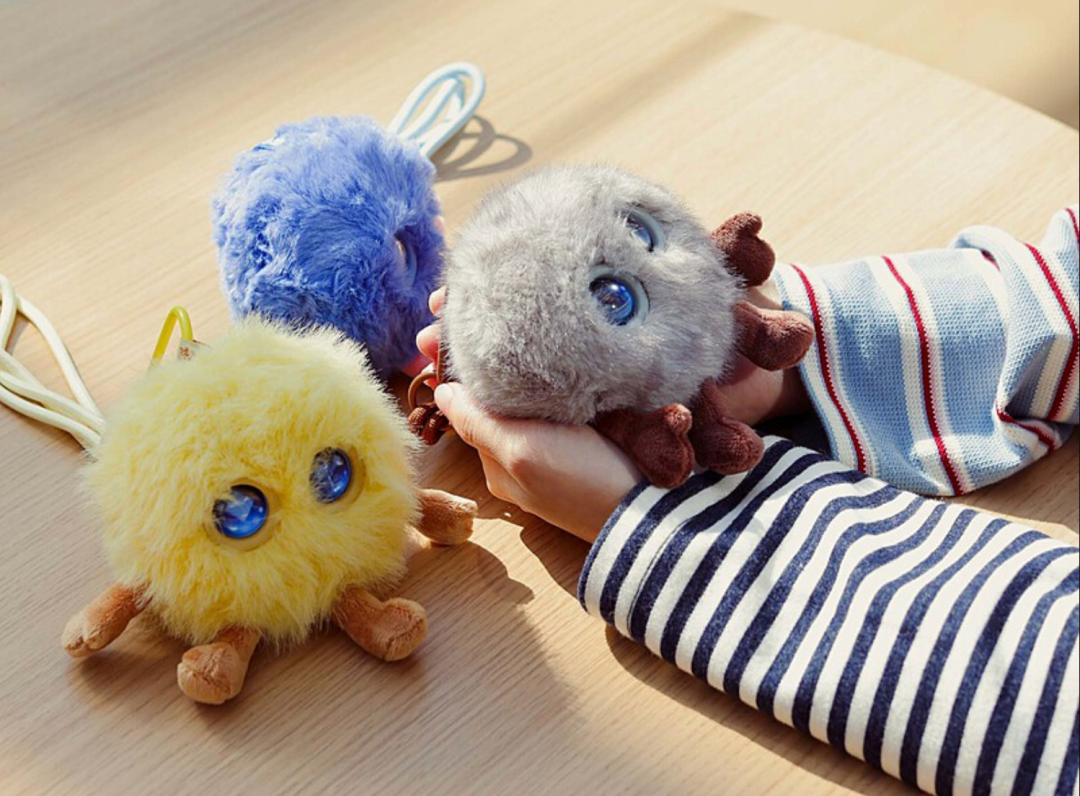
*Image source: Huawei Mall
Trendy transformation overhauls smart products almost entirely. Aesthetically, it introduces building blocks, plush, and IP collaborations to serve the logic of being visually appealing, fun, and shareable. Interaction expands from one-way command execution to multimodal feedback (touch, expressions, lighting, vibration), constructing anthropomorphic response mechanisms. Products cease to be pure tools; they inspire conversations, play, and companionship.
Of course, trendy transformation isn't a panacea. It lowers the bar for differentiation but risks fostering dependency on appearance over experience.
Take the booming AI toy sector: products boast increasingly attractive designs and tactile qualities, yet according to Hangzhou Daily's *Daily Business News*, some AI companion toys see 30% seven-day no-reason return rates on e-commerce platforms. The primary issue lies in current conversational AI's shortcomings in response latency, interaction coherence, and network stability, making it hard to sustain a true playmate role.
Appearance and emotion can drive purchases, but unsustainable experiences ultimately fail to retain users. This was pre-figured by smart speakers: many now serve only as weather checkers and alarms, while users endure intrusive ads. Such products are novel initially but lack long-term appeal, eventually becoming smart decorations.
Trendy appeal persists because its emotional value still resonates with many. But emotional dividends will eventually expire.
What Comes After Emotional Dividends?
When all smart products become visually appealing, cute, and IP-branded, the "trendy transformation" path rapidly homogenizes.
Today, a plush AI chat robot may go viral, but similar models will soon flood the market. If air conditioners can resemble cats, dog and bear versions will follow. Thus, the trendy dividend (dividend) period may be even shorter than technological dividend due to its ease of replication.
Beyond homogenization, a deeper issue is the inherent conflict between trendy appeal and functionality. Trendy products encourage impulse buys, appearance-driven upgrades, and weakened functionality, while smart products prioritize usability and durability. Combining these logics in one product often leads to friction.
However, this conflict isn't unsolvable. Some products now integrate IPs beyond aesthetics, making them part of the functionality. Nintendo's Alarmo, launched in October 2024, exemplifies this.
Priced at $99.99 and initially exclusive to NSO members, this smart alarm incorporates motion controls, immersive game soundscapes, and sleep monitoring. It features over 30 "wake-up scenes" from popular Switch games like *Super Mario* and *The Legend of Zelda*, allowing users to wake to familiar game sounds. For instance, *Zelda*'s Link being chased by Guardians can serve as an alarm tone. In March 2025, Nintendo added retro *Super Mario* themes for existing users, followed by *Kirby and the Forgotten Land* themes in October. These updates continuously refresh the experience.
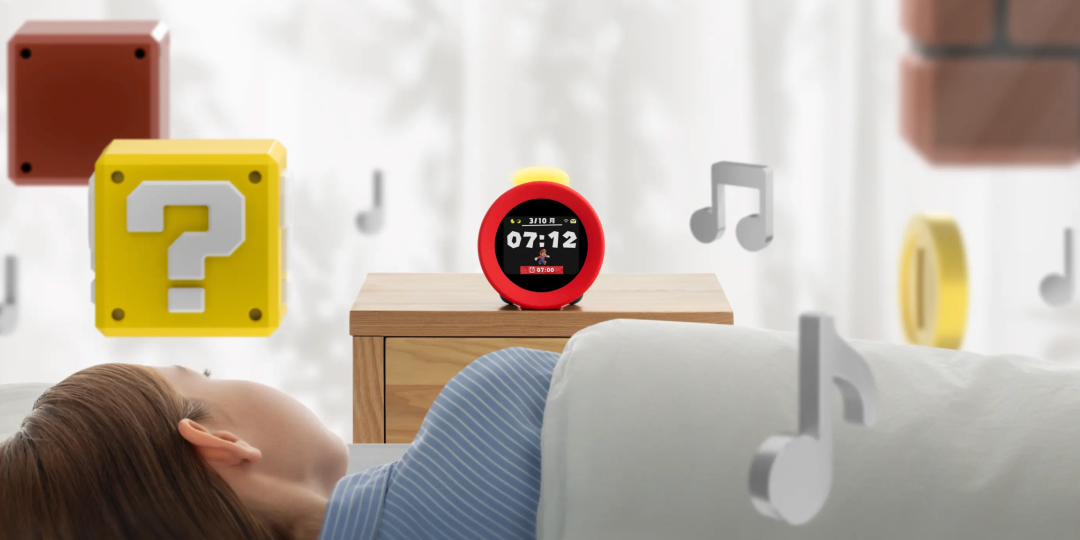
*Image source: Nintendo official website
Creative product concepts and anticipated experiences made the Alarmo sell out instantly, forcing Nintendo to switch to a lottery system. In China, secondary market prices soared to 2,000-2,500 yuan (3-4x the original price), with some paying over 10,000 yuan.
Its uniqueness lies in design shift: Mario, Link, and other IPs aren't just cartoon shells but deeply integrate into the core "wake-up" function via soundscapes and themes. Here, IPs are functional, not decorative.
Thus, evaluating a trendy smart product's success requires looking beyond initial stunning (amazement). The real test is whether users discover new playing method (ways to play) and experiences half a year (half a year), a year (a year), or two years (two years) later, with sustained experience optimization. Even stripping away trendy elements, does it remain a competent product? If not, its lifespan will be short.
This criterion also applies to Pop Mart's home appliance venture. Short-term "IP + branding" can boost sales, but long-term repurchases depend on usability. Making trendy transformation even more uncertain is the possibility that the trendy economy itself could cool abruptly.

*Image source: Pop Mart official website
In late March, Pop Mart released its "strongest annual report ever"—2025 revenue hit 37.12 billion yuan, up 184.7% YoY, with net profit at 13.08 billion yuan, up 284.5%. Yet its stock fell over 35% in five trading days post-announcement. The decline may signal that capital markets are reevaluating the sustainability of the trendy economy. Especially for revenue models relying on constant IP refreshes, once IP heat (popularity) fades without successors, growth ceilings become inevitable.
Consumer demands are always shifting. Pure emotional dividends will fade, leaving the question: What will retain users then?
Trendy transformation is redefining smart products' value, but its endpoint won't be trendy toys. It may evolve into a new category that solves real problems while providing sustained emotional value.
-
![]()
"Tech Ferrari" Xiangjie RX: Yu Chengdong’s Glowing Review Sparks Wild Netizen Speculation: Is It the YU7?
-
![]()
Chery's 'Audi Suit Gangster' Makes Waves with Unbeatable Pricing. Netizens React: 'Is This the Aorui A6L?'
-
![]()
AITO Takes a Bold Leap, Forms Joint Venture with BMW and Mercedes-Benz
-
![]()
How Does the Cloud Data Engine Transform Physical Labor into Technical Work for Autonomous Driving Annotators?
-
![]()
Historic Strongest Mercedes-Benz GLE L Faces Intense Competition from Domestic 9 Series
-
![]()
Jeff Dean's First Entrepreneurial Venture After Leaving Google: Why Launch an AI Company 'Not Aiming to Make Money' at This Juncture?
-
![]()
Caught in the Traffic 'Web'
-
![]()
Alibaba's AI Offensive: Over Half of Investment Allocated, Time to Reap Returns