Lu Weibing Was Right—The Smartphone Industry Faces Its Most Challenging Decade
 07/06 2026
 459
459
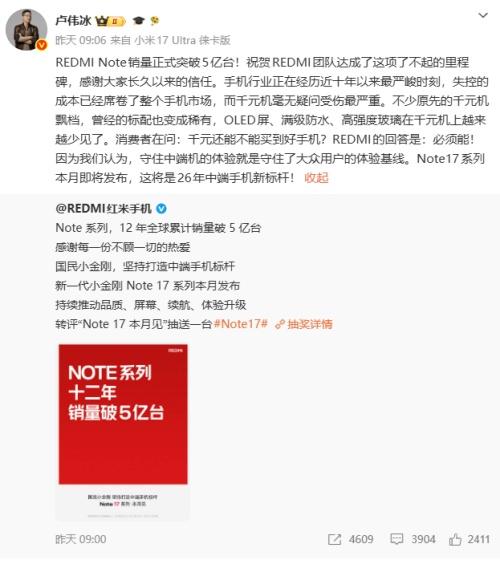
Recently, Xiaomi Partner Lu Weibing penned an article analyzing the escalating pressures within the smartphone industry. He asserted that the sector is enduring its most critical juncture in a decade, with spiraling costs engulfing the entire market, and budget smartphones bearing the brunt. "Features once considered standard in budget smartphones, such as OLED displays, top-tier water resistance, and high-strength glass, are becoming increasingly difficult to sustain," he observed.
His insights accurately capture the structural crisis currently gripping the smartphone industry. This is not mere marketing spin but a systemic transformation of traditional smartphone profit models, triggered by a supply chain upheaval stemming from the expansion of AI computing power.
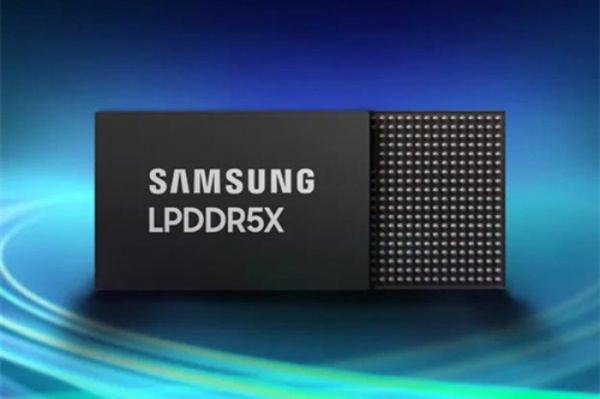
It is widely acknowledged that the root cause of the current smartphone cost crisis lies in the explosive growth of the AI sector, which has induced a 'siphon effect' on global supply chains. Major memory chip manufacturers, including Samsung, SK Hynix, and Micron, are redirecting their wafer and flash memory production capacity towards high-bandwidth memory (HBM) and server DRAM in pursuit of higher margins.
This shift has directly constrained the supply of flash memory for consumer electronics like smartphones, causing DRAM and NAND memory costs to soar. Lu Weibing predicts that this prolonged memory price surge will persist until the end of 2027 or even 2028. Consequently, the share of memory semiconductors in the overall cost structure of smartphones has surged from the previous 10%-15% to over 20%. For profit-marginal budget smartphones, this proportion even nears 30% to 40%.
This disruptive cost restructuring has trapped budget smartphones in a negative gross margin trap, completely dismantling their profit models. Maintaining current prices would result in losses on every unit sold, while raising prices would alienate price-sensitive mass-market consumers. As a result, numerous budget smartphones have been compelled to either 'drift upward' in price or covertly downgrade hardware specifications. Features once deemed standard, such as OLED displays, top-tier water resistance, and high-strength protective glass, are gradually becoming rare.
In reality, the cost crisis extends beyond memory; price hikes across screens, advanced-node chips, batteries, protective glass, and waterproof components are even more alarming. This has not only hit budget smartphones the hardest but is also accelerating market polarization: small and medium-sized brands (such as Meizu) lacking significant supply chain bargaining power will be forced to reduce their budget smartphone offerings or even exit the market, with market share further consolidating among leading brands with full-stack self-research capabilities and massive shipment volumes.
Simultaneously, the industry's competitive focus has shifted from past hardware specification arms races to high-value-added capabilities like on-device AI and cross-device ecosystems, with low-end price wars gradually receding from the mainstream market. In essence, a major shakeout in the smartphone industry has arrived, characterized by a structural shift from volume-driven to quality-driven differentiation. To navigate this crisis, leading manufacturers like Xiaomi are leveraging their massive smartphone procurement volumes (scale advantages) and profit-sharing from high-end smartphone and automotive businesses (premiumization strategy) to build resilience against cost shocks.
Lu Weibing's decision to speak out at this juncture serves as both a cautionary tale of industry downturn and a promotional move for the upcoming REDMI Note 17 series, set to launch this month. By upholding mid-range smartphone experience benchmarks, he aims to solidify market share and demonstrate the brand's ability to sustain complete configurations amid widespread industry downscaling.
For consumers, the era of low prices and high specifications has drawn to a close, and the strategy of waiting for price drops while holding cash is no longer viable. Especially for budget smartphones, the cost-effectiveness (cost-performance) feast of flagship features trickling down is coming to an end, with the threshold for fully balanced smartphones rising above 2,000 yuan, compelling users to increase their replacement budgets.
Overall, Lu Weibing's remarks shed light on the growing pains of the smartphone industry's transformation in the AI era, with objective assessments that resonate with current supply chain realities. This marks the smartphone market's formal departure from the old era of relying solely on low prices and high volumes, ushering in a new phase of structural differentiation centered on supply chain control and ecosystem value.
-
Alibaba’s Earnings Soar with Triple Catalysts: Full-Stack AI Hits Maturity, Capital Efficiency Drives Sustainable Growth
-
![]()
Raking in Big Profits Overseas! Chery’s Overseas Revenue Makes Up 70% in H1, with Gross Margin Climbing to 16.1%
-
![]()
Alibaba’s New Fiscal Quarter: 45% Revenue Surge in Alibaba Cloud, Enhanced Profitability in AI Cloud, but Widening Losses in the Application Layer
-
![]()
The AI Version of 'PayPal Mafia' Has Arrived: 20 AI Startups Raise Over $4.6 Billion in Funding
-
![]()
Wang Jian's Vision: Paving a Pathway for Alibaba Through AI
-
![]()
Hyundai Motor Workers Strike Today, Fearing Job Losses to Robots
-
![]()
Embracing 'Light': O-film Unveils Its 'Illuminating the Future' Strategy
-
![]()
SenseTime’s SenseNova U1.5 Lite Goes Open Source: Ushering in a New Era of Predictable AI Image Generation