Shenzhen Local Derby Unfolds: DJI vs. Insta360 - Product Convergence, Divergent DNA
 07/07 2026
 631
631
These two imaging leaders based in Shenzhen essentially represent a long-term comparative experiment of two domestic hard-tech entrepreneurship routes.
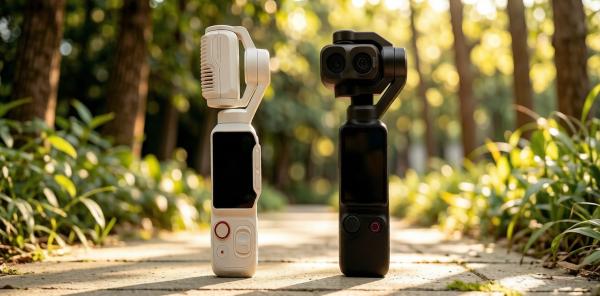
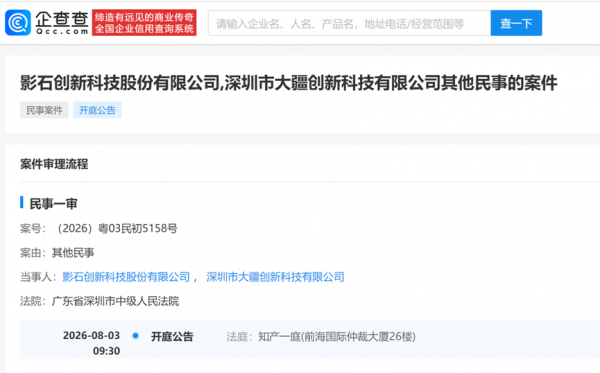
Recently, patent infringement lawsuits filed by DJI against Insta360 in multiple Chinese courts are set to commence trials soon. In these lawsuits, DJI accuses Insta360 of infringing on several of its invention patents held for years, covering core technologies such as handheld gimbals and their control methods, shooting methods and storage media based on handheld gimbals, detachable control devices, gimbal devices, and their control schemes.
DJI and Insta360, both deeply rooted in Shenzhen, stand at a crossroads of Stock game ( inventory competition, referring to competition within an existing market) in the smart imaging sector.
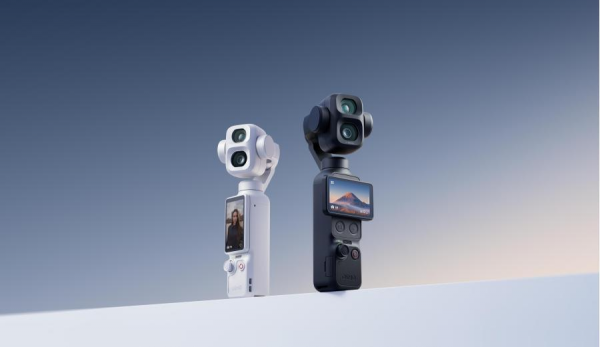
A few days ago, DJI officially launched the Osmo Pocket 4P, a dual-primary-camera pocket camera, while Insta360 had recently released its first dual-camera gimbal camera, the Luna Ultra. The sequential launches by these two giants have created a sense of urgency.
The competition extends beyond products. Over the past year or two, both companies have engaged in a comprehensive battle over pricing, talent, and market share. Recent patent litigation has further intensified their commercial rivalry. However, LuJiu Business Review observes that their product lines—handheld gimbals, action cameras, and consumer drones—are increasingly overlapping, with similar specifications, pricing, and target demographics.
Frankly speaking, DJI gained prominence earlier in the industry and, with its brand value—including holding about 70% of the global drone market—was once seen as a symbol of Shenzhen's speed and Chinese innovation. In contrast, Insta360 is a later entrant. Can the newcomer catch up? At present, Insta360 still lags behind DJI by a significant margin in terms of revenue scale, consumer drones, and gimbal cameras.
Their differing scales indicate an asymmetric competition between Insta360 and DJI. While the outside world has largely focused on their product rivalry and public controversies, the reality is that hardware products can be benchmarked against each other, supply chain components can be shared, and marketing strategies can be replicated. However, the underlying DNA of these two companies—shaped by their founders' backgrounds, organizational structures, and cultural cores—cannot be fully duplicated.
DJI states on its official website, "A better self stems from a unique culture." Looking ahead, short-term victories will be determined by factors such as products and pricing. However, over a decade or more, the true defining factor of the industry landscape may well be the irreplaceable scarcity of each company's corporate culture.
Thus, on the surface, the competition between DJI and Insta360 appears to be a rivalry, but it actually offers valuable insights for future competitions in the hardware industry.
Zhu Ping, who has worked in the smart hardware sector, told LuJiu Business Review that in the past year or two, a notable phenomenon has emerged in the smart hardware field: many founders of hardware companies have increasingly stepped into the public eye. He emphasized that this might signal that competition in the sector is reaching a critical point, where converging technological routes lead to growing homogenization, and hardware differences are continuously narrowed through product iterations.
Over the past decade, except for the smartphone industry, most domestic hardware entrepreneurs have generally maintained a low profile. For example, DJI's Frank Wang rarely gave public interviews, Insta360's Liu Jingkang focused on product development in the early stages and seldom participated in industry forums, and founders of hardware companies like Roborock and XGIMI were also little known to the public.
However, in the past year or two, there has been a partial reversal in industry trends. Notably, Insta360's founder has become a regular voice on social media, while DJI's Frank Wang broke his decade-long silence to give an in-depth interview.
From an industry perspective, the frequent public statements by founders are probably not merely for brand promotion. Some view it as a comprehensive capital narrative: some need to demonstrate technological barriers to the capital market, convey organizational value to industry talent, or communicate product values to consumers. Further analysis suggests that certain companies may, to some extent, rely on the personal IP of their founders to build brand momentum. However, for other companies, their brand momentum no longer depends solely on the continuous exposure of their founders.
Conversely, the shift from staying out of the limelight to entering a new phase of "expanding product categories and invading competitors' territories" also indicates that relying solely on products will make it increasingly difficult to achieve a decisive edge in the future.
Looking back at the development paths of DJI and Insta360, their early market segments were almost entirely different, with no direct competition. DJI initially focused on underlying flight control technology and established industry dominance with professional aerial drones. It then applied gimbal, image transmission, and stabilization technologies to the handheld imaging sector. The Osmo Pocket series has sold over ten million units, solidifying DJI's position in handheld gimbals, while its drones maintain a firm grip on the global top spot.
Insta360 entered the market by targeting the niche outdoor segment with panoramic cameras and has since captured over 60% of the global panoramic camera market, becoming the undisputed leader in this niche segment (niche segment). At that time, their business boundaries were clear: DJI focused on aerial imaging, while Insta360 specialized in panoramic consumer products, with non-overlapping market spaces and a Maintaining a misaligned development pattern for many years (multi-year pattern of differentiated development).
Since 2025, both companies have simultaneously embarked on cross-border expansions, completely dissolving market barriers.
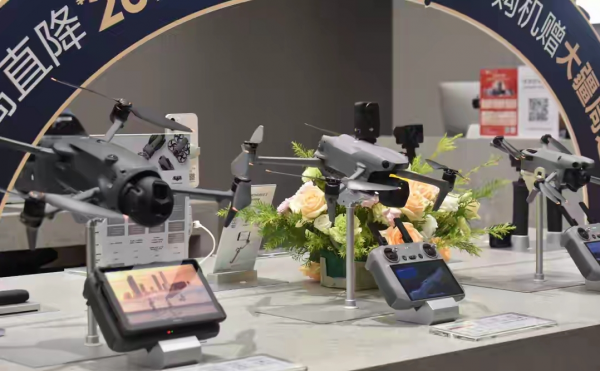
Insta360 released the Yingling A1 panoramic drone, directly challenging DJI's dominance in drones. DJI launched the Osmo 360 panoramic camera, encroaching on Insta360's core market. Subsequently, various competitive incidents occurred frequently, culminating in recent patent lawsuits. From the current competition, DJI still holds the lead. For example, its revenue is several times higher than Insta360's, and its over 700 domestic specialty stores also far outnumber Insta360's.
Furthermore, the development patterns of the consumer electronics industry indicate that mature sectors inevitably undergo a period of technological convergence. As underlying components such as chips, sensors, and motors become highly standardized at the supply chain level, the gaps in hardware R&D among companies continue to narrow. Relying solely on component upgrades and parameter iterations cannot establish long-term barriers.
The decade-long intensification of competition in the smartphone industry serves as a cautionary tale, where hardware specifications converged, and differences ultimately arose from system ecosystems and corporate management. The smart imaging sector is likely to follow a similar path, with imaging and motor control technologies becoming standardized, and product homogenization being an inevitable result of industry maturity.
Of course, this does not mean that DJI and Insta360 lack product differentiation or core technologies that set them apart from competitors. For example, DJI's gimbal stabilization and algorithms possess certain barriers, while Insta360 emphasizes that its products are not just another "Pocket" but are defined by AI-driven concepts centered around photographers.
However, while hardware products can indeed be replicated in the short term through supply chains and talent poaching, the underlying organizational logic that supports sustained innovation cannot be simply copied. Full product benchmarking is only the surface layer of this competition; DNA plays a more significant role.
Typically, the founder's background can influence a company's underlying path to some extent, with organizational models aligning with their respective growth logics and cultural cores forming distinct developmental advantages. Neither gene is absolutely superior or inferior, but they reveal their unique characteristics when they clash head-on.
Frank Wang and Liu Jingkang, with an 11-year age gap, represent two generations of entrepreneurs whose differing upbringings have shaped the entirely contrasting developmental paths of their companies.
Frank Wang is a quintessential hardcore engineer who specialized in automatic control and flight control algorithms during his studies and has remained committed to foundational innovation throughout his entrepreneurial journey. "The world is too stupid—stupid beyond belief," Wang remarked in a 2016 interview with China Entrepreneur, reflecting a sense of invincibility.
In a recent interview with LatePost, Wang admitted that management complexity far exceeds hardware R&D. After undergoing business line restructuring and reforms in decision-making and financial processes, he believes his current management score has risen from 30 to 65, with a goal of surpassing 70 to achieve self-driven, virtuous cycles.
Personality-wise, Wang is relatively introverted and restrained, rarely engaging in public marketing. He consistently allocates resources to tackling foundational technological challenges. As of late 2025, DJI has accumulated over 38,000 authorized patents and invests 15% of its annual revenue in R&D—a proportion comparable to tech giant Huawei. By independently developing core technologies in flight control, image transmission, and gimbals, DJI has built an insurmountable technological moat.
It is evident that Wang embodies a relentless pursuit of technology and innovation, a commendable trait at the spiritual level. This founder's characteristic has trickled down to shape a distinct organizational development logic.
For example, DJI's 2027 campus recruitment features notable changes. On one hand, chip-related positions have been elevated to an independent category, reflecting the company's sustained investment in foundational technological capabilities. On the other hand, algorithm positions have been further subdivided into multiple specialized fields, indicating that the company's competitive arena is shifting from isolated breakthroughs to systemic capabilities. These recruitment trends demonstrate Wang's unwavering commitment to technological precision and innovation.
Regarding his competitor, Wang once likened Liu Jingkang to "Red Boy," describing him as youthful, daring, and agile—a stark contrast to Wang's own steady, foundational approach.
LuJiu Business Review observes that Liu Jingkang, a post-90s founder, brings an internet product mindset to entrepreneurship. He starts by deeply understanding user scenarios and excels at identifying differentiated experiences for mass-market shooting pain points. For instance, Insta360 broke through early on with features like dual-lens stitching, panoramic stabilization, and lightweight panoramic designs, precisely addressing the needs of outdoor enthusiasts and short-video creators.
Liu's management style is outgoing and agile. He openly shares his company's growth strategies on social media far more frequently than Wang and often creates innovative incentive mechanisms. For example, he once scattered stacks of 100-yuan bills from a height, with employees scrambling to catch them, and at annual events, he has high-profile giveaways of houses and cars.

His core management principles seem to revolve around user demand, team empowerment, and rapid trial-and-error. He excels at leveraging lightweight innovations to capture incremental growth in niche markets. However, Liu's management style is not static. Sources indicate that during the development of Flow in earlier years, he personally oversaw even minor details like transparent design elements, text colors, and layouts. Nowadays, he focuses more on setting directions and providing opportunities.
In terms of results, Insta360's full-year revenue in 2025 reached 9.741 billion yuan, with first-quarter growth still exceeding 80% this year. However, compared to DJI, Insta360 has faced significant public controversies, some of which have been negative.
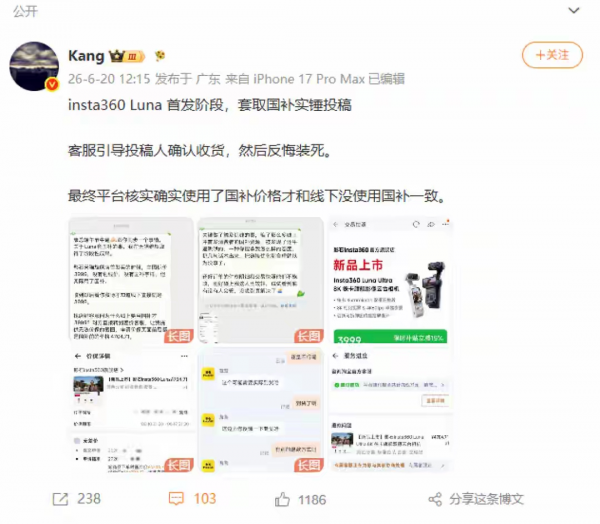
For instance, within ten days of the Luna Ultra's release, the product became embroiled in a "scamming national subsidies" controversy, as its listed price of 3,999 yuan was only available after qualifying for government subsidies. Founder Liu Jingkang's remark about "subsidizing domestic consumers" sparked dissatisfaction among some buyers, highlighting potential compliance and risk control deficiencies driven by expansionary ambitions.
Moreover, Insta360's net profit fell by over 50% year-on-year in the first quarter of this year. Liu appears to be making strategic investments, sacrificing short-term profits for long-term capabilities. While this direction is sound, it remains to be seen how long the market will wait. Notably, Insta360's stock price has plummeted from a high of 377 yuan to around 150 yuan, a clear market signal.
Drawing from the characteristics of their respective founders, we can summarize the cultural DNA of these two companies. DJI pursues values such as "impartiality, radical excellence, and introspection," embodying the "obsession" and self-revolution of a genius company. The name "DJI," derived from "great love knows no bounds," is catchy and symbolizes a world of infinite possibilities.
In contrast, Insta360's corporate culture centers on "Think Bold," prioritizing responsiveness to market and user changes, encouraging bold trial-and-error, and rapid iteration. It fosters a strong entrepreneurial atmosphere and encourages global users to co-create content.
Both cultures have their strengths: DJI's approach is suited for pioneering new sectors and building technological monopolies, while Insta360's model excels at uncovering niche demands in mature markets and achieving rapid breakthroughs. Every survival strategy, however, comes with corresponding weaknesses. When these two companies collide, their inherent strengths transform into competitive vulnerabilities. In the long-term attrition, the scarcity of cultural DNA may influence the competitive landscape.
As Huawei's founder once said, "Resources will eventually deplete; only culture endures."
Unique and irreplaceable corporate culture is a scarce long-term asset for companies. Both DJI and Insta360 currently face structural weaknesses that need urgent attention. The company that can preserve its genetic advantages while addressing these weaknesses will hold significant significance.
Looking at domestic manufacturing leaders that have endured industry cycles, all possess unique cultural identities. In its early years, Huawei built its foundational innovation moat through a culture of strivers and incentives, while Haier established its global Status of household appliances (appliance dominance) through a quality control culture. Unique corporate cultures cannot be replicated through capital, technology, or supply chains; they are a company's most core scarce asset.
We believe that the smart imaging sector will continue to experience Stock internal competition ( inventory competition) over the next five years, with hardware parameters, supply chain costs, and marketing channels converging. In the long run, only companies with sufficiently scarce cultural deposits and the organizational capabilities they foster will likely sustainably influence their long-term development trajectories.
Currently, DJI faces common challenges shared by industry giants: how to maintain technological barriers while addressing corporate efficiency losses and balancing long-term technological deep cultivation (deep cultivation) with market agility.
Insta360's challenges extend beyond short-term profit growth and returns. As a newcomer scaling up, it must also consolidate its foundations—that is, how to build underlying technological capabilities, supply chain control, and systematic organizational strength on top of its advantages in agile iteration and user orientation.
Evidently, these two imaging leaders based in Shenzhen essentially represent a long-term comparative experiment of two domestic hard-tech entrepreneurship routes. One route, exemplified by DJI, is technology-driven, focusing on long-term deep cultivation to build full-industry-chain barriers and defining new industry categories through hardcore R&D. The other route, represented by Insta360, is user-scenario-driven, leveraging agile innovation to explore niche markets and capturing incremental growth through lightweight iterations.
Neither path is absolutely superior. During market expansion phases, Insta360's flexible model allows for rapid scaling. In Stock Battle (mature market competition) periods, DJI's technological depth provides stronger risk resistance.
The same industrial soil in Shenzhen has nurtured two completely divergent hard-tech entrepreneurial genes. Gimbal, camera, and drone hardware specifications are converging infinitely, with patent lawsuits, price wars, and channel competition becoming daily confront (replace with "confrontational" or "competitive" tactics for natural English) tactics. However, the superficial convergence of products cannot conceal the vast gulf in underlying organizational structures and cultures.
The implications of these two companies extend beyond this. They also pose a thought-provoking question to all domestic consumer electronics brands, particularly those venturing into embodied AI and smart glasses in the future: If all hardware sectors become homogeneous, where does a company's truly irreplaceable core competitiveness truly lie?
-
Alibaba’s Earnings Soar with Triple Catalysts: Full-Stack AI Hits Maturity, Capital Efficiency Drives Sustainable Growth
-
![]()
Raking in Big Profits Overseas! Chery’s Overseas Revenue Makes Up 70% in H1, with Gross Margin Climbing to 16.1%
-
![]()
Alibaba’s New Fiscal Quarter: 45% Revenue Surge in Alibaba Cloud, Enhanced Profitability in AI Cloud, but Widening Losses in the Application Layer
-
![]()
The AI Version of 'PayPal Mafia' Has Arrived: 20 AI Startups Raise Over $4.6 Billion in Funding
-
![]()
Wang Jian's Vision: Paving a Pathway for Alibaba Through AI
-
![]()
Hyundai Motor Workers Strike Today, Fearing Job Losses to Robots
-
![]()
Embracing 'Light': O-film Unveils Its 'Illuminating the Future' Strategy
-
![]()
SenseTime’s SenseNova U1.5 Lite Goes Open Source: Ushering in a New Era of Predictable AI Image Generation