XREAL Sprints, Rokid Close Behind, Thunderbird Lurking: The Countdown to the First AI Glasses IPO
 07/10 2026
 563
563
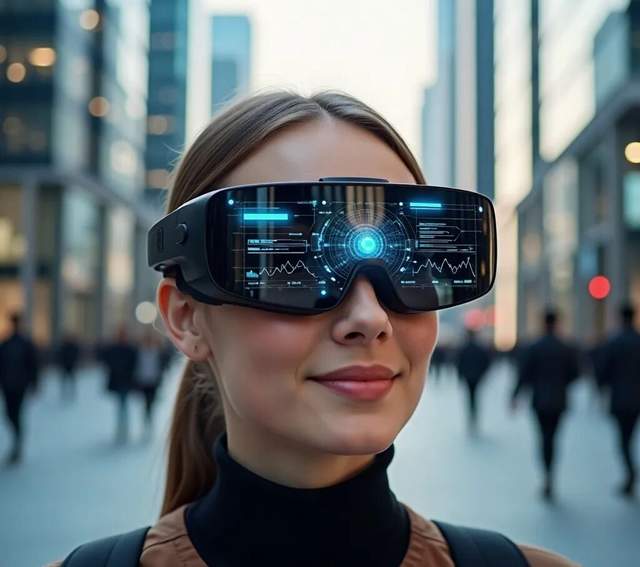
In 2026, the smart glasses sector will fully blossom.
On the policy front, trade-in programs in multiple domestic regions have, for the first time, included smart glasses in their subsidy scope. On the capital front, XREAL has officially submitted its Hong Kong stock exchange prospectus, Rokid has completed its shareholding reform in preparation for listing, and Thunderbird Innovation has quietly signaled its intention to go public. The race for the title of "first AI glasses IPO" is entering its final countdown.
Facing this battle among a hundred glasses, the five major players—Thunderbird Innovation, Rokid, XREAL, Kwark, and Xiaomi—have all revealed their respective trump cards.
Thunderbird Innovation: The Hardcore Tech Enthusiast, the "Optical Flow" Champion
Among the five major smart glasses brands, Thunderbird Innovation stands out as one of the few players with substantial scientific research capabilities.
Thunderbird's technological moat runs deep, primarily concentrated in the field of optical technology. It is one of the few leading manufacturers in the domestic AR smart glasses market with full-link self-research capabilities for core optical components and the ability to achieve large-scale mass production. Its self-developed binocular full-color MicroLED light guide scheme significantly outperforms the industry average in light efficiency, effectively avoiding homogeneous competition with "public model" solutions.
On the channel front, Thunderbird has chosen a differentiated route backed by state-owned enterprise shareholders. In January of this year, Thunderbird secured over 1 billion yuan in investment from China Mobile and China Unicom. Thunderbird can opt to join the shareholders' "contract phone" channels, enriching its customer base while further lowering the purchase threshold for its AR glasses.
In terms of product experience, Thunderbird has not pursued broad scenario coverage but has instead focused on breakthroughs in commercial scenarios. Its products prioritize optimizing translation, teleprompter, cross-border navigation, and other essential business functions, establishing strong user loyalty among business professionals and cross-border travelers.
Thunderbird's extreme product design orientation, however, sometimes risks alienating the mainstream market. Due to relatively high material costs, Thunderbird AR glasses are positioned in the mid-to-high-end range, making it difficult to penetrate the sub-1,000 yuan market, thus limiting its target customer base to a relatively niche segment.
Strong external dependency on the software side is another vulnerability of Thunderbird AR glasses. As a mid-sized tech company, Thunderbird Innovation cannot cover all aspects of R&D, so the AI models and system software used in its AR glasses rely on external suppliers like Alibaba and Tencent. If these giants decide to enter the market directly, Thunderbird could face significant challenges.
A more long-term challenge lies in user education—how to translate complex AR technology into tangible experience advantages for ordinary users. In other words, can AR, as an augmented reality technology, improve efficiency in daily work and life scenarios such as photography, navigation, and office work? This question warrants deep exploration by Thunderbird.
Rokid: The Cross-Ecosystem "Diplomat," Racing Ahead Before IPO
If Thunderbird Innovation is a dedicated tech enthusiast, then Rokid (Rokid Technology) is a cross-ecosystem diplomat, adept at navigating relationships with major industry players.
Rokid is also preparing for a Hong Kong stock exchange listing, and every move it makes now attracts investor attention.
Rokid's most distinctive label is openness. Its smart glasses can freely switch between global mainstream large models such as QianWen, DeepSeek, and Gemini, offering users a high degree of software freedom—a rare approach in today's IT industry. This "non-aligned" choice objectively provides Rokid with a certain level of risk resistance.
This flexible business approach is also reflected in Rokid's supply chain system. Before Sprint ( Sprint here means "rushing toward") its Hong Kong stock IPO, the company Intensive introduction ( Intensive introduction here means "intensively introduced") upstream and downstream enterprises in the industrial chain, such as Lens Technology and Conant Optics, as shareholders. By transforming suppliers into stakeholders, Rokid has secured supply chain stability and priority, serving as a safeguard against price wars.
Rokid's first-mover advantage should not be overlooked. As one of the earliest entrants in the AI glasses market, Rokid has accumulated significant brand recognition. The company also places a strong emphasis on marketing. Previously, Rokid reached an agreement with CCTV to become the AI glasses broadcasting partner for the 2026 World Cup, a first-of-its-kind collaboration for global top-tier sporting events.
However, with great influence comes great responsibility. The immense marketing hype also amplifies Rokid's operational vulnerabilities.
Among investors' concerns about Rokid is doubt about its profitability. Since its inception, Rokid has never publicly disclosed any profit-related data. Referring to its peer XREAL, which has also submitted its prospectus, XREAL reported a net loss of 456 million yuan last year. Rokid, being at a similar development stage, is likely in a comparable situation.
Additionally, Rokid's open attitude on the software side is a double-edged sword. While it saves significant development costs, it also leaves Rokid glasses without an "independent soul," placing the company in a passive position regarding user acquisition and scenario integration. Under pressure from tech giants, Rokid risks becoming a mere hardware carrier.
The bottleneck in interaction smoothness restricts the development of the smart glasses industry, and Rokid is no exception. In noisy public settings, voice commands and eye-tracking interactions may not match the convenience and accuracy of smartphones—a fact that cannot be ignored and poses a common challenge for the entire smart glasses industry.
XREAL: Betting on Self-Developed Chips, Can the "Lone Warrior" Break Through?
As a strong contender for the title of "first smart glasses IPO," XREAL is currently the furthest along in the listing process, having already submitted its prospectus to the Hong Kong Stock Exchange.
XREAL's lead is largely attributed to its management's decisiveness in choosing an extremely challenging asset-heavy development path—self-developing spatial computing chips.
Similar to smartphone CPUs, spatial computing chips serve as the core brain of AR smart glasses, largely determining the product's performance ceiling. While established giants like Qualcomm and NVIDIA dominate this niche segment, few companies like XREAL directly target end consumers.
Perhaps due to its firsthand market exposure, XREAL's self-developed X1 series high-end chips precisely address user pain points.
XREAL's high-end AR glasses excel in field of view and image latency, delivering an immersive spatial experience while alleviating two major pain points for first-time users: dizziness and visual fatigue. This feature is particularly attractive to productivity users who need to wear AR glasses for extended periods.
XREAL's global Layout ( Layout here means "expansion") is also leading. In an interview with tech media 36Kr, XREAL founder Xu Chi stated that overseas revenue accounts for over 70% of the company's total. This "overseas-first, domestic-later" strategy effectively avoids the intense competition in the domestic market, providing the company with broader growth opportunities.
However, due to its heavy investment in self-developed chips, XREAL faces significant financial pressure. The prospectus reveals that XREAL has accumulated losses exceeding 2 billion yuan over the past three years. More concerningly, the company has only 63.63 million yuan in cash on hand and has yet to achieve self-sustaining profitability.
Simultaneously, XREAL's software ecosystem lags behind. Despite its leading hardware and chips, the NebulaOS system used in its products is an open-source ecosystem, resulting in a relatively low proportion of software service revenue. Last year, XREAL's total revenue was 516 million yuan, with service and other income contributing only 40 million yuan, accounting for just 7.8% of the total.
A more hidden risk is path dependency. XREAL is deeply tied to Google's Android XR ecosystem. If Google adjusts its AR ecosystem strategy or tightens interface permissions, XREAL's global narrative will face direct disruption. Given cross-market factors between the two sides of the Pacific, this scenario is plausible.
Kwark: Backed by Alibaba's Pedigree, How Strong Is the "Butler Hero"?
As an internet giant, Alibaba would not pass up a hot market. With the release of Kwark smart glasses in December last year, the smart glasses market was stirred up.
In the smart glasses market, Kwark's pedigree advantage is unmatched. Leveraging Alibaba's complete application ecosystem, Kwark glasses integrate high-frequency scenarios such as navigation, payment, and shopping. This highly agent-like intelligent experience better resonates with mainstream consumers.
In terms of identity, Kwark smart glasses are more "down-to-earth." To use a superhero movie analogy, Kwark smart glasses are not J.A.R.V.I.S. from Iron Man but rather Alfred, Batman's loyal butler. While Alfred may not engage in combat, he handles the mundane aspects of life with finesse.
To address battery life challenges, Kwark offers a straightforward solution: eyeglass frame batteries. This hot-swappable battery design has practical advantages in outdoor scenarios where charging options are limited.
However, an overly strong Alibaba DNA is not necessarily beneficial. A common issue with internet giants' cross-border ventures—a lack of hardware experience—also plagues Kwark smart glasses. The company still has significant room for improvement in supply chain refinement ( refinement here means "refinement") management and production line yield control. The delayed launch in January this year serves as a cautionary tale.
Additionally, there are costs associated with brand migration. After internal adjustments at Alibaba in March, the smart glasses business was merged into QianWen, and future products will be branded as "QianWen AI Glasses." However, due to timing differences, the initial products still bear the "Kwark" name, potentially confusing users and requiring additional marketing investment.
Finally, ergonomic improvements are needed. Compared to similar products, Kwark smart glasses fall slightly short in lightweight design, with more pronounced nose bridge pressure after prolonged wear.
Xiaomi: The Frugal Choice, Affordable "Style Enthusiast"
Unlike other players betting on AR technology, Xiaomi takes a relatively conservative approach to smart glasses, focusing on camera-centric smart glasses.
Xiaomi's core strength lies in extreme cost control. The company chose this path largely because its mature smartphone business allows it to significantly reduce smart glasses costs by reusing related supply chains. The result is Xiaomi AI glasses priced at 1,999 yuan, replicating the blockbuster success of the Mi 1 smartphone.
Another ace up Xiaomi's sleeve is seamless integration with its "human-vehicle-home" ecosystem. Xiaomi AI glasses are not just camera devices but also mobile remotes for the Xiaomi ecosystem. For example, upon detecting that the user has woken up, the glasses can open bedroom curtains, start the living room coffee maker, and automatically unlock the car door and turn on the air conditioning when approaching a Xiaomi vehicle, delivering a frictionless smart experience.
Intuitive and stylish design is also key to Xiaomi smart glasses' popularity. Drawing inspiration from the success of its predecessor, Ray-Ban Meta, Xiaomi prioritizes fashionable aesthetics, using classic sunglasses designs to lower the barrier for mainstream adoption.
However, this conservative approach comes with limitations in narrative scope. Abandoning AR display functionality means Xiaomi smart glasses are more likely to be perceived as advanced action cameras rather than next-generation productivity tools. Additionally, due to relatively low technical barriers, Xiaomi smart glasses face many competitors and are likely to enter a price war in the future.
Bound to the "Mi Fans" customer base due to the Xiaomi ecosystem's nature, breaking out of this circle is challenging for Xiaomi glasses. Moreover, during rapid market expansion, Xiaomi glasses have encountered quality control issues, indicating that product details still require refinement.
AI Glasses: Where Do They Go From Here?
Judging by current industry trends, 2026 may become a "watershed" for the smart glasses sector, with three clear development paths emerging.
First, the shift from "specs competition" to "ecosystem competition." Just as in the smartphone industry, hardware performance will inevitably become excessive for average users, and the same applies to smart glasses. At this stage, competing on specifications becomes meaningless for the mainstream market. The future winners will be those who can take over users' digital lives, testing not just AI performance but also software ecosystem capabilities.
Second, supply chain stability will determine survival. Premised on product hardware performance improvements is a stable supply chain system. Whether through self-building or Interest binding ( Interest binding here means "benefit alignment"), smart glasses manufacturers must maintain sufficient influence and priority within their supply chains; otherwise, they risk being eliminated during industry shakeouts.
Third, AR and camera-centric approaches will coexist long-term. The smart glasses market needs both high-end and mass-market offerings. Not all consumers are core productivity users; for many, smart glasses serve as a new perspective for recording life, representing a more mainstream market demand. Manufacturers would do well to lower their sights somewhat.
As for which of the five major smart glasses manufacturers will win greater consumer favor in the future? The answer remains to be seen.
-
![]()
Optical Communication and Robot Vision: OFILM’s Bold Transformation Amid a 460 Million Yuan Loss
-
![]()
From 100,000-GPU Computing Might to Industrial Efficiency: The Logic Behind AI4S-Driven Intelligence
-
![]()
OpenAI, Grok, and Meta Release Three Major Models: Who is the King of Cost-Effectiveness?
-
![]()
Momenta’s Backers in the Auto Industry Crave Blockbusters More Than Stock Dividends
-
![]()
China’s AI Computing Power: Embracing a New Organizational Paradigm
-
Same Bloodline, Two Fates: How Two AI Giants Took Divergent Paths?
-
![]()
Combined Market Value Plummets by Nearly One Trillion Yuan: What’s Behind the Decline of Two AI Powerhouses?
-
![]()
Detailed Explanation of the Impact of Hikvision Guanlan Coding on Video Quality and Key Frame Quality