QianWen Joins Apple, Signal for Large Models to ‘Fade into the Background’
 07/27 2026
 481
481

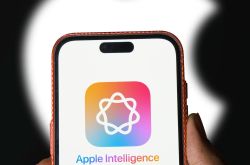
On July 8, 2026, "Apple Intelligence," submitted by Apple Technology Development (Shanghai) Co., Ltd., completed its registration for generative AI services. On July 15, China's Cyberspace Administration announced the registration of seven mobile-side generative AI services, officially including "Apple Intelligence" on the list.
This signifies that Apple Intelligence, after one and a half years of preparation for its China launch, has cleared the final regulatory hurdle.
On the day of the announcement, Alibaba confirmed that QianWen would be integrated as an AI capability into Apple Intelligence, covering all iOS, iPadOS, macOS, and visionOS devices in China. It will provide services such as text and image understanding, content generation, and multi-turn dialogues. The capital market responded swiftly, with Alibaba's U.S.-listed shares surging over 7% at one point.
With over 200 million existing iPhones in China, QianWen being selected as the default AI foundation—what implications does this hold for QianWen, Alibaba, and the entire large model industry? How will industry rules be rewritten when AI becomes the default capability embedded within operating systems?
In February 2025, at the World Government Summit in Dubai, UAE, Alibaba Chairman Joe Tsai confirmed for the first time that Alibaba is collaborating with Apple to provide localized AI capabilities for Apple Intelligence's entry into the Chinese market.
Tsai revealed that to enter China, Apple required a local AI partner and had engaged with multiple Chinese companies before ultimately choosing Alibaba.
The significance of this partnership extends beyond Alibaba securing a major client.
For QianWen, this collaboration comes at a critical juncture.
Currently, competition in China's large model industry at the consumer end is intensifying: on one side, Doubao is rapidly gaining traction through scale advantages, while on the other, WeChat Agent, backed by a 1.2 billion monthly active user ecosystem, is poised to launch. QianWen faces a fragmented traffic battlefield. Under such circumstances, continuing the path of "relying on users to actively download AI apps" means engaging in hand-to-hand combat with rivals in already crowded app stores.
Apple's native entry point offers an opportunity to bypass this congested track, allowing QianWen to enter a completely different competitive arena.
Previously, whether through AI applications within Alibaba's internal businesses or reaching consumers via the Tongyi QianWen app, users or enterprises were actively choosing AI.
After integrating into Apple Intelligence, QianWen faces an entirely different distribution logic. It is no longer just a model downloaded by users or invoked by developers but has the opportunity to become the default AI capability behind the operating system.
This implies that the value metrics for large model competition are shifting—from technical capabilities like parameter scale, reasoning ability, and open-source ecosystems to engineering and ecological indicators in real-world commercial environments.
According to publicly available information, the collaboration employs an edge-cloud collaborative technical solution. Lightweight foundational AI computations are performed on-device using Apple's in-house chips, ensuring response speed and privacy security. Cloud-based demands such as long-text processing, complex logical dialogues, and multimodal generation are supported by Alibaba's QianWen computing power. All user-related data is stored on domestic servers in compliance with regulatory requirements.
In specific scenarios, according to multiple tech media sources citing insiders, QianWen handles "most text generation, summarization, image-text understanding, and content creation capabilities," while Baidu is responsible for scenario-based capabilities like "camera recognition, landmark search, image processing, voice wake-up, and Siri Chinese optimization."
For QianWen, the value of this collaboration lies not in short-term increases in invocation volume but in gaining large-scale terminal validation.
The large model industry is entering a new phase. Previously, companies could prove model capabilities through leaderboards, evaluations, and open-source downloads. However, after entering mobile operating systems, they must meet another set of standards: Is the model stable enough? Can it adapt to real user needs? Can it operate continuously in complex scenarios? Can it meet the safety, privacy, and reliability requirements of global consumer electronics companies?
The Apple ecosystem provides precisely this high-standard validation.
This partnership recalls Android's path over a decade ago. Android relied on its open-source system and free licensing to bind global smartphone manufacturers, securing its foothold in the mobile internet and monetizing through app stores and advertising ecosystems.
While QianWen does not currently control an operating system, both share a common goal: to become the foundational capability behind the next-generation computing platform, leaving users with no choice but to use it.
As mentioned earlier, news of this partnership affected Alibaba's stock price on the same day, but how it will impact Alibaba Cloud's or even Alibaba's financial reports remains undisclosed, as Apple and Alibaba have not revealed specific commercial terms.
Brokerage research reports analyze potential revenue contributions for Alibaba from this partnership through several pathways.
The first layer is fixed annual licensing fees. This is the most direct revenue stream and is considered a relatively certain form of benefit.
After the China launch of Apple Intelligence, Apple will need system-level usage authorization for QianWen. Market references to Apple's annual payment of approximately $1 billion in licensing fees to Google suggest this could be a substantial fixed annual revenue stream.
The second layer is pay-as-you-go computing power tokens. Institutions expect this portion to exceed fixed licensing fees.
The China-bound Apple Intelligence must process generative AI inference computing power and user interaction data on domestic servers due to regulatory requirements. Apple lacks large-scale self-built AI computing infrastructure in China, so all cloud computing power for complex AI tasks is procured from Alibaba Cloud's Lingjun AI computing cluster.
This means every complex AI request initiated by users corresponds to token consumption on Alibaba Cloud.
IDC data shows that there are approximately 220 million to 250 million existing iPhones in China. As AI features become standard equipment, user invocation frequencies will gradually rise, making this revenue stream more sustainable than fixed licensing fees.
The third layer is e-commerce transaction commissions. This is a unique revenue source for Alibaba.
The China-bound Apple Intelligence includes exclusive traffic-driving privileges for Alibaba's ecosystem. In shopping-related Q&A and image-based product search scenarios, the system generates structured product cards that directly launch the Taobao app into the transaction pathway, with Apple earning a commission on completed GMV.
This revenue stream does not depend on AI invocation volume but on transaction conversion, with its ceiling determined by actual purchasing behavior generated by users through AI features. If Apple Intelligence introduces a subscription service in the future, Alibaba could also secure long-term subscription commissions.
The first three revenue streams essentially correspond to the monetization of three different types of commercial resources: technology licensing, computing infrastructure, and user transaction scenarios.
Additionally, providing "services and expertise" is another possible collaboration model. If Alibaba Cloud participates in the deployment and operation of Apple's AI system in China through technology exports or joint operations, it can directly convert its engineering expertise and cloud operation capabilities into service-based revenue. This income does not depend on user invocation volume or e-commerce conversion rates but directly prices Alibaba Cloud's long-accumulated industry service capabilities.
When these predictions will translate into actual financial figures can be referenced from industry precedents. The end-side AI features of manufacturers like Huawei and Xiaomi typically take 1.5 to 3 months from registration completion to official launch.
Based on this partnership, brokerages have raised their revenue forecasts for Alibaba Cloud. Guotai Junan International increased its FY27 revenue forecast for Alibaba Cloud by 4%, projecting a 47% growth rate for cloud intelligence business revenue. Jefferies expects that, driven by strong MaaS and AI-related revenue performance, AI-related revenue contributions will reach 50% of external revenue within the next 12 months. For MaaS, it anticipates ARR (annual recurring revenue) to reach $1.5 billion ahead of schedule in Q2 2026 and move toward the $4.5 billion target by year-end.
The premise is that Apple Intelligence will be frequently used by Chinese users.
In the process of technological diffusion, the widespread adoption of a new technology often depends not on how powerful it is as a standalone product but on whether it can be integrated into users' existing behavioral habits and tool environments, becoming an "unnoticed" presence.
This is true for fully standardized electricity: early on, whoever mastered large-scale power generation and long-distance transmission held industry influence. Today, no one cares where electricity comes from—only whether appliances function properly. The same partially applies to cloud computing: early discussions revolved around servers, virtual machines, and cloud platforms, but now cloud services hide behind various applications, with few people caring which data center powers their online documents or video conferences.
Large models are undergoing a similar transition but face higher challenges.
Unlike electricity and cloud computing, large models exhibit greater performance differentiation. Users have vastly different tolerances for "errors" from Doubao, QianWen, or ChatGPT versus "slowness" from Siri: the former merely feels like "the tool isn't good enough," while the latter is blamed on "the phone being bad."
This means system-level AI has no room for error; invisibility presupposes that the model must continuously provide high-quality output where users cannot see it. Thus, entering the system layer does not signify the end of competition but the beginning of a higher threshold.
This seamlessness imposes multi-layered capability requirements.
First is stability. System-level AI must handle hundreds of millions of users and billions of interactions, amplifying even small-probability errors. Second is response speed. Users may tolerate long answers from an AI app but will not accept prolonged waits for every smartphone assistant operation.
Specifically for Apple Intelligence, this includes multi-model collaborative capabilities.
The cooperation model, where different models handle distinct capability modules, leverages each party's strengths but introduces new engineering challenges: users must perceive a unified AI assistant, not a complex system stitched together from multiple models.
When a user makes a request, the backend may involve speech recognition, visual understanding, text generation, search, and task execution, but the user must experience a continuous, natural interaction. The system must decide which request should be handled by whom and how to integrate results across multiple models.
These user experiences will influence how frequently Apple Intelligence is used by Chinese users.
This also means that, at the system level, future competition among large model companies will no longer be solely about algorithmic capabilities but also about engineering prowess, ecological collaboration, and infrastructure capabilities.
Apple's collaboration with QianWen may signal a shift in industry dynamics. More precisely, competition among large models is splitting into two tracks.
One track is at the system level, vying for "seamless user invocation." QianWen's integration into Apple Intelligence and Doubao's embedding in Nubia are experiments along this path. Their commonality is not directly owning consumer entry points but achieving scaled applications by entering super-ecosystems like smartphones and automobiles.
The other track is at the application level, competing for "active user choice."
System-level AI will inevitably compress the survival space of thin-shell AI applications that merely provide simple dialogue interfaces or generic model invocation services. However, it is unlikely to engulf "expert needs" requiring deep thinking, complex operations, and specialized knowledge or replace services embedded in workflows with closed-loop private data.
Future AI terminals are more likely to adopt a model where system-level AI (the central dispatcher) collaborates with countless "capability-driven" application-layer AIs (executors).
Ultimately, whether at the system or application level, it's a knockout round between "mediocrity" and "irreplaceability." What remains will either be system-level AIs that users unconsciously rely on yet cannot live without or application-layer AIs that establish irreplaceable scenario moats.
-
On the Eve of Its IPO, Avatr Finds Itself Embroiled in a 'Farce of Controversy and Belittlement'
-
![]()
Yutong Optics' Japanese Subsidiary Unveiled in Tokyo, Shifting Strategic Focus to Technology-Driven Growth
-
![]()
Half-Year Revenue Outstrips Last Year’s Total! Zhongrun Optics Forecasts 80.2% H1 Revenue Growth
-
![]()
Why Does AI Competition Start with Computing Power?
-
![]()
Apple AI Finally Makes Its Debut in China, Yet iPhone's 'AI Autonomy' Faces Uncertainty
-
![]()
Apple AI and QianWen Make Up Lessons: Alibaba Has Its Own 'Doubao Phone'
-
![]()
QianWen Joins Apple, Signal for Large Models to ‘Fade into the Background’
-
![]()
The ‘Anchor’ Strategy of Google Hidden Behind the Bleeding Financial Report