Apple’s Foldable iPhone and Huawei’s Straightened Pura X: Two Paths, One Vision
 08/24 2026
 408
408
Author|Unsigned
Huawei and Apple share numerous strategic similarities. However, when it comes to their next-generation flagship phones, they are poised to make divergent choices.
At the product launch event on August 20, 2026, Yu Chengdong, Executive Director and Chairman of Huawei's Terminal BG, and Director of the Product Investment Review Committee, unveiled the world's first expansive straight phone, the Pura X View, as a 'One More Thing' announcement.
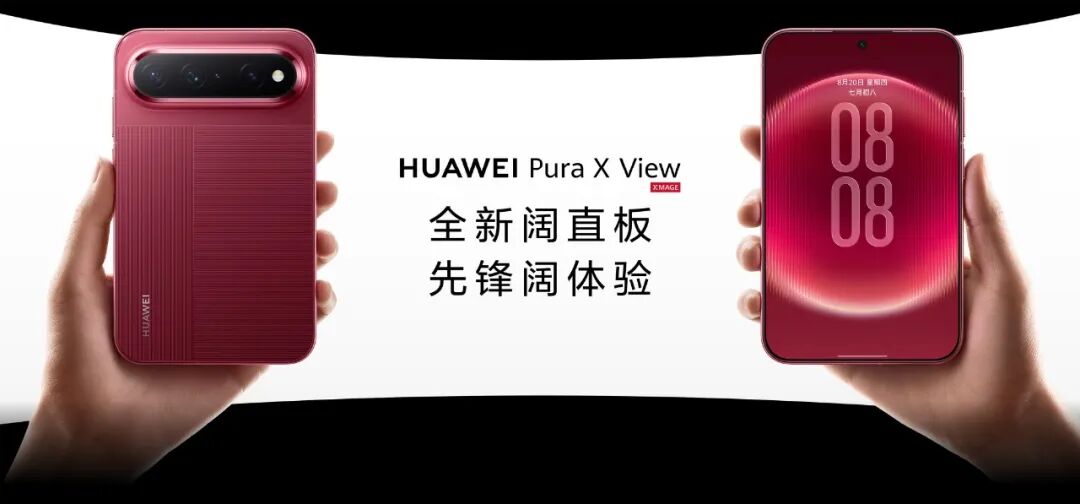
Image Source: Huawei
The Huawei Pura X View reportedly features a 16:9.5 expansive screen, similar in form to the unfolded Pura X. By eliminating fold-related components, the Pura X View achieves a slimmer profile, higher screen-to-body ratio, and larger battery capacity. Essentially, the Huawei Pura X View is a straight version of the Pura X.
In contrast, Apple is planning to transition from straight phones to the foldable screen segment. According to Bloomberg reporter Mark Gurman, Apple will release its first foldable iPhone in September 2026, featuring a horizontally folding design with a 7.8-inch inner screen, a 5.5-inch outer screen, and support for Face ID.
On the surface, Huawei and Apple's product strategies appear vastly different. However, at their core, their strategic goals are remarkably similar. Today, the smartphone industry faces significant downward pressure due to factors such as performance surpluses and rising memory costs. Huawei and Apple aim to leverage their core capabilities in full-stack self-developed hardware and software to expand the boundaries of phone form factors and attract consumer attention.
01
Horizontal Fold and Expansive Straight Screen: Both Point to Large Screens
In previous years, competition in the foldable smartphone market primarily focused on hardware. The successive releases of Huawei's Pura X View and Apple's foldable iPhone largely signify that industry competition is shifting from merely pursuing hardware breakthroughs to exploring the experiential value behind different form factors.
One major reason Apple did not release a foldable iPhone when foldable phones first emerged in 2019 is that such products were not yet mature.
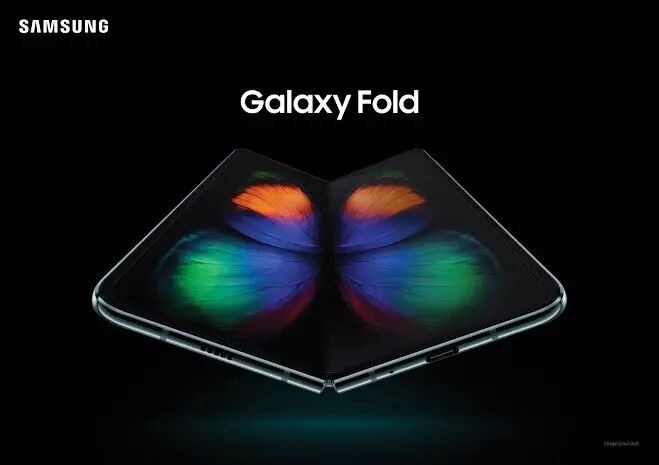
Image Source: Samsung
Take Samsung's Galaxy Fold, released in February 2019, as an example. The product featured a mere 4.6-inch outer screen with a 21:9 aspect ratio and a thickness of 17.1mm when folded, making single-handed use far inferior to that of a straight phone. In response, Liu Zuohu, Chief Product Officer of OPPO, stated, "For foldable phones, no matter how powerful the specs, thickness is the original sin."
Despite these hardware compromises, the Samsung Galaxy Fold was still not a polished product. Originally slated for release in April 2019, its launch was delayed due to frequent issues such as screen flickering, breaks, and blackouts during media testing. It officially hit the market six months later.
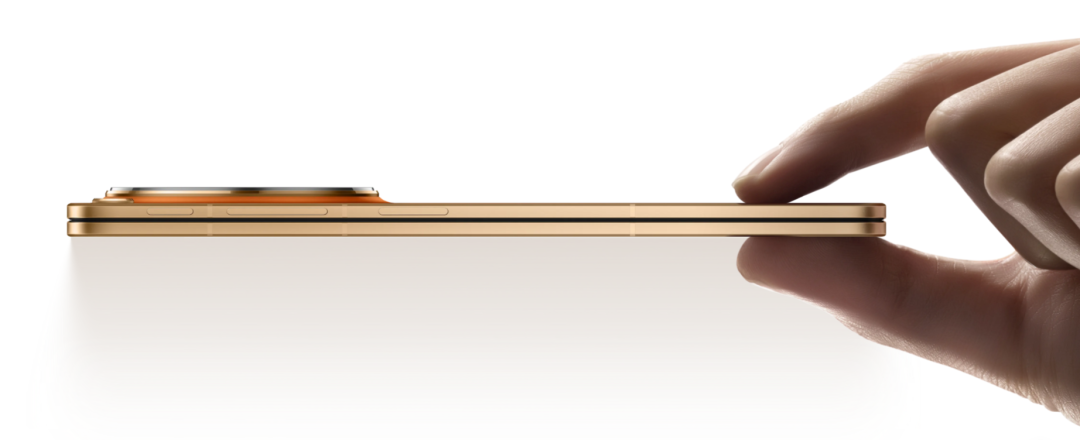
Image Source: OPPO
After years of development, the hardware gap between foldable phones and straight phones has significantly narrowed. For instance, the OPPO Find N6, released in March 2026, has a folded thickness of 8.93mm and weighs 225g. In contrast, the OPPO Find N, released in December 2021, had a folded thickness of 15.9mm and weighed 275g.
Now that foldable phones offer a grip feel comparable to straight phones, Apple can focus more on unlocking the value of large screens when developing its foldable iPhone. According to Bloomberg, the foldable iPhone will feature a deeply customized iOS system, enabling an iPad-like interface layout and split-screen functionality with stronger multitasking capabilities.
Similarly, Huawei's development of the Pura X View follows the successful path of the Pura X, aiming to provide straight phone users with a highly differentiated expansive screen experience.

Image Source: Huawei
A vertical media review editor who received an early test unit of the Huawei Pura X View revealed to Shijiao Farsight, "Huawei's PR specifically instructed us not to test the performance or camera of the Pura X View but to focus on introducing how its expansive screen offers a unique experience for reading, watching dramas, and office work."
Overall, despite their different form factors, the Huawei Pura X View and the foldable iPhone share strong internal connections. Their successive releases mark a new inflection point in the smartphone industry's development—shifting from merely pursuing form factor innovation to deeply exploring the unique experiential value of large screens.
02
Apple Seeks Higher Prices, Huawei Aims to Amortize R&D Costs
While both the foldable iPhone and Huawei's Pura X View aim to deliver a superior large-screen experience from a market perspective, their commercial implications differ for Apple and Huawei.
Due to the lack of disruptive innovation in iPhone form factors in recent years and amid rising memory costs, Apple has not rashly increased its phone prices but has instead frequently offered discounts.

Image Source: Apple
For example, in early 2026, Apple launched a New Year promotion, reducing the price of the iPhone Air by 2,000 yuan. During the 618 shopping festival, the entire iPhone 17 series saw price reductions, with the standard iPhone 17 model dropping by 200 yuan and the iPhone 17 Pro series by 1,000 yuan.
Although the price-competitive iPhone 17 series significantly expanded market share amid rising competitor prices, Apple's profits were also negatively impacted.
In the third fiscal quarter of fiscal year 2026 (ending June 27, 2026), Apple's gross margin for hardware products was 40.1%. After excluding tariff impacts of approximately 2.5%, it was about 37.6%, a 0.1 percentage point decrease from the previous quarter. According to Bank of America estimates, the downward pressure on Apple's hardware product gross margins will further intensify in the next fiscal quarter, potentially declining by 2.8 percentage points quarter-over-quarter.
Therefore, Apple urgently needs to release innovative products that can significantly raise its price ceiling to expand the profit margins of its hardware products. Mark Gurman revealed that the starting price of the foldable iPhone will be "at least $2,000 (approximately RMB 13,400) and possibly even higher."
Unlike Apple's attempt to reach new price heights with the foldable iPhone, Huawei's current core strategic goal is to balance high upstream innovation costs through economies of scale.
Financial reports show that Huawei's R&D investment reached RMB 192.3 billion in 2025, a 7.01% year-over-year increase, accounting for 21.83% of its sales revenue. With annual R&D expenditures in the hundreds of billions, Huawei has been able to launch unique innovative products like the Pura X and Pura X Max.
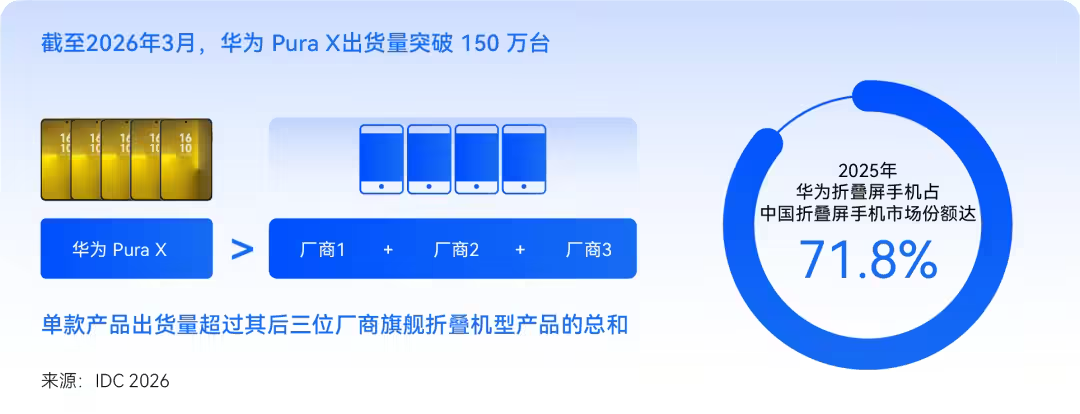
Image Source: IDC
However, due to their high prices and limited durability, foldable phones have not gained wide user acceptance. Data from IDC reveals that as of its first anniversary in March 2026, the Huawei Pura X series had shipped only about 1.5 million units, far below the sales of the straight flagship Huawei Pura 80 series released in the same period.
Due to limited sales, these innovative products have not become a driving force for Huawei's consumer business growth. In 2025, Huawei's terminal business revenue was RMB 344.473 billion, a mere 1.6% year-over-year increase, lagging behind the growth rate of R&D investment.
Therefore, from the perspective of amortizing R&D costs for innovative products, Huawei has a clear need to release the Pura X View. By continuing the widescreen ratio validated by the Pura X and Pura X Max and eliminating the high-cost drawbacks of the foldable form factor, the Pura X View is expected to achieve higher sales volumes with its more market-acceptable straight form factor.
03
Foldable Screens Are Not the Endpoint but a Testing Ground for Next-Generation Phones
Many believe that as flexible screen technology matures and prices decline, foldable phones will replace straight phones and become the mainstream form factor for smartphones.
However, judging by the strategies of leading smartphone manufacturers like Huawei and Apple, foldable phones are more akin to a testing ground for the industry to explore innovative technologies. They will not simply replace straight phones but will coexist with them across different price tiers and usage scenarios for the long term.
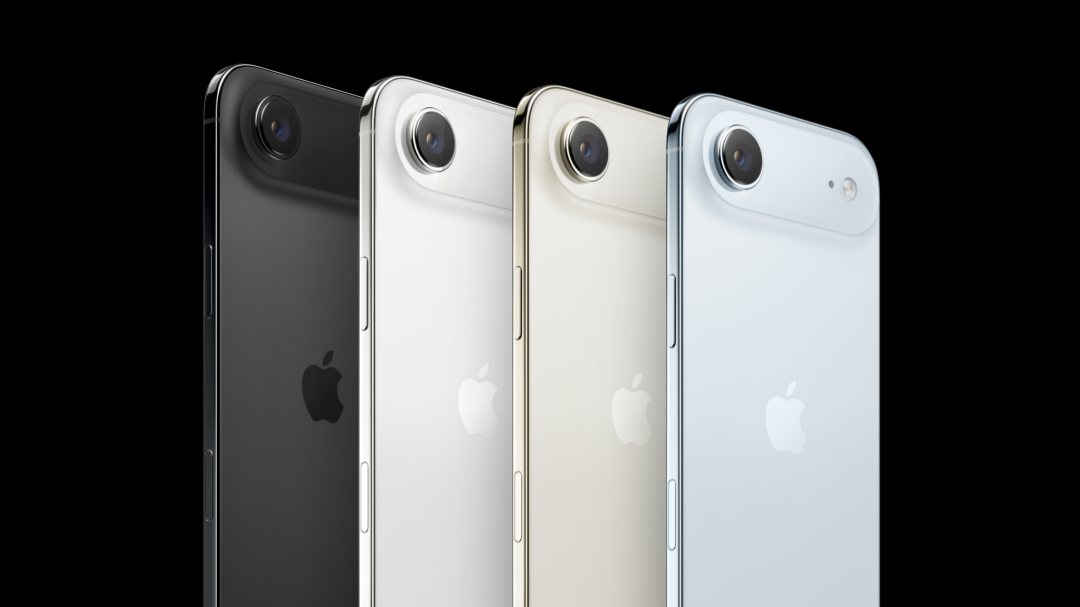
Image Source: Apple
To create a lightweight foldable iPhone, Apple first tested the waters with the iPhone Air in September 2025. Equipped with eSIM technology, the iPhone Air is just 5.6mm thick and weighs only 165g, making it "the thinnest iPhone yet."
According to Mark Gurman, after releasing the foldable iPhone, Apple will not abandon the iPhone Air lineup but will launch the second-generation iPhone Air in spring 2027. It will retain a lightweight design with significantly upgraded specs, including an enhanced battery capacity and a dual-camera system.
Similarly, due to the limited internal space in foldable phones, smartphone manufacturers are exploring silicon-carbon anode batteries to ensure battery life.
For example, the Honor Magic V, released in January 2022, was equipped with only a 4,750mAh battery. Four years later, the Honor Magic V6 (16GB+1TB version) featured a new generation of Qinghai Lake blade battery with a silicon content increased to 32%, an energy density of 985Wh/L, and a capacity of 7,150mAh.
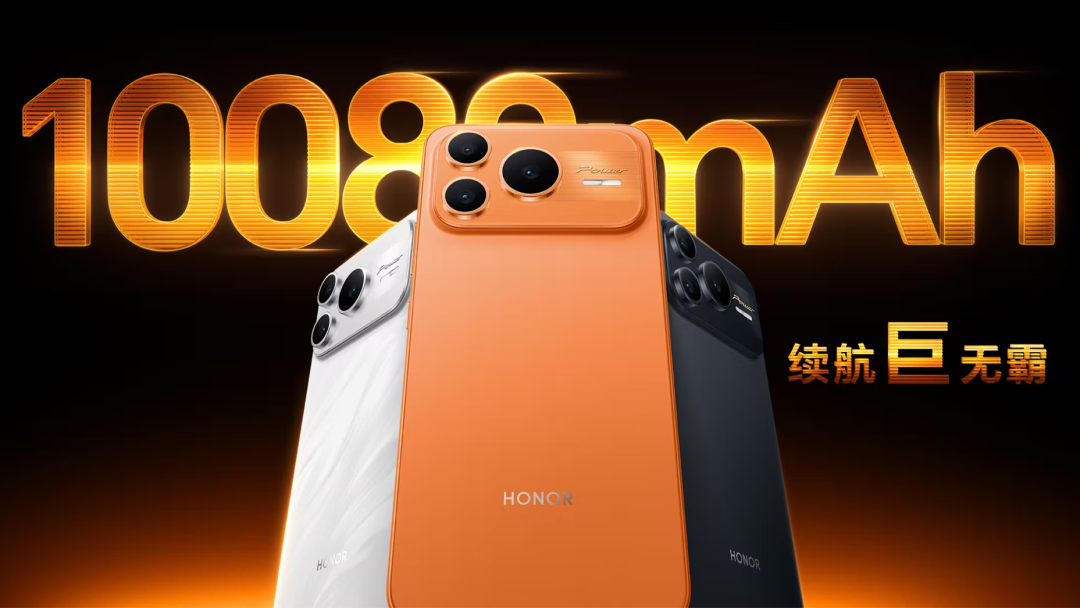
Image Source: Honor
Led by the Magic V series, Honor's terminal battery capacities have seen significant increases. For instance, the Honor Power2 is equipped with a 10,080mAh Qinghai Lake battery, which the company claims can provide up to 20.3 hours of continuous screen-on time.
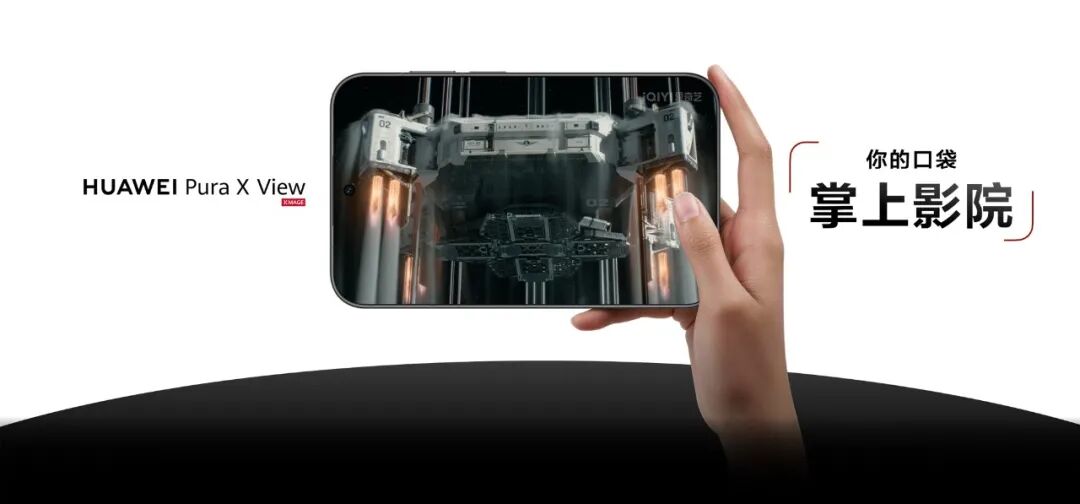
Image Source: Huawei
Similarly, the release of Huawei's Pura X View is directly tied to the successful market penetration of expansive foldable phones like the Pura X and Pura X Max.
Although the sales volume of Huawei's Pura X series is not particularly impressive compared to straight phones, it is a popular product in the foldable phone segment.
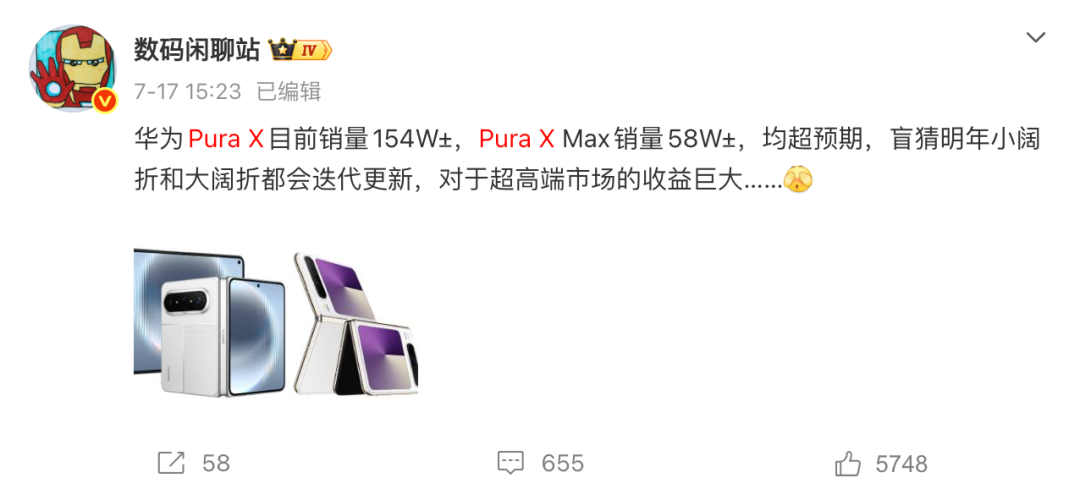
Image Source: Huawei
According to leaks from digital blogger "Digital Chat Station," as of the 28th week of 2026 (July 6-July 12), the Huawei Pura X had accumulated approximately 1.54 million activations, while the Pura X Max had reached about 580,000 activations, totaling around 2.12 million units, exceeding expectations.
Data from CounterPoint Research shows that in Q1 2026, Huawei held a 60% market share in China's foldable phone market, surpassing the combined share of the second to fourth-place vendors.
With its self-developed HarmonyOS and the push from over a million users, Huawei has collaborated with software developers to create a highly differentiated expansive screen ecosystem. For example, Douyin (TikTok) offers a broader field of view for short videos, while Xiaohongshu supports a three-column layout for images and text, providing higher information density.
Based on its mature expansive foldable products, Huawei's decision to develop an expansive screen straight phone helps create a virtuous cycle of "user scale-prosperous ecosystem," further enhancing the expansive screen experience.
Interactive Topic
Do you prefer foldable screen phones or straight-screen phones? Why?
This article is original content from Farsight. Unauthorized reproduction is prohibited.
-
![]()
Can Domestic Autos Still Hold Their Own Against Joint Venture Brands?
-
![]()
Domestic Cars Priced Above 300,000 Yuan Are Gaining Ground in Chengdu
-
![]()
BBA Takes a Leap of Faith: No Sales, No Tomorrow
-
![]()
Chengdu Unfaded: BYD and Geely Vie for Championship While the Weak Exit
-
![]()
3X Salary Poaching, 40 Executives Depart: Autonomous Driving Talent is Batch-Producing Embodied AI Leaders
-
![]()
Apple’s Foldable iPhone and Huawei’s Straightened Pura X: Two Paths, One Vision
-
![]()
Dong Yuhui Departs with Traffic, Yet East Buy Crafts a Profit-Generating Engine
-
![]()
Did Alibaba Say AI Investments Would Pay Off in Three Years, Then Turn Around and Ask Shareholders for HK$80 Billion to 'Tide Over'?