SpaceX Confidentially Files for IPO, Eyeing the Biggest Public Offering Ever
 04/10 2026
 676
676
Author|Qian Jing
Editor|Chen Xiaoran
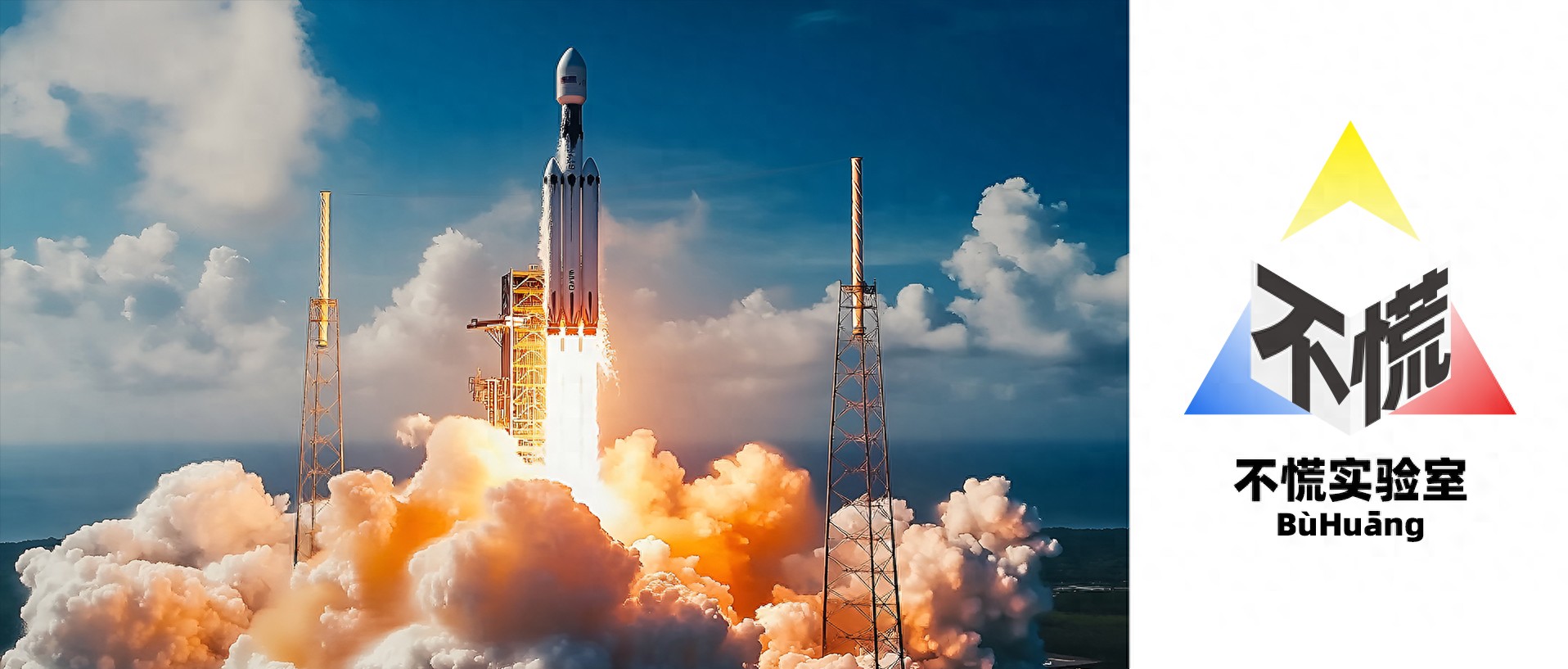
Recently, SpaceX, the world's leading commercial space company, has reportedly confidentially submitted its initial public offering (IPO) application documents to the U.S. Securities and Exchange Commission (SEC), marking a significant stride towards what could be the largest IPO in history.
Targeting a $1.75 Trillion Valuation
Multiple foreign media sources, citing insiders, report that SpaceX plans to raise up to $75 billion through its IPO, significantly exceeding Saudi Aramco's 2019 global IPO record of $29 billion. The company aims for a valuation of $1.75 trillion, which, if achieved, would position it among the top ten most valuable publicly traded companies globally.
The IPO process is moving swiftly, with SpaceX expected to complete its listing as early as June-July 2026. This would enable it to outpace competitors like OpenAI and Anthropic in securing market capital and lead the 2026 global super-IPO trend.
SpaceX has already assembled a top-tier underwriting team, with Bank of America, Citigroup, Goldman Sachs, JPMorgan Chase, and Morgan Stanley serving as lead underwriters, and several other investment banks playing supporting roles.
Notably, in February 2026, SpaceX completed an all-stock acquisition of xAI, Elon Musk's AI company, creating a $1.25 trillion commercial powerhouse. This strategic move has elevated the IPO narrative from just commercial space to a fully integrated platform combining space infrastructure and artificial intelligence.
Following the news, U.S. stocks in the space exploration and commercial space sectors surged, with the sector posting a 3.60% single-day gain, reflecting heightened market anticipation for this historic capital event.
From an operational and business standpoint, the merged SpaceX now operates under a dual-drive model of "profitable space business + high-growth AI business," with notable differences in performance and development stages between the two sectors.
SpaceX's original space business has established a stable commercial closed loop, achieving consistent profitability and rapid growth. Its core revenue comes from two main sources: Starlink satellite internet and commercial rocket launches.
According to media reports, SpaceX's total revenue for 2025 reached $15-16 billion, with earnings before interest, taxes, depreciation, and amortization (EBITDA) of approximately $8 billion. The Starlink segment contributed about $10.6 billion in revenue and $5.8 billion in EBITDA, boasting a 54% profit margin and accounting for over two-thirds of the company's total revenue, making it an undisputed cash cow.
As of March 2026, Starlink had over 10 million active users globally, with more than 10,000 satellites in orbit, representing 66% of the world's active orbiting satellites. The service covers over 150 countries and regions, while also providing specialized communication services for NASA and U.S. national security agencies.
The commercial rocket launch business similarly dominates the global market, generating $5.2 billion in revenue and $1.7 billion in EBITDA in 2025, with a 33% profit margin. SpaceX completed 165 rocket launches that year, accounting for 51% of global launches. Leveraging the reusable technology of its Falcon 9 rockets, SpaceX reduced launch costs to one-tenth of traditional models, establishing an unshakable cost advantage.
The Space AI Narrative vs. Reality
SpaceX's IPO is more than just a corporate capitalization move; it reflects Musk's deep strategic vision across commercial space and artificial intelligence, as well as a precise bet on global future tech industry trends.
From a core value restructuring perspective, the merger with xAI has fundamentally rewritten SpaceX's valuation logic. The company has transformed from a commercial space leader into a vertically integrated tech platform combining "space computing infrastructure + AI large models," breaking down capital barriers between the space and AI sectors. This allows it to simultaneously attract global capital focused on space technology and artificial intelligence, creating an unprecedented capital suction effect—the core logic supporting its trillion-dollar valuation.
From an industry trend perspective, the global commercial space sector is transitioning from technical validation to large-scale implementation, marking a critical inflection point for the space economy. SpaceX has already validated a scalable profit model for commercial space through Starlink and reusable rockets, setting a commercial closed loop benchmark for the entire industry.
Meanwhile, the AI industry has entered a deep phase of computing power competition, with ground-based data centers facing dual physical bottlenecks of power consumption and cooling water usage. Musk's proposed "space data center" concept precisely meets the industry's long-term core needs. By leveraging SpaceX's Starlink satellite network and Starship launch capabilities, computing infrastructure can be migrated to space, utilizing the continuous solar energy and natural cooling advantages of the space environment to break through ground-based computing power limits and unlock new growth for the future computing industry.
From a market opportunity perspective, SpaceX has already established monopoly-level barriers in global commercial launches and low-Earth orbit satellite internet. The substantial capital raised through the IPO will primarily fund three core areas: Starlink constellation expansion, Starship R&D iteration, and space AI data center construction, further solidifying its competitiveness in both space and AI sectors.
Additionally, the accelerated global deployment of space resources and growing market demand for space launches and satellite internet will continue to expand. NASA's manned lunar landing and deep-space exploration programs will also provide long-term stable government contracts for the company. This IPO will set a clear valuation benchmark for the global commercial space industry, driving industrialization across the entire space economy sector.
It should be noted that xAI's business is still in its early, cash-burning phase.
Sources indicate that xAI's monthly cash consumption is around $1 billion, primarily for GPU procurement, data center construction, and training operations for its Grok large model. Annual revenue is far from covering these massive capital expenditures. Moreover, all 11 co-founders have departed following the merger, and the company is now in a team-rebuilding phase under Musk's sole leadership, requiring continued financial support from the space business in the short term.
Multiple Risks Beneath the Halo
Despite the highly imaginative blueprint for SpaceX's IPO, the $1.75 trillion valuation conceals multiple significant risks and challenges.
First is the performance risk of overvaluation. The $1.75 trillion target valuation corresponds to the company's 2025 revenue of under $16 billion, resulting in a price-to-sales ratio exceeding 100x. The market has already priced in a substantial long-term premium for its space AI narrative. If subsequent business progress falls short or profit growth fails to match the valuation, the stock price will face significant downward pressure.
Second is the risk of business synergy and resource diversion. The space and AI businesses operate under vastly different commercial logics and corporate cultures. The space business is a capital-intensive, long-cycle, high-reliability premium manufacturing sector, while the AI business involves rapid iteration, high burn rates, and significant uncertainty in tech R&D. Balancing xAI's massive cash consumption with the R&D pace of the space business—while avoiding excessive resource diversion from core projects like Starship and Starlink—will be a critical challenge for management.
Third is the uncertainty of core technology implementation. The space data center, a key growth narrative for this IPO, remains at the conceptual stage. Deploying, operating, and maintaining space-based computing facilities face enormous technical challenges, including radiation and orbital management. Commercial viability remains distant, with substantial uncertainty surrounding its business value and profit model.
Fourth are corporate governance and personnel risks. Market expectations widely suggest SpaceX will adopt a dual-class share structure to ensure Musk and insiders retain absolute control post-IPO, meaning limited voice for public shareholders and potential governance vulnerabilities. Simultaneously, the collective departure of xAI's core founding team has introduced significant uncertainty regarding the continuity and stability of its technological R&D.
Finally are market and geopolitical risks. Current global stock market volatility, driven by geopolitical conflicts and soaring oil prices, could derail the IPO if market sentiment turns pessimistic before listing. Additionally, evolving regulatory policies on satellite internet and space resources across countries create dual uncertainties of geopolitics and compliance for Starlink's global operations.
-
AI's Moment of Truth: When 'Burning Cash' Starts to 'Pay Back'
-
![]()
Harmony Intelligent Mobility Alliance Advances Further in the Automotive Realm
-
Lianbo Shares: Core Product Quantities Up, Prices Down; Capacity Utilization Dips Yearly, R&D Investment Lags Behind Peers
-
![]()
The Vala Pro, Based on the Pure Electric Ruisheng Ace M7 and Priced at 268,000 Yuan—Is It a Worthwhile Purchase?
-
![]()
Which Brands Will Be the First to Skip the Next Chengdu Motor Show?
-
![]()
Walmart: Steady Performance Marred by Overvaluation Concerns
-
![]()
Can Domestic Autos Still Hold Their Own Against Joint Venture Brands?
-
![]()
Domestic Cars Priced Above 300,000 Yuan Are Gaining Ground in Chengdu