Meituan Waimai's AI-Driven Price Adjustments: An Invisible Shackle for Merchants
 07/06 2026
 568
568
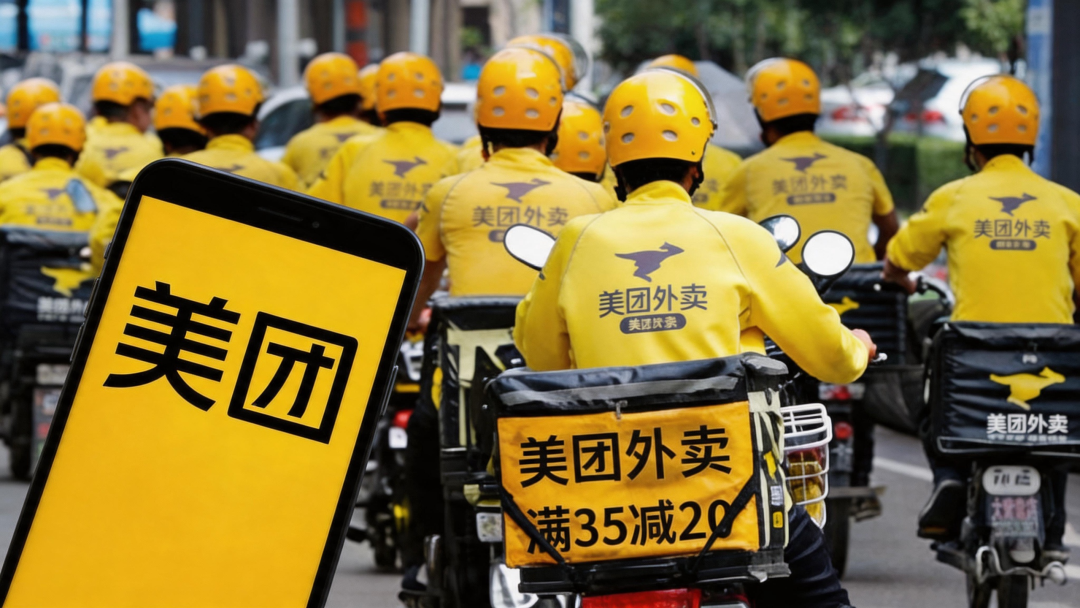
A Forced Price War
At 3 PM, the backend of a restaurant in Shenzhen suddenly went haywire. Owner Lin Tian'en stared at the screen, his fingers trembling slightly—15 dishes had their prices adjusted in bulk at the same second, all uniformly set to 28.81 yuan by the AI system. The highest discount was 52.4% off, and the lowest was 25% off.
Crucially, the backend showed that the 'Meituan cost' for the relevant dish promotions was 0 yuan, with the entire discount difference borne by the merchant.
'In just one afternoon, I lost two to three thousand yuan,' he later told reporters from Shenzhen Press Group angrily.
Moreover, after the uniform price adjustment, some other dish prices became excessively low. Lin Tian'en showed reporters a comparison of several dishes: a beef brisket rice dish, which was expected to generate 33.55 yuan before the price change, now only brought in 14.49 yuan after the change. Some orders even yielded a mere 6.92 yuan, already below the cost of the dish.
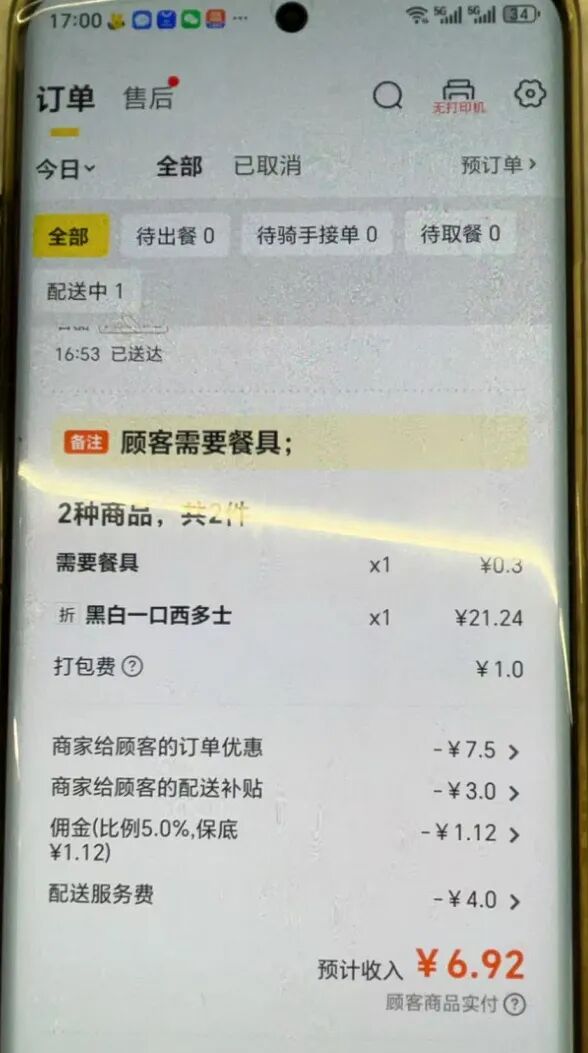
Image Source: Internet
This is not an isolated case.
According to Shenzhen Press Group, the owner of a stew shop in Foshan encountered the same issue in mid-March: 'I lose 8 to 10 yuan per order. The more I sell, the more I lose.' The agency operator told him that the AI in the food delivery backend detected lower prices on other platforms and automatically adjusted the prices.
'There's no record of the modifications in the backend either.'
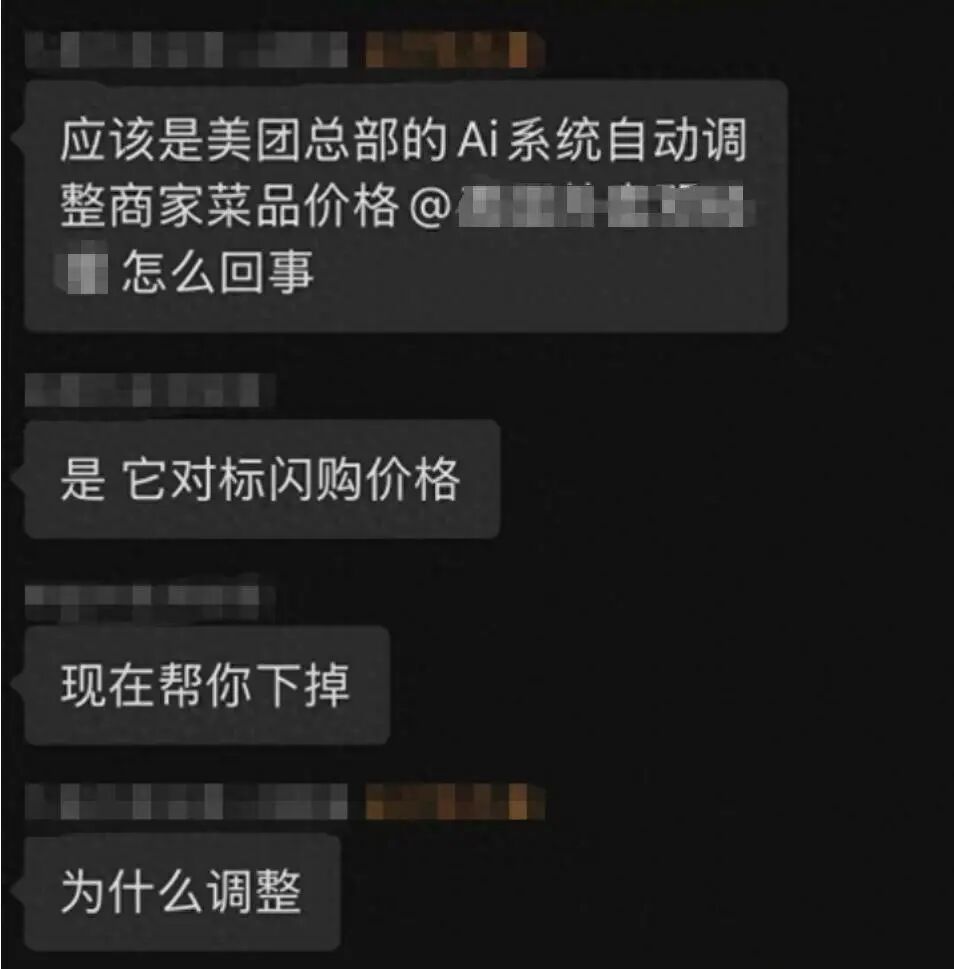
Image Source: Internet
The author believes this is not a technical glitch but a design flaw in the business model.
Similar situations have been reported in other public accounts. Jiupainews reported that the owner of a rice noodle franchise brand, watching his staff bustling about, couldn't feel happy at all. After various coupons were applied, consumers paid 9.9 yuan for a portion of rice noodles, but after deducting all costs, he received less than 1 yuan. Additionally, National Business Daily reported in July 2025 that Xibei was flooded with 11,000 low-priced orders in a single day, with manipulated pricing power becoming a widespread industry phenomenon. When algorithms become pricing weapons, what merchants see in the backend may be an increase in order numbers, but it's a countdown to the disappearance of profits.
This war is smokeless yet even more brutal, taking place in the shadows of code and data, in backend operations that merchants are completely unaware of.
How AI Algorithms Become Pricing Weapons
In fact, platforms have a precedent for using technological means to interfere with merchant pricing. From big data-driven price discrimination to merchants being 'forced to lower prices,' the essence is price discrimination. Data from the State Administration for Market Regulation in 2025 showed that the number of complaints involving price discrimination increased by an average of 217% annually, with frequent users encountering premium rates as high as 38%.
But this time, the blade is turned towards merchants.
On food delivery platforms, such price discrimination or price-following may be more conceal (concealed). The AI system 'learns' from market data, fostering a bottomless price competition that ultimately squeezes merchant profit margins.
Image Source: Internet
'Operational assistance' has become a legal disguise for mandatory enforcement. Standard terms signed between platforms and merchants often include a blanket authorization: 'On behalf of the merchant, participate in marketing activities by filling in, checking, or clicking.'
However, in practice, the authorization is infinitely expanded. Merchants think they are signing up for 'operational assistance,' but in reality, they are signing over their 'pricing power.' When the AI system enforces 'assistance' in the name of 'mandatory' actions, technology transforms from a tool into a weapon.
Meanwhile, according to public information, Meituan Waimai has launched a series of 'Merchant AI Protection' tools to further upgrade its capabilities in combating malicious claims and refunds. According to statistics, Meituan Waimai intercepts over 200,000 malicious negative reviews and over 310,000 AI-identified and intercepted malicious fraud claims per month on average. Over the past year, Meituan has helped Catering (catering) merchants intercept fraud losses totaling 86.71 million yuan, with the proportion of merchants suffering from malicious negative reviews decreasing by 60%.

Image Source: Internet
The essence of Meituan's 'AI-driven pricing transactions' is not a question of 'whether the technology is good' but 'who the technology serves.'
When AI is used to protect merchants from black-market exploitation, it is a model of technology for good, saving 86.71 million yuan in losses annually, which is commendable. But when AI is used to modify prices without merchants' knowledge, force participation in activities, and shift subsidy costs, it becomes a technological extension of platform monopoly power. This is not technological progress but abuse of power.
Silenced Small and Medium-Sized Merchants Should Not Be Ignored
Calculations by Zhongtai Securities show that each food delivery order creates approximately 34 yuan in value surplus: consumer welfare increases by 27 yuan, merchant efficiency by 15 yuan, minus 7 yuan in rider costs and 1 yuan in platform costs. But how is this 34 yuan distributed?
The platform holds the pricing power. Research by Guosheng Securities points out that the pricing power of leading platforms over merchants and users will not weaken but may even strengthen. When merchants' fixed costs rise and marginal costs change little, the platform's bargaining power increases instead.
A survey by the China Chain Store & Franchise Association shows that some merchants bear a subsidy-sharing ratio as high as 70%, far exceeding the internationally recognized reasonable threshold of 30%. Chengdu's 'Shuweixuan' chain hotpot restaurant saw its search ranking plummet to the fifth page overnight after refusing Meituan's exclusivity agreement, with daily orders dropping from 300 to 180.
When 60% of a merchant's profits are taken by the platform, the transfer of pricing power becomes a shift from a technological foundation to a business model.
Jia Guolong, the founder of Xibei, put it bluntly: 'Food delivery platforms are just trading and service platforms. They shouldn't engage in any promotions; that's the merchants' job. Now, food delivery platforms are forcing merchants to subsidize, leaving merchants with no pricing power at all.'
Traffic allocation power becomes the ultimate authority. Not participating in activities means no exposure, but participating means incurring losses. Merchants are trapped in a prisoner's dilemma.
Respecting Rules Is the Best Way to Protect the Platform Itself
Article 35 of the E-Commerce Law explicitly prohibits platforms from using technological means to impose unreasonable restrictions or conditions on merchants' transaction prices. However, platforms package AI price changes as 'technical services' through standard terms like 'operational assistance authorization.'
According to Shenzhen Press Group, lawyer Li Wangyingying from Guangdong Chenggong Law Firm points out that the platform's use of AI to forcibly change prices without authorization essentially deprives merchants of their pricing power through technological means, directly violating this article.
Is a blanket authorization valid? Merchants often overlook the clause 'on behalf of the merchant, participate in marketing activities' in the fine print when signing contracts. When the AI system batch (batch) changes prices accordingly, merchants only realize upon seeking recourse that they had 'agreed' to it.
When profits are pushed below the bottom line (bottom line) by algorithms, the food safety defense line begins to crumble. To cope with the situation of 'losing money on every order,' some merchants are forced to use expired ingredients, frozen and spliced meat, and even see the proliferation of 'ghost kitchens' and ready-to-eat meal packages.
Consumers think they're getting a good deal from the platform, unaware that what they're eating may be the 'price' merchants pay under survival pressure to cut corners. The platform's use of AI to change prices creates a false sense of prosperity but plants a time bomb for food safety across the industry.
In April 2026, the 'Internet Platform Price Behavior Rules' came into effect, explicitly prohibiting platforms from using technological means to force merchants to offer 'the lowest price across the internet' or automatically follow prices. Self-regulatory pacts signed in Guangdong and other places also strictly prohibit platforms from 'unauthorized backend operations.' Beijing's market regulatory authorities directly summoned the platforms, stating that 'operational assistance authorization' cannot be a shield for infringing on merchants' operational rights.
Price is the core property right of operators. Modifying others' goods (commodity) prices without authorization is equivalent to forging price tags and tampering with accounts in the real world. No matter how intelligent AI is, it cannot override property rights.
Platforms have scale advantages and information gaps, making 'bullying the small with the big' inherently unreasonable. Moreover, such short-sighted behavior is tantamount to draining the pond to catch fish, ultimately eroding all trust in the platform and pushing it to the opposite side of everyone. Therefore, respecting industry rules and laws and regulations is the optimal solution for platform giants to protect themselves.
In Conclusion
Business competition can involve various forms of efficiency competition and a certain degree of price competition, but turning it into a bottomless price war will only lead to the worst-case scenario of 'bad money driving out good.' Therefore, platforms should do their utmost to return the right to know and the right to price to the merchants who know the cost of dumplings and how much a pig's trotter rice dish should sell for. They should also respect the right to know and the right to health of all consumers.
References:
Shenzhen Press Group, 'Food Delivery Platform AI Changes Prices Without Merchants' Knowledge, Dishes Forced to Sell at Low Prices'
National Business Daily, 'Nearly 11,000 Low-Priced Orders Suddenly Flood In! Jia Guolong, Boss of Xibei with Annual Revenue Exceeding 6.2 Billion Yuan, Calls Out: 'Crazy! Completely Coerced. Please Return Pricing Power to Merchants, Food Delivery Platforms''
Related reports from Jiupainews
- END -
-
Alibaba’s Earnings Soar with Triple Catalysts: Full-Stack AI Hits Maturity, Capital Efficiency Drives Sustainable Growth
-
![]()
Raking in Big Profits Overseas! Chery’s Overseas Revenue Makes Up 70% in H1, with Gross Margin Climbing to 16.1%
-
![]()
Alibaba’s New Fiscal Quarter: 45% Revenue Surge in Alibaba Cloud, Enhanced Profitability in AI Cloud, but Widening Losses in the Application Layer
-
![]()
The AI Version of 'PayPal Mafia' Has Arrived: 20 AI Startups Raise Over $4.6 Billion in Funding
-
![]()
Wang Jian's Vision: Paving a Pathway for Alibaba Through AI
-
![]()
Hyundai Motor Workers Strike Today, Fearing Job Losses to Robots
-
![]()
Embracing 'Light': O-film Unveils Its 'Illuminating the Future' Strategy
-
![]()
SenseTime’s SenseNova U1.5 Lite Goes Open Source: Ushering in a New Era of Predictable AI Image Generation