Behind the 140 Trillion Token Calls Per Day: Who Will Become China's New Big Three Operators in the Future?
 08/25 2026
 342
342
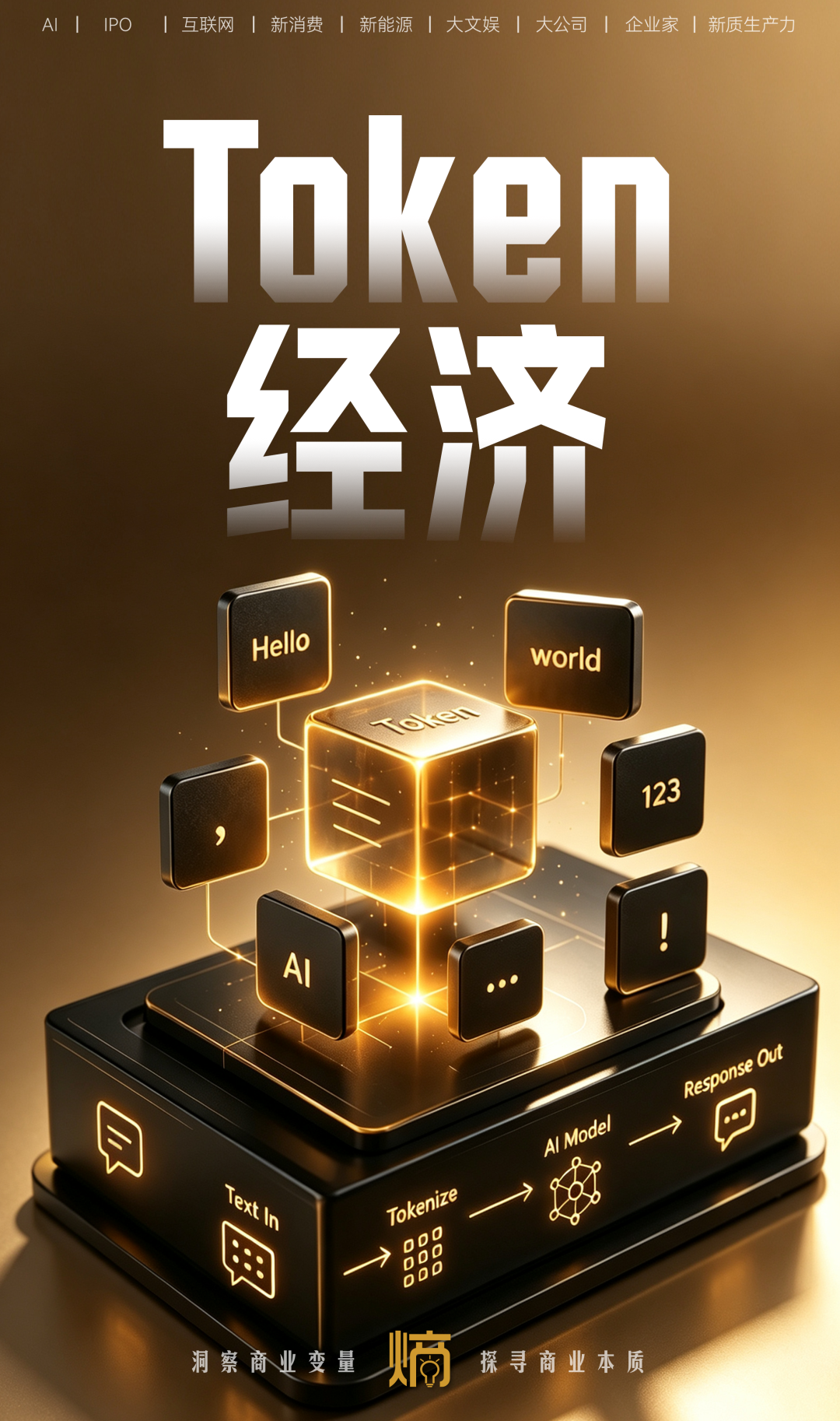

In the era of data traffic, operators were mere pipeline workers. In the Token era, whoever controls the unit of measurement holds the 'electricity bill' of the AI age. Behind the 140 trillion daily call volumes lies a new future of layered coexistence—not three companies, but three models.
Original Article by AI New Tech Team, Xinshang
In mid-2026, China Telecom's Ningxia branch secured a 16.451 billion yuan contract for a 'Token Factory' project. This marked the first time the three major operators included 'Token' in the name of a multi-billion-yuan procurement project.
Soon after, Shanghai Telecom launched a 9.9 yuan Token package for consumers, with China Mobile and China Unicom quickly following suit.
These veterans, who had been selling broadband and data traffic for two decades, were shifting their Token strategies from exploration to deep engagement.
The reason is simple: operators refuse to accept a slow decline. They aim to break through in the AI era—transforming from 'data pipeline workers' to 'actuaries of intelligence.'

The Infrastructure of Tokens and the Collective Shift of Operators
What is a Token? It is the smallest semantic unit processed by large models.
Every time you ask an AI a question, have it write copy, or revise a weekly report, Tokens are consumed. In the industrial age, productivity was measured in kilowatt-hours; in the information age, connection efficiency was measured in GBs; in the AI age, intelligence density is measured in Tokens.
What is truly alarming is the speed of transition.
In early 2024, the domestic daily Token call volume was around 100 billion; by March 2026, it had surged to 140 trillion. Two years, three orders of magnitude. This is not linear growth but exponential explosion.
Tokens are following the same path as cellular data traffic two decades ago: evolving from a scarce technical parameter in labs to a standardized, packageable, and mass-distributable basic resource commodity. China Telecom's 9.9 yuan Token package is not a promotion but a clear signal—Tokens now possess the attributes of utilities and can be sold to every ordinary person like data traffic.
But Tokens mean much more to operators than just an additional business. They are redefining the value of 'connection' itself.
Traditional data traffic billing measures the volume of data transmitted, while Token billing measures the volume of intelligence processed. When intelligent interactions occur at the large model level, Tokens are not a substitute for data traffic but a dimensionality reduction attack on it. If operators fail to transform from 'data pipeline workers' to 'actuaries of intelligence,' they will be kicked aside by the new era's giants.
Over the past two decades, the three major operators have been trapped in the pipeline dilemma of increasing traffic but declining ARPU. The more traffic they sold, the thinner their revenues became. In the AI era, if user interactions with intelligent agents bypass traditional apps and data consumption, the 'connection' value of operators will be completely undermined.
Thus, all three have embarked on difficult breakthroughs.
China Telecom is the most aggressive: combining multi-billion-yuan procurement with 9.9 yuan consumer packages and the 'Tianyi Token Coin,' it aims to establish industry standards for billing and circulation. The logic is clear—set standards first, then rules, and finally prices. Whoever controls the unit of measurement for Tokens holds the 'electricity bill' of the AI age.
China Mobile has chosen a platform-based approach: leveraging its computing infrastructure and ecological alliances, it partners with Tencent, Alibaba, and Huawei to build distribution capabilities. The mindset is pragmatic—not the coolest, but the most stable. It uses the nation's largest base station network and billing access for over a billion users as leverage.
China Unicom has taken a differentiated route: bundling Tokens with AI cloud desktops and intelligent agents, it offers solutions for lightweight B-end scenarios like 'one-person companies.' It competes not on scale but on penetration.
While their paths differ, the underlying logic is the same: never again be mere pipeline workers. Their national-level network infrastructure and billing access for over a billion users are their shared core assets—a moat that no cloud provider or third-party platform can easily replicate.
 The Three-Tier Division of New Players and the Distribution Layer Dilemma
While operators are still searching for way out (paths) at the entry layer, the industrial chain has quietly divided into three tiers. The fiercest competition is happening where you can't see it.
The production layer is dominated by Huawei's Ascend and others.
They build computing clusters responsible for the physical generation of Tokens, acting as the 'upstream miners' of the entire chain. No computing power means no Tokens; no chips mean no computing power. This tier has extremely high technical barriers, with few players—a true 'hardcore arena.' Whoever masters advanced AI chips and large-scale computing clusters holds the 'faucet' of Token production. At this level, the story of domestic substitution is unfolding fiercely, but a visible gap remains compared to international leaders.
The distribution layer is the battleground for third-party platforms.
Companies like Silicon Base Flow package Tokens produced by computing clusters into APIs and sell them to developers and enterprises. However, this tier faces significant challenges—Silicon Base Flow's 2025 annual report showed a gross margin as low as -119%, essentially trading capital for scale and subsidies for users. Pure Token distribution lacks network effects and differentiation barriers. With computing costs steadily declining, the profit models of independent distributors remain under pressure.
Why is the distribution layer so brutal?
Because Tokens are logical commodities, not physical monopolies. They lack scarcity barriers—anyone can buy or sell them, with prices as transparent as glass. If you sell for one cent today, someone will sell for half a cent tomorrow. Distribution layer players are trapped in an endless war of attrition—either crushed by giants or dragged down by costs.
The application layer is the domain of internet newcomers like Alibaba, ByteDance, and Tencent.
They don't care about the price of Tokens per million; they only care whether users are willing to pay for AI features. Doubao hides Tokens in chatboxes, letting you generate copy while chatting; Tongyi Qianwen embeds them in document assistants, automating weekly reports and meeting minutes; Hunyuan integrates them into code completion, reducing repetitive coding for programmers by half. Users interact seamlessly, while giants quietly collect revenues.
Do you see the difference?
One type of player burns money in the distribution layer to gain market share, trying to outpace rivals; the other, represented by Alibaba and ByteDance, swallows Tokens into their products, using application-layer premiums to cover costs and creating closed loops. True high-dimensional players never sell naked Tokens—they turn Tokens into the air users can't live without.
The distribution layer's dilemma won't disappear. As OpenAI and domestic large models continue their price wars, Tokens are becoming increasingly cheap. When Tokens drop to a fraction of a cent per million, players' profit margins will be flattened entirely.
The deeper issue is that the distribution layer lacks irreplaceable moats. The computing layer has chip barriers; the application layer has user stickiness. What does the distribution layer have? An API interface? A billing system? These are not uncopyable core competencies.
This means the distribution layer's ultimate paths are only two: either extend upstream to build computing clusters, becoming vertical integrators of 'production + distribution'; or penetrate downstream to offer industry solutions, becoming scenario deep-divers of 'distribution + application.' Pure distributors stuck in the middle are destined to be the first eliminated in the large model industrial chain.
 Final Verdict: Three Models, Not Three Companies
After all this, who will be the 'new big three operators' of the future?
The answer is already clear—not three independent companies, but three irreplaceable business models.
The first is operator-led basic pipeline layer, making Tokens universally accessible through scale effects and entry advantages. They hold the national network and billing access for over a billion users, packaging Tokens into affordable plans and becoming the 'utilities' of the AI age. No matter how upper-layer applications evolve, Tokens must flow through their pipelines. This is their irreplaceable trump card.
The second is cloud giants-led enterprise platform layer, enabling enterprises to 'use Tokens effectively' through vertical integration. Alibaba, Tencent, and Huawei don't sell naked Tokens but offer one-stop solutions of 'Tokens + models + toolchains.' For enterprise clients, buying Tokens is just the beginning; how to turn Tokens into productivity is where cloud giants truly add value.
The third is third-party and developer-led application aggregation layer, letting developers 'use Tokens enjoyably' through scenario innovation. Future Token aggregation platforms will emerge for specific industries—finance, healthcare, law, education. They don't produce Tokens or build general-purpose large models but process Tokens into 'plug-and-play' modules for vertical scenarios.
As logical commodities rather than physical resources, Tokens inherently possess layered attributes and cannot be absolutely monopolized by a single entity. Old powers control network entries and billing pipelines; new powers control computing production and application transformation. The true competition lies in whether each party can build irreplaceable moats within its own tier.
For developers, the core proposition is never 'which Token is two cents cheaper' but whether applications can run stably in high-concurrency, low-latency environments. Tokens will become increasingly cheap, even approaching zero, but 'running stably' will always be 100 times more important than 'buying cheaply.'
For the industry, the final outcome will never be a zero-sum tripartite standoff but a coexistent architecture of multiple layers—each guarding its tier, each building its barriers. Every tier requires different capabilities, and every tier may spawn new giants.
Behind the 140 trillion daily call volumes lies more than just a soaring number.
It is a footnote to the entire AI era—when Tokens become as ubiquitous as air, a new era where intelligence measures everything has quietly begun.
The age of pipeline workers is over. The age of actuaries has begun.
References:
Silicon Base Flow 2025 Annual Report: Gross Margin -119%
MIIT/AI Association Joint Release, March 2026: Domestic Daily Token Call Volume 140 Trillion
Public Materials from Vendors: China Telecom's 'Tianyi Token Coin,' China Mobile's 'Computing Ecosystem Alliance,' China Unicom's 'AI Cloud Desktop + Intelligent Agent' Solution
China Telecom Ningxia Branch's July 2026 Bid Announcement: 'Token Factory' Intelligent Computing Center Procurement Project, Amount 16.451 Billion Yuan
Shanghai Telecom's June 2026 C-End Token Package Launch Announcement (9.9 yuan/month); China Mobile and China Unicom's Follow-Up Reports in July-August 2026
- END -
-
How AI Changes the Flow of Money: Budget, Self-Development, and the Last Mile
-
![]()
SAIC Volkswagen’s Bold “Self-Revolution”: ID.ERA 5S Targets the Heart of the Fuel-Powered Family Sedan Market
-
![]()
Beyond APIs: Future-Oriented Strategies for AI Global Expansion
-
![]()
Behind the Daily Average of 140 Trillion Token Calls: Who Will Become China's Future New Three Major Operators?
-
![]()
How Many Zhipu Members Were Wrongly Banned?
-
![]()
Leapmotor Revises Profit Goal to 3 Billion Yuan: Targets 400,000 Overseas Sales in the Coming Year, Forges Symbiotic Alliance with FAW | MINGJINGpro
-
![]()
Behind the 140 Trillion Token Calls Per Day: Who Will Become China's New Big Three Operators in the Future?
-
![]()
DPCA Technology Launched, Pioneering a New Era for Joint Ventures: Taking 'Chinese Heritage' Global