SAIC Volkswagen’s Bold “Self-Revolution”: ID.ERA 5S Targets the Heart of the Fuel-Powered Family Sedan Market
 08/25 2026
 457
457
Produced by Zhineng Technology
At this year’s Chengdu Auto Show, the ID.ERA 5S made waves with its pricing strategy:
The official guide price ranges from RMB 119,900 to RMB 149,900, but with limited-time promotions, customers can snag it for as low as RMB 89,900 to RMB 119,900.
The Pro Pilot version, equipped with urban NOA (Navigate on Autopilot), is available for RMB 114,900 after discounts.
Just ten days prior, the pre-sale price for this model stood at RMB 115,900 to RMB 145,900. By the official launch at the auto show, the overall benefit price for existing versions had dropped by an additional RMB 26,000.
SAIC Volkswagen is aiming squarely at China’s fiercely competitive mainstream new energy vehicle (NEV) market with this aggressive pricing.
The ID.ERA 5S is tasked with winning back buyers who might otherwise opt for traditional fuel-powered family sedans like the Lavida and Sagitar.
In an exclusive interview following the auto show press conference, SAIC Volkswagen candidly stated, “To revolutionize, you must revolutionize yourself.”
Given SAIC Volkswagen’s current predicament, this declaration serves as a somewhat belated but necessary call to action for the organization.
According to SAIC Group’s production and sales report for January to July 2026, SAIC Volkswagen’s cumulative sales reached 384,600 units, marking a year-on-year decrease of 32.73%.
While the core market for fuel-powered vehicles remains, it is rapidly shrinking. Meanwhile, the NEV segment has yet to achieve significant scale with past offerings.
Can a company that has relied on the scale of fuel-powered vehicles, joint venture systems, and channel inertia for over four decades learn to attack the Chinese market again without completely abandoning its old expertise? The ID.ERA 5S must provide the answer.
01 Pricing at RMB 89,900: Breaking Down Its Own Barriers
Joint venture brands in the mainstream family sedan market have traditionally enjoyed three key advantages: brand trust, accumulated fuel vehicle technology, and a nationwide dealer network.
These factors have long granted SAIC Volkswagen pricing power and fostered a stable business model: leveraging mature models to achieve scale, relying on brand and channel strength to support prices, and using long product cycles to amortize R&D and manufacturing costs.
However, NEVs have compressed product cycles from five or six years to just one or two. Smart cockpits and assisted driving systems rely on continuous OTA (Over-the-Air) updates, and consumer comparisons of configurations and prices are nearly real-time. Problems that could be addressed with a mid-cycle facelift in the past may now require a complete redesign every six months.
Fu Qiang made a down-to-earth analogy: In the fuel vehicle market, SAIC Volkswagen is “defending a hilltop”; in the NEV market, it is still at the “foot or mid-slope of the mountain.” Defending a hilltop can rely on inertia, but attacking requires substantial investment.
The ID.ERA 5S is the first clear indication of this cost.
This plug-in hybrid sedan, measuring over 4.8 meters in length, offers a CLTC pure electric range of 160 kilometers and a claimed combined range exceeding 2,000 kilometers. The high-end version comes equipped with urban NOA.
Packaging all this into a limited-time benefit price range of RMB 89,900 to RMB 119,900 targets not just internal competition among joint venture NEVs but Chinese brands’ strongest segment: the RMB 100,000-level family sedans.
The ID.ERA 5S cannot avoid competing with SAIC Volkswagen’s own fuel vehicles (a phenomenon known as self-cannibalization). If the company refuses to embrace self-cannibalization, the market will eventually force it upon them. Instead of worrying about hurting Lavida sales, the question is whether these users will buy SAIC Volkswagen’s NEVs or someone else’s in the future.
“Revolutionizing itself” is a strategic choice driven by market structure for SAIC Volkswagen.
02 The 9X Repositions the Brand, While the 5S Validates Scalability
SAIC Volkswagen has assigned distinct roles to the ID.ERA family.
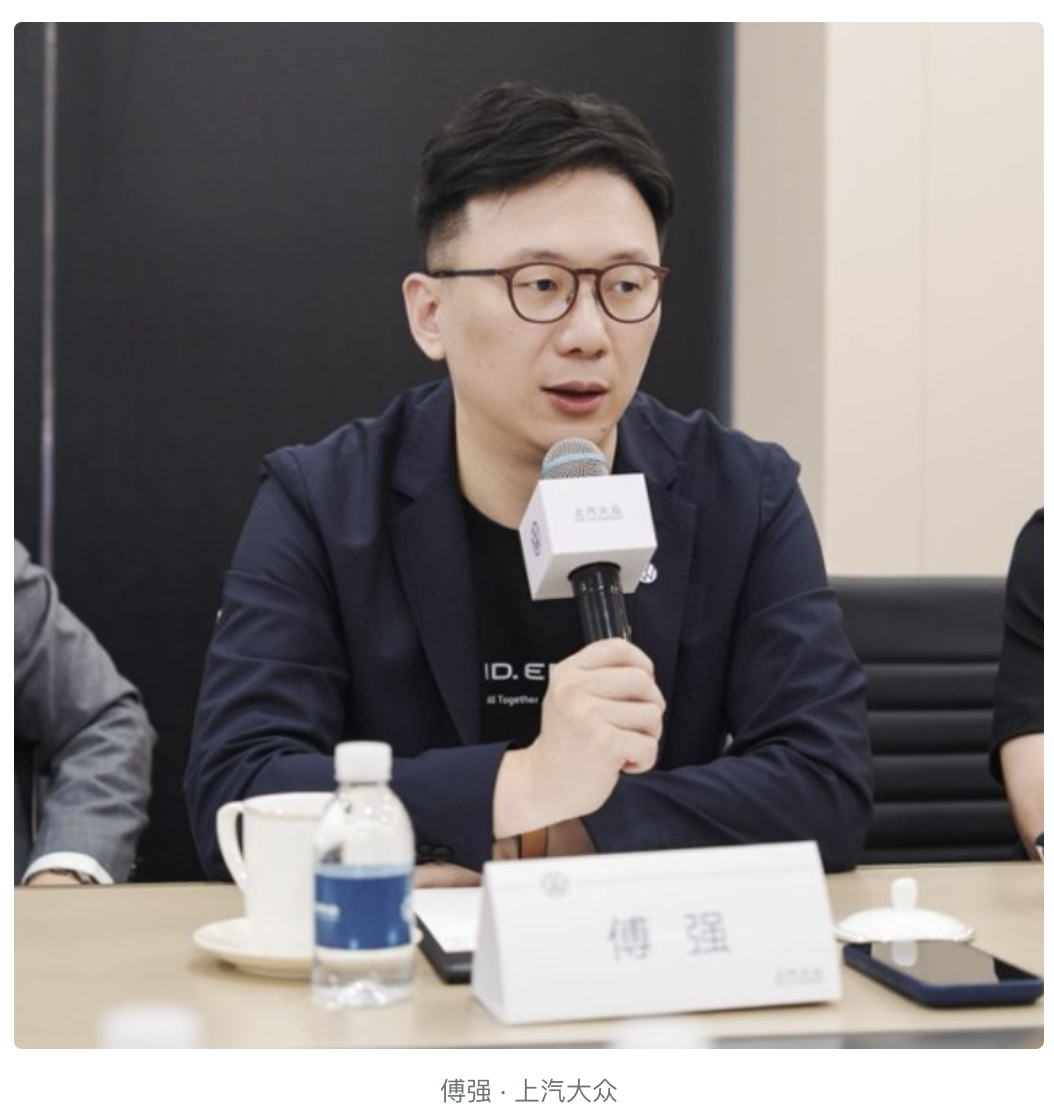
According to Fu Qiang, the flagship ID.ERA 9X’s primary task is to reposition Volkswagen at the center of NEV technology and public discourse.
The 9X serves as a brand anchor, signaling to the market that Volkswagen has developed a new Chinese-oriented solution for extended-range capabilities, smart cockpits, and advanced assisted driving.
The ID.ERA 5S, 5X, and 8X are tasked with achieving scale in Volkswagen’s most familiar A-class and B-class mainstream markets, translating technological prowess into sales volume. The family matrix covers sedans and SUVs, including plug-in hybrids, extended-range, and pure electric vehicles, leveraging scale to drive down costs.
For new entrants, a single hit product can sustain them for a while. For SAIC Volkswagen, true transformation must simultaneously address fuel vehicle inventory, dealer profitability, production line switching, supply chain depreciation, and investments from Chinese and foreign shareholders.
The 9X showcases SAIC Volkswagen’s capabilities, but for the 5S to be affordable enough for mass production, it presents both a product and an organizational challenge.
03 Can Low Pricing and “Gold Standard” Coexist? Time Will Tell
SAIC Volkswagen insists on avoiding three types of vehicles: “quick-fix cars,” “borderline compliance cars,” and “double standard cars.”
Although the ID.ERA 5S enters the RMB 100,000-level market, its validation standards remain unchanged.
According to SAIC Volkswagen, each model undergoes over 8,000 tests before launch, with the assisted driving system undergoing more than 500 tests above national standards. Some durability and environmental validations still adhere to the rigorous “two winters and two summers” standard.

Li Jun believes that “quality is a promise to users over time.”
Quality is not just about launch parameters but the actual vehicle condition after five or eight years. Validation takes time, but the market does not wait. High standards require costs, yet RMB 89,900 squeezes cost space.
Automakers can reduce unit costs through platform sharing, supply chain bargaining, benefit design, and scale amortization but cannot infinitely compress physical validation cycles.
Rubber aging, suspension fatigue, body corrosion, and software stability in extreme scenarios truly emerge only over time and mileage.
Fu Qiang acknowledged the existence of a “new vehicle death trap” in the domestic market: Three to six months after a new vehicle’s launch, its selling points may be dismantled by competitors, with price and configuration advantages quickly disappearing.
Automotive companies operating in China need to prepare for iterations six months after a model’s launch.
SAIC Volkswagen cannot simply choose between “Chinese speed” and “Volkswagen standards.” R&D and decision-making must accelerate, but validation baselines cannot be cut. Hardware must be frozen earlier, while software continues to improve via OTA. Several models share mature modules, focusing efforts on new risks without re-verifying old issues.
“Not building quick-fix cars” does not mean slowing down. The past serial, layered approval development system must be transformed into a parallel, collaborative one.
04 Three Intelligent Driving Routes: Betting on Speed and Discourse Power
SAIC Volkswagen currently has three assisted driving collaboration lines: Fuel vehicles partner with Zoyu; the ID.ERA 9X uses Momenta; and the ID.ERA 5S introduces Coretc—a joint venture between Volkswagen and Horizon Robotics.
China’s assisted driving industry is still rapidly evolving. Algorithms, chips, data loops, and mass production capabilities are not yet standardized. Binding the entire product matrix to a single supplier early on may offer short-term integration efficiency but could lose bargaining power and route flexibility in the long run.
SAIC Volkswagen tries to stay close to several leading companies while securing resources through equity investments, joint ventures, and early co-development. Early involvement encourages suppliers to develop around your chassis and safety goals; late adoption often results in receiving merely transplanted technologies from other models.
This strategy quickly bridges the intelligence gap without waiting for full self-research and reserves the flexibility to compare and switch routes.
The multi-supplier strategy hinges on establishing a unified standard above suppliers: the same safety boundaries, similar interaction logic, continuous software maintenance, and consistency from the vehicle end to underlying controls. Without this, multiple routes become fragmentation; with it, supply chain control becomes possible.
05 Rebuilding the Dealer System Is Harder Than Building Cars
SAIC Volkswagen is pushing for “marketing transformation,” using Net Promoter Score (NPS) as the “North Star metric.” The overemphasis on procurement and wholesale volume in the fuel vehicle era easily led to price fluctuations and may have caused dealers to neglect service quality, touching on the most fundamental issues of traditional joint venture brands.
In the fuel vehicle era, manufacturers wholesale vehicles to dealers, shifting inventory and sales pressure to the latter. When demand is strong, this system can quickly scale; when demand drops, inventory pressure leads to terminal price cuts, dealers in the same city undercutting each other, and repeated erosion of the brand’s price system.
NEV users, beyond the transaction, require software updates, charging, infotainment, and assisted driving usage boundaries, as well as ongoing communication from order placement to delivery. Service begins only after the vehicle is sold.
Fuel vehicle and NEV users should not be treated differently—this is fine in principle. However, NEV business requires a completely different revenue and assessment structure. If dealers still primarily earn from purchase-sale margins, finance, and maintenance but are expected to handle higher-frequency software explanations and user operations, the transformation cost ultimately falls on the sales side.
Thus, “one customer, one group,” direct user connection, and NPS are just surface actions. How manufacturers share inventory risk, compensate dealers for delivery and long-term service, reduce reliance on wholesale volume, and stabilize terminal prices matter more.
The ID.ERA 5S can lower the threshold to RMB 89,900 with benefits, but if terminal prices fluctuate wildly six months later, the first batch of users’ trust and dealer-related issues will arise. Product pricing is the first shot in the offensive; sustained channel performance is key.
06 The Joint Venture Model Is Not Outdated—It Just Needs to Evolve from “Resource Exchange” to “Joint Decision-Making”
The common explanation for the slow transformation of joint venture brands in the past is the long decision-making chain and misaligned interests between Chinese and foreign shareholders.
Fu Qiang did not avoid this point—Chinese and foreign shareholders may have disagreements on pace, short-term and long-term interests. The management’s crucial task is to align the interests of both sides.
The ID.ERA 5S’s price reduction indicates at least one point of consensus: The NEV market cannot be managed with a defensive logic; even if it means sacrificing short-term profits and some fuel vehicle sales, securing a ticket to the mainstream market comes first.
The most valuable aspects of joint ventures are global engineering capabilities, Chinese supply chains, Chinese software ecosystems, and local decision-making recombined.
If this combination still involves layered reporting and item-by-item approvals, it becomes a burden. If the local team can make decisions, the joint venture model can extend significantly.
SAIC Volkswagen first proclaimed “In China, For China” and now aims for “In China, For the World.” This path depends on how much product definition power, supplier selection power, and pricing power the Chinese team holds.
The 5S’s price of RMB 89,900 is an attempt.
Summary
The ID.ERA 5S brings SAIC Volkswagen back to the RMB 100,000-level NEV family sedan table, but pricing can only solve whether consumers are willing to take a glance—not why they would stay long-term. “Revolutionizing itself” means revolutionizing the old methods that once helped it win but may now hold it back.
-
![]()
RUNTO Ranking | Global Top TV ODM Factories' Shipment Figures for July 2026
-
![]()
Dealer Service Operational Prowess | How After-Sales Managers Can Harness Efficiency and Expertise to Secure Trust in the New Energy Era
-
![]()
Xiaohongshu: Navigating Through the AI Anxiety Storm
-
The Foundation of AI is Being Built
-
![]()
Huawei and Apple Embrace Change, Samsung Steps Back: Is Variable Aperture Technology a Game-Changer?
-
![]()
Huawei and Apple Embrace the Trend, Samsung Steps Back: Is Variable Aperture Technology Truly Worthwhile?
-
How AI Changes the Flow of Money: Budget, Self-Development, and the Last Mile
-
![]()
SAIC Volkswagen’s Bold “Self-Revolution”: ID.ERA 5S Targets the Heart of the Fuel-Powered Family Sedan Market