After Securing First-Quarter Sales Leadership, Can Geely Sustain Its Edge Over BYD?
 04/07 2026
 587
587
If you visited several 4S stores in March, you'd grasp just how 'hot' this year's first quarter has been. On one hand, BYD had just wrapped up its product launch, with sales consultants frequently touting 'megawatt flash charging.' On the other, Geely's dealerships were displaying an impressive array of new configurations. The rivalry between these two automotive giants has never been fiercer in the first three months of the year.
Geely took an early lead in the first two months, but BYD accelerated its pace in March with the introduction of groundbreaking technologies, such as the new-generation megawatt flash charging.
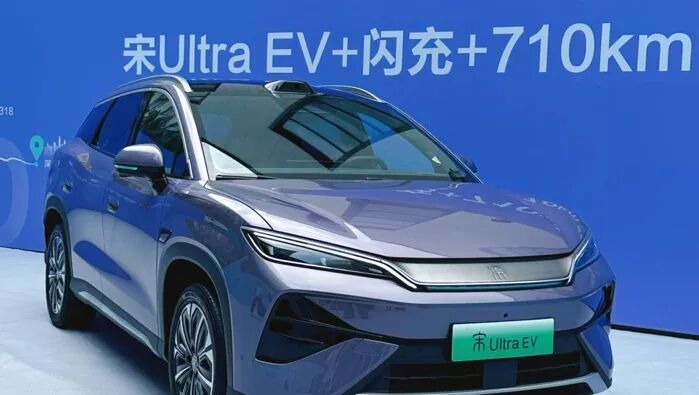
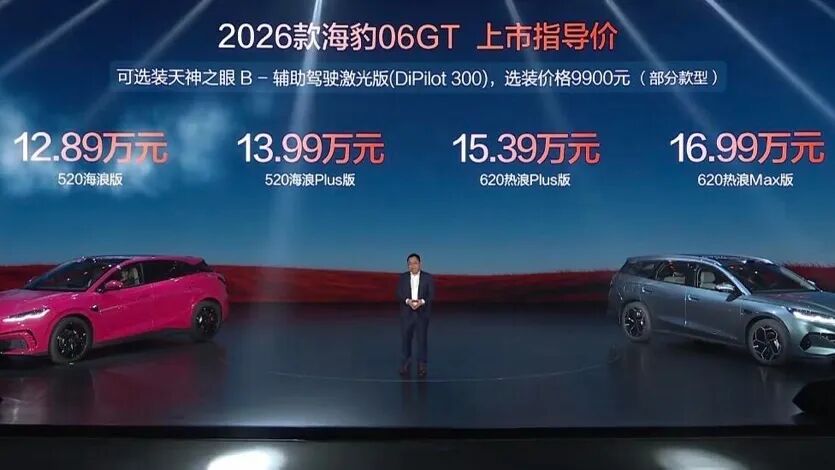
The recently launched 2026 Seal GT has achieved the industry's fastest charging speed for plug-in hybrids, while the Song Ultra has brought megawatt flash charging to the 150,000-yuan price bracket. Besides new batteries, these two models are also generously equipped with other advanced features. It's evident that in the mainstream 100,000-200,000 yuan market, BYD is leaving little room for competitors.
BYD's All-Out Effort: Geely's Win Not Assured
The impact of new technology releases on sales is immediately apparent in terminal channel feedback. In the last week of March, BYD sold approximately 50,000 new cars domestically, with this last-minute surge casting doubt on the first-quarter outcome.
Why can a charging technology provide such a direct sales boost? It's straightforward: users are always most concerned about 'range anxiety' and 'operating costs.' The essence of megawatt flash charging is to further reduce charging time to the level of 'grabbing a coffee,' approaching the convenience of 'charging on the go.' Simultaneously with the technology release, BYD also adopted a more aggressive pricing strategy. For instance, the 2026 Seal GT bundles 'second-generation blade batteries + faster plug-in hybrid charging' at a price below 150,000 yuan, reflecting BYD's cost control prowess.
In terms of product rhythm, BYD's strategy this year is highly intensive. The March 26 launch of the Song Ultra, featuring megawatt flash charging across the entire lineup, directly brought ultra-fast charging from a premium feature to the mass-market 150,000-yuan segment. Now, megawatt flash charging faces its first brief hiatus after release—the Qingming Festival.
Zhang Zhuo, General Manager of BYD's Ocean Network Sales Division, stated at the launch event that as of April 1 this year, BYD has constructed 5,000 flash charging stations covering 297 cities globally. With the implementation of technology, network, and pricing strategies, BYD's sales surged in March.
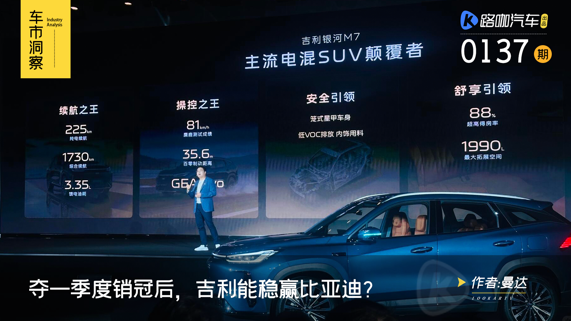
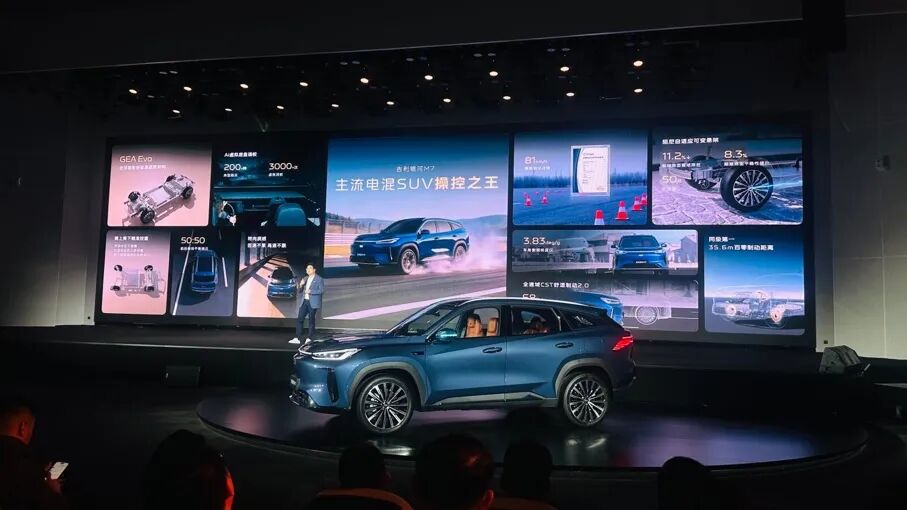
Geely is not without its own strengths. The recently released Galaxy M7 targets the home scenario with a blend of 'space + comfort + energy efficiency,' featuring Geely's new battery—the Shendun Golden Brick Battery—emphasizing safety, longevity, and stability. More crucially, Geely's group advantages are substantial. With multi-brand synergy among Geely, Lynk & Co, and Zeekr, a solid foundation, and extensive channel coverage, Geely's ability to surpass BYD in the first two months underscores its strong execution in system and terminal operations.
From a market standpoint, the primary battleground between the two companies lies in the 100,000-200,000 yuan A+ to B-class segment, where the winner will secure 'blockbuster' models with monthly sales exceeding 100,000 units. Plug-in hybrids will be the keyword in the first half: consumers will decide based on who offers lower fuel consumption, a smoother electric drive experience, faster charging, and a denser charging network.
Judging from current trends, BYD's advantages in product iteration and cost reduction resemble 'acceleration,' offering opportunities to steadily climb in Q2/Q3 through密集 (intensive) new product launches and an improved charging network. Meanwhile, Geely will continue to solidify its mass-market position with Galaxy series products while tasking Zeekr with brand and average price exploration, potentially maintaining a 'total volume leadership or profit optimization' scenario for an extended period.
Reviewing monthly sales trends from 2023-2025, a clear pattern emerges: Geely often takes an early lead, while BYD tends to surpass it in annual sales through new product rhythms as the quarter progresses. For example, in January 2024, Geely's wholesale volume reached 213,500 units, surpassing BYD's 201,500 units. In January 2025, Geely's domestic retail volume of 240,000 units also temporarily exceeded BYD's approximately 200,000 units. The 'cat-and-mouse' game between Geely and BYD in the first quarter is just the opening act—the show has just begun.
TOP 3 Is Settled, But the Race for Fourth and Fifth Is More Thrilling
Based on first-quarter sales, the ranking of automakers in 2026 is unlikely to undergo significant changes. BYD, SAIC, and Geely will form the top three, creating the first tier. Over the past year, Changan achieved annual sales of 2.913 million units, while Chery reached approximately 2.8064 million units, with a relatively small gap in volume.
In the first quarter of 2026, industry aggregate data indicates that Geely and BYD remain closely matched in total volume, with Chery following at approximately 601,700 units and Changan slightly lower than Chery. The gap between third and fifth place has narrowed to single-digit to low double-digit thousands of units.
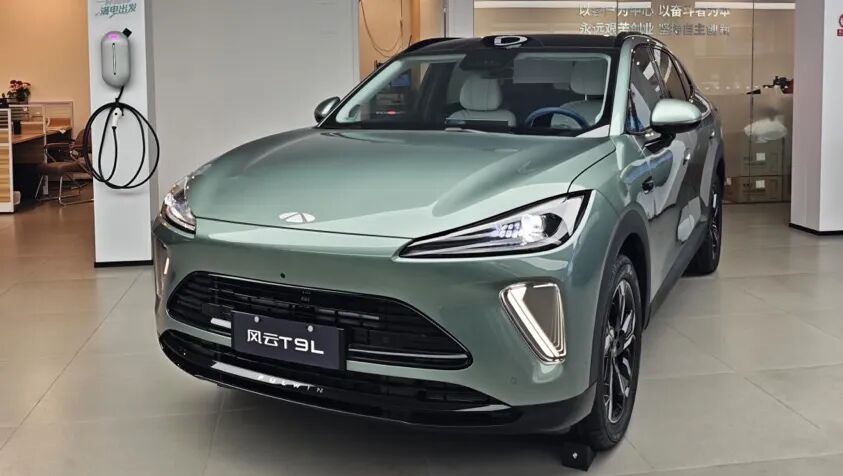
Following this logic, the speed of technological realization this year will directly influence sales trends. For Changan, Qiyuan is focusing on efficient electric hybrids as a volume strategy, Shenlan is continuously upgrading 800V high-voltage systems, thermal management, and vehicle energy efficiency, while Avatr is the first to adopt Huawei's 896-line LiDAR. Thus, Changan's sales rebound in March was no coincidence—270,600 units sold in a single month, including 89,600 new energy vehicles and over 100,000 overseas sales for the first time. In the first quarter, Changan sold a total of 557,500 new vehicles, including 168,600 new energy vehicles.
Chery sold a cumulative 601,700 units in the first quarter, with 240,700 units in March alone. New energy sales reached 161,200 units for the quarter and over 70,000 units in a single month. Exports reached 393,300 units. Stable export performance has propelled Chery into the TOP 5. Chery's overseas channel expansion and localized production ramp-up enable it to quickly scale up when suitable models are introduced, replicating this success across multiple markets. Domestically, the Stellar Era platform emphasizes comfort, NVH, and consistent range as perceivable quality benchmarks in the mid-to-large new energy segment, while C-DM hybrids achieve lower energy consumption.
Therefore, the ranking of automakers in 2026 is unlikely to witness a major reversal, with SAIC, BYD, and Geely vying for the TOP 2 spots without much suspense. The more thrilling race is for fourth and fifth place: how will Changan and Chery strategize to secure a TOP 5 position?
Notably, reliable sources indicate that BYD will host a new intelligent driving technology launch event in April. More intriguing than the automotive ranking race is how other automakers will respond to BYD's current wave of dominant technological cycles.
-
![]()
The Allure of 'Acquisition Spree': Li Shufu's Left Turn, Xu Jiayin's Right
-
![]()
Strategic Transformation Yields Results: Phoenix Optics Reports 10.9% YoY Rise in Core Net Profit for H1 2026
-
![]()
Three Key Growth Trajectories Synergize! Crystal-Optech Reports 3.478 Billion Yuan in Revenue for H1 2026
-
![]()
Semi-Annual Report Sparks XPENG Motors Buzz
-
![]()
1.6 Billion Big Order Secured! SeeYA Technology's Revenue Soars by 287.87% in the First Half of the Year
-
![]()
Baidu's Profits Plunge by 68%: Unraveling the Mystery Behind the Numbers
-
![]()
Baidu’s Profits Tumble by 68%! Where Has All the Money Gone?
-
![]()
Hynix’s Taobao Store Shuts Down Abruptly: What Should Customers Do About Warranty Services for Memory Modules?