Leveraging China’s Industrial Chain Strengths, Volkswagen and BYD Spearhead Overseas Market Expansion
 07/07 2026
 404
404
Copywriting|Chen Cong
Produced by|Shi Tianhao Observations
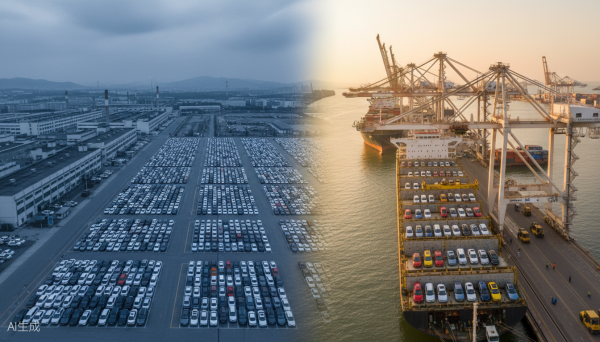
On June 17, 2026, at the Tashkent International Forum, Volkswagen China announced the official entry of its Volkswagen and Jetta brands into Uzbekistan, marking Volkswagen China’s first full-scale launch of its overseas export business.
A Volkswagen China employee involved in the project’s preparation later recalled that there had been internal debates over the project’s strategic positioning. Some saw it as merely a trial to clear unsold domestic inventory, while others argued it represented Volkswagen’s most significant strategic pivot in China in two decades.
Ultimately, the latter perspective prevailed.
Around the same time, BYD released its June sales figures on July 1, reporting 403,500 vehicles sold—the only automaker to surpass 400,000 units in that period. However, a closer look revealed that 228,100 units were sold domestically, marking a 21.94% year-on-year decline, while overseas sales reached approximately 175,400 units, showing significant growth.
Industry analysts described BYD’s performance in the first half of 2026 as a tale of two markets.
Two companies, one strategy: When domestic sales falter, go global.
I. Volkswagen: From “China’s Darling” to “Global Hub”
1. The Chinese Market: From Profit Pool to Cost Center
Volkswagen’s challenge isn’t low absolute sales but excess capacity amid shrinking demand.
According to June 2026 data from the China Passenger Car Association (CPCA), retail sales of passenger vehicles in China totaled 7.099 million units from January to May 2026, a 19.5% year-on-year decline. From June 1 to 21, retail sales fell further by 23% year-on-year.
NIO Chairman William Li publicly stated in June that full-year passenger vehicle retail sales in 2026 would likely decline by 15% to 20% year-on-year.
As the overall market contracts, Volkswagen struggles to remain unaffected.
In May 2026, Volkswagen’s domestic retail sales reached approximately 97,000 units, a significant year-on-year decline. While it remained second in brand rankings, its performance compared to its historical scale showed clear weakness.
A deeper issue is capacity utilization. Volkswagen’s planned annual production capacity in China exceeds 5 million units. Based on May’s sales, capacity utilization remains far below design levels, leaving over 3 million units of capacity idle or underutilized.
According to sources close to Volkswagen’s production system, the situation on the factory floor is more telling. Starting in the second half of 2025, some workshops shifted from three shifts to two. In early 2026, an entire assembly line halted production, with equipment sealed and personnel reassigned to operating lines. “We used to fear insufficient capacity; now we fear excess capacity,” one employee remarked.
Price wars further squeezed profit margins. In the first half of 2026, domestic automakers generally lowered prices to maintain market share, with BYD, Leapmotor, and XPeng adjusting prices consecutively. Caught in the middle, Volkswagen faced a choice: follow suit and erode profits or hold firm and lose share.
Leapmotor Chairman Zhu Jiangming candidly remarked in June, “The domestic auto market from January to May and the first three weeks of June 2026 has not been optimistic.”
If leading automakers face such challenges, Volkswagen’s predicament is hardly unique.
2. Uzbekistan: A Signal of Strategic Shift
Volkswagen’s entry into Uzbekistan might seem like a trial run, but a closer look reveals a comprehensive market entry strategy.
During the Tashkent International Forum, Volkswagen China disclosed collaboration details. Initially focusing on exported complete vehicles, including models like the Tiguan L Pro and Passat Pro, it later partnered with local automaker Alyans to launch semi-knocked-down (SKD) assembly production, targeting an annual capacity of 20,000 units.
Simultaneously, the brand deepened its presence in Southeast Asian markets like the Philippines and Vietnam, achieving a breakthrough in Central Asia.
Notably, exported vehicles were optimized for local climates, road conditions, and driving habits. Upgrades included enhanced air conditioning systems, added dust protection, and reinforced chassis protection. The target markets were clear: Central Asia, the Middle East, and Southeast Asia—regions with persistent demand for fuel-powered vehicles.
This move effectively redefined China’s production base from a “domestic factory” to a “global export hub.” Volkswagen’s Chinese capacity now serves global markets, not just China.
Similar transitions are evident among other joint ventures. Yueda Kia’s Yancheng plant exported 537,000 vehicles from 2018 to the end of 2025; Ford’s Chongqing and Hangzhou plants became the sole global producers of B- and C-segment sedans; GAC Honda began exporting China-made Odyssey models back to Japan.
Volkswagen’s uniqueness lies in being the first leading joint venture to fully manage overseas export operations. This marks a symbolic shift: The “globalization of China-based operations” strategy among joint ventures has evolved from passive response to proactive strategic deployment.
II. BYD: Overseas Markets Become the “Second Home”
1. Two Stories Behind 400,000 Units
On July 1, 2026, BYD released its June sales figures: 403,500 units, solidifying its position as the top-selling automaker.
But the numbers hide two contrasting realities.
Domestically, June sales reached 228,100 units, a 21.94% year-on-year decline. BYD’s monthly domestic sales fell year-on-year throughout the first half of 2026, with recent declines stabilizing above 20%.
Overseas, June sales hit approximately 175,400 units, showing significant growth. First-half overseas sales repeatedly set new records.
Together, these figures reveal BYD’s strategic landscape: A large domestic base with stagnating growth entering negative territory, while overseas markets emerge as the strongest growth engine.
Why has domestic demand weakened? CPCA data shows that from June 1 to 21, 2026, the retail penetration rate of new energy passenger vehicles in China reached 63.8%.
Penetration exceeding 50% signals the end of rapid growth dividends.
Price wars also limited expansion. BYD adjusted prices multiple times in the first half of 2026 to maintain volume through lower prices. However, this path narrowed over time. When all players cut prices, differentiation vanishes, leaving only sustained profit erosion.
The domestic market’s logic has changed: From incremental expansion to zero-sum competition, growth now means capturing share from rivals.
Thus, going global has become the second growth curve for domestic automakers.
2. The Foundation of Overseas Growth
BYD’s overseas success relies not on dumping but on systemic advantages built through China’s industrial chain.
First, macro data: In May 2026, China exported 930,000 vehicles, a 68.7% year-on-year increase, maintaining above 900,000 units for two consecutive months. From January to May, exports totaled 4.059 million units, a 63% year-on-year surge. At this pace, industry experts predict annual exports could hit 10 million units in 2026.
Now, BYD’s micro-level competitiveness. Its core strength lies in vertical integration’s cost control. From batteries, motors, and electronic controls to vehicle assembly, a self-controlled supply chain enables highly competitive overseas pricing.
Product adaptation is equally critical. BYD launches customized versions for different markets: Right-hand-drive models for Thailand and Australia; cold-weather-enhanced versions for Nordic markets; and collaborations with local dealers to build charging networks and after-sales services.
This is not mere vehicle sales but a comprehensive market operation strategy.
In the first half of 2026, overseas sales accounted for over 40% of BYD’s total volume.
Overseas markets are no longer supplementary but a parallel growth engine to the domestic market.
III. Two Cases Point to the Same Industrial Logic
Volkswagen and BYD—one a century-old German joint venture giant, the other a local new energy leader—follow different paths but confront the same domestic market and global landscape.
From January to May 2026, retail sales of passenger vehicles in China totaled 7.099 million units, a 19.5% year-on-year decline. The domestic auto market has shifted from incremental expansion to zero-sum competition, a consensus reached industry-wide in the first half of the year.
Volkswagen chose to transform its Chinese base into a global export hub because domestic capacity cannot be fully utilized. BYD selected overseas markets as its second growth curve because domestic incremental demand has peaked.
Together, these choices highlight a single trend: China is transitioning from the “world’s largest auto market” to the “global automotive manufacturing center.”
This shift draws strength from China’s industrial chain depth. From batteries to motors, chips to intelligent driving solutions, stamping to final assembly, China hosts the world’s most complete automotive supply chain. Scale-driven cost advantages translate into tangible global competitiveness.
Going global has evolved from “individual corporate choices” to “collective industry imperative.” Beyond Volkswagen and BYD, Chery, Geely, Great Wall, Changan, and SAIC are accelerating overseas expansion. Chery’s overseas sales climbed continuously from January to May; Geely’s Xingyue L, rebadged as Renault, launched in South Korea. The 4.059 million vehicles exported from January to May 2026, with 63% year-on-year growth, reflect not isolated corporate achievements but collective industry transformation.
Epilogue
Volkswagen struggles domestically but finds new battlefields in Uzbekistan and Southeast Asia. BYD’s domestic growth slows, but its vehicles proliferate on roads in Thailand, Brazil, and Europe.
Together, these companies answer the same question: Where should China’s auto industry go as the domestic market shifts from incremental to zero-sum competition?
In 2026, China’s auto exports are marching toward the historic 10 million-unit milestone. Behind this figure lies the strategic redefinition of China’s role by century-old giants like Volkswagen and the decisive transformation of Chinese automakers like BYD, which turned overseas markets from supplementary to primary battlegrounds.
Not all domestic automakers struggling in China will succeed overseas.
But at least they have found a vastly broader arena than the Chinese market.
And China’s auto industry, through this wave of globalization, is completing its evolution from an inward-looking to a globally competitive sector.
-
![]()
Registered Capital Slashed to 372 Million Yuan! Yutong Optical Finalizes Industrial and Commercial Change Registration
-
![]()
Zhuque-3 Successfully Lands, and 'Time Traveler' Secures Another ¥100 Million in Funding: China's Commercial Space Industry Experiences a 'Dynamic August'
-
![]()
Autohome Faces a Shrinking Window of Opportunity
-
![]()
Even a Titan Like Musk Has Faced Setbacks in Fulfilling Promises
-
![]()
AI Office: The End of the Racing Era, Context Becomes the Key to Success
-
![]()
Domestic Vehicle Chassis Revolution ②: The Steering Wheel Remains, But Mechanical Connections in the Steering System Are Decreasing
-
![]()
Exploring MiniMax Design: Can Video Editing Be as Simple as Speaking?
-
![]()
Why Can SenseTime Achieve Profitability While CloudWalk Still Faces Challenges, Despite Both Adopting Large Models?