An Evening in Changchun’s Outskirts: Unveiling the Legacy of the ‘Jiefang’
 07/13 2026
 526
526
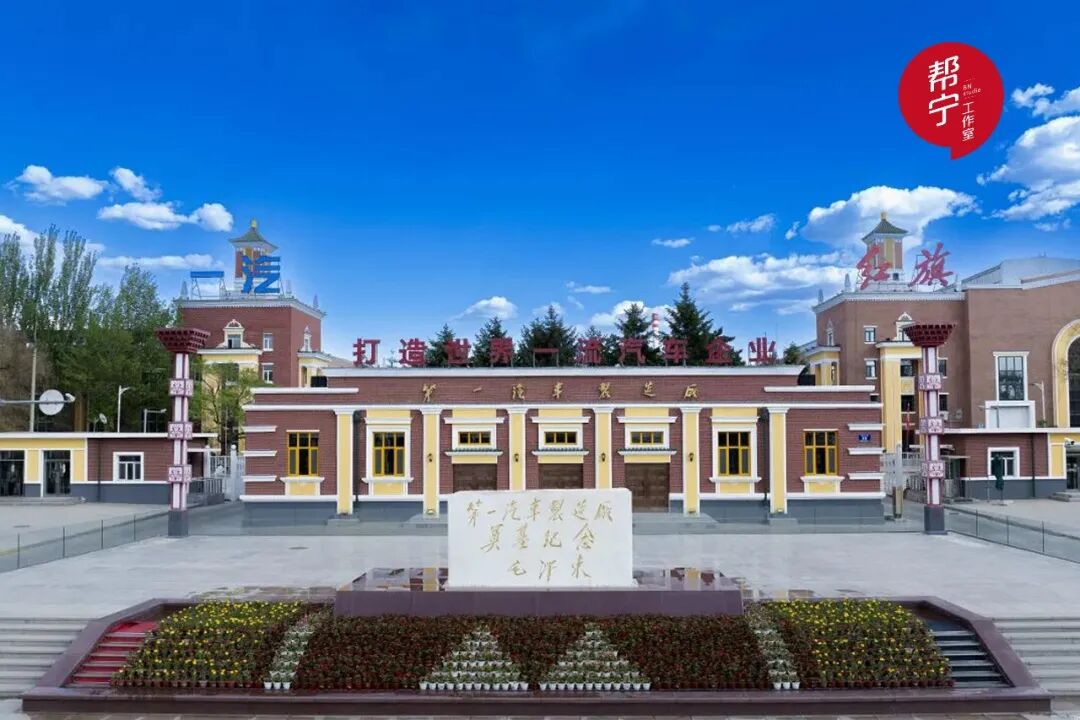
"The Story of the First Automobile Rolling Off the Line in New China"
Author | Ge Bangning
Editor | Li Guozheng
Produced by | Bangning Studio (gbngzs)
| Editor's Note
On July 13, 2026, FAW in Changchun will host a commemorative event to mark the 70th anniversary of the first automobile rolling off the assembly line in New China.
Seventy years ago, on July 13, 1956, a historic day, the first Jiefang-brand automobile rolled off the assembly line, signaling the end of New China’s inability to produce automobiles systematically. Two days later, a modern automotive city, equipped with world-class technology, was completed and operational.
Since then, China’s automotive industry has evolved from nothing to something, from small-scale to large-scale, breaking through barriers and thriving. Numerous records have been set as the wheels of progress have turned. Today, China’s automotive industry is shifting towards the new energy vehicle sector, embarking on a global journey for Chinese automobiles with strong momentum, both domestically and internationally.
Today, let us journey back to the evening on the outskirts of Changchun 70 years ago, to the birthplace of New China’s automotive industry, to that thrilling moment, and witness how the first automobile in New China rolled off the line.
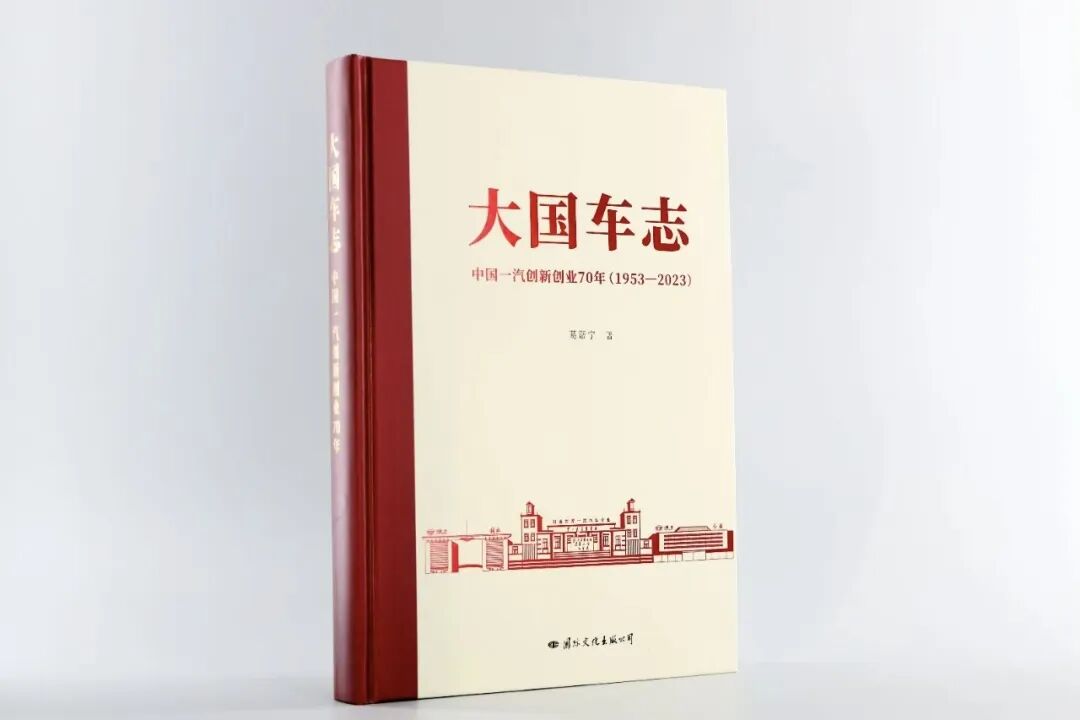
The following excerpt is from "The Grand Vehicle Chronicles: 70 Years of Innovation and Entrepreneurship at FAW in China (1953-2023)" (published by International Culture Publishing Company in August 2023, authored by Ge Bangning).
"At fifty, I, an old driver, smile broadly, playing the accordion as we reminisce. At eighteen, I learned to drive, skilled with foreign vehicles. But I had never seen a Chinese car. Hoping and waiting, the homemade car finally emerged from the factory..."
In the 1950s, the popular song "Old Driver" resonated throughout China. Whenever the familiar tune played, Ma Guofan’s heart would swell with excitement, as if transported back to that passionate era.
On July 14, 1956, Ma Guofan rose early, got a haircut, shaved, donned a clean new work uniform, and hurried to FAW. The automotive city buzzed with a festive atmosphere, adorned with large banners. In the production workshop, amid thunderous applause, the day’s stars—the first batch of 12 brand-new Jiefang-brand automobiles—slowly rolled off the assembly line.
They were meticulously decorated and neatly arranged at the workshop entrance. Twelve selected drivers, carrying the earnest hopes of 18,000 FAW employees, would drive these Jiefang automobiles to meet FAW workers and Changchun residents, reporting their success to provincial and municipal leaders.
Ma Guofan, from the transportation workshop, would drive the first Jiefang automobile, leading the way with labor models and colleagues reporting the good news. The second and third vehicles carried FAW leaders and guests. The convoy also included two female drivers, Wang Lizhong and Song Huirong.
The day before the success report, Rao Bin gave a motivational talk to the 12 drivers in his office, earnestly urging them that the mission was both arduous and glorious and must be accomplished flawlessly.
All 12 drivers felt a profound sense of responsibility. Ma Guofan had driven foreign-brand automobiles for over 20 years. Upon hearing that New China was building its own automobile factory, he resolutely declined his former employer’s attempts to retain him and joined the ranks of FAW builders. For three years, he consistently exceeded transportation quotas and was annually recognized as an advanced worker.
Wang Lizhong came from a peasant family; her father had passed away early, and she grew up in poverty. After becoming a worker at FAW, she became one of New China’s female drivers. Now, they were to represent automotive workers by driving the first batch of Jiefang automobiles for inspection—a tremendous honor and joy.
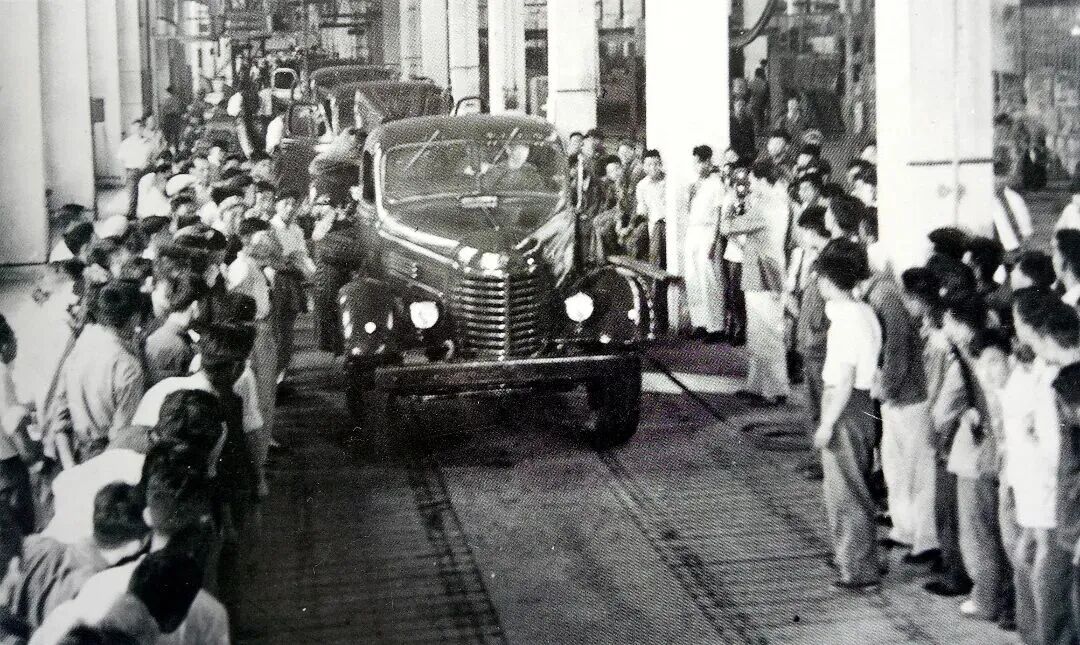
The most thrilling moment arrived. At 1 p.m., a convoy of 12 Jiefang automobiles slowly set off, passing through the central avenue strewn with confetti and the pervasive smoke of firecrackers. They first circled the automotive city and then exited through Gate 1. Wherever the convoy went, crowds gathered, people eagerly sharing the news and flocking to catch a glimpse of the Jiefang automobiles.
In July’s scorching sun in Changchun, nothing could compare to the people’s fervent emotions. Sweating profusely in their cabs, the drivers were surrounded by layers of people—some standing on the cargo beds, others sitting on the fenders, some on the foot pedals, and even some on the front bumpers... An elderly woman with white hair, who finally managed to ride in Wang Lizhong’s car, happily exclaimed, "I’ve ridden in a car made by our own country! Even if I die now, I won’t feel wronged!"
"Old driver, how fortunate you are to drive the first car!" many said to Ma Guofan.
"Isn’t that obvious? When our country can produce automobiles, we feel proud and elated. How can I not be proud of this?" Ma Guofan replied with a beaming face.
The next day, Ma Guofan once again drove the first Jiefang automobile to participate in the celebration at FAW. His experience and feelings about driving the first car were shared by his colleague Liu Yi with his brother Liu Zhong, who then wrote the lyrics for "Old Driver," set to music by composer Xian Xingcheng, and the song has been sung ever since.
The birth of the Jiefang automobile marked the achievement of FAW’s three-year factory construction goal.
On July 13, 1956, the first Jiefang automobile rolled off the final assembly line. By 8 a.m. on July 14, the first batch of 12 Jiefang automobiles had rolled off the line one after another, ending New China’s history of inability to manufacture automobiles, symbolized by the proud Jiefang emblem and green bodies, and accompanied by a surge of emotions.
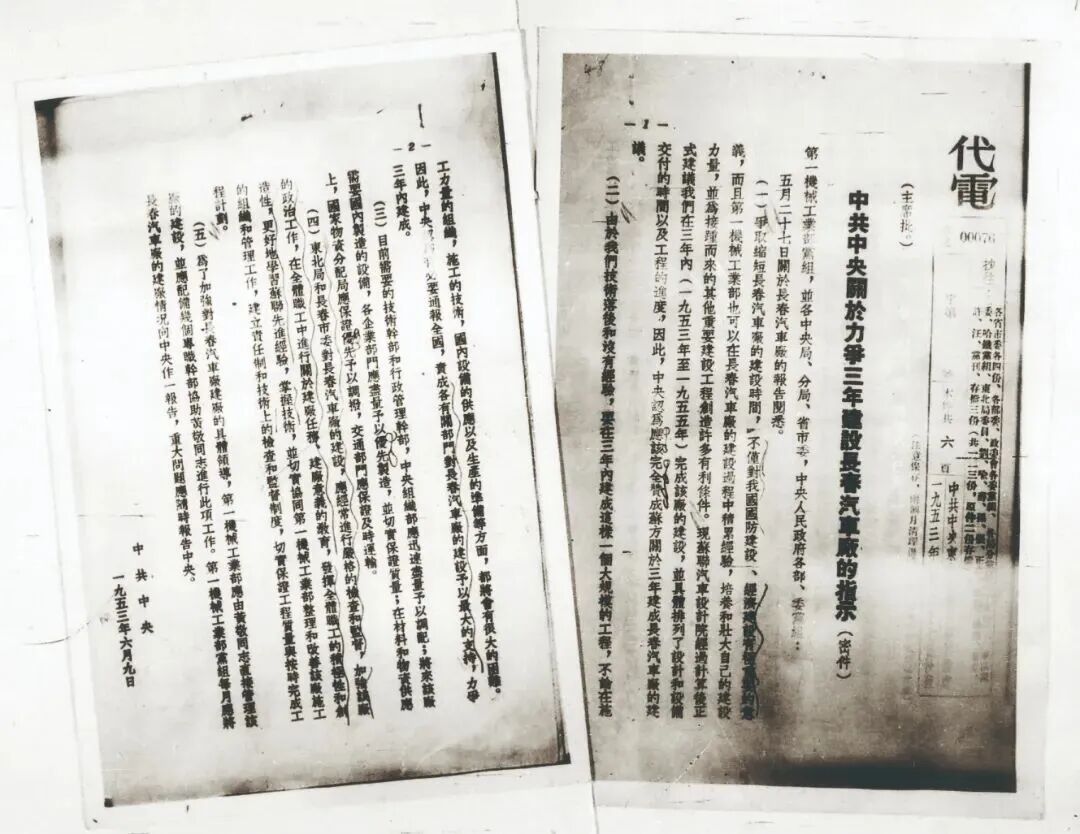
In its success report to Chairman Mao Zedong and the Party Central Committee, FAW wrote: "Dear Chairman Mao and the Party Central Committee, the entire staff of our First Automobile Works reports with great excitement: The Party Central Committee’s directive to strive to complete the construction of the Changchun Automobile Factory within three years has been achieved! Today, we are celebrating the third anniversary of the factory’s establishment with the completion of construction tasks and the trial production of a batch of domestically produced automobiles.
"We are actively preparing for various production tasks, organizing comprehensive production, and ensuring, through practical actions, the production of 250 Jiefang-brand automobiles meeting quality requirements in the third quarter, to welcome the Eighth National Congress of the Party and to present a gift for this year’s National Day."
Years later, we have come to know that the Jiefang vehicle is the root of FAW—only with deep roots can the leaves flourish. After a series of coincidental and inevitable events that occurred over 70 years ago, the grand narrative of FAW’s automobile manufacturing truly began.
Whether it’s the brands like Jiefang, Hongqi, and Besturn that have survived through bitter struggles, the joint ventures FAW-Volkswagen and FAW-Toyota that have overcome numerous obstacles to come together, or the vehicles like Dongfeng, Jiabao, and Senya that only left a fleeting impression in FAW’s history, all are fruits borne from the tree of the Jiefang brand.
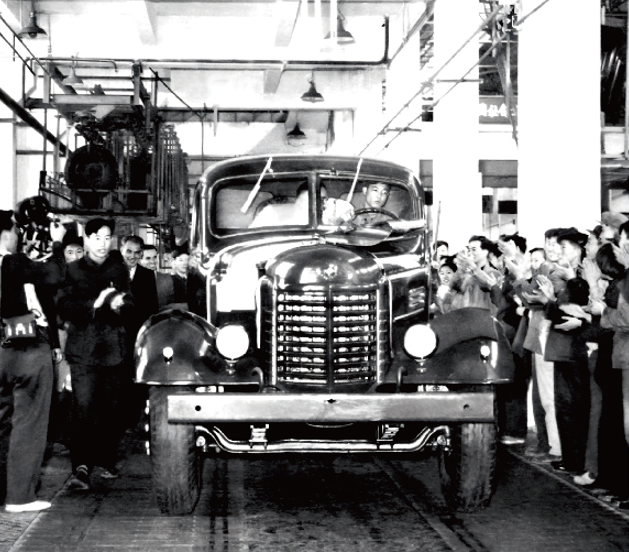
Let’s take a look at the first model produced by FAW.
The first-generation Jiefang CA10 was modeled after the ZIS-150 produced by the Stalin Automobile Factory. It weighed 3,900 kilograms, was equipped with a 90-horsepower, four-stroke, six-cylinder engine, had a maximum speed of 65 kilometers per hour, a payload capacity of 4 tons, and a maximum power of 71 kilowatts. The overall structure of the vehicle underwent some improvements compared to cars produced in the Soviet Union before 1955.
During the construction of FAW, some ZIS-150 vehicles had already been imported and used across the country. After the establishment of the Automobile Industry Preparatory Group in 1950, its automobile laboratory conducted surveys on the usage of these vehicles.
The origin of the "CA" designation has a story behind it.
Meng Shaonong recalled: "Initially, the Soviet side wanted to name the automobile factory. Suggestions included 'China’s First Automobile Works' and 'Changchun Automobile Factory.' Later, we consulted Huang Jing, who said, 'Let’s just call it the First Automobile Works!' The Soviet Union designated the factory code as AZ-1, but we felt we should have our own simple code. Thus, we proposed 'CA'—'A' signifies 'first,' and 'C' represents both 'Changchun' and 'China,' with the latter being the primary meaning."
However, for a long time, there were three different versions circulating in the industry regarding the origin of the name "Jiefang" (Liberation).
The first version is that after a name solicitation, Chairman Mao Zedong selected "Jiefang" from several options. The second version is that Chairman Mao specially inscribed the characters "Jiefang" for the new vehicle. The third version is that at a Political Bureau meeting, Marshal Zhu De proposed the name, and Chairman Mao expressed his approval.
In the summer of 1969, to compile the history of FAW, the FAW Party Committee Organization Department traveled to Beijing to verify the story with veteran leaders such as Duan Junyi, Zhang Fengshi, Rao Bin, and Xing Anmin (former director of the Infrastructure Department of the First Machinery Industry Ministry). They also confirmed the details with Liu Naifu, secretary to the director of the Automobile Bureau of the Ministry of Machinery Industry, and Chen Zutao, former director of the Factory Design Department of FAW. It was determined that shortly after Chairman Mao inscribed "Commemoration of the Founding of the First Automobile Works," he named the upcoming 4-ton truck "Jiefang."
Now, with the rollout of the Jiefang vehicle, FAW has redefined the history of New China’s automotive industry. Meng Shaonong believed that during those three years, not only was large-scale construction carried out in the automotive factory area in the southwestern part of Changchun, but also meticulous and complex production preparations were made. This enabled the newly built factory to quickly commence production and fully realize the benefits of national investment.
The two tasks mentioned by Meng Shaonong were both novel at the time. To complete the three-year factory construction on schedule, production preparations had to start early, with civil construction, equipment installation, and production preparations overlapping. In other words, the arduous and complex production preparations actually began in 1953 when FAW broke ground, mainly encompassing five aspects: equipment, personnel, materials, collaborative products, and process equipment.
The first major task in production preparation was translation. According to FAW historical records, the "Report on Readiness for Operation Upon Completion" statistics show that the Soviet Union provided 5,409 product drawings and technical documents, 138 sets and 735 volumes of process cards and various process technical materials, 4,085 sets of non-standard equipment design drawings, and 16,942 sets of process equipment drawings. After receiving these various design and technical materials, FAW promptly organized their translation and used them as the basis for specific preparations.
Zhu Dezhao, a technician in the FAW Technical Department, was already preparing for automobile production at that time. In March 1953, after being reassigned by the Northeast Personnel Department, Zhu Dezhao joined the FAW construction team. He worked at FAW for 32 years, rising from an ordinary technician to deputy chief engineer. In 1984, he was entrusted with the important task of establishing the China Automotive Technology and Research Center.
He recalled that the production preparations were extremely紧张 (intense): "We had to fully grasp the technical and organizational designs sent by the Soviet Union and understand the entire process of mass automobile production within a short period."
Design mainly consisted of three steps: preliminary design, technical design, and organizational design.
In April 1953, a large amount of materials (mainly preliminary and technical designs) arrived. The preliminary design provided a broad outline, such as the number of workshops in the factory. The technical design further refined these details, specifying the exact areas of the chassis, engine, and cargo body workshops, dividing them into work sections, and listing the equipment. The organizational design was highly specific, equivalent to today’s construction design drawings, detailing the construction sequences, including the steps involved in the first and second sequences.
The translation process faced numerous difficulties. Take technical drawings, for example. At that time, global drafting was divided into two major systems: the Anglo-American system and the German-Japanese-Soviet system. The former used the third quadrant, requiring drawings to be viewed in reverse, which was unfamiliar, while the latter used the first quadrant. Moreover, the Anglo-American system used scaling ratios like 1/2 inch, 1/4 inch, and 1/8 inch, which were quite different from the Soviet system.
Another example was translating technical condition materials. Russian documents were not very detailed, usually referring to Soviet standards on the drawings. The Soviet Union had both TOCT national standards and OCT standards from various ministries. For instance, if the document only specified TOCT standard steel with a certain number, the composition and properties of the steel were unknown, as was whether it was carbon steel or alloy steel. Therefore, the original TOCT standard materials had to be found.
If the materials fell within the purview of the Ministry of Metallurgy, the relevant standards had to be obtained from that ministry. Similarly, if the materials were related to wood, the standards had to be verified with the Ministry of Forestry. For materials involving leather or petroleum, the corresponding standards had to be sought from other relevant ministries. Consequently, the workload was immense and highly tedious.
Then there were the automobile parts to consider. The Jiefang automobile comprised tens of thousands of parts, including 2,335 self-manufactured components. These components were produced across 13 basic production workshops and over 20 auxiliary production and service departments. The process involved the ordering, manufacturing, installation, and commissioning of more than 7,900 pieces of equipment, as well as the ordering, manufacturing, and preparation of a substantial amount of technical documentation for 22,524 types of process equipment. The 409 collaborative products were primarily distributed among 46 large and small factories in 16 cities across the country. Additionally, there was the procurement and preparation of 16 types of main steel materials, 7 types of non-ferrous metals, and 950 specifications of raw and auxiliary materials.
To ensure that the preparations proceeded in an organized and efficient manner, FAW, following the advice of Soviet experts, adopted the "Equipment Installation Progress Chart" and the "Production Preparation Record Chart," which became known as the famous "Chart No. 1" and "Chart No. 2." The former focused on equipment, listing the ordering, arrival, and installation progress of both domestic and foreign equipment, and regularly reporting on the progress. The latter targeted parts, compiling a delivery schedule for fixtures, tools, and measuring tools according to process requirements and regularly reporting on the progress of part commissioning.
By August 1955, the production preparations had entered an adjustment phase. The part adjustment process was divided into two stages: the first stage aimed to enable a few production backbones to master production operation techniques and produce a small quantity of qualified products.
The production of the first Jiefang-brand automobile was now in its countdown phase, with historical records from China FAW Group Corporation documenting the following key milestones:
● On March 26, the first blast furnace produced molten iron, which was used to cast the initial batch of components, marking the trial production phase in the foundry workshop.
● On April 2, the chassis workshop commenced assembly line production, aiming for a daily output of 48 units.
● On April 13, the forging workshop produced the first batch of crankshafts.
● On April 23, the accessory workshop manufactured the first batch of qualified water tanks.
● On April 29, the engine workshop assembled the first engine complete with a gearbox.
● By the end of the second quarter, all equipment had been installed except for the 3,500-ton press, the ten-sided quenching machine, and the wheel-manufacturing equipment. Qualified parts accounted for 98.7% of the total after debugging (commissioning).
● On June 21, the spring workshop utilized a temporary bending flame machine as a substitute for the ten-sided quenching machine to produce qualified leaf spring assemblies.
● On June 28, the stamping workshop assembled the first batch of frame assemblies using beam blanks provided by the Soviet Union.
● On July 10, six large presses in the stamping workshop were successfully commissioned, producing the first cab assembly.
● On July 12, all components and outsourced parts were fully prepared.
● On July 13, the first Jiefang-brand automobile rolled off the final assembly line.
FAW laid a solid foundation for China's automotive industry, transforming a once barren wasteland into a magnificent automotive city. Passing through Gate No. 1 of FAW, one can see the spacious central avenue flanked by major production workshops and factories. Bounded by the final assembly workshop to the west, the other three sides are interconnected by aerial transport bridges and underground tunnels.
All major production workshops and warehouses are equipped with railway sidings, allowing trains to directly enter these facilities. On the over 100-meter-long final assembly line, assembly workers use automatic or semi-automatic tools to secure components and assemblies onto the chassis. Every six to seven minutes, a dark green Jiefang-brand automobile rolls off the line.
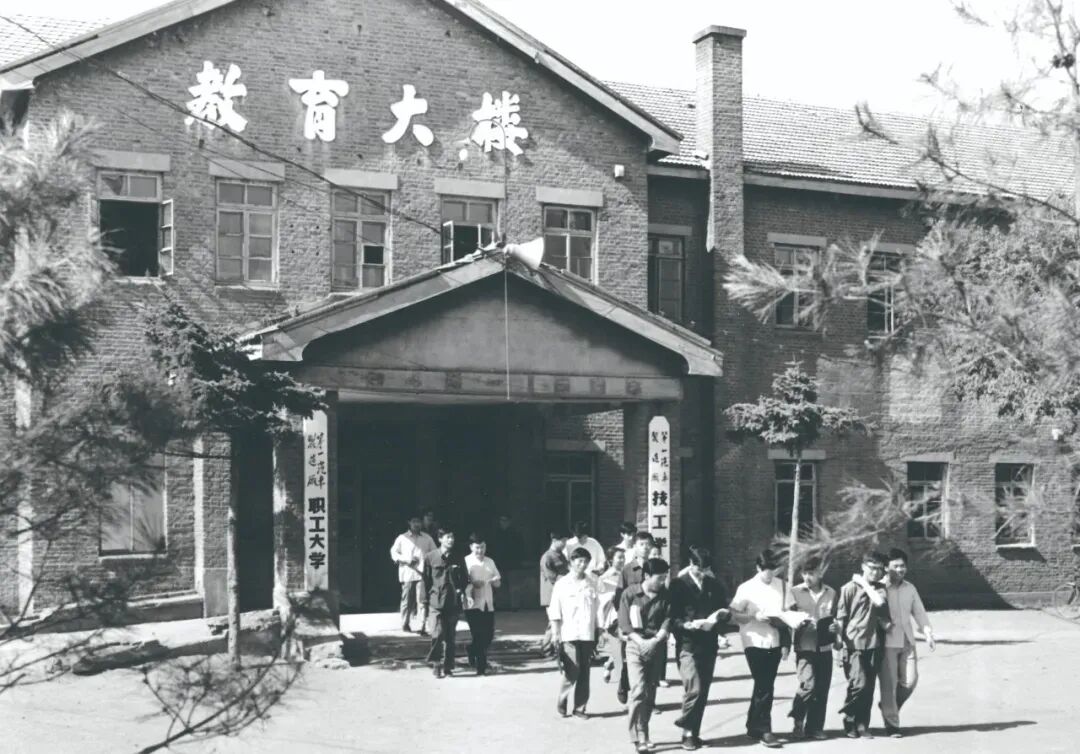
Upon its completion, FAW was vibrant and youthful, with nearly 18,000 employees, the vast majority being young people, and only a handful reaching their forties. These builders were like the "sun at eight or nine in the morning," full of energy and vitality. They were busy with work, study, and romantic pursuits. Outside Changchun, the nights were tranquil, with lush green trees and fragrant flowers in summer. Under the starlight, there were songs and whispers, reminiscent of the famous Soviet song "Evenings on a Farm Near Moscow."
Interestingly, due to the large number of young builders, there was a lively atmosphere of finding romantic partners. In those days, the "Prince Charming" in the automotive city had clear criteria, widely recognized as the "Three Members (Yuan) and One Leader"—Communist Party members, technicians, those earning 100 yuan, and section chiefs. These standards were high and difficult to meet. The positive aspect of these "Prince Charming" criteria was that they encouraged young men and women to strive for excellence, serving as both ideal conditions for young women seeking partners and aspirational goals for young men.
Amidst this fervent era, on October 14, 1956, the FAW construction project passed state acceptance. The acceptance conclusion stated that the overall project quality was good. After long-term production preparation and temporary operational tests, the FAW construction project met production requirements and could officially commence automobile manufacturing.
The following day, the FAW commencement ceremony was held in the square outside Gate No. 1, attended by over 20,000 people. In his opening speech, Rao Bin said, "From today onward, we have ended the history of China's inability to manufacture its own automobiles... However, the completion of the automobile factory is just the beginning. How to mass-produce high-quality automobiles in accordance with national plans in the future requires even greater efforts and achievements."
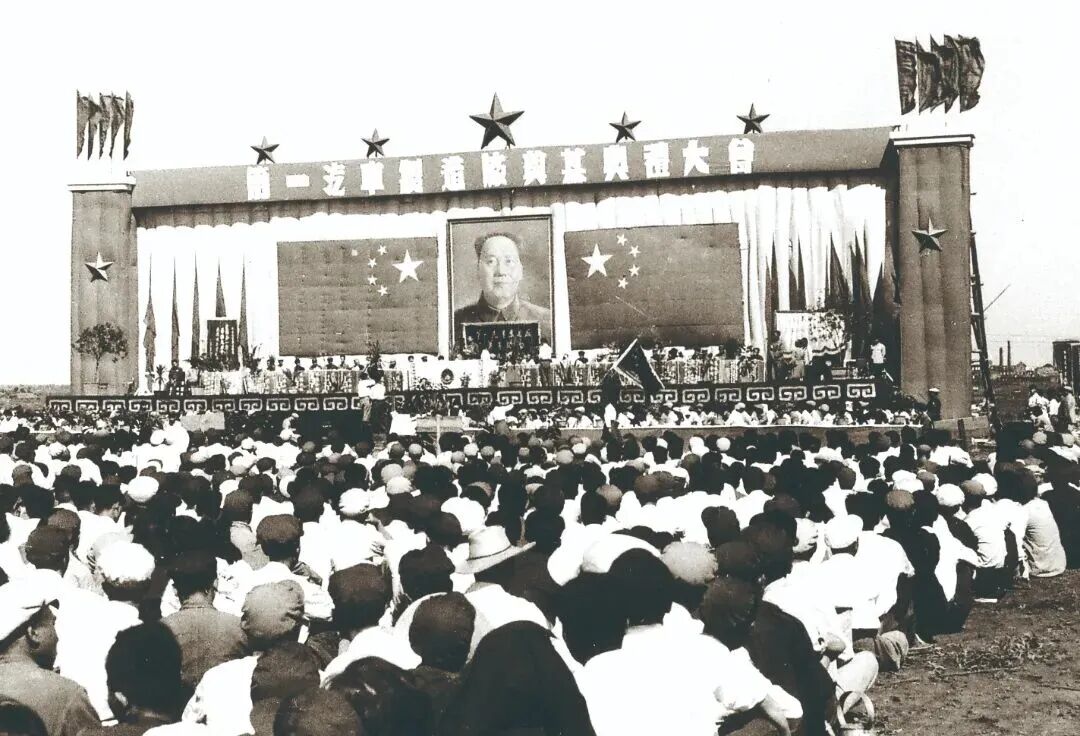
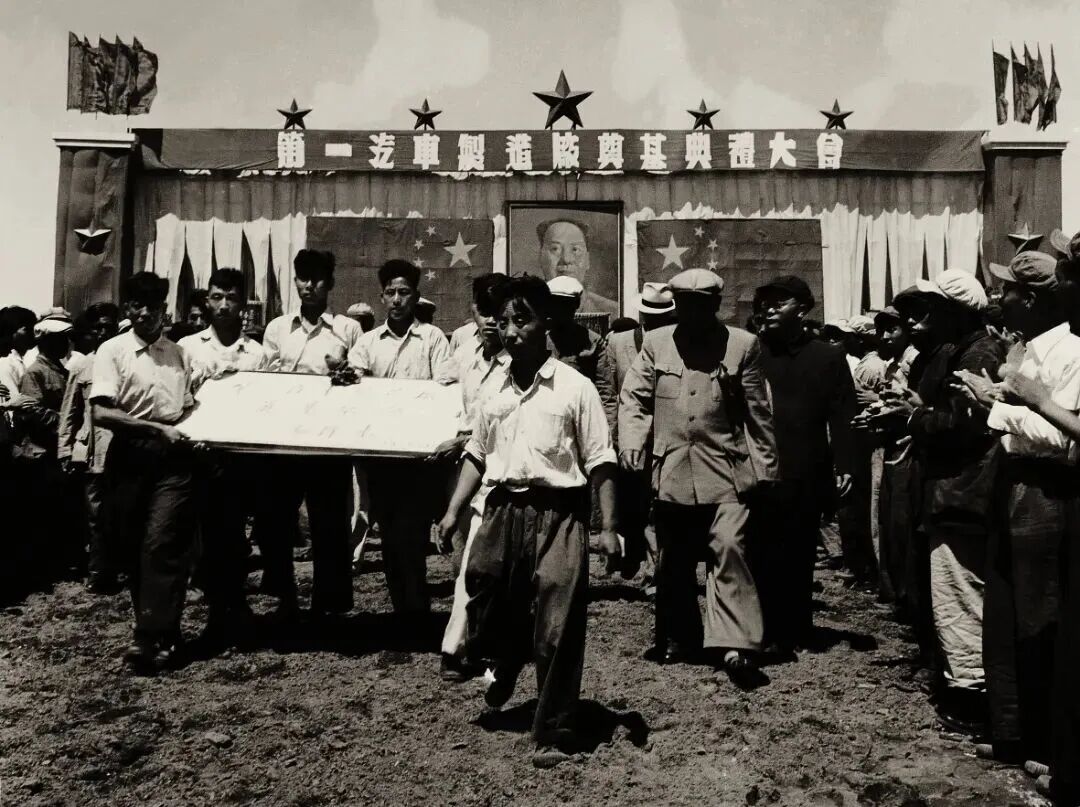
This marked a fresh beginning. Zhang Xingye (1926-2021), the first-generation automotive industry builder and former president of the Chinese Society of Automotive Engineers, recalled that after FAW's completion, three plant-wide initiatives were undertaken from the third quarter of 1956 to the first quarter of 1957.
The first initiative focused on familiarizing with, mastering, and strictly adhering to processes (process discipline), with various FAW departments learning, mastering, and implementing "organizational design." The second initiative involved rectifying, establishing labor hour norms, and setting consumption quotas for raw and auxiliary materials, along with establishing various original records and vouchers. The third initiative was a comprehensive economic accounting drive, extending from teams and cadres to workshops and the entire plant.
Zhang believed that after these three initiatives, FAW's management became well-organized, and production proceeded smoothly. Supporting this, Soviet evaluations noted that during a certain period after production commenced, among the ZIS 150 automobiles produced by the Soviet Union, China, and Romania, the Chinese products were of the highest quality.
But this was just the beginning, as greater responsibilities often entailed greater challenges.
-
![]()
Will Changan Mazda, Mired in Difficulties, Follow Skoda’s Path Out of China?
-
![]()
This Week in Home Appliances: Domestic Cool, Overseas Hot – Haier, Midea, Gree, Hisense Break Through; JD.com, TCL, Samsung, Vanward Drive Transformation
-
Seres Anticipates Over 2.2 Billion Yuan Loss in Q2, with Core Subsidiary AITO Automobile Projected to Lose 1.9-2.15 Billion Yuan
-
![]()
Breaking Through Barriers: Five Models for Chinese Automakers to Access Global Markets
-
![]()
Young Generation Trades Cars as Often as Smartphones! Average Age of New Energy Vehicles: Just 1.8 Years...
-
![]()
Musk Declares SpaceX Will Surpass the Combined Value of Everything on Earth! Is He Just Making Bold Claims? Online Debates Rage On…
-
![]()
The Most Terrifying Truth Behind GPT-5.6: AI Has Started to Self-Evolve
-
![]()
Is AI Still the Main Theme of the Market After the Decline of Memory Stocks?