Breaking Through Barriers: Five Models for Chinese Automakers to Access Global Markets
 07/13 2026
 357
357
In the past few years, Chinese automakers have relied on vehicle exports and price advantages to expand overseas. However, by 2026, with the rise of global trade barriers, tightening EU tariffs, and increased local manufacturing requirements in various countries, the simple approach of "exporting cars" is no longer viable. The real competition has shifted from "selling products" to "building production capacity, establishing systems, and localizing industrial operations."
An analysis of overseas vehicle projects from over ten automakers, including BYD, XPeng, Geely, Great Wall, SAIC, Chery, Leapmotor, GAC, Dongfeng, JAC, Ji Shi, FAW, and Changan, in the first half of 2026 reveals a clear pattern:
Chinese automakers have developed a mature, tiered, and replicable set of five models for overseas vehicle projects. These models combine varying levels of asset intensity to precisely match the needs of different markets in Europe, Latin America, Southeast Asia, Central Asia, and Africa.
01 Model 1: Contract Assembly (No Equity Relationship)
Core Logic: Without purchasing land, building factories, or holding equity, this model leverages the existing resources of local automakers to quickly establish local manufacturing.
This model is suitable for testing new markets, right-hand-drive niche markets, and rapidly capturing market share in the short term, with low trial-and-error costs.
Case Study 1: XPeng's Malaysia Factory
In June 2026, XPeng Motors officially launched its Malacca factory in Malaysia, with the XPeng G6 rolling off the assembly line.
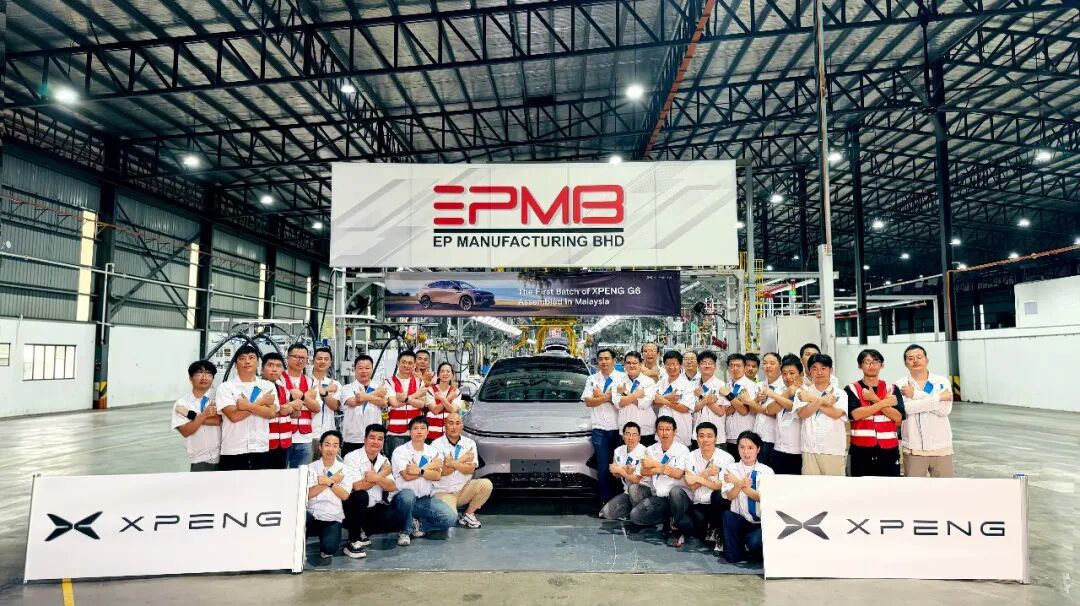
XPeng's Malacca factory in Malaysia goes into operation. Source: XPeng Motors' Weibo
XPeng signed a CKD (Completely Knocked Down) assembly agreement with Malaysian listed automaker EPMB in late 2025, without any equity binding. In just six months, XPeng leveraged EPMB's mature production line to establish local manufacturing.
The factory currently focuses on the right-hand-drive version of the G6, with plans to introduce the X9 BEV/EREV models later, targeting right-hand-drive markets in Malaysia, Singapore, and other ASEAN countries. This approach allows XPeng to capture the growing Southeast Asian new energy vehicle market with minimal asset investment.
Case Study 2: GAC Aion's Production at Magna's Austrian Factory
In March 2026, the Aion AION UT officially went into production at Magna's Graz factory in Austria, becoming GAC's second contract-manufactured model in Europe after the AION V.
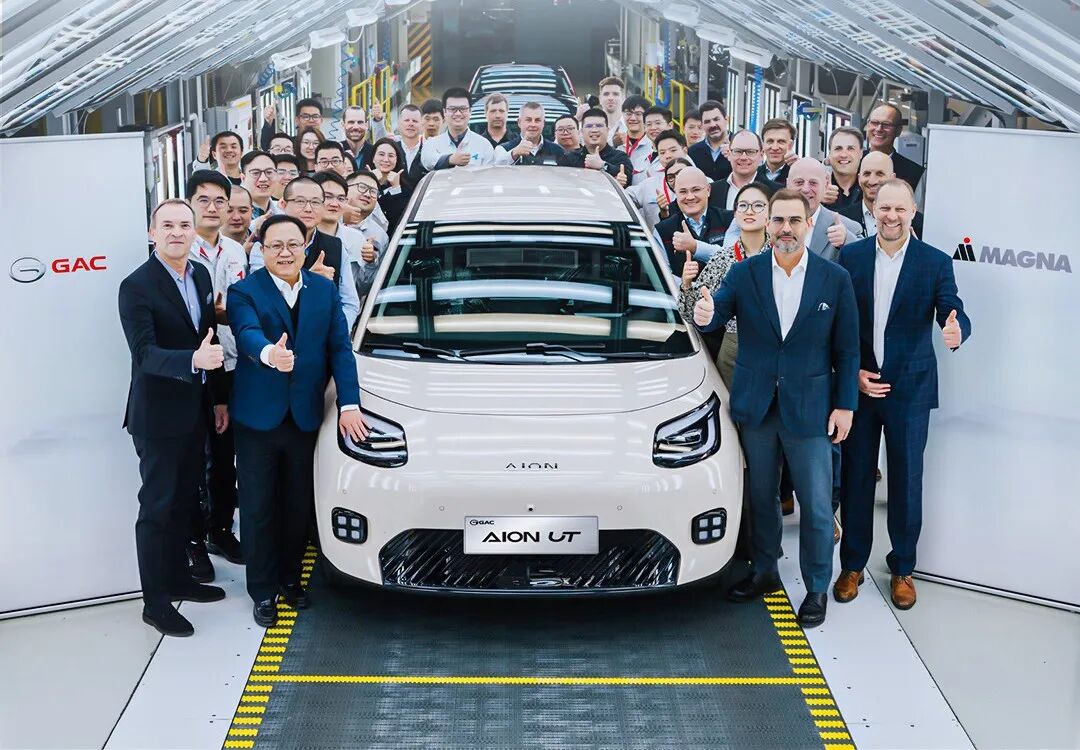
AION UT goes into production at Magna's Graz factory. Source: Magna
By relying on the mature processes of a global top-tier contract manufacturer, GAC can quickly enter the high-standard European market without the need to build its own factory.
Model Advantages: Low investment, fast implementation, and avoidance of complex overseas factory approval processes and union risks.
02 Model 2: Strategic Cooperation (With Equity Relationship)
Core Logic: Capital binding, capacity sharing, and local risk-sharing.
This has become the most frequent and stable approach for Chinese automakers going global, particularly well-suited to the policy environments in Europe, Latin America, and the Middle East.
Through joint ventures or equity cooperation with local companies, idle production capacity is activated, local regulations are met, and the "local manufacturing" status is quickly obtained.
Case Study 1: Chery × Spain's Ebro
In June 2026, Chery and Spain's Ebro-EV Motors officially launched a new production line at their joint venture factory. This 696-meter-long line can accommodate the production of five models, with current mass production of the S400 and S700 series, while reserving capacity for BEV models in 2027.
Background: In April 2024, Chery and Ebro-EV Motors signed a joint venture agreement witnessed by the Spanish Prime Minister. On November 23, 2024, the first product, the EBRO brand S700, rolled off the assembly line.
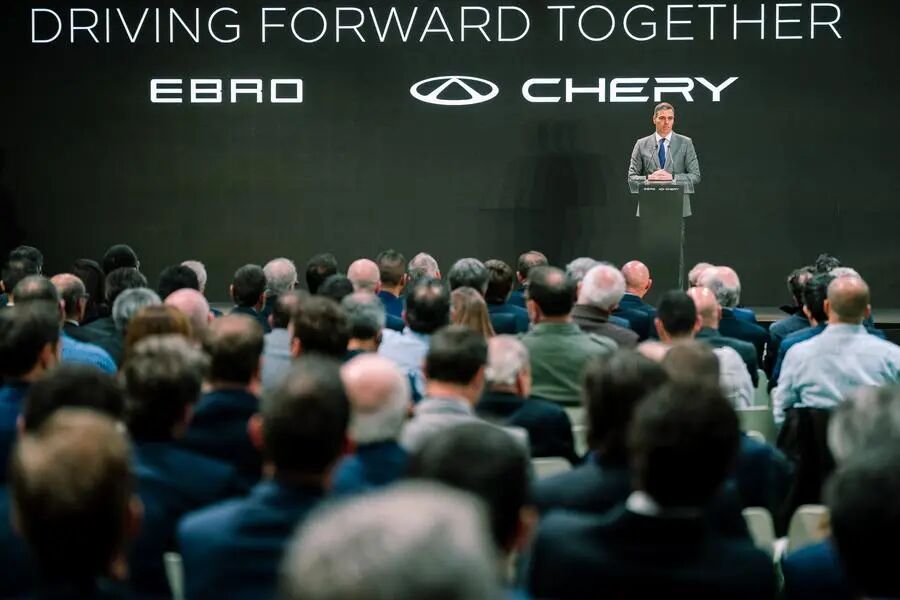
In April 2024, the Spanish Prime Minister attended the signing ceremony of the joint venture agreement between Chery and Ebro-EV Motors. Source: Xinhua News Agency
The partnership not only revives the legendary Spanish EBRO brand and repurposes the abandoned former Nissan plant but also introduces Chery Group models.
Case Study 2: Leapmotor × Stellantis
Leapmotor's overseas production is rapidly expanding (including planned projects):
Stellantis' Malaysia factory began producing the Leapmotor C10 in June 2026, with the B10 to be introduced by the end of the year.
The Zaragoza factory in Spain is planned to produce the Leapmotor B10.
The Madrid factory in Spain is scheduled to start producing a new Leapmotor model in 2028.
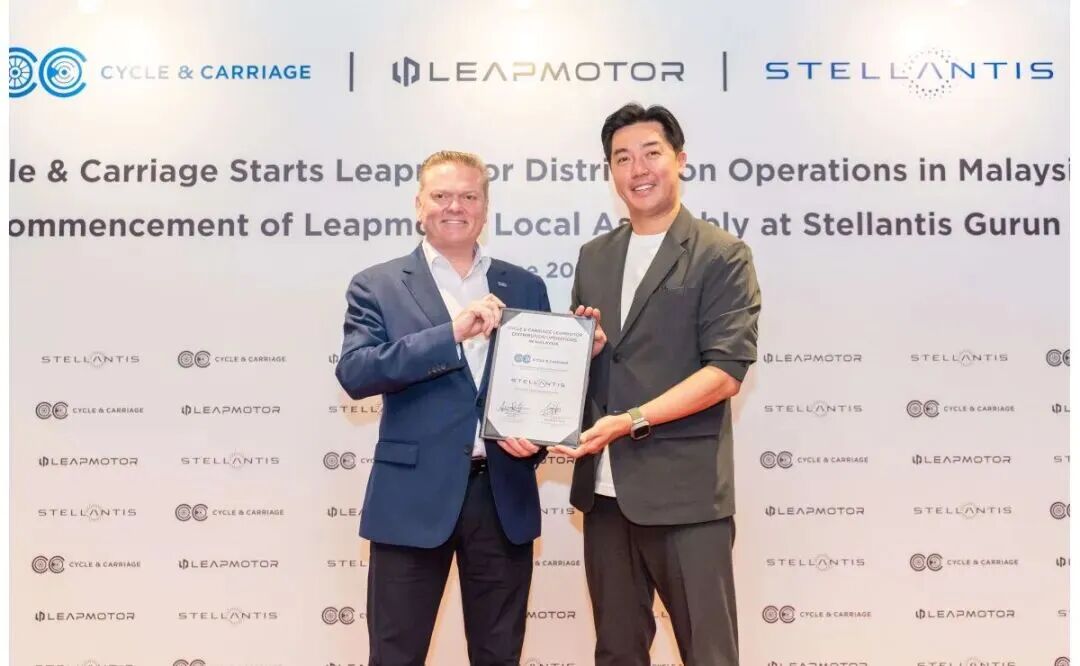
Stellantis' Gurun factory in Malaysia has begun assembling Leapmotor vehicles, with technicians and assembly workers receiving specialized training and certification. Source: Leapmotor
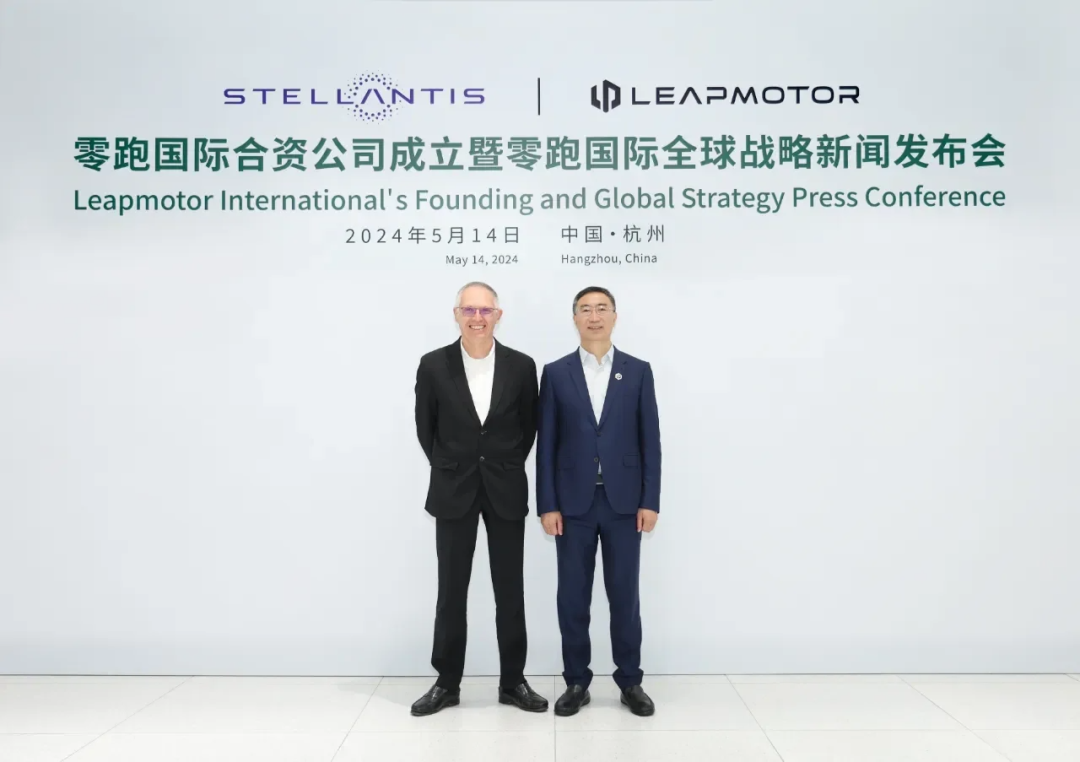
Stellantis and Leapmotor will also conduct in-depth cooperation in procurement through their joint venture, Leapmotor International. Source: Leapmotor
By leveraging Stellantis' global factory network, Leapmotor achieves bidirectional empowerment between China's supply chain and Europe's manufacturing system, quickly meeting local compliance requirements in Europe.
Case Study 3: Geely × Renault Brazil
On November 18, 2025, following the announcement of the establishment of Renault Geely do Brasil, the strategic cooperation launch ceremony was held in the Elton Senna Industrial Park in Brazil. Renault Geely do Brasil will invest 3.8 billion reais (approximately RMB 5.1 billion) to promote the localization of new energy technology platforms and models in Brazil. Two new models based on Geely's GEA new energy architecture will be locally produced and officially launched in the Brazilian market in the second half of 2026.
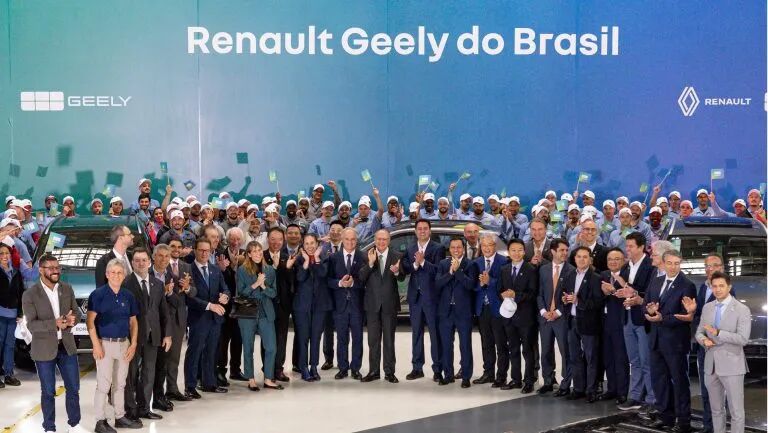
Geely and Renault's strategic cooperation in Brazil is launched. Source: Geely Holding Group
According to Brazilian media reports in March 2026, the Geely EX5 hybrid has been co-assembled with the Renault Kardian and Boreal and is set to arrive at dealerships in the second half of the year.
In the future, the joint venture will also develop a new new energy technology platform, with a new Renault model based on this platform scheduled for production in 2027.
Case Study 4: Changan × Brazil's CAOA Group
In November 2025, Changan and Brazil's CAOA Group signed a strategic cooperation agreement, establishing a joint venture operating company, CAOA Changan, responsible for Changan's production, R&D, and sales in Brazil.
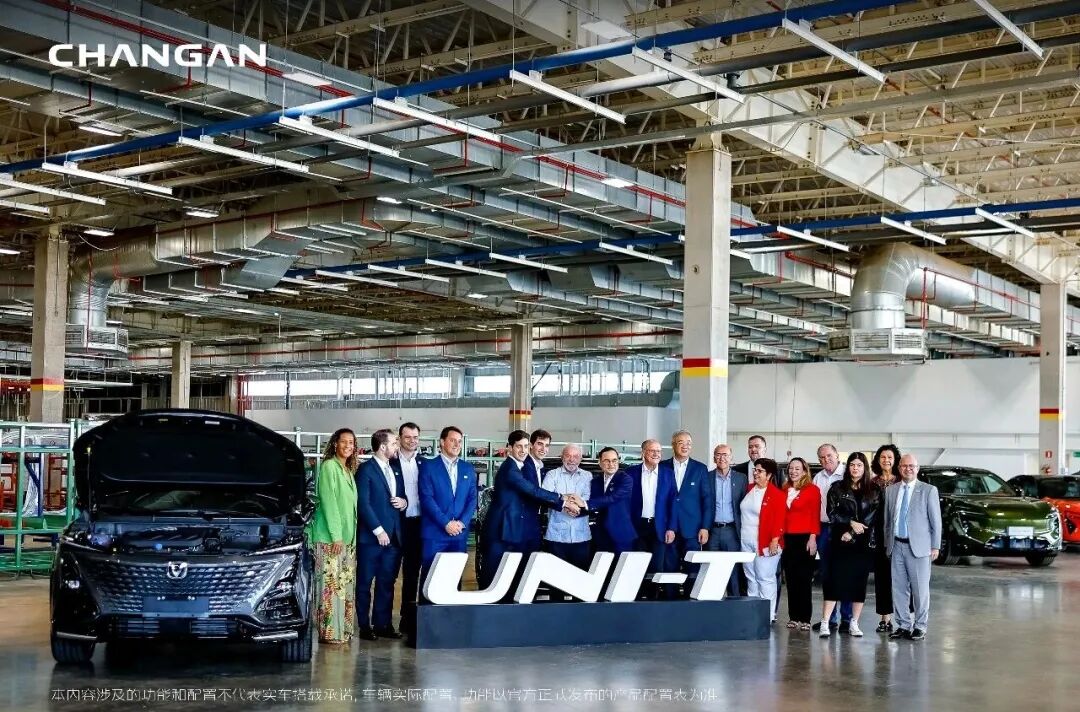
On March 26, the first "Made in Brazil" Changan UNI-T, produced through cooperation between Changan and CAOA Group, rolled off the assembly line. Source: Changan Auto
On March 26, 2026, the first "Made in Brazil" Changan UNI-T, produced through cooperation between Changan and CAOA Group, rolled off the assembly line. The factory initially plans to produce three models, covering fuel, hybrid, and plug-in hybrid powertrains. All models will be equipped with flexible-fuel engines compatible with gasoline, ethanol, or any blend, fully adapting to Brazil's ethanol-based energy demand. This factory will complement Changan's other overseas factories, forming a regional and global network to further advance the "Ocean of Opportunities" plan.
More Major Joint Venture or Equity Cooperation Projects:
Ji Shi × Egypt's ESI: Local production of Ji Shi's range-extended models is scheduled for 2027, with products targeting North Africa and Gulf countries.
Dongfeng × Stellantis: A European joint venture is planned to localize the production of VOYAH's high-end new energy vehicles and handle joint procurement and engineering R&D projects.
XPeng Indonesia: Acquisition of 90.1% equity in EIDO, an Indonesian automaker already assembling XPeng vehicles.
JAC × Tashkent Investment Company: A joint venture factory in Uzbekistan opened in May, aiming to become a key automotive manufacturing and export hub in Central Asia.
03 Model 3: Acquiring Overseas Factories or Production Lines
Core Logic: Instead of building new factories, this model involves acquiring existing ones to quickly gain access to mature facilities, qualifications, workers, and supply chains at a lower cost.
Compared to the long lead time of building new factories, acquiring existing ones is the fastest way to establish independent overseas production capacity.
Case Study 1: Chery Acquires Nissan's South Africa Factory
On January 23, 2026, Nissan announced an agreement with Chery South Africa: Chery South Africa will acquire Nissan's Rosslyn factory in South Africa by mid-2026. On July 3, Chery officially launched its Rosslyn factory.
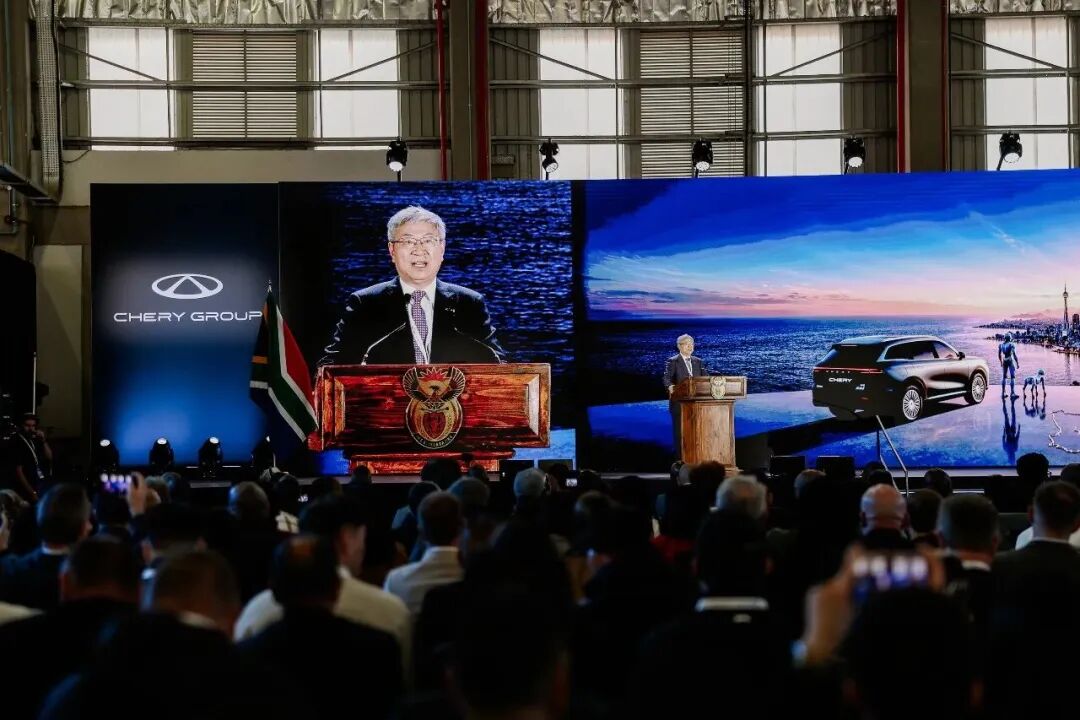
Chery announces the official launch of its Rosslyn factory in South Africa. Source: Chery Group
The factory will undergo a comprehensive upgrade and is scheduled to start production in the middle of next year, with an annual capacity of 50,000 units in a single shift once fully operational. Chery has also launched an extensive localization plan, aiming to achieve an initial localization rate of 40% by 2028.
Case Study 2: Geely Acquires Ford's Idle Production Line in Spain
In May 2026, Spanish media outlets such as "Automotion Forum" reported that Geely would acquire Ford's No. 3 body assembly plant at its Almussafes factory in Valencia, Spain, to produce a model with three powertrain options.
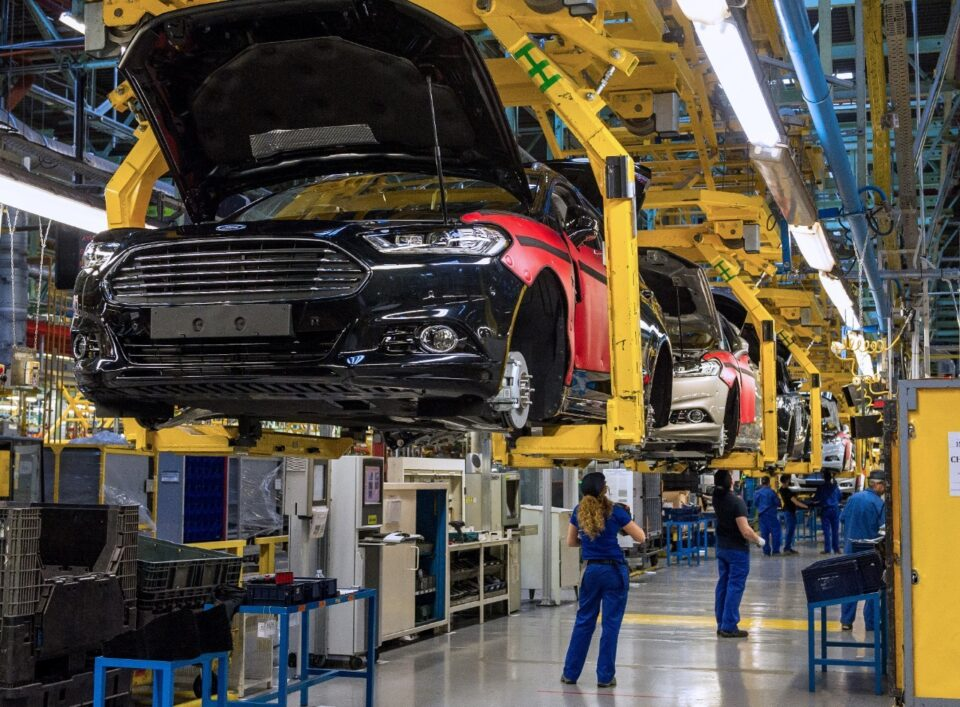
Ford's Almussafes factory in Spain (file photo). Source: La Tribuna de Automoción
The plant is fully equipped and has been idle for a long time. Geely can quickly retool and start production, gaining rapid access to the mainstream European market.
04 Model 4: Exporting Automotive Industrial Capabilities
Core Logic: Instead of investing in factory construction or asset acquisition, this model involves exporting automotive R&D and manufacturing capabilities.
Representative Project: FAW Besturn × Egypt's Nasr Auto
In June 2026, FAW Besturn reached a strategic cooperation agreement with Egypt's state-owned Nasr Auto to jointly produce a range of "Nasr" brand vehicles. This collaboration will support the production of "Nasr" brand vehicles to the latest international standards, meeting not only Egyptian market demand but also expanding into regional and international markets.
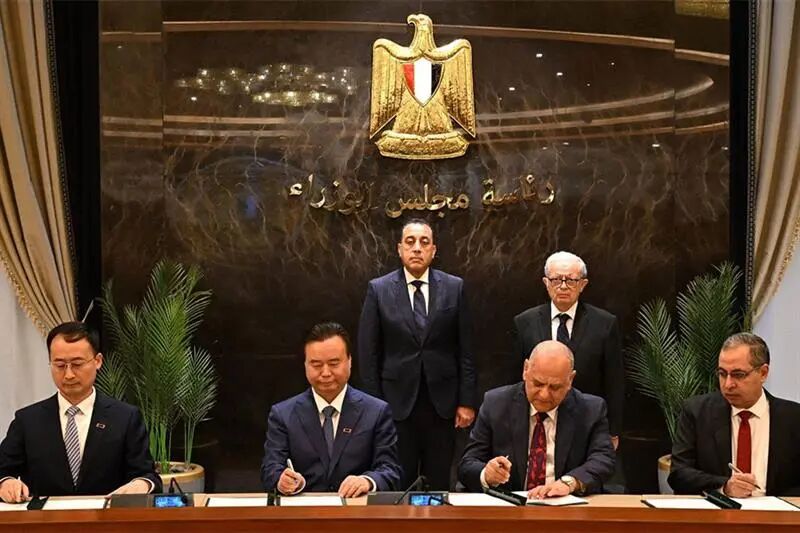
FAW Besturn reaches a strategic cooperation agreement with Egypt's Nasr Auto. Source: Egypt's State Information Service (SIS)
FAW Besturn will deeply integrate and support Egypt's efforts to revitalize its national automotive industry, driving industrial restructuring and upgrading through technology transfer and standard co-development, helping Egypt's automotive sector achieve better development.
This also marks the evolution of China's automotive exports from "selling cars" to "selling industrial capabilities."
05 Model 5: Self-Built Factories
Core Logic: Building factories independently for full control and Take root (deep rooting) in core strategic markets.
Some leading automakers are choosing to build top-tier smart manufacturing bases.
Case Study 1: BYD's Multiple Vehicle Projects
On February 26, 2026, BYD officially launched its factory in West Java, Indonesia. Covering 108 hectares, the plant has a planned annual capacity of up to 150,000 units. Initial production includes BYD's best-selling models in the Indonesian market: the BYD M6 and BYD Atto 3 (Yuan PLUS).
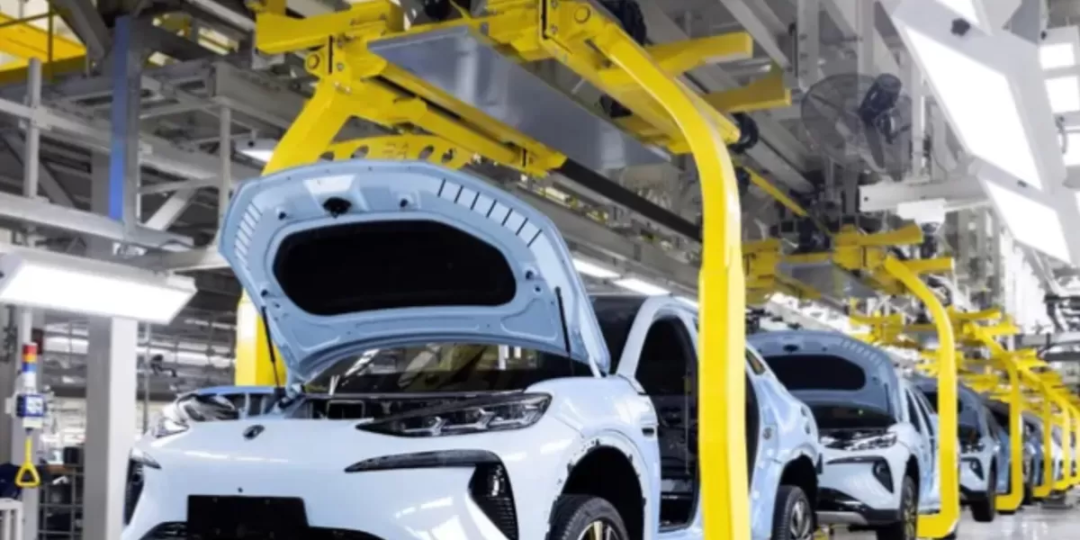
BYD's factory in West Java, Indonesia, officially goes into operation. Source: Warta Sasambo
BYD's passenger vehicle factory in Szeged, Hungary, is expected to start vehicle assembly in the fourth quarter of this year, about a year later than originally planned.
Additionally, BYD has several other overseas vehicle projects this year: some are scheduled for production within the year, some are undergoing expansion, some have signed agreements, and others are under negotiation.
Case Study 2: Great Wall Motors' Second Factory in Brazil
On June 30, 2026, Great Wall Motors officially launched its new factory in Aracruz, Espírito Santo, Brazil.
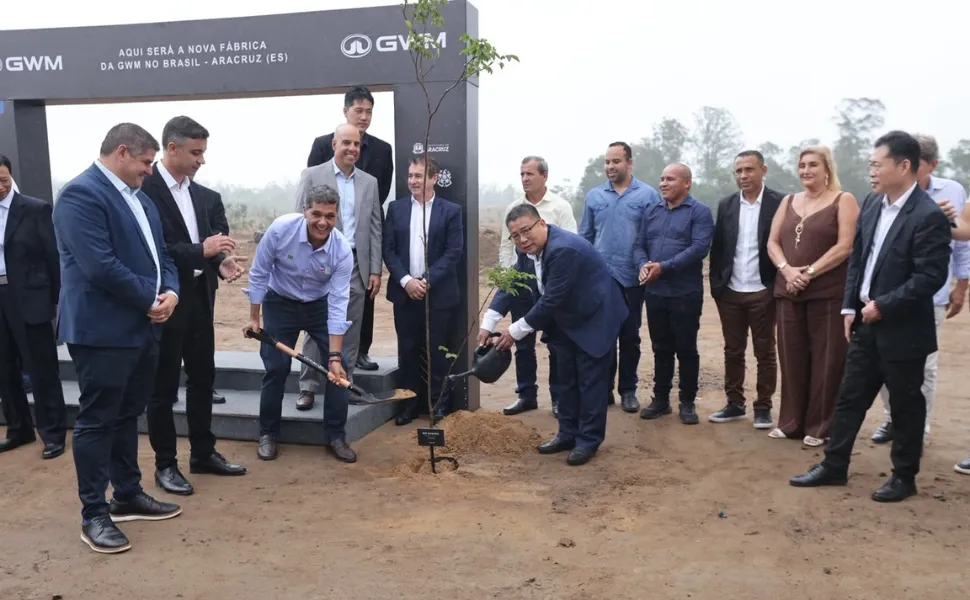
Great Wall Motors' new factory in Aracruz, Brazil, officially launches. Source: Government of Espírito Santo, Brazil; Photographer: Sid Costa",
Case 3: SAIC's First Electric Vehicle Plant in Europe Planned to be Established in Spain
Alfonso Rueda, President of the Regional Government of Galicia, Spain, stated to the media on June 1, 2026, that SAIC Motor will build its first electric vehicle plant in Europe in Galicia. The plant will be located in Ferrol, A Coruña Province, with an initial investment of €200 million. Construction is set to begin in 2027, aiming to commence operations before the end of 2028, with an expected annual production capacity of 120,000 vehicles upon completion. Additionally, the project will establish an industrial zone near the local port to handle vehicle assembly and transportation.
06 Summary: Systematic Global Expansion of Chinese Automakers
Reviewing overseas vehicle projects since 2026, a clear gradient and differentiated approach to global market expansion emerges:
Trial Markets: CKD assembly without equity partnerships, enabling light-asset rapid experimentation.
Key Markets: Equity joint ventures for co-located production, aligning with policies and sharing risks.
Mature Markets: Acquiring existing factories to swiftly secure independent production capacity.
Protected Markets: Exporting automotive industrial capabilities to empower local industries.
Core Strategic Markets: Building self-owned factories for long-term Take root (rooted presence).
In the past, Chinese automakers relied on 'cost-effectiveness to break through' in overseas markets. Now, they leverage 'industrial system dimensionality reduction strikes'.
From exporting products to exporting supply chains, technology, manufacturing capabilities, and automotive industry standards, 2026 marks the true maturation of China's automotive globalization.
(Cover image source: Xinhua News Agency)
- END -
-
![]()
Why Hasn’t AI-Driven Payment Flourished Despite Tech Giants’ Push?
-
![]()
Intensify Efforts in the High-End Optoelectronic Semiconductor Sector! Aipu Dingchun and Jiangsu Meidong Forge a New Joint Venture
-
![]()
From Endoscopes to Optical Interconnects for AI Computing Power: A Veteran Optical Company's Strategic Shift
-
![]()
Behind the Scenes of Token Factories' Rise as a Capital Market Sensation
-
![]()
What Does MaaS Ultimately Bring to Chinese Cloud Providers? | In-Depth Industry Analysis
-
![]()
China’s Auto Resale Value Report Unveiled: AITO M9 Electric and Hybrid Variants Dominate Rankings
-
![]()
Dialogue with Huang Yangming: On the Eve of the Physical AI Boom, the Value of Data Infrastructure Begins to Materialize
-
![]()
The Experience is a Bit Unusual! Logitech G Cloud Review: Great Feel, but Not Ideal for Cloud Gaming