Seres Anticipates Over 2.2 Billion Yuan Loss in Q2, with Core Subsidiary AITO Automobile Projected to Lose 1.9-2.15 Billion Yuan
 07/13 2026
 329
329
The half-year forecast released by Seres on July 12th appears to have shattered market expectations.
The prosperous era when Seres turned its fortunes around with the help of AITO has swiftly transitioned into a challenging phase marked by year-over-year and quarter-over-quarter losses. This loss forecast announcement has also exposed the current challenges confronting high-end smart vehicle companies.
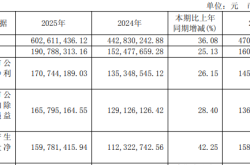
Let's delve into the figures: The net profit attributable to shareholders for the first half of 2026 is projected to be a loss ranging from 1.5 to 1.8 billion yuan. This is a stark reversal from the nearly 3 billion yuan profit earned during the same period last year. After two years of stable profitability, thanks to the partnership with Huawei in the previous two years, profits have plummeted this year.
Breaking down the data further reveals an even more alarming trend. In the first quarter, there was still a net profit of 754 million yuan, but in the second quarter, it plummeted to a loss between 2.254 and 2.554 billion yuan. In just three months, the company transitioned from profitability to a significant loss, creating a heart-stopping financial rollercoaster.
In fact, Seres had been grappling with losses in its early years until AITO emerged, providing a respite in 2024 and 2025. Previously, whenever the media discussed Seres' profitability, it was always in the context of AITO, which had significantly boosted Seres' revenue and gross profit. However, the paradox is that despite AITO's sales continuing to rise in the first half of this year and its market share remaining stable, profits could not be sustained. The core issues lie in costs and assets.
Upstream raw materials delivered the first blow. The announcement highlights memory chips (once again the scapegoat this year), industrial metals (which have indeed experienced substantial price hikes), and a general increase in lithium carbonate prices (although prices have recently declined), causing vehicle costs to surge. AITO, with its intelligent driving and high-computing-power cockpits, requires significantly more chips and batteries than ordinary vehicles, exacerbating the impact of price increases.
Currently, amid fierce price wars, automakers dare not raise prices arbitrarily. Consequently, the more vehicles sold, the greater the raw material losses (or consumption), squeezing gross profits with no place to hide. The pressures that were somewhat manageable in the first quarter completely collapsed in the second quarter.
In addition to regular price increases, there was also a one-time 'financial cleanup' this time. To ensure stability, the company wrote down the book value of obsolete assets (eliminated/phased out) due to technological advancements and model updates. Simply put, with the concentrated launch of new AITO models, the value of old production lines, molds, and parts quickly diminished, leading to a depreciation in value.
Impairment provisions were uniformly made in the second quarter. Although no actual cash outflow occurred, the book profit took a severe hit. This can be viewed as an inevitable consequence in the rapid product iteration cycle.
Caught between rising costs and the need for technological upgrades, the blame falls squarely on AITO, which is the primary contributor to the losses. AITO Automobile is projected to incur a net loss attributable to shareholders of 1.9-2.15 billion yuan in the second quarter, accounting for nearly the entire loss of the listed company.
The former profit champion has now become the biggest drag, underscoring that the profitability logic of high-end smart vehicle manufacturing is indeed evolving.
The sales figures are remarkable. Nearly 180,000 new energy vehicles were sold in the first half of the year, with AITO delivering 160,800 units, showing a slight year-over-year increase. Growing against the trend during the off-season is impressive, but it is overshadowed by the phenomenon of 'increasing revenue without increasing profits.'
As vehicle sales improve, the financial statements reveal greater losses, prompting everyone to question: Should the profitability shortcomings of the Huawei-collaborative car-building model be reassessed?
Fortunately, the company states that its cash flow and balance sheet remain stable, with the new M9 and M6 models generating excitement and maintaining product competitiveness. However, in the short term, the pressures from volatile raw material prices and model-update-related impairments will not dissipate immediately. The massive losses in the second quarter serve as a wake-up call to the market: Smart vehicles are no longer a guaranteed moneymaker based solely on volume. The hidden costs of upstream cost fluctuations and rapid technological iterations can undermine profit defenses at any moment.
Investors should monitor two key variables: Can lithium carbonate and chip prices stabilize? After the clearance of existing impairments, can profits stabilize and stop declining in the third quarter? For Seres, deeply intertwined with Huawei and relying solely on AITO, this half-year loss forecast is not just a financial fluctuation but a long-term test that must be navigated amid intense industry competition.
-
![]()
Why Hasn’t AI-Driven Payment Flourished Despite Tech Giants’ Push?
-
![]()
Intensify Efforts in the High-End Optoelectronic Semiconductor Sector! Aipu Dingchun and Jiangsu Meidong Forge a New Joint Venture
-
![]()
From Endoscopes to Optical Interconnects for AI Computing Power: A Veteran Optical Company's Strategic Shift
-
![]()
Behind the Scenes of Token Factories' Rise as a Capital Market Sensation
-
![]()
What Does MaaS Ultimately Bring to Chinese Cloud Providers? | In-Depth Industry Analysis
-
![]()
China’s Auto Resale Value Report Unveiled: AITO M9 Electric and Hybrid Variants Dominate Rankings
-
![]()
Dialogue with Huang Yangming: On the Eve of the Physical AI Boom, the Value of Data Infrastructure Begins to Materialize
-
![]()
The Experience is a Bit Unusual! Logitech G Cloud Review: Great Feel, but Not Ideal for Cloud Gaming