A Deluge of New Cars Leaves Consumers Overwhelmed
 08/03 2026
 496
496
Reflecting on the trends in the domestic automotive market during the first half of this year, the surge of new car models stands out as the most notable phenomenon, with new vehicles making their debut nearly every day. Including annual updates, new configurations, and limited editions, the market saw an influx of over 600 new models in just six months—equating to an average of three new car launches per day. Traditionally, when fuel-powered vehicles reigned supreme, the journey from concept to launch for a car typically spanned 5 to 8 years of meticulous refinement, with classic models undergoing numerous rounds of rigorous polishing before hitting the market. Nowadays, the development cycle for new energy vehicles has been significantly shortened to just 18 to 24 months. While the number of new cars continues to climb, the ones that resonate with consumers are becoming fewer. Beneath this vibrant facade lies a substantial inventory of unsold models and a growing cohort of hesitant, reluctant buyers.

In fact, a high volume of new car releases is not inherently detrimental—it signals industry vitality. However, when over 600 models flood a market that has contracted by 20% year-on-year, problems begin to arise. According to public data, from January to June this year, cumulative retail sales of narrowly defined passenger vehicles in China reached 8.701 million units, marking a year-on-year decline of 20.2%. Amidst this overall market contraction, automakers are frantically launching new cars. Data reveals that over 600 new models were introduced to the domestic market in the first half of the year, setting a new record for new car releases in recent times. Yet, in stark contrast to the fervor surrounding new launches, very few of these mass-released products have managed to establish a strong foothold. Among the 768 models with terminal registration records, only 40 achieved stable monthly sales exceeding 10,000 units in the first half of the year, accounting for just over 5%. Even fewer—less than 10%—were blockbuster models that consistently generated profits. More alarmingly, 60 models sold fewer than 10 units cumulatively in the first half of the year, becoming marginalized "also-rans" in the market.
This uneven distribution becomes even more pronounced in popular market segments. Take the highly anticipated "full-size 9-series SUV battle" in the first half of the year as an illustration. Among the seven new 6-seat full-size SUVs spanning a price range of 150,000 to 600,000 yuan, only a select few models, such as the NIO ES9 and Leapmotor D19, achieved monthly sales surpassing 8,000 units. Most other "9-series" models performed rather lacklusterly. This side corroboration confirms that, under homogeneous competition, even in trending market segments, the potential for blockbuster models is far more limited than automakers anticipate.
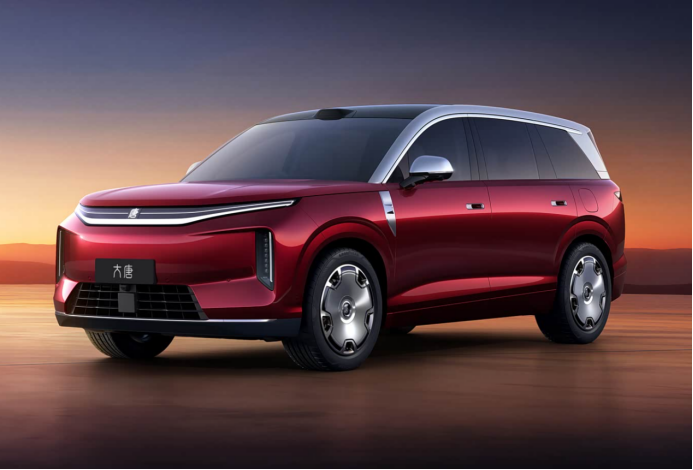
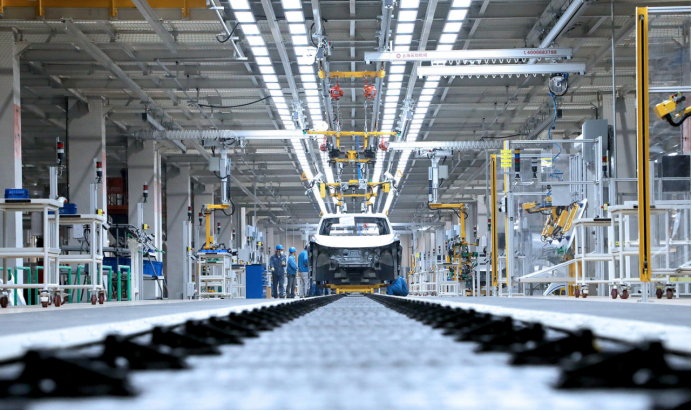
Therefore, amid intensifying market competition, rapid new car launches have increasingly become a strategy for many automakers to vie for market share. However, most of these updates have not resulted in substantial product enhancements. Data from vehicle platform monitoring reveals that among the new products launched in the first half of the year, models with entirely new architectures or native generational updates accounted for less than 15%, with over 80% being minor annual updates. Many models marketed as "fully upgraded" merely saw adjustments in body colors, wheel designs, interior materials, or optional features, while core components like the three-electric system (battery, motor, electronic control) and chassis architecture remained unoptimized.
Numerous car owners report that shortly after purchasing a new car, the brand introduces a newer model with slightly enhanced configurations and a lower terminal price, leaving them feeling like they've been shortchanged as owners of the "old" model. This frequent practice of "redesigning and lowering prices"—a form of pseudo-upgrade—is gradually eroding consumer trust in the brand. When consumers perceive that waiting will always yield a better deal and that new models offer little genuine value, adopting a wait-and-see approach becomes the most rational choice. Consequently, the effectiveness of automakers relying on frequent updates to drive sales will gradually wane.
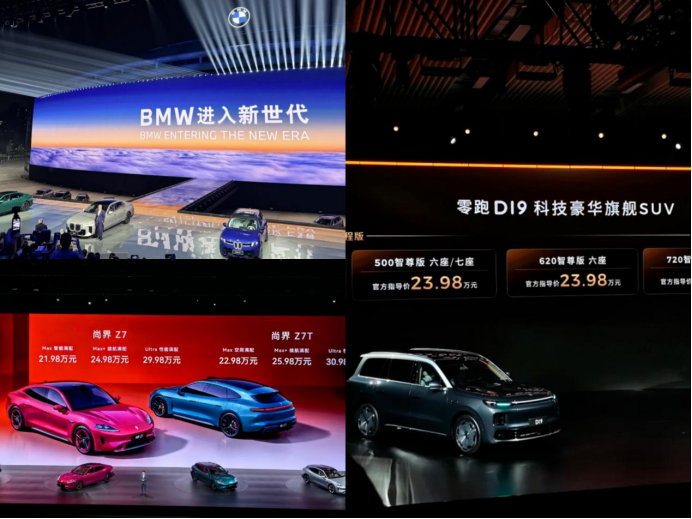
Simultaneously with the rise of "pseudo-upgrades," the phenomenon of "launch event inflation" has become increasingly pronounced in the industry. According to incomplete statistics, from January to June this year, there were nearly a thousand automotive launch events in China. Wei Jianjun, Chairman of Great Wall Motors, wrote on Weibo, "In the first half of this year, the Chinese auto market has witnessed an average of two to three launch events per day, with severe homogenization and wasted resources." This sentiment resonates widely across the industry. Li Xiang, CEO of Li Auto, also pointed out that while the number of launch events continues to rise, the information density of each event keeps declining. A single model can be split into multiple marketing activities, from teasers and reveals to pre-sales and launches, followed by annual updates. However, consumer patience is ultimately finite.
When new car launches become assembly-line operations, events lacking core information not only dilute consumer anticipation but also trap brands in a cycle of internal marketing exhaustion. Automakers' original intention of relying on traffic to drive sales gradually falls flat amidst this repetitive exhaustion.
Today, the domestic auto market has transitioned from a phase of incremental growth to one of fierce competition over existing market share. However, many automakers remain stuck in the mindset of "relying on volume to increase odds," fearing being outpaced by competitors and thus frantically compressing development cycles to accelerate new launches. When new models fail to sell, they resort to quick price adjustments through minor updates. After incurring losses from price cuts, they further compress R&D and real-world validation cycles, ultimately releasing more half-baked "unfinished products" into the market.
Ultimately, what consumers are truly willing to pay for are not "faster new cars rushed out in a hurry" but products that have undergone sufficient refinement, are reliable, user-friendly, and offer genuine value. Amidst relentless industry competition, how to balance the pace of new launches, R&D investment, and product quality—and break free from the cycle of "launch-unsold inventory-relaunch"—is a question all automakers must ponder in the long term.
(Image sourced from the internet. Removal upon infringement notice.)
-
![]()
Did the US Really Film Its Moon Landing in a Studio? 57 Years On, Doubts Persist, but the Irrefutable Evidence Lies Beyond the Photos
-
![]()
The Final Battle of Large Models
-
![]()
Battle of Defense and Offense Between Xiaomi and Li Auto in the Cooling Extended-Range Market
-
Top 10 AI Application Enterprises: Fast Growth & High Profitability
-
![]()
Thousands Rally as Audi’s Flagship Plant Faces Threat of Closure Amid Volkswagen Criticism
-
![]()
State-Owned Capital Makes Exclusive Foray into Bluetooth Satellite Sector, Propelling ‘Lanling Xingtong’ to Secure Key Financing for Large-Scale Network Deployment!
-
![]()
A Deluge of New Cars Leaves Consumers Overwhelmed
-
![]()
Analysis of Service Reputation Index in the First Half of 2026