Battle of Defense and Offense Between Xiaomi and Li Auto in the Cooling Extended-Range Market
 08/03 2026
 385
385
Teaser | Lead
The extended-range sector is undergoing profound adjustments. Faced with industry changes, Li Auto and Xiaomi have made starkly different choices—Li Auto aims to defend its home turf in the extended-range market while seeking new growth through battery electric vehicles (BEVs); Xiaomi Pengcheng, on the other hand, is entering the market against the trend, targeting the core of the extended-range segment. With one side defending and the other attacking, a new round of intense competition is about to unfold in the extended-range sector.
This article is produced by Heyan Yueche Studio
Written by Cai Yan
Edited by He Zi
Full text: 2,813 characters
Reading time: 4 minutes
As the extended-range market cools, Li Auto's new L6 faces a chilly reception, while Xiaomi Pengcheng generates buzz—an intriguing industry drama is unfolding.
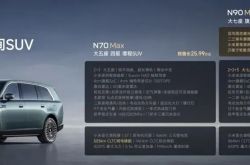
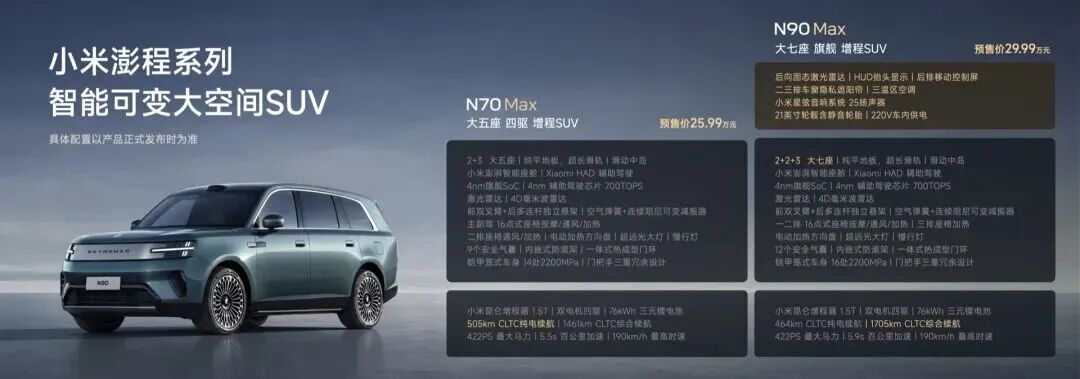
On July 30th, Lei Jun spent two hours detailing the Kunlun technology architecture and officially opened pre-sales for two new extended-range models, the Pengcheng N70 Max and N90 Max, priced at RMB 259,900 and RMB 299,900, respectively. As Xiaomi's first extended-range SUV lineup, these two new models have generated significant online buzz and strong offline foot traffic. However, their popularity pales in comparison to Xiaomi's pure electric models, the SU7 and YU7. The extended-range sector is already a red ocean, with Li Auto and Seres long dominating the minds of home SUV users, and consumers have become relatively more rational. The day after the launch event, Xiaomi's Hong Kong stock price slipped, closing at HK$28.78, down 7.28%. This reflects capital market concerns about the prospects of the extended-range market amid a price war.
Is the extended-range market cooling due to a bottleneck in the entire route, or is it accelerating the survival of the fittest? Can Xiaomi Pengcheng buck the trend?
From Golden Age to Structural Contraction in Extended-Range Vehicles
According to data from the China Passenger Car Association (CPCA), retail sales of extended-range electric vehicles (EREVs) reached 82,000 units in June 2026, a sharp year-on-year decline of 31.9%. From the wholesale perspective, 94,000 extended-range models were shipped, down 25.2% year-on-year, marking the largest single-month decline in nearly five years.
In the first half of the year, cumulative sales of extended-range models reached 439,000 units, down nearly 20% year-on-year. Their market share in the new energy vehicle (NEV) sector shrank to 8.14%. Only two extended-range models—the all-new Seres M9 and Li Auto L9—sold more than 6,000 units in a single month. Notably, even these top-selling extended-range models struggled; the Li Auto L9 did not even rank among the top sellers in the NEV segment in June, while the Seres M9 sold 20,500 units in the first half of the year, down 62.9% year-on-year.

It's worth noting that during the golden age of extended-range vehicles from 2021 to 2024, this segment achieved the most impressive growth trajectory in the NEV market, with year-on-year increases of 218%, 130%, 181%, and 78.7%, respectively, maintaining over 70% growth for four consecutive years. However, starting in the second half of 2025, the extended-range market rapidly declined and showed clear structural differentiation.
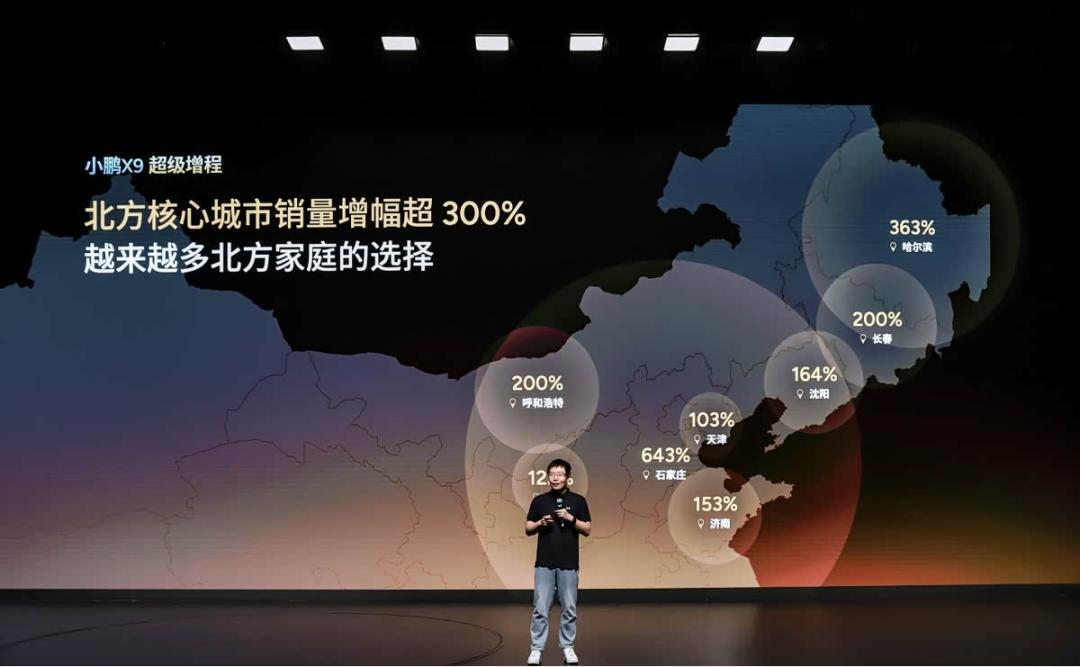
The overall trend is as follows: high demand in northern regions, low demand in southern regions; high demand in lower-tier markets, low demand in urban markets; overseas markets becoming a new growth pole; sales concentrated in cost-effective and high-end large SUVs and MPVs.
The key factor driving the extended-range market is not that certain automakers have fallen behind in product competitiveness, nor that the extended-range technology route has been suddenly outpaced by a "new technology." The real change lies in the underlying logic of NEV industry development—when the density of supercharging stations and battery swap stations is sufficient to cover daily travel radii, the "fuel tank-engine" anxiety reliever transitions from a necessity to a redundancy.
According to data from the National Energy Administration, as of the end of May this year, the total number of charging infrastructure facilities in China reached 22.497 million, up 44.9% year-on-year, including 4.951 million public charging facilities and a 98.8% coverage rate of charging facilities in highway service areas. Private charging piles reached 17.546 million, up 51.4% year-on-year. Combined with the National Development and Reform Commission's "Three-Year Doubling" action plan for EV charging facility service capacity, 28 million charging facilities will be built by the end of 2027.
The improvement of the charging network not only leads to a decline in sales of extended-range models but, more critically, reflects a shift in consumer mindset regarding extended-range vehicles. According to the 2026 McKinsey China Automotive Consumer Insights, 60% of plug-in hybrid/extended-range vehicle owners plan to switch to a pure electric vehicle for their next purchase. Of course, the decline of extended-range models is also attributable to changes in market policies, the dilution of cost advantages for extended-range models, and high product homogeneity—reasons why more and more automakers are gradually withdrawing from the extended-range market.
Xiaomi and Li Auto: Defense vs. Offense
Faced with the same market backdrop, Li Auto is on the defensive while Xiaomi goes on the offensive.
In early July, Xiaomi officially announced its Pengcheng (SkyNomad) brand. Despite explicitly positioning its first model as an extended-range mid-to-large SUV, its market value surged by 10%, and internet discussion did not wane due to Pengcheng's debut as an extended-range SUV.
In contrast, the much-anticipated all-new Li Auto L6, which officially announced its pricing in mid-July, received widespread market feedback that its pricing was on the high side. Although Li Auto recently stated that orders for the new L6 remain optimistic overall, considering Li Auto's shift in focus toward BEVs since 2025 and the lukewarm market response to the refreshed L series in 2026, a clear "scissors gap" has emerged in the strategic pacing of Li Auto and Xiaomi in the same market.
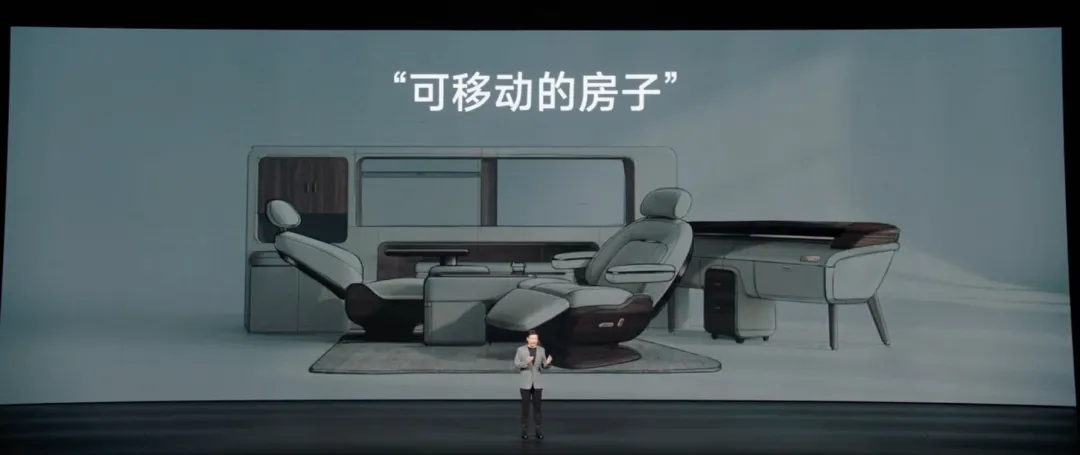
Interestingly, because Xiaomi Pengcheng's brand positioning, first model, and core selling point of a "transformable large space" all significantly overlap with Li Auto's vision of "creating a mobile home" focused on "family vehicles," and given that both Xiaomi and Li Auto excel in user insights and tangible product experiences, Xiaomi Pengcheng is poised to become Li Auto's biggest competitor after Seres.
Of course, as an attacker in the extended-range market, Xiaomi faces challenges in dislodging Li Auto's potential or existing customers amid intensifying competition and shrinking market volume, let alone replicating the success of the Xiaomi SU7 by setting a new benchmark in an unfavorable market.
On one hand, although Xiaomi Pengcheng and the all-new Li Auto L6 overlap significantly in pricing, with the official launch of the Pengcheng N70 and N90 in September potentially seeing further price reductions, the two automakers still have distinct positioning for their new models. After Li Auto embraced the "embodied intelligence" label, the L6's core identity became "family dad + embodied intelligence," emphasizing space, comfort, and intelligent experiences. In contrast, Xiaomi Pengcheng's concept of a "transformable space" is indeed attention-grabbing from a product marketing perspective, but previous models from Zeekr MIX and ARCFOX with similar selling points ultimately underperformed in sales. Therefore, how Pengcheng tells the story of "transformable space + family" will be a key factor in determining whether its first model achieves volume.
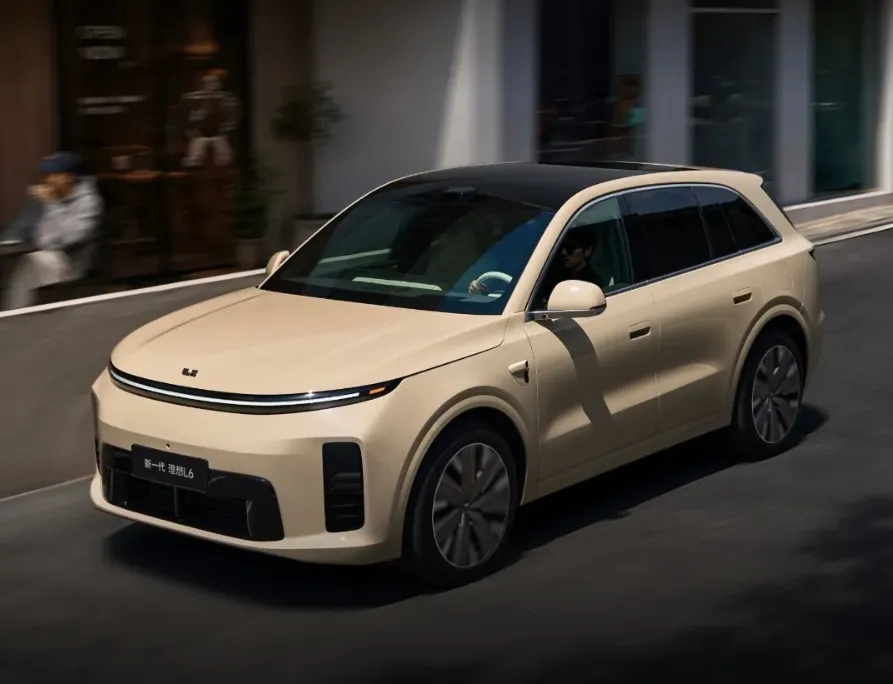
On the other hand, the competition extends to brand perception. Despite the pressure on Li Auto's L series models in recent years, Li Auto has established a strong mental anchor in consumers' minds since its inception: "extended-range family SUV = Li Auto," which is difficult to shake overnight. Meanwhile, Xiaomi Pengcheng's definition of "driving cabin space" ultimately does not break free from the traditional automotive "spatial attribute" design framework. Moreover, Li Auto has long faced pixel-level benchmarking from competitors, and its core competitiveness now lies not in simple features like "fridge, TV, sofa" but in user trust. Can Xiaomi Pengcheng turn the tables?
Can Xiaomi Pengcheng Succeed?
Judging by the traffic and attention generated by the tech launch event, Pengcheng, as Xiaomi's second brand, has not lost the "Xiaomi hype halo " (Xiaomi's inherent buzz) just because its first model is an extended-range vehicle.
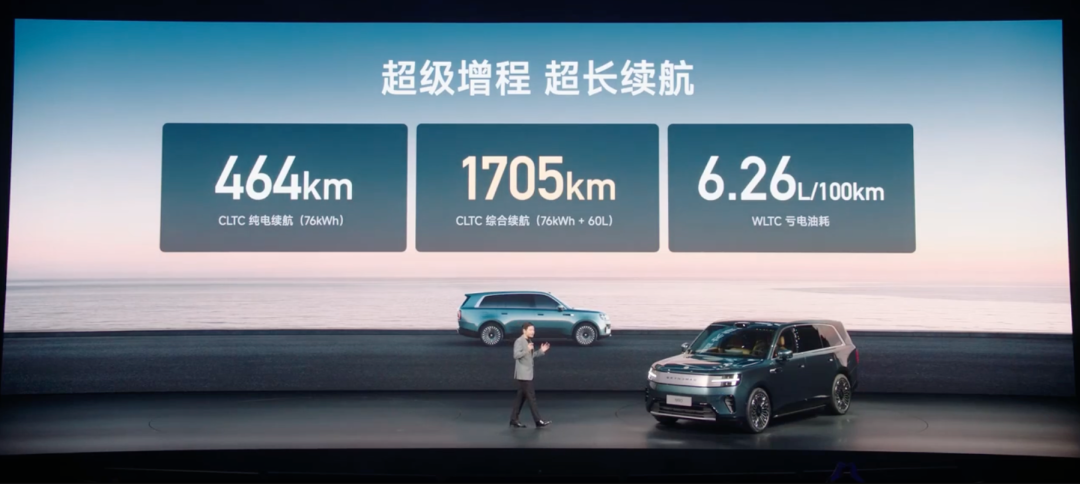
Although the core selling points of Xiaomi Pengcheng's two new models still revolve around the "four pillars" of "large battery, long range, fridge, TV, sofa, large space, and high safety," from the perspective of "meeting genuine user needs," Pengcheng has chosen an opportune moment to enter the market. If it can successfully tell the brand story of "home use and transformable space," there is still potential. During the tech launch event, Lei Jun devoted significant time to emphasizing the "transformability and expandability" of the new vehicle's space, indicating thorough preparation.
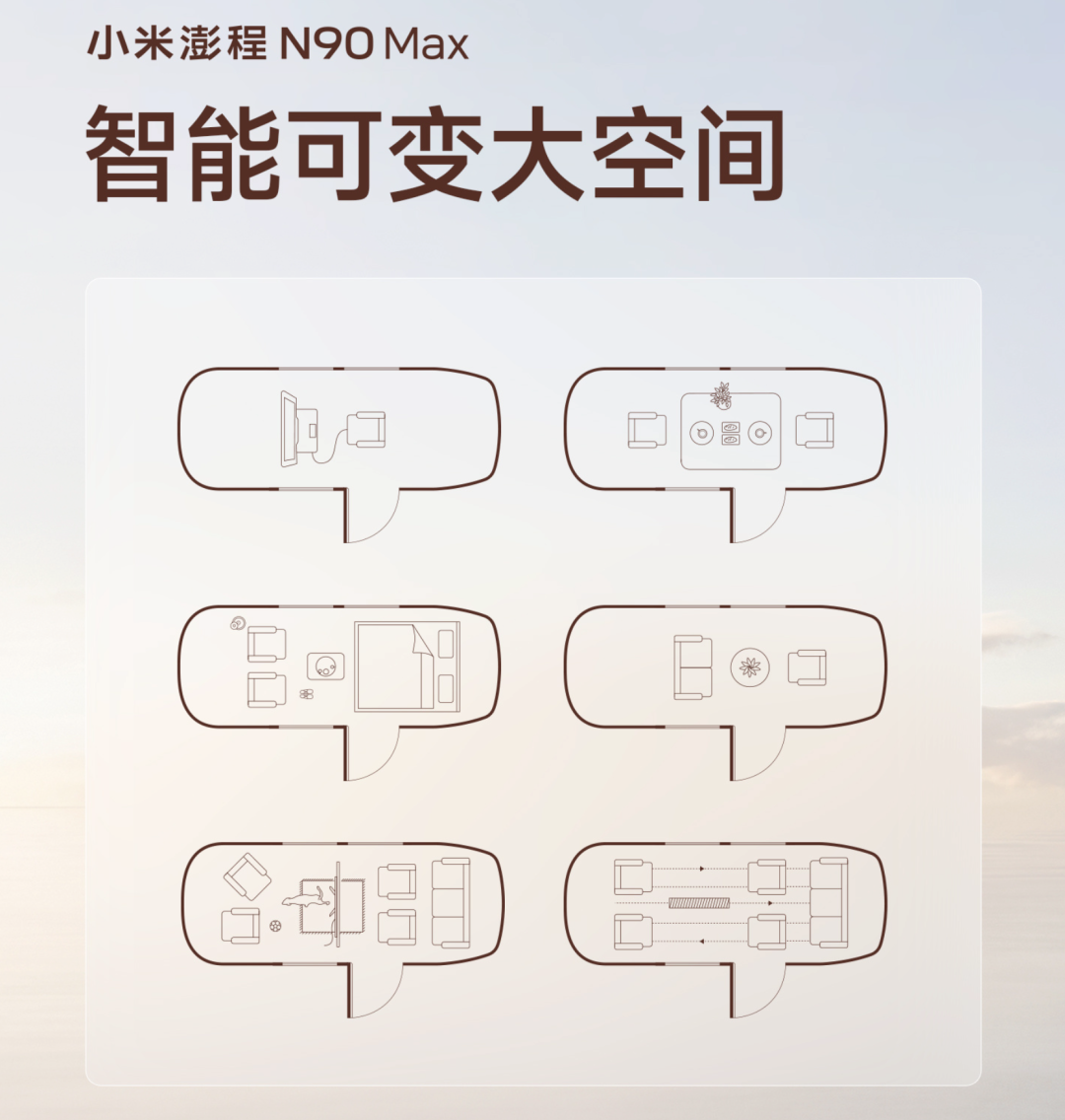
It's worth noting that with Xiaomi's well-established "Internet of Things" (IoT) ecosystem, creating a brand entirely focused on the "family" label is not a difficult task. Additionally, Xiaomi Pengcheng has explicitly stated that in addition to the Max flagship version announced today, the September launch will include an entry-level standard version. Clearly, Xiaomi still has several "aces" up its sleeve for Pengcheng's sales.
Currently, the biggest challenge for Pengcheng is determining whether its future sales channels will integrate with Xiaomi's existing network or establish an entirely separate sales system distinct from Xiaomi's.
Although the extended-range market is currently sluggish, a large number of new players still entered in the first half of this year, with automakers such as Beijing Off-Road, Chery iCAR, and Volkswagen launching 54 new extended-range models. Given the current pace and trend of new vehicle launches in the Chinese automotive market, the momentum for extended-range new models is unlikely to wane in the second half of 2026. Within the automotive industry's framework, where "scale" remains paramount, even if the domestic extended-range market cools, the segment still holds immense potential to unlock market scale across China's vast territory and the diverse global market.
Commentary
Xiaomi's entry into the extended-range sector resembles traditional brands' forays into fuel-efficient vehicles. Earlier this year, Geely, Changan, and Great Wall Motors all entered the HEV segment—not a step backward in history but an effort to reinvigorate a "niche" segment through superior experiences, ultimately expanding their user base and boosting scale and brand presence. For a brand like Xiaomi, which bring your own " Traffic halo " (comes with inherent buzz), it is inevitable that it will venture into more market segments, breaking free from the limitations of a single powertrain. Its entry into the extended-range sector is a strategic choice based on product lineup and user demand, aiming to further expand scale by Improve product matrix (completing its product matrix).
(This article is original to Heyan Yueche and may not be reproduced without authorization.)
-
![]()
Did the US Really Film Its Moon Landing in a Studio? 57 Years On, Doubts Persist, but the Irrefutable Evidence Lies Beyond the Photos
-
![]()
The Final Battle of Large Models
-
![]()
Battle of Defense and Offense Between Xiaomi and Li Auto in the Cooling Extended-Range Market
-
Top 10 AI Application Enterprises: Fast Growth & High Profitability
-
![]()
Thousands Rally as Audi’s Flagship Plant Faces Threat of Closure Amid Volkswagen Criticism
-
![]()
State-Owned Capital Makes Exclusive Foray into Bluetooth Satellite Sector, Propelling ‘Lanling Xingtong’ to Secure Key Financing for Large-Scale Network Deployment!
-
![]()
A Deluge of New Cars Leaves Consumers Overwhelmed
-
![]()
Analysis of Service Reputation Index in the First Half of 2026