Transforming Car Manufacturing into a 'Smartphone Launch' Frenzy: 5 Tips to Avoid Pitfalls When Purchasing a New Car
 08/03 2026
 430
430
On July 28, the five-seater variant of the Zeekr 9X was officially unveiled, offering three distinct models.
On the same day, Yueda Kia officially released promotional images of the all-new Seltos and announced that pre-sales for this new model would commence on August 13.
The following day, July 29, marked the official debut of the Audi Q9.
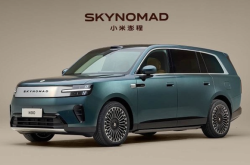
On July 30, Xiaomi unveiled the Pengcheng N70 Max and N90 Max, with pre-sales kicking off simultaneously.
Come August 1, the new Hongqi Tiangong 08 670 Max was officially launched.
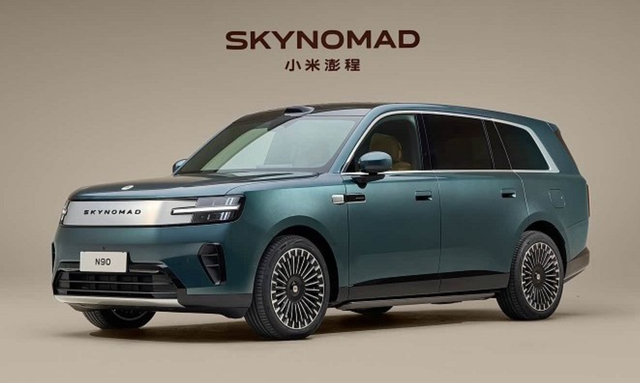
Over the past year, the Chinese automotive market has witnessed an unprecedented surge in new car releases.
In March 2025 alone, over 50 new car launch events took place across the country, averaging roughly two new model introductions per day. By September of the same year, more than 70 new domestic models had been introduced.
As we entered 2026, this trend not only persisted but accelerated. In March alone, over 80 car-related events were held, with approximately 60 new models released, nearing a 'daily update' frequency.
In the first half of 2026, a staggering 576 new passenger car models were launched domestically, averaging more than 3.3 per day.
Statistics reveal that in the first five months of 2026, 542 new models were introduced domestically, averaging 3.6 per day.

In contrast, the smartphone industry appears relatively 'restrained.' In 2025, mainstream smartphone brands collectively released over 139 new models. Even when including all domestic brands, the annual total number of new model launches was only 515.
The number of new automotive models has now surpassed the release pace of smartphone models.
The issue arises from the fact that smartphones are fast-moving consumer goods, typically replaced every one and a half years, whereas cars are durable consumer goods, often used for a decade or more. Manufacturing cars at the pace of 'smartphone production' clearly conceals significant systemic risks.
I. Feast or Gamble?
The current auto market boasts over 130 brands available for sale, with 576 new models flooding in during the first half of the year alone.
However, the market pie hasn't expanded. Domestic demand for new cars has long stabilized at around 25 million units annually, with a limited share divided among an increasing number of 'competitors.' More severely, in the first half of 2026, domestic sedan retail sales plummeted by 30.1% year-on-year, and the number of cars in use has surpassed 371 million, indicating a market that has long shifted from growth competition to a 'stock competition.'
Pouring a massive number of new products into a continuously shrinking market hasn't spurred technological upgrades in the industry but has instead pushed competition into a vicious circle of low-level, disorderly intense competition.
Among the 542 new models launched in the first half of the year, only 30 models consistently sold over 10,000 units per month, accounting for just 5.5%. The bottom 70% of new models combined held less than 15% of the market share.
Many so-called 'all-new models' merely feature minor adjustments to the infotainment interface or new exterior colors, with no substantial upgrades to their core architecture.
Even more alarming is that the automotive industry's profit margin has dropped to 3.4%, with the profit margin for vehicle manufacturing down to just 1.5%.
II. The Warning Bell for 'Abandoned Cars' Has Rung
The denser the new car releases, the more fragmented the ownership of individual models becomes.
In the era of internal combustion engine vehicles, a classic model could remain on sale steadily for six to ten years, with long-term production of parts and a mature after-sales system. Nowadays, many models' popularity fades within three months, and some are quickly discontinued within two to three years of launch.
This is not just baseless worry.
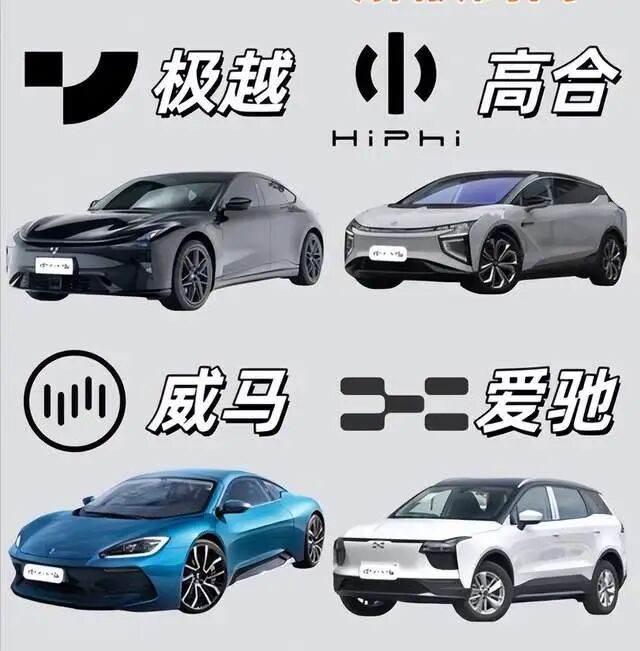
After brands like WM Motor and HiPhi shut down, owners faced dilemmas such as inoperable encrypted three-electric systems (battery, motor, controller), discontinued original parts, and terminated OTA services. Due to closed technology and highly customized supply chains, third-party repair thresholds are extremely high, leaving many vehicles without basic support and causing their residual values to plummet.
A report from the China Consumers Association indicates that lack of after-sales support for vehicles after automakers shut down has become a concentrated consumer complaint. In 2018, China had over 487 electric vehicle manufacturers, but by the end of 2023, only about 40 remained in normal operation.
Although the 'Automobile Sales Management Measures' stipulate that automakers must ensure at least 10 years of parts supply after production stops, once a company goes bankrupt, consumers' after-sales rights rank last in debt settlement and are essentially unenforceable. Warranty promises become 'empty checks.'
III. Car Buying Tips: To Avoid Being 'Orphaned' in Five Years, Focus on These Points
Faced with the chaos of an overflowing new car market, consumers need to be especially clear-headed when purchasing a vehicle:
First, choose 'major players' over 'internet celebrities.'
Prioritize leading brands with high market share and stable sales.
You can assess their strength by reviewing financial reports, industry news, and sales data.
Second, look at ownership volume, not hype.
Models consistently selling over 10,000 units per month indicate a relatively sufficient supply of repair parts and more guaranteed residual values.
Stay away from models that make a big splash at launch but disappear after three months.
Third, be cautious about the 'value' of 'lifetime warranties.'
If the automaker itself is unstable, 'lifetime warranties' are just empty promises.
If warranty services are provided solely by 4S dealerships, rights may be unenforceable if the dealership closes.
Fourth, clarify after-sales service terms when signing contracts.
Include warranty scope, repair channels, and parts supply in the contract to provide a basis for future rights protection.
Fifth, beware of 'fake new releases.'
Many so-called annual updates merely feature minor exterior tweaks and small configuration changes, with no core technological upgrades.
When buying a new energy vehicle, focus on hardcore strengths like the three-electric system and chassis architecture rather than flashy marketing rhetoric.

Conclusion
Cars are not smartphones and cannot be replaced annually.
When the industry manufactures cars at the pace of 'smartphone launches,' the revelry is for capital and traffic, while the risks are borne by every consumer who spends their hard-earned money.
Five years from now, when a batch of models are discontinued and a batch of companies shut down, owners of those 'orphaned' vehicles will face the dilemma of no repair services and scarce parts alone.
In this era of an overflowing new car market, choosing a vehicle that 'can accompany you for ten years' is far more important than choosing the 'hottest model today.'
Which brand's car have you been paying attention to lately?
-
Financing and IPO: Is Ant Group a Financial Giant or a Pioneer in Cutting-Edge Tech?
-
![]()
Revenue Soars Twofold in Three Years! Optical Firm Reignites Bid for Hong Kong Stock Exchange Listing
-
![]()
Jiangsu LEAD Microelectronics Successfully Hands Over Its Inaugural 12-Inch Wafer-Level Optical Magnetron Sputtering System!
-
![]()
Domestic Computing Power Hits Breakthrough: Super Nodes as the Pivotal Force
-
![]()
Tongze Kangwei Secures IPO Registration on GEM: Broadband Terminal Equipment Provider Set for Imminent Share Issuance
-
![]()
Transforming Car Manufacturing into a 'Smartphone Launch' Frenzy: 5 Tips to Avoid Pitfalls When Purchasing a New Car
-
![]()
The Three-Way Battle Among AI Office Software: A Decade of War Among BAT
-
![]()
The Three-Way Battle Among AI Office Software: A Decade-Long War Among BAT