China's Luxury Brand with the Highest Sales Volume: How Has Li Auto Stayed Competitive These Past Six Months?
 08/10 2026
 502
502
Introduction
Li Auto's Resilience Is More Noteworthy Than Its Sales Figures
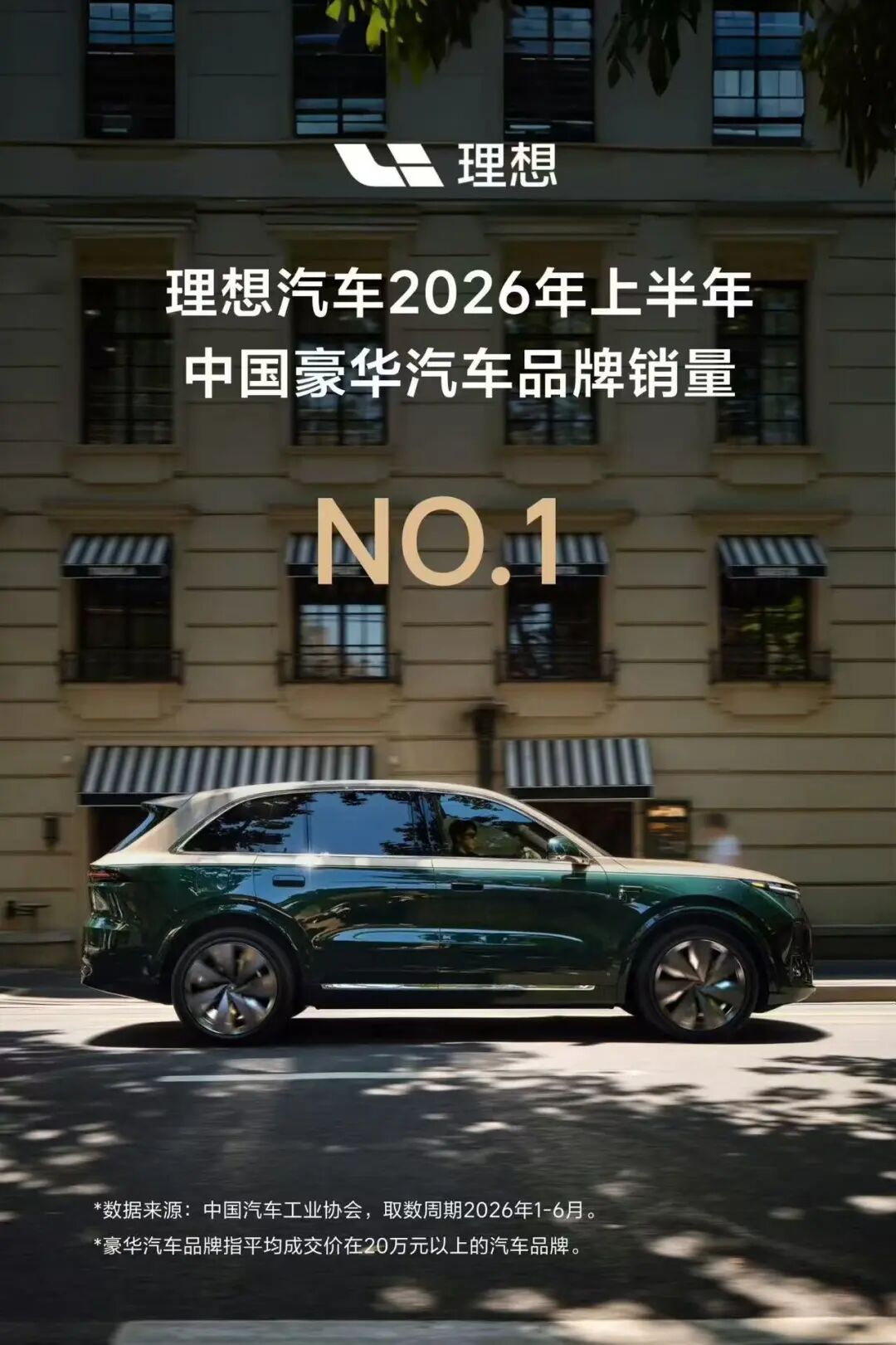
In the first half of 2026, Li Auto secured the top spot in sales among China's luxury automotive brands. However, this title was not easily earned.
If we rewind to a year ago, the industry's outlook on Li Auto was far less optimistic. The early advantage of its extended-range technology was rapidly diminishing, with Seres pressing from the front and Xiaomi and NIO taking turns in the pure electric market. Li Auto itself was at a critical juncture, transitioning its product lineup from extended-range to pure electric vehicles—the L series was in the middle of its lifecycle, the i series was just getting started, and the public controversy surrounding the MEGA had not fully subsided. By all accounts, it was not a year to let up.
Yet, six months later, Li Auto's performance tells a different story: In the first half of 2026, it delivered 193,472 vehicles, securing the top spot among Chinese brands in the luxury passenger vehicle segment with a starting price of over RMB 200,000. The significance of this championship in this category needs little explanation.
Even more interesting is the data on residual value rates. In July, according to the China Automobile Dealers Association, the one-year residual value rate for the Li Auto MEGA was 79.7%, ranking second among pure electric models and first among pure electric MPVs. The L series also remained at the forefront in terms of residual value rates in the plug-in hybrid segment.
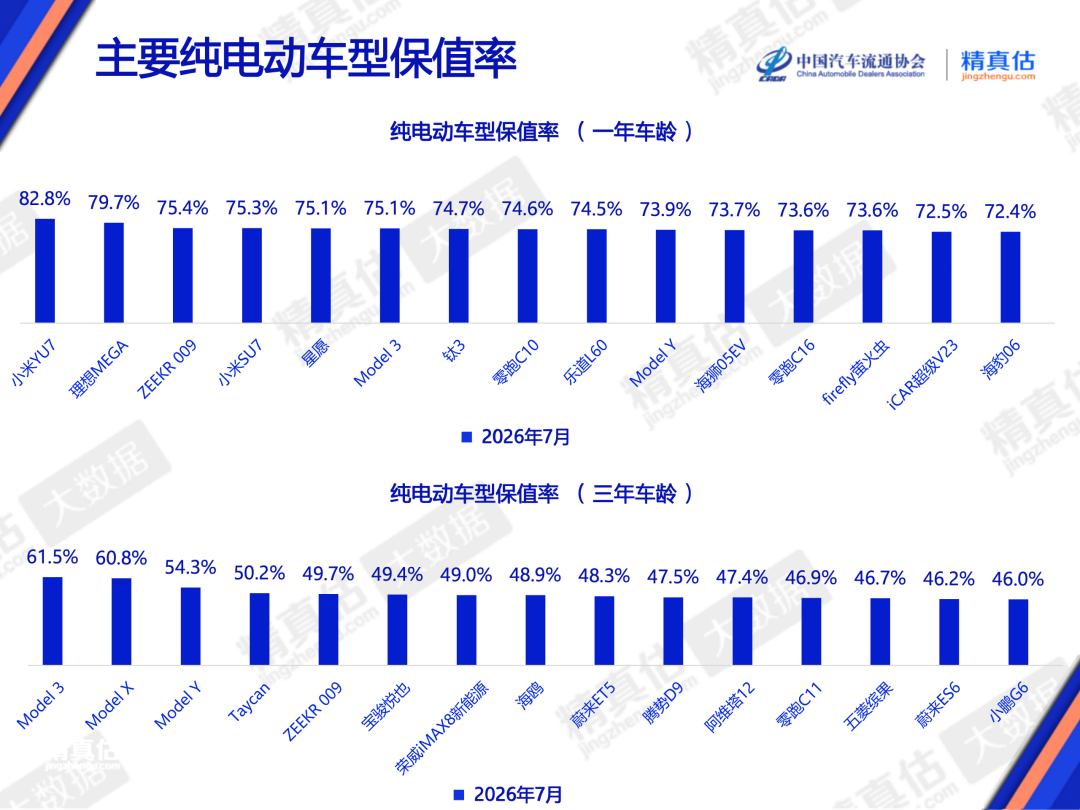
Image Source: China Automobile Dealers Association and Jingzhen Gu
When these figures are viewed together, they reveal something more noteworthy than sales volume alone—Li Auto's supply chain and distribution systems are stable. Its pricing system has not collapsed, and the foundation of used car prices remains solid. Currently, Li Auto has 495 retail centers covering 160 cities, 536 after-sales service centers covering 220 cities, and 4,097 supercharging stations. The density of its channels directly supports the circulation of used vehicles and the supply of parts, providing hard evidence of a stable system.
This is no easy feat. The industry has seen many cases where a decline in sales leads to system-wide chaos: dealers incur losses, used car prices plummet, and user confidence collapses, creating a vicious cycle.
Li Auto has avoided this path. Despite a year-on-year decline in sales in the first half of the year, the pricing order, channel confidence, and user expectations across its system have been maintained. This cannot be simply attributed to "strong brand power" but rather reflects a sophisticated management capability that spans pricing, channels, supply chains, and user sentiment.
The success of the i6 provides another perspective on this story.
In the first half of 2026, the i6 achieved cumulative retail sales of 120,443 units, accounting for 62.2% of Li Auto's deliveries in the period, topping the mid-to-large SUV sales charts for the half-year. From March onwards, it surpassed 20,000 units in monthly sales for four consecutive months, with 21,453 units sold in June and the 160,000th mass-produced vehicle rolling off the line on July 21.
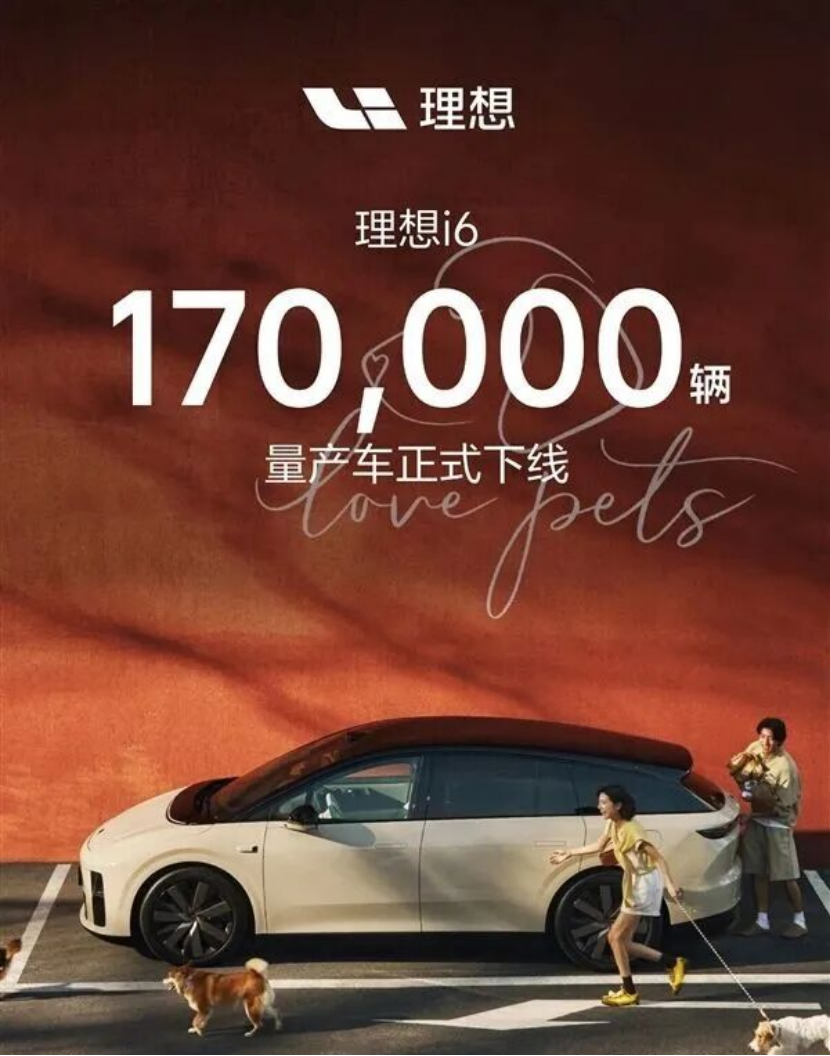
As a luxury pure electric SUV, these figures would be noteworthy for any brand. More critically, the i6 achieved this sales volume not solely relying on batteries from CATL. Li Auto made a risky decision in its supply chain—introducing Sunwoda as a second supplier. Since then, 170,000 i6 units have been produced, with battery health checks showing 99.6% health, while product strength and communication strategies have maintained user confidence.
The results speak for themselves: Users have accepted this approach, as evidenced by monthly sales exceeding 20,000 units. Such supply chain negotiations and balancing acts are far more challenging than simply stacking specifications, but they represent a threshold a brand must cross to truly mature.
Another point worth noting is that industry sources indicate the L series will also launch pure electric versions in the future.
In the view of Diandongshi, this decision and direction are wise. The design language of the i series is relatively aggressive, whereas mainstream Chinese luxury car users prefer elegance, appropriateness, and refinement. The design of the L series aligns precisely with these aesthetic preferences, and launching pure electric versions under the L series banner would appeal to a much broader user base. This represents Li Auto's second strategic correction in its pure electric approach, and the direction is correct.
Looking back at Li Auto over the past six months—its extended-range advantage being challenged, its pure electric transition in progress, and sales under pressure yet still holding the top position—it has not fallen behind in terms of data. From a systemic perspective, it is more stable than many peers. From a product strategy standpoint, the i6 has proven its capability in pure electric vehicles, while the electrification of the L series opens up new possibilities.
The Chinese automotive market is no stranger to short-term hits, but what it lacks are brands that can transcend cycles. Li Auto still has a way to go before achieving this, but the resilience it has demonstrated during this adjustment period—through product repositioning, refined supply chain operations, and sustained user confidence—has already placed it one step further on the right track.
-
![]()
Why I'm Not Optimistic About Meituan?
-
![]()
Tencent Goes All In on WorkBuddy: The Battle for AI Office Entry Points Has Just Begun
-
![]()
950 Million Users Fail to Rescue Gemini
-
![]()
Weekly Stock Review | Auto Industry: Profit Margins Thinner Than Factory Work Pay, Thousands of Investors Caught Unawares
-
![]()
Kimi's Valuation Rockets to $50 Billion Amidst Frenzy of Secondary Share Sales! Who's Exiting, Who's Buying?
-
![]()
SAIC-GM Signs 20-Year Contract Extension, Yet Chevrolet Falters at Third Decade’s Dawn
-
![]()
Charging Costs Climb to Parity with Fueling, Will Electricity Prices Reach European Levels?
-
![]()
Tax and Fee Restructuring: The End of 'Special Perks' for Electric Vehicles?