Why Are Once-Prominent 'Honored Guests' Now Mostly Missing from the Chengdu Motor Show?
 08/24 2026
 351
351
On August 21, the 2026 Chengdu International Auto Show is set to kick off at the Western China International Expo City. Reports indicate that nearly 120 automotive brands are slated to participate in this year's Chengdu Motor Show, covering an exhibition area of approximately 220,000 square meters and displaying around 1,600 vehicles. As one of China's traditional top four A-class auto shows, the Chengdu Motor Show remains a significant annual event in terms of its scale.
However, despite its substantial scale, the lineup of exhibitors has undergone notable changes. Among the list of upcoming participants, some familiar traditional foreign and joint-venture brands are conspicuously absent: popular joint-venture brands such as Dongfeng Honda, Dongfeng Nissan, SAIC-GM Chevrolet, and Yueda Kia are not participating; among imported luxury brands, Lexus and Jaguar Land Rover are missing; and imported ultra-luxury brands like Porsche and Maserati are also not exhibiting. In contrast, Chinese domestic brands continue to actively increase their presence, particularly traditional domestic automakers such as BYD, Chery, and Great Wall Motor, as well as new energy vehicle startups, which are securing increasingly larger exhibition stands. The past scene of traditional foreign and joint-venture brands flocking to participate is fading, and today's Chengdu Motor Show increasingly resembles a home turf for Chinese new energy brands.
The reasons for these brands' absence from the 2026 Chengdu Motor Show vary, as evidenced by their market performance in recent years.
Yueda Kia's absence from the Chengdu Motor Show is tied to its shift in market focus. Although its sales are still on the rise, while stabilizing its domestic market, it is also ramping up its export efforts to utilize overseas markets to absorb excess production capacity. Compared to increasing brand exposure by participating in the Chengdu Motor Show, allocating resources to domestic terminals and overseas markets is a more pragmatic approach for Kia at this stage.
Dongfeng Nissan will also be skipping this year's Chengdu Motor Show. Looking back at its participation changes in recent years, its auto show strategy appears to be a phased decision: it did not participate in 2024, returned in 2025, and is absent again in 2026. This suggests that Dongfeng Nissan's participation is not a fixed arrangement but is adjusted based on its product lineup and market conditions.
Dongfeng Honda's absence this time is primarily influenced by its slower transition to new energy vehicles, lacking high-profile new products suitable for a concentrated debut at the auto show. Currently, the Honda GT (Ye GT) has been postponed to launch between the end of 2026 and the first half of 2027; the new e:Ny1 (Y1) is still in the planning stage, expected to be launched in 2026 but has not yet unveiled a physical vehicle. Without sufficiently impactful new cars to showcase, the practical effect of participating in the Chengdu Motor Show is limited, making Dongfeng Honda's absence understandable.
In comparison, the situation with SAIC-GM Chevrolet is more unique. Not long ago, General Motors announced that Chevrolet would cease sales in China but would retain production in China and shift its focus to the export market. With Chevrolet exiting the Chinese new car sales system, the Chengdu Motor Show naturally loses its significance for Chevrolet to showcase new cars and attract consumers.
When it comes to Porsche and Maserati, their absence is more related to changes in how auto shows generate buzz and acquire customers. Today, channels such as live streaming, short videos, and social media can all be used to launch new products and expand brand influence, making auto shows no longer the only option for brand exposure. For ultra-luxury brands, the decision-making process for purchasing is lengthy, and consumers are unlikely to decide to buy after just visiting an auto show and seeing the displayed vehicles. Therefore, for Porsche and Maserati, the Chengdu Motor Show is no longer an irreplaceable customer acquisition channel.
Lexus has been absent from the Chengdu Motor Show for two consecutive years. Since the beginning of this year, Lexus has completed the launch of the all-new ES and conducted brand communication through the Beijing Motor Show, announcing that the all-new pure electric ES model will be launched in the second half of the year. At the same time, channels such as online launches, live streaming, and eLexusClub can also achieve new product display and customer acquisition. With an established product launch schedule and increasingly diverse communication channels, the Chengdu Motor Show is no longer a must-attend event for Lexus.
Jaguar Land Rover's absence is somewhat different; it's not so much "not coming" as adopting a different strategy in the Chinese market. Although Jaguar and Land Rover are not participating, their "successor" is here. At this year's Chengdu Motor Show, the FREELANDER, a collaboration between Chery and Jaguar Land Rover, will participate for the first time, and the Freelander 8 will also make its debut. As Jaguar Land Rover adjusts its original product system, the FREELANDER begins to enter the Chinese market as an independent brand and rebuilds its sales and service channels. Therefore, Jaguar Land Rover's absence from the Chengdu Motor Show this time is more like a handover to a new brand after adjusting its original business.
 It is clear that the brands absent from this year's Chengdu Motor Show each have their own considerations and reasons for their absence. However, besides their own reasons, automakers must also consider the practical value that the Chengdu Motor Show can bring when deciding whether to participate. In recent years, traditional foreign and joint-venture brands have been under pressure from declining sales, shrinking profits, and dealer network adjustments while also investing heavily in developing new energy products and upgrading technology. In this context, participating in an A-class auto show typically requires an investment of 8 to 10 million yuan, prompting automakers to reevaluate the value of participation: whether there are new cars to launch, how much attention and sales it can generate, and whether the investment in participation can yield corresponding practical returns.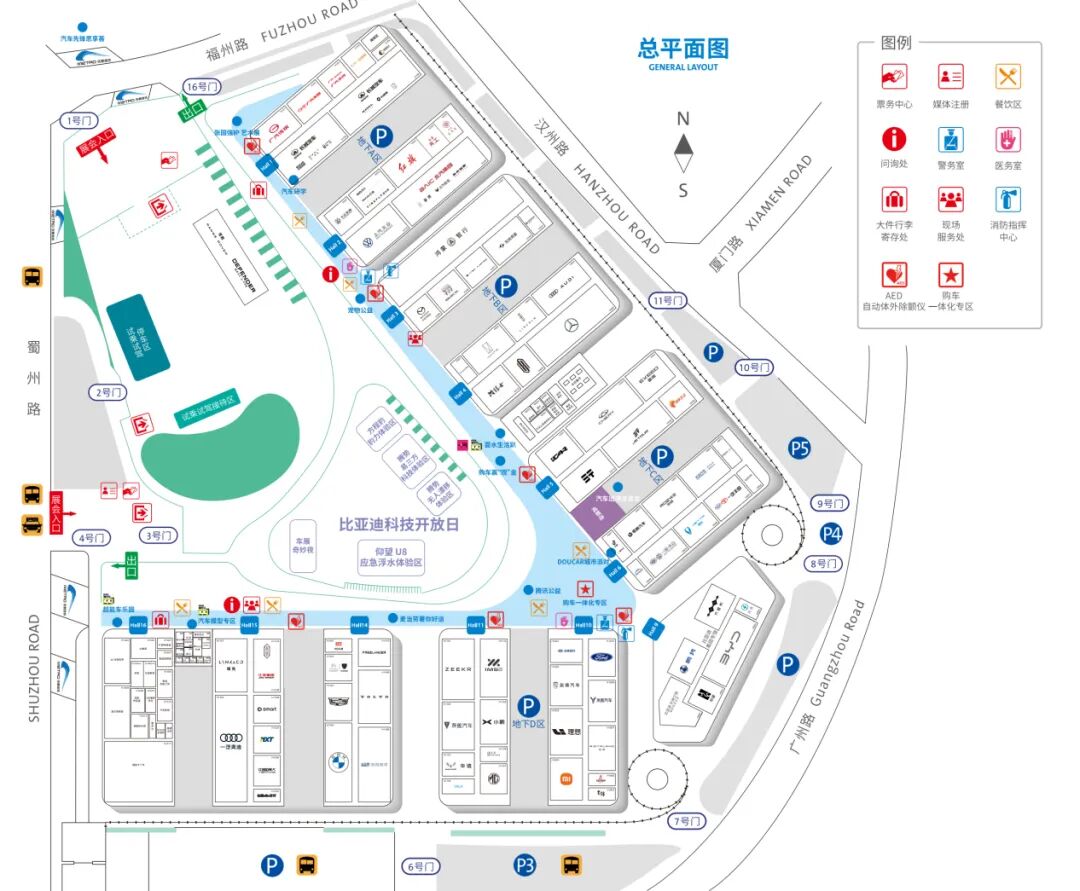
From the perspective of the Chengdu Motor Show itself, its scale remains impressive, but this does not necessarily mean that its actual influence has increased in tandem. In recent years, the performance of the auto show in terms of transactions, new car debuts, and industry communication has changed. In 2020, on-site orders at the Chengdu Motor Show reached 38,900, with a transaction value of 6.806 billion yuan; in 2025, orders decreased to 33,700, and the transaction value dropped to 5.753 billion yuan. Meanwhile, the number of new car debuts decreased from 80 in 2019 to 68, 73, and 70 in 2023, 2024, and 2025, respectively, while media press conferences decreased from 66 in 2023 to 61 in 2025. Additionally, automakers have more and more communication channels, and new cars can directly reach consumers through online launches, live streaming, and short videos, no longer relying solely on auto shows for new product exposure. When automakers and consumers have more alternative channels, auto shows are no longer the only option. With limited budgets, automakers must also reconsider the cost-effectiveness of participation.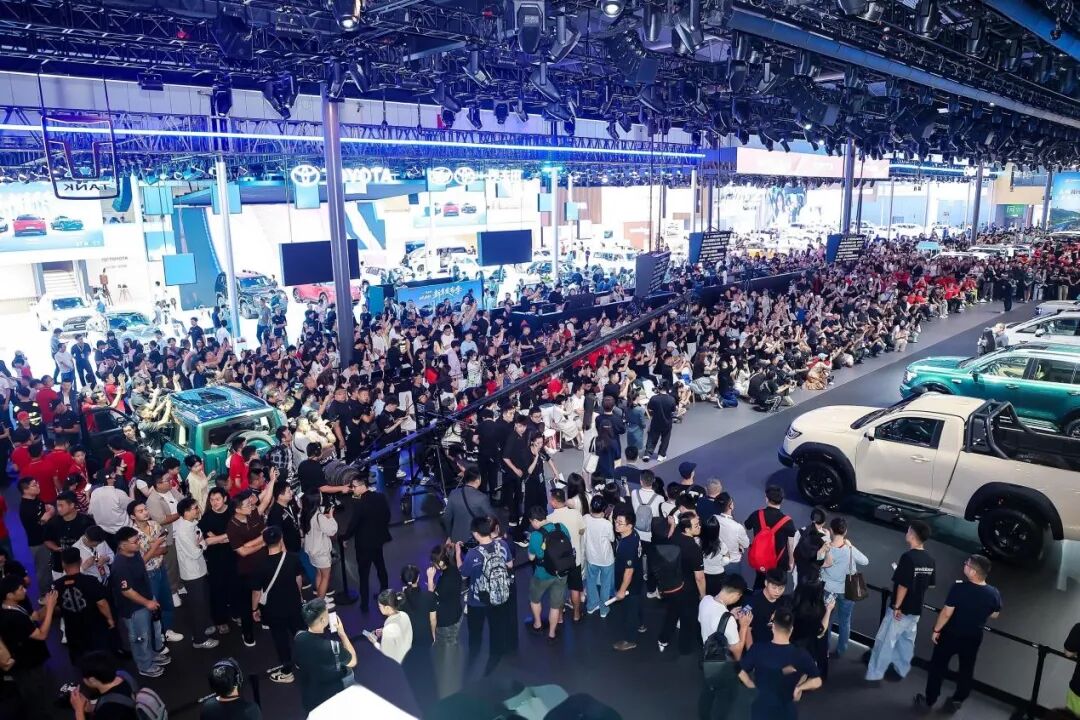
Overall, this year's Chengdu Motor Show features "some absent, some increasing their presence," influenced by adjustments in brands' market focus and product rhythms, as well as the declining influence of the Chengdu Motor Show itself and the proliferation of communication and customer acquisition channels. Under the combined effect of multiple factors, automakers are taking a more pragmatic approach to participation, ultimately forming this year's distinctly different exhibition landscape.(Image source: Internet, removed if infringing)
-
![]()
Exploring MiniMax Design: Can Video Editing Be as Simple as Speaking?
-
![]()
Why Can SenseTime Achieve Profitability While CloudWalk Still Faces Challenges, Despite Both Adopting Large Models?
-
![]()
Domestic Car Chassis Revolution Part 3: Suspension Systems Transform Vehicle Posture, from Vibration Absorption to Active Force
-
![]()
Hainan is Going on a Crazy Satellite-Building Spree
-
![]()
Optics Determines Success in the XR Era: Wafer Production Reaches Millions, Industry Giants Join the Fray!
-
![]()
Zhejiang’s AI Industry Surges Forward: Who Will Be the Next Wave of ‘Tech Rising Stars’?
-
![]()
Disappointing, Utterly Disappointing, Falling Short on All Fronts. Yet, Brighter Days Lie Ahead...
-
![]()
New Cars Launched at Chengdu Motor Show: Domestic Brands Ascend, Joint Ventures Concede, and Intelligent Driving Goes Rural