Insights from the Chengdu Motor Show: Overseas Brands Step Up Their Game
 08/24 2026
 439
439
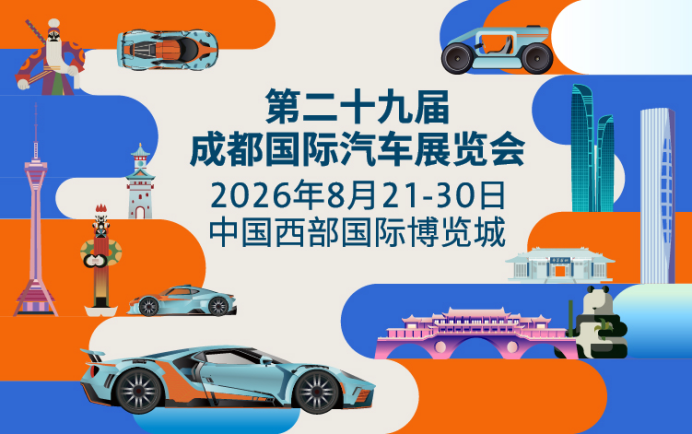
In recent years, the domestic new energy vehicle (NEV) sector has been dominated by local brands. Leveraging their early lead in smart technologies, rapid product iteration cycles, and exceptional cost-efficiency, these brands have steadily expanded their market presence. Conversely, overseas brands have faced challenges in the NEV arena due to sluggish transformation efforts, insufficient localization, and delayed new product introductions, putting them in a defensive stance amidst increasingly competitive market conditions. However, overseas automakers are now taking decisive action, significantly adjusting their strategies in China. They are fully embracing localized technology adaptations and launching a barrage of new products to safeguard their core market positions. As a bellwether for the auto market in the latter half of the year, this month's Chengdu Motor Show has emerged as a crucial platform for overseas brands to display their transformation achievements. Mainstream German, American, Japanese, and South Korean automakers have concentrated on showcasing their new energy offerings, shedding past hesitations and instead unveiling systematic, multi-pronged strategies to counter the prevailing trend.
German brands are making significant strides this year. Volkswagen, for instance, plans to introduce 13 new energy vehicles within the year and over 30 by 2029. This ambitious pace is supported by the Hefei R&D Center, which, backed by a €3.5 billion investment and staffed by over 3,000 engineers, has shortened new vehicle development cycles to just 24 months. Meanwhile, Volkswagen's ID series of pure electric vehicles has already established a solid market footing. At this year's Chengdu Motor Show, the ID.ERA family made its debut with four models on display for the first time. The ID.ERA 5S, the first sedan in the family, was officially launched, while the ID.ERA 8X and ID.ERA 5X made their global premieres. The flagship ID.ERA 9X was also showcased. Several models boast advanced driving assistance systems and intelligent chassis, coupled with a locally tuned EA211 powertrain, reflecting R&D decision-making centered in China and tailored to the domestic market's rhythm.
Mercedes-Benz, previously focused on localization efforts like wheelbase extensions and interior adjustments, is now deeply adapting to Chinese users' demands for extended range, intelligent driving, and an enhanced overall driving experience. At the Chengdu Motor Show, the all-new electric GLC SUV, built on the MB.EA native electric platform, made its debut, filling a void in the brand's mid-size luxury electric SUV lineup. Simultaneously, the new domestically produced long-wheelbase GLE SUV made its global premiere, bolstering the brand's NEV derivative matrix for internal combustion engine models. Additionally, Mercedes-Benz plans to introduce the all-electric MPV VLE this year, targeting the luxury business NEV segment and achieving multi-scenario product coverage. To better cater to Chinese customers' evolving digital mobility needs, Mercedes-Benz is accelerating the integration of intelligent technologies across its electric and internal combustion engine models, propelling the continuous advancement of "equal intelligence for both electric and combustion models."
BMW is also accelerating its product rollout this year, planning to launch nearly 20 all-new and revised models, with new energy vehicles comprising over 60% and synchronously popularizing the sixth-generation eDrive electric propulsion technology. At the Chengdu Motor Show, two next-generation models made their debut—the domestically produced iX3 long-wheelbase version opened for pre-orders, and the new-generation i3 was officially showcased. This marks the first introduction of the next-generation platform in the Chinese market. Both models are specifically tailored for the Chinese market and will feature BMW's intelligent driving assistance system co-developed with Momenta. It is clear that BMW is now prioritizing Chinese users' preferences, incorporating more locally developed features into mass-produced vehicles, and striking a balance between intelligent experience and driving quality.
SAIC-GM, an American brand, is leveraging localized product definition rights and the Xoyod super integration architecture to drive differentiated electrification for its Buick and Cadillac brands. According to the plan, SAIC-GM, Buick, and Cadillac will introduce at least 30 new energy models in the future. At this Chengdu Motor Show, the Buick brand unveiled the newly launched Enclave L7 electric version, while SAIC-GM has also initiated the "Enclave Mode" for creating new energy vehicles that cater to the Chinese market. The previously launched Enclave E7 has also achieved decent sales, and even its flagship MPV models have introduced new energy versions such as the GL8 PHEV and Enclave Grand. Cadillac, meanwhile, has opened pre-orders for the all-new XT5 PHEV, featuring Momenta's large-model intelligent driving system, marking a further step forward in intelligent configurations. The two brands have distinct roles, with Buick targeting the mainstream family market and Cadillac maintaining its high-end position, gradually building up their product lines in the NEV sector.
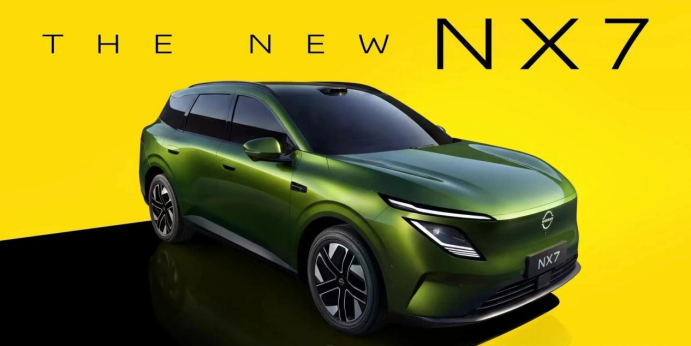
Japanese Brands: Despite facing overall market pressure this year, with Toyota, Nissan, and Honda's China sales declining by 17.1%, 15.0%, and 34.7% year-on-year in the first half, these automakers have not persisted stubbornly with their original self-developed routes. Instead, they are adjusting their new energy development strategies, focusing on collaborating with domestic mature supply chains to swiftly address intelligentization shortcomings. For instance, the Toyota bZ7 features Huawei's intelligent cockpit; the Nissan NX7 relies on Dongfeng's Tianyan architecture and adopts Momenta's intelligent driving solution; Honda also plans to utilize domestic chassis platforms for new vehicle development and is considering reverse exporting its China-exclusive INSIGHT model to Japan. Additionally, the Nissan NX7 made its official debut at the Chengdu Motor Show, positioned as a mid-size plug-in hybrid SUV, equipped with LiDAR, a 40.95kWh battery, and a WLTC pure electric range of 225km, further enriching the N series product lineup. Leveraging domestic mature supply chains to control costs and expedite product launches has become a common strategy for Japanese brands to enhance the competitiveness of their new energy models.
South Korean Brand: Beijing Hyundai officially introduced the IONIQ brand this year, planning to launch six localized new energy vehicles over the next three years. At this Chengdu Motor Show, the Ioniq V opened for pre-orders. The new vehicle was fully designed by China's design center, built on the E-GMP pure electric platform, supporting 800V fast charging, with a CLTC range of 650km. It integrates local large models, intelligent driving, and cockpit chip resources, with plans for future global reverse exports. This shift from "overseas design, Chinese production" to "Chinese-led global output" represents the core pivot for Beijing Hyundai's new energy counter-offensive in China. Whether this strategy succeeds remains to be seen by the market, but at least they are no longer hesitating.
Overall, the current new energy transformation strategies of overseas brands are all centered on localization, placing R&D, product definition, and other key links within China, shifting localization from a mere marketing-level propaganda tool to actual adjustments in organizational and R&D systems. This transformation underscores one key point: in China's new energy vehicle market, relying solely on brand prestige is no longer sufficient. Overseas brands are redefining "localization," gradually shifting the focus of their entire product logic to China. Now, it's time for the products to speak for themselves, and the market will provide the answers. (Images sourced from the internet; removal upon infringement notice)
-
![]()
Exploring MiniMax Design: Can Video Editing Be as Simple as Speaking?
-
![]()
Why Can SenseTime Achieve Profitability While CloudWalk Still Faces Challenges, Despite Both Adopting Large Models?
-
![]()
Domestic Car Chassis Revolution Part 3: Suspension Systems Transform Vehicle Posture, from Vibration Absorption to Active Force
-
![]()
Hainan is Going on a Crazy Satellite-Building Spree
-
![]()
Optics Determines Success in the XR Era: Wafer Production Reaches Millions, Industry Giants Join the Fray!
-
![]()
Zhejiang’s AI Industry Surges Forward: Who Will Be the Next Wave of ‘Tech Rising Stars’?
-
![]()
Disappointing, Utterly Disappointing, Falling Short on All Fronts. Yet, Brighter Days Lie Ahead...
-
![]()
New Cars Launched at Chengdu Motor Show: Domestic Brands Ascend, Joint Ventures Concede, and Intelligent Driving Goes Rural