Is Another Joint Venture Brand on Its Way Out?
 08/25 2026
 495
495
Transitioning to Export Markets
Chevrolet, a brand once celebrated for its blockbuster models such as the Sail, Cruze, Malibu, and Camaro, is now struggling to maintain its foothold?
Recently, whispers of Chevrolet's impending complete exit from the Chinese market have surfaced, triggering fervent online debates. In response, General Motors clarified that "Chevrolet will not cease production."
General Motors emphasized that Chevrolet, as the joint venture brand whose product range best suits export market demands, will persist in manufacturing models in China mainly for export and will seek additional overseas opportunities beyond the U.S. The company committed to continuing to offer extensive after-sales service support for existing Chevrolet owners in China.
In fact, speculation about Chevrolet's departure from the Chinese market has persisted for years. A prolonged and sharp decline in sales has gradually marginalized the brand domestically, reducing its presence to a level that the current situation was largely foreseen.
At its zenith, Chevrolet was a formidable player in China's domestic sedan market, with annual sales hitting 767,000 units in 2014. Models like the Cruze and Malibu were everywhere, being the preferred choices for countless families purchasing joint venture vehicles that year. However, in recent years, evolving market trends have caused Chevrolet's sales to plummet, with domestic retail sales dropping below 9,000 units for the entire year of 2025. The downward trend intensified in 2026, with cumulative sales of just 36 units in the first half of the year and only 1 new vehicle sold nationwide in June, effectively rendering its presence in the terminal market negligible.
Prolonged delays in intelligent and electrification strategies, a lack of new model introductions, and a significant reduction in dealer networks have made it challenging to sustain Chevrolet's independent sales system.
On August 5, SAIC-GM extended its joint venture agreement, prolonging the cooperation period by 20 years to 2047. Chevrolet's future role was thus defined: it will no longer engage in the fierce domestic price and tech competitions, instead leveraging China's comprehensive local manufacturing supply chain to pivot from domestic sales to global exports.
Chevrolet's strategic shift mirrors a broader tiered strategy within SAIC-GM's Joint Venture 2.0 era: Buick will handle domestic mainstream family market sales, Cadillac will target the premium luxury market's pricing potential, and Chevrolet will evolve into a global export production hub. The three brands will each play distinct roles, adopting differentiated strategies to navigate the significant reshuffling of China's automotive industry.
Although Chevrolet has faced crushing defeats in China's automotive market competition in recent years, it has already devised a "fallback" plan by shifting towards exports. Compared to other joint venture brands that have left the market dejectedly, Chevrolet has not only preserved its domestic production capacity and workforce but also ensured after-sales service for existing owners—a strategy that can be deemed a win-win.
The End of the 'Bumblebee' Era
A decade ago, Chevrolet was a highly recognizable joint venture brand among Chinese consumers. Introduced to China by SAIC-GM in 2005, the brand swiftly garnered a large following of first-time car buyers with popular models like the Sail, Malibu, and Cruze, establishing itself as a go-to option for affordable joint venture vehicles priced around 100,000 RMB.
The Cruze became an instant sensation upon its launch in 2009, selling over 28,000 units in a single month and becoming a common sight on streets. In 2014, Chevrolet's annual sales peaked at 767,000 units, a milestone it has yet to replicate in the Chinese market.
More iconic and representative of its era than the Cruze or Malibu was the 'Bumblebee' Camaro. This yellow sports car, made famous by the Transformers franchise, bestowed Chevrolet with an American performance image, becoming a source of nostalgia and aspiration for a generation. Unfortunately, nostalgia alone could not salvage its crumbling position in the family car segment, nor could the 'Bumblebee' rescue a declining brand in reality.
In 2018, Chevrolet's abrupt switch to three-cylinder engines across its lineup marked a pivotal turning point in its decline. Disregarding domestic consumers' core demands for engine stability and durability, the brand forcibly introduced three-cylinder models, eroding goodwill among loyal customers and diminishing its competitiveness. Sales of the Cruze and Malibu, which once contributed half of the brand's volume, were halved, and its market position rapidly eroded amid intensifying competition.
Behind this year's near-zero monthly sales lies the collapse of Chevrolet's terminal sales channel system. From nearly a thousand dealerships nationwide at its peak, the network has dwindled to fewer than 50 today, with only single outlets remaining in first-tier cities like Beijing, Guangzhou, and Hangzhou to handle after-sales services, effectively abandoning new car sales.
General Motors has now made it clear that Buick's dealership network will fully assume after-sales service responsibilities for Chevrolet in China. Meanwhile, Chevrolet will embark on a path of "reverse exports," transforming its Chinese factories into global export manufacturing bases to compete in other markets. A New Path for Joint Venture Survival
While Chevrolet has suffered consecutive setbacks in the domestic market, globally, this century-old automotive brand still holds strong cards. In emerging regions like Latin America, the Middle East, and Africa, Chevrolet's well-established brand image and longstanding dealership networks continue to deliver stable sales, serving as a cornerstone for the brand.
SAIC-GM proactively laid the groundwork for this fallback option. In 2024 and 2025, Chevrolet exported 17,159 and 15,917 units from China, respectively. Compared to its dismal domestic sales figures, the export route has proven viable through actual performance.
The shift from relying on the Chinese market for sales to leveraging Chinese production capacity for global supply is becoming a common transformation strategy among major joint venture brands.
However, for General Motors, natural trade barriers make the export strategy logic of SAIC-GM even more apparent. By consolidating all Chinese manufacturing capacity to serve emerging overseas markets, the company can capitalize on cost advantages to generate stable profits, creating a global division of labor that completely offsets production in North America.
Notably, Chevrolet's domestic parts localization rate exceeds 95%, and mature sea freight logistics from ports in Yantai and Shanghai enable approximately 20-30% lower per-unit production costs compared to General Motors' facilities in North America and Southeast Asia.
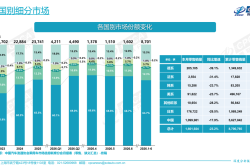
Chevrolet's transformational fallback strategy may offer a referential path for other joint venture brands still grappling with survival challenges. In the first half of 2026, joint venture brands' passenger car market share stood at just 28.2%, a significant decline from its peak, with a mere 24.5% share in June alone. Mainstream brands like Volkswagen, Toyota, Honda, Nissan, and Ford all experienced substantial year-on-year sales declines in the first half of the year, indicating a widespread industry crisis.
Faced with this grim situation, joint venture brands are actively seeking self-rescue strategies. However, there are no signs of improvement in the domestic market's competitive landscape in the short term. While it remains uncertain which brand will be the next to exit the Chinese market, multiple industry experts have judged that second-tier joint venture brands currently selling fewer than 100,000 units annually face an over 80% probability of withdrawal.
This article is original to China News Auto. Sharing by individuals is welcome, while media outlets must credit the author and source at the beginning of any republication. Any media or self-media using this article's content to create video or audio scripts without permission will be held legally responsible.
-
How AI Changes the Flow of Money: Budget, Self-Development, and the Last Mile
-
![]()
SAIC Volkswagen’s Bold “Self-Revolution”: ID.ERA 5S Targets the Heart of the Fuel-Powered Family Sedan Market
-
![]()
Beyond APIs: Future-Oriented Strategies for AI Global Expansion
-
![]()
Behind the Daily Average of 140 Trillion Token Calls: Who Will Become China's Future New Three Major Operators?
-
![]()
How Many Zhipu Members Were Wrongly Banned?
-
![]()
Leapmotor Revises Profit Goal to 3 Billion Yuan: Targets 400,000 Overseas Sales in the Coming Year, Forges Symbiotic Alliance with FAW | MINGJINGpro
-
![]()
Behind the 140 Trillion Token Calls Per Day: Who Will Become China's New Big Three Operators in the Future?
-
![]()
DPCA Technology Launched, Pioneering a New Era for Joint Ventures: Taking 'Chinese Heritage' Global