First Round of Financing Achieved: Sixcore Optoelectronics Steps into the Age of Thin-Film Lithium Niobate as the ‘Optical Silicon’
 02/13 2026
 689
689
On February 5th, the fledgling Wuhan Sixcore Optoelectronics Technology Co., Ltd. (hereinafter referred to as 'Sixcore Optoelectronics') proudly announced the successful completion of its first round of financing. This milestone round was spearheaded by the esteemed domestic venture capital firm Leaguer Ventures, with additional support from the Wuhan government fund. The infusion of funds will be strategically allocated to expedite the mass production of thin-film lithium niobate photonic chips.

This financing not only signifies capital's endorsement of a startup but also serves as a harbinger in China's high-end optical chip sector. At a pivotal moment when AI computing power is propelling optical communications towards 1.6T and even 3.2T transitions, next-generation photonic integration technologies, typified by thin-film lithium niobate, are transitioning from the laboratory to industrialization.
So, what kind of company is Sixcore Optoelectronics? How did it secure this financing? What are its background and strengths?
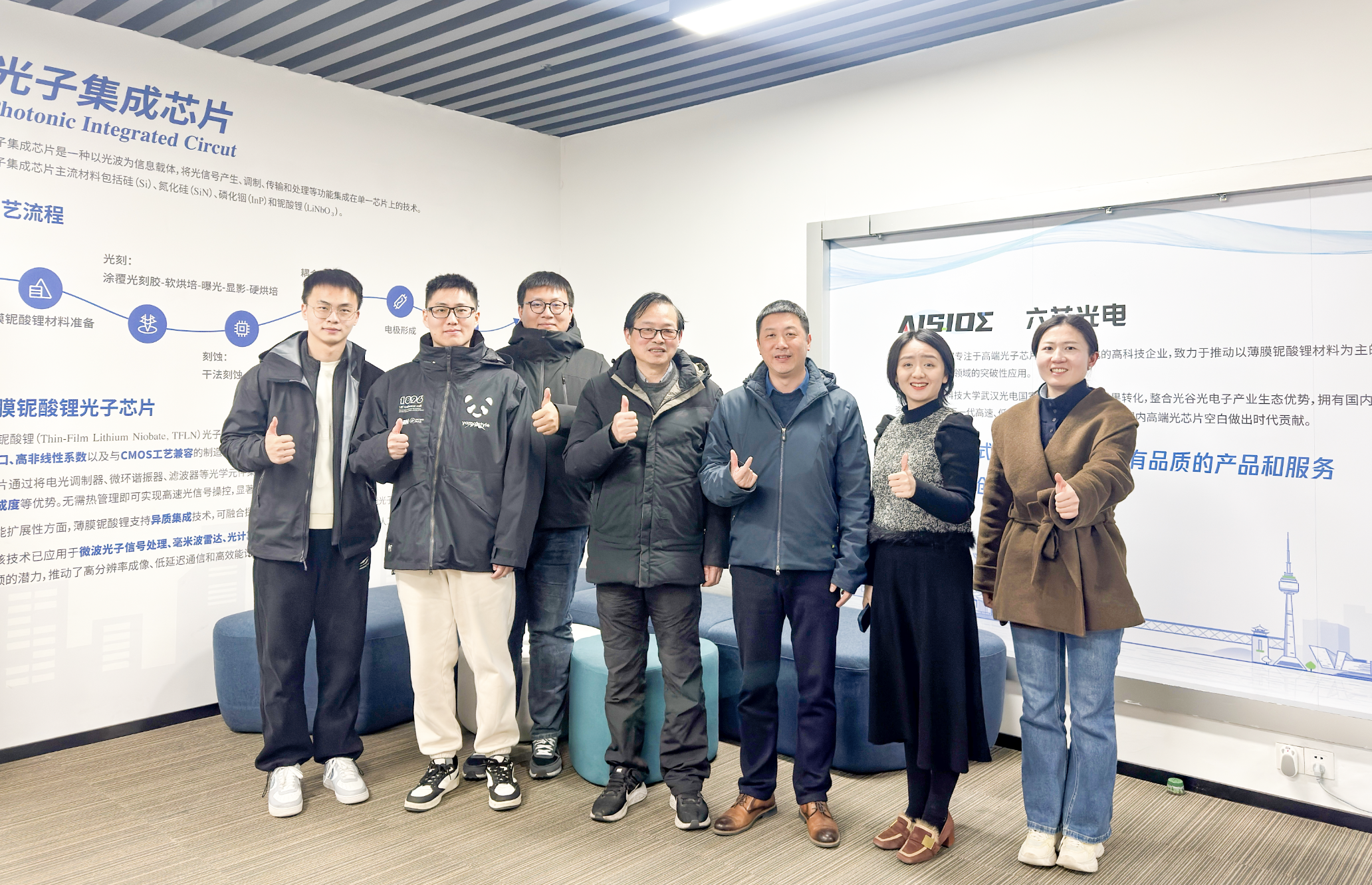
Established in November 2024, Sixcore Optoelectronics is a technology-driven enterprise dedicated to the research, development, and industrialization of high-end photonic chips. Its founder, Qi Zhiyong, is a distinguished alumnus of the School of Optical and Electronic Information at Huazhong University of Science and Technology (HUST). Prior to founding Sixcore, he worked at Tencent, established the technology service agency 'Xinqingluo,' and served as a consultant for Tencent Cloud's Industrial Internet. This unique blend of 'hardcore technological prowess + commercial practical experience' equips him to pinpoint the nexus between technological advancements and market demands.
The team's additional strength lies in its seamless integration of industry, academia, and research. By leveraging the scientific research legacy of the Wuhan National Laboratory for Optoelectronics at HUST, expert resources from the Hubei Optics Valley Laboratory, and agile methodologies from the internet industry, the team has forged a distinctive 'small core, large collaboration' R&D model.
At the heart of Sixcore Optoelectronics' core technology lies thin-film lithium niobate, a pivotal material. In the realm of photonic chips, traditional silicon photonics solutions are nearing their physical limits. In contrast, thin-film lithium niobate is widely hailed as the 'optical silicon' capable of surmounting these bottlenecks, thanks to its superior electro-optic conversion efficiency, lower transmission losses, and broader operating bandwidth.
As one of the few domestic companies to master the 8-inch thin-film lithium niobate mass production process, Sixcore Optoelectronics has successfully achieved chip tape-out, with its jointly developed intensity modulators meeting design specifications. This positions the company as a key player in the globally scarce field of thin-film lithium niobate photonic integration.
Notably, Sixcore Optoelectronics has eschewed the conventional capital-intensive approach of constructing its own factories. Instead, it has adopted an asset-light model, retaining in-house design capabilities while outsourcing manufacturing to external platforms. Through deep collaboration with domestic mature tape-out platforms, the company maintains core competencies in chip design and device packaging, while leveraging external industrial chain resources for manufacturing conversion. This approach establishes a seamless technical closed loop from laboratory principles to industrial-grade products, preserving technological iteration flexibility and significantly shortening the R&D-to-mass-production cycle.
Currently, the expansion of AI large model training and high-performance computing clusters is fueling the demand for accelerated optical interconnects within data centers. Traditional electrical interconnects are increasingly constrained by bandwidth and power consumption limitations, making photonic chips the cornerstone of next-generation information infrastructure.
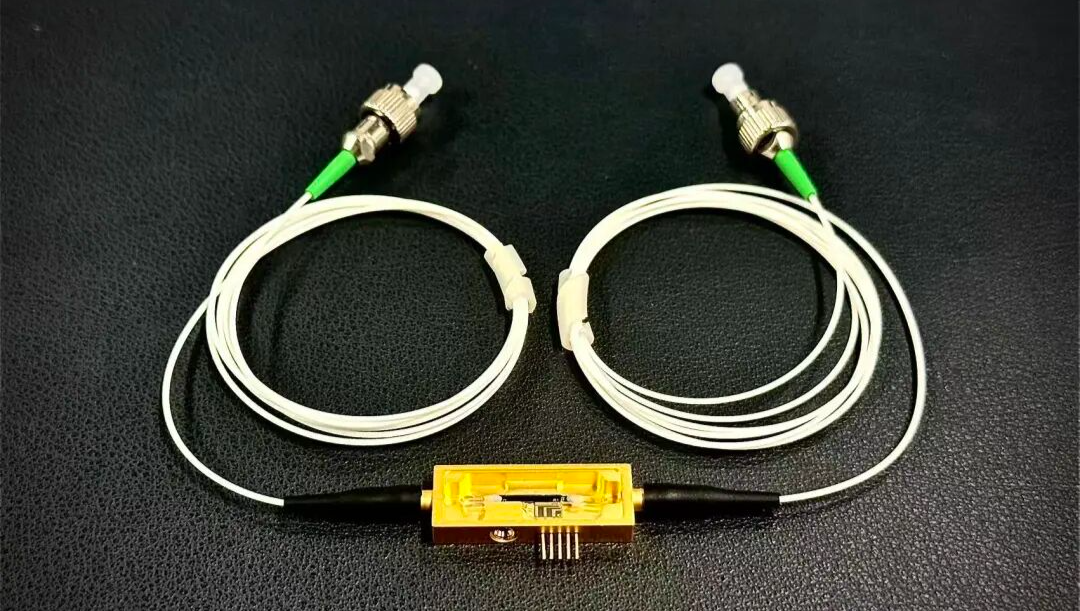
Sixcore Optoelectronics' focus on thin-film lithium niobate modulator chips addresses a critical component in high-speed optical modules. As data transmission rates evolve from 800G to 1.6T and beyond, low-power, high-bandwidth optical interconnects have become indispensable. The company's products precisely cater to this burgeoning demand. It plans to publicly unveil its next-generation thin-film lithium niobate photonic integrated chips at the Wuhan Optics Expo in May this year.
From technological breakthroughs to product launches and capital support, this startup, founded just months ago, is advancing engineering and mass production at an unprecedented pace. More profoundly, amid a landscape where high-end optical chips have long been dominated by overseas manufacturers, independently mastering the design and manufacturing capabilities of thin-film lithium niobate—a foundational hardware—is not merely a commercial competition but also a matter of industrial chain security and resilience.
Sixcore Optoelectronics aspires to emerge as a leading force in China's high-end optical chip sector. Standing atop the increasingly mature optoelectronic industrial chain in Optics Valley, this young company is poised to pioneer the material foundation for next-generation information technology, with a promising future ahead.
-
![]()
Alibaba's AI Offensive: Over Half of Investment Allocated, Time to Reap Returns
-
![]()
Alibaba’s AI Push: Over Half of Investments Made, Time to Harvest Returns
-
![]()
Chinese Enterprises Going Global 3.0: From World Factory to AI Infrastructure Builder
-
![]()
Honor RobotPhone Review: Half Movie Camera, Half Robot
-
![]()
AI-Driven Cheating Surges in Universities! Online Exams Reduced to Mere Formalities, Degree Credibility on the Line
-
Insta360’s Decade in Panoramic Imaging: Making Cameras ‘Invisible’ and Returning Creation to the Masses
-
![]()
Foreign Media Claims Apple is Concentrating Resources on AI Development: Vision Pro and Siri Teams Lay Off 200 People
-
Big News! Huaneng and Huawei Hold Talks in Shenzhen with Ren Zhengfei in Attendance; Huawei Emerging as the 'Second Brain' of China's Energy System