Big Events of the Week in XR: First Half of XR Concludes, Apple Loses Core Hardware Talent, XR Industry Enters New Phase of Diverging Tech Paths
 07/06 2026
 451
451
The first half of the year has officially concluded, and this week, several major events have unfolded in the XR sector, involving talent movements at international giants, updates in market data, and technological breakthroughs within the industry.
Observing these news items together reveals a clear direction: the XR industry is moving away from mere hardware iteration and entering a new phase of diverging tech paths. In this phase, AI glasses are set to accelerate in replacing VR headsets as the industry's focal point.
01 Talent and Capital Increasingly Flow Toward AI Glasses, VR Headsets Face "Cold Shoulder"
The most noteworthy event this week is undoubtedly the impending departure of Paul Mead, head of Apple's Vision Pro, who is set to join OpenAI's hardware division.
Mead has been with Apple for over a decade, leading the hardware engineering for Vision Pro since 2017 while also overseeing the development of Apple's smart glasses. Previously, the AI hardware startup co-founded by Apple's former design chief Jony Ive, hardware product design head Tang Tan, and industrial design lead Evans Hankey was acquired by OpenAI last year for $6.5 billion. Apple's former head of human-machine interfaces, Alan Dye, also joined Meta in December last year.

Industry insiders widely believe Mead's departure is linked to Apple's internal restructuring. With long-time hardware engineering senior vice president Ternus set to take over as CEO on September 1 and chip head Srouji promoted to chief hardware officer, the hardware engineering department faces reorganization. Vice presidents like Mead will now report to a newly established VP of hardware engineering, prompting some executives to reassess their career growth opportunities.
Comment: For Apple, the combination of underperforming Vision Pro sales and the loss of core talent means its first-mover advantage in the next-generation computing platform race is weakening. For OpenAI, acquiring Ive's team and attracting core engineering talent like Mead makes its strategic intent clear—it's not satisfied with just providing AI models but aims to build a complete hardware ecosystem from chips to devices and from models to interactions.
The outcome of this talent war will directly influence product definition rights and standard-setting power in the emerging AI glasses category over the next two to three years.
Market research firm Omdia reports that the global near-eye display market is expected to reach $675 million in revenue by 2026, up 12% year-on-year, driven primarily by the AR glasses market—AR display product shipments are projected to reach 4.1 million units, a 154% surge year-on-year.
In contrast, VR headset shipments are expected to decline to 10.5 million units, down 4% year-on-year. Tech giants like Meta are slowing the pace of new Quest releases, while Apple's Vision Pro sales have fallen short of expectations, leading Top manufacturers (leading manufacturers) to become increasingly cautious about VR investments.
02 Optical, Display, and Interaction Technologies Continue to Advance
This week, notable progress has been made in both domestic and international technical developments.
In optics, Gudong Intelligence has made progress in polarized volume holographic waveguide technology, achieving a 45-degree field of view with a single-substrate solution. By using dual-sided coating for polarization multiplexing instead of traditional dual-layer bonding, it eliminates interlayer alignment errors and thermal mismatch risks;
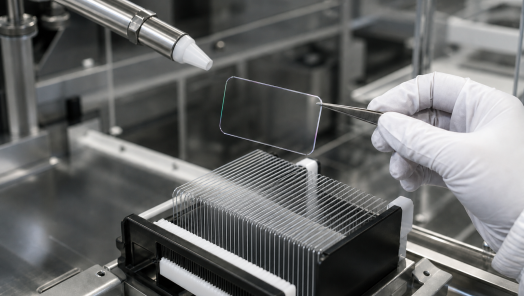
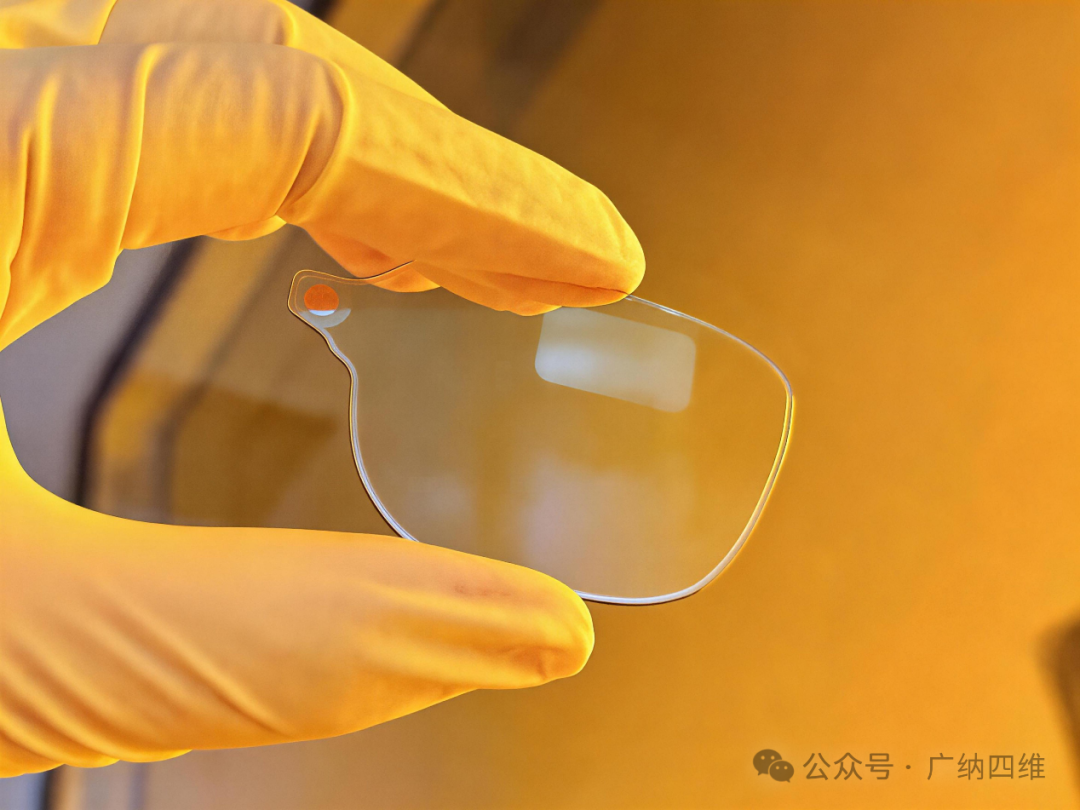
As the core optical partner for iFLYTEK's AI glasses, Guangna Siwei's self-developed nanowaveguide technology supports the mass production of iFLYTEK's AI glasses, which have ranked among the top sellers in the AI glasses category since their June launch;
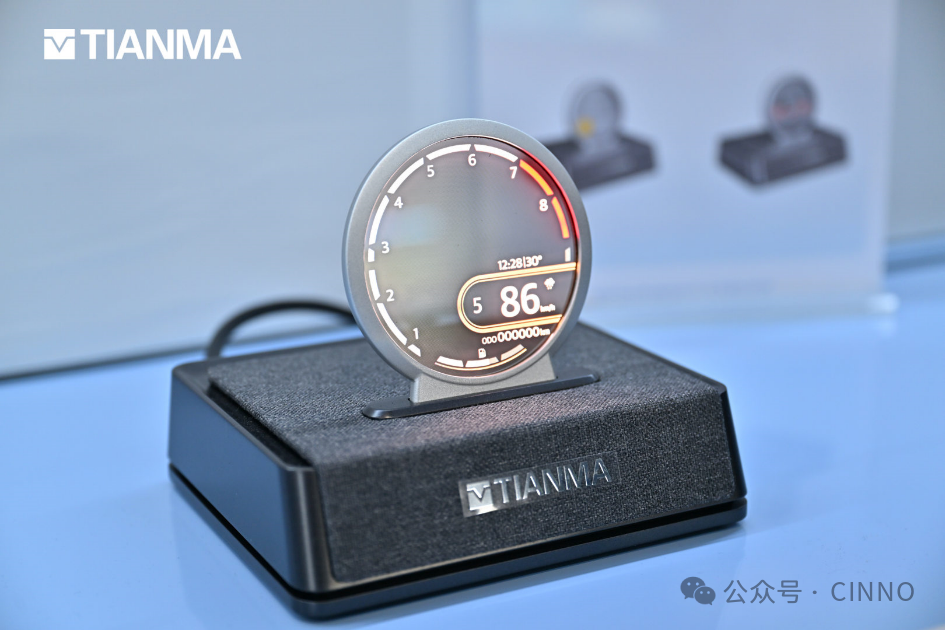
In display technology, Tianma unveiled the world's first 3.16-inch Micro-LED transparent circular screen, featuring 15,000 nits peak brightness and 50% transmittance, targeting smart cockpit and in-vehicle assistant applications;
Chenxian Optoelectronics completed a multi-hundred-million-yuan Series B funding round, accelerating the construction of its TFT-based Micro-LED mass production line, achieving a mass transfer efficiency of 10 million chips per hour with a 99.995% yield.
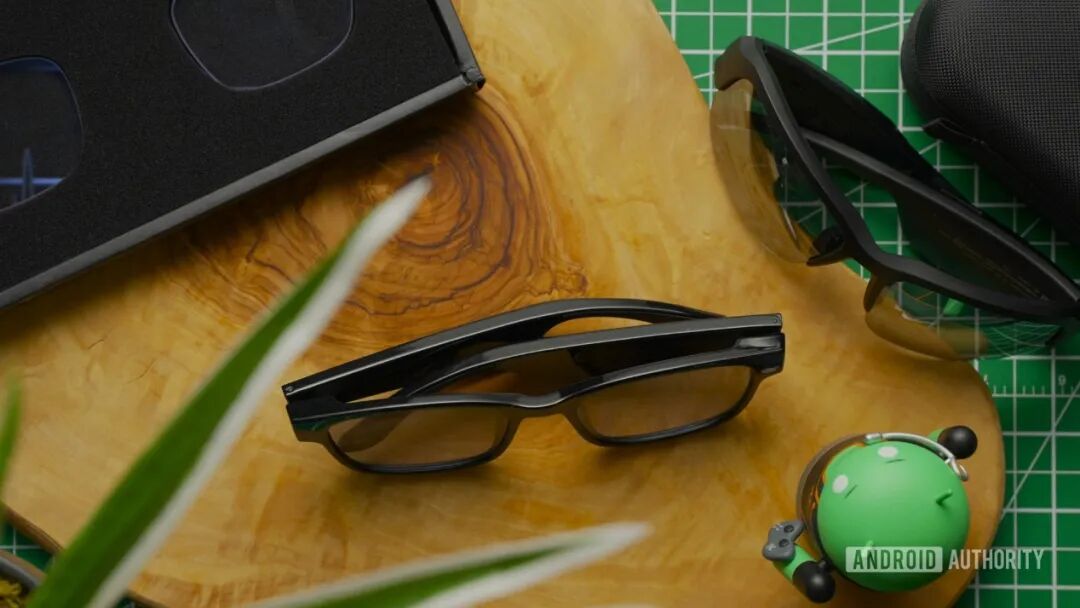
In interaction, details of Samsung's Galaxy Glasses manager app and gesture controls have leaked, revealing a touchpad supporting single-finger track switching, two-finger volume adjustment, and a dedicated camera button on the temple. This indicates that a multimodal combination of "glasses plus touch and voice" will remain the mainstream interaction scheme for consumer products in the near term.
Meanwhile, Meta's Brain2Qwerty v2 non-invasive brain-computer interface achieved 61% text decoding accuracy, while Neuralink completed its first dural brain implantation surgery, with the subject able to control a cursor with their mind less than an hour post-op. While brain-computer interface technology is advancing rapidly, it remains far from consumer-grade applications.
Comment: This week's technical progress shows that the XR field is still in a phase of multiple parallel paths. Companies have chosen differentiated routes based on varying trade-offs between size, yield, cost, and performance, with mass production capabilities and user experience set to determine the ultimate winners.
03 Regulatory Standards Must Keep Pace with Rapid Technological Advancements
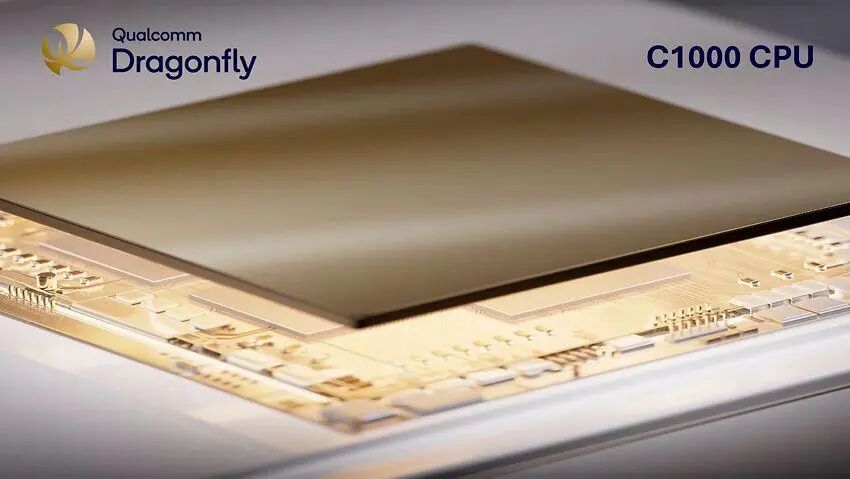
Recently, Qualcomm unveiled its data center roadmap for agentic AI at its investor day, introducing the Feilong product portfolio, including the Feilong C1000 CPU, high-bandwidth computing technology, and the Feilong AI300 inference accelerator. The C1000 features customized Oryon cores with clock speeds exceeding 5GHz and over 250 cores, expected to commercialize by 2028. Qualcomm announced a multi-year cooperation agreement with Meta, with Meta's next-gen server clusters to adopt the Feilong C1000 CPU.
Meanwhile, VAST completed a Series A3 funding round exceeding 1 billion yuan, co-invested by Geely Capital, 4399, Giant Network, and others. Its 3D large model ranked first globally in third-party blind testing votes while launching the world model project Project Eden;
ZTE filed a patent for XR multi-view streaming, aiming to solve the fixed-perspective issue when multiple users watch the same XR video source; NEC was listed by Gartner as an "expert" supplier for physical AI services, with its world model technology capable of quantitatively estimating human discomfort levels and implementing proactive control.

Underlying chips, operating systems, optical modules, and AI models are rapidly converging, with the industrial foundation for AI glasses taking initial shape. From the second half of 2026 to 2027, as products like Samsung's Galaxy Glasses hit the market, the industry will face its true scalability test.
However, as technology advances, certain ethical and public order issues warrant industry attention.
This week, a South Korean tech blogger wore AI smart glasses during a college entrance exam simulation, completing all answers in 18 minutes with only one incorrect response. The video garnered over 600,000 views within three days, prompting schools across South Korea to ban smart glasses during final exams, with the education ministry planning to add AI glasses to its prohibited items list for the November college entrance exam.

Comment: This incident validated AI glasses' capabilities in information acquisition and real-time processing through a real-world test. Completing all answers in 18 minutes with only one mistake demonstrates that any standardized exam relying on memory and knowledge assessment could become obsolete in the face of AI glasses.
More concerning is the stealth of the operation. The camera scans questions while the lens displays answers, all without needing to check a phone or make obvious movements, making detection difficult for proctors. While South Korea's education authorities swiftly added AI glasses to the prohibited list, this is merely a temporary fix.
As devices increasingly resemble ordinary glasses, physical inspections and exam rules will face growing enforcement challenges. This incident serves as a wake-up call for global education and examination authorities: as AI capabilities become ubiquitous through wearable devices, exam formats and content must be redesigned, not just exam rules.
These are some of the key news items worth noting this week. Overall, the broad direction of the XR industry is relatively clear, but no unified consensus has yet formed on specific technical paths. AR applications in industrial settings have already delivered practical value, while the consumer market still awaits products capable of truly breaking through.
Meanwhile, advancing technological capabilities are challenging existing regulatory frameworks, making ethical and governance responses equally urgent. Against this backdrop of overall industry optimism but numerous variables, the next 1-2 years will be a critical window for determining the landscape of next-generation computing platforms.
VRAR Planet will continue to bring you the hottest industry news as it happens. Welcome to follow the 【VRAR Planet】 WeChat official account and video channel.
-
![]()
Raking in Big Profits Overseas! Chery’s Overseas Revenue Makes Up 70% in H1, with Gross Margin Climbing to 16.1%
-
![]()
Alibaba’s New Fiscal Quarter: 45% Revenue Surge in Alibaba Cloud, Enhanced Profitability in AI Cloud, but Widening Losses in the Application Layer
-
![]()
The AI Version of 'PayPal Mafia' Has Arrived: 20 AI Startups Raise Over $4.6 Billion in Funding
-
![]()
Wang Jian's Vision: Paving a Pathway for Alibaba Through AI
-
![]()
Hyundai Motor Workers Strike Today, Fearing Job Losses to Robots
-
![]()
Embracing 'Light': O-film Unveils Its 'Illuminating the Future' Strategy
-
![]()
SenseTime’s SenseNova U1.5 Lite Goes Open Source: Ushering in a New Era of Predictable AI Image Generation
-
![]()
Collaboration Initiated! Tesla Officially Welcomes Doubao Onboard