Autonomous Driving's "Landing Surge": Pony.ai, WeRide, Apollo Go, QCraft, and HelloBike Establish Local Subsidiaries En Masse—What Strategic Moves Underpin This "Race for Resources"?
 04/07 2026
 609
609
Introduction
On March 30, Hunan Xiaoma Yixing Technology Co., Ltd. was established with a registered capital of $15 million, fully owned by Hong Kong-based Pony.ai. This move marks another key step in Pony.ai's recent local expansion strategy. Just a month earlier, on February 24, Shanghai Xiaoma Huixing Technology Co., Ltd. was founded with an impressive $100 million in registered capital, also under the full ownership of Hong Kong Pony.ai. From Shanghai to Hunan, and with investments ranging from $100 million to $15 million, Pony.ai is rapidly expanding its presence.
Pony.ai is not alone in this trend. WeRide's Taizhou subsidiary recently underwent a capital increase, boosting its registered capital from $80 million to $100 million, a significant 25% rise.
HelloBike is also making strides. On March 26, Chengdu Hadong Network Technology Co., Ltd. was established with $50 million in registered capital. Approximately two months prior, HelloBike set up operations in Beijing through Beijing Hayue Network Technology Co., Ltd., with a registered capital of 1 million yuan.
Apollo Go's expansion is even more extensive. Since November 2025, Luobo Yunli (Shenyang) Technology Co., Ltd. (registered capital: 10 million yuan), Luobo Yunli (Qingdao) Technology Co., Ltd. (1 million yuan), and Luobo Kuaipao (Heshan) Technology Co., Ltd. (1 million yuan) have been established in succession, all wholly owned by Luobo Yunli (Beijing).
Meanwhile, QCraft established Wuhu QCraft Technology Co., Ltd. in December 2025 with 100 million yuan in registered capital, fully owned by Beijing QCraft.
The "Self-Driving Vehicle Insider" (WeChat Official Account: wurenchelaiye) posits that this wave of subsidiary establishments is not merely about business expansion—it's also a strategic play involving policy navigation, resource acquisition, and ecosystem construction.
(For further reading, click: "Who’s Winning the Autonomous Vehicle Cultural Tourism Race? [With Poll] Apollo Go’s Mobile Trendy Play Cabin, Pix Moving’s Coffee Castle, Pony.ai’s Cultural Tourism Shuttle, WeRide’s New Year Blessing Train, Neolix’s Scenario Revolution")
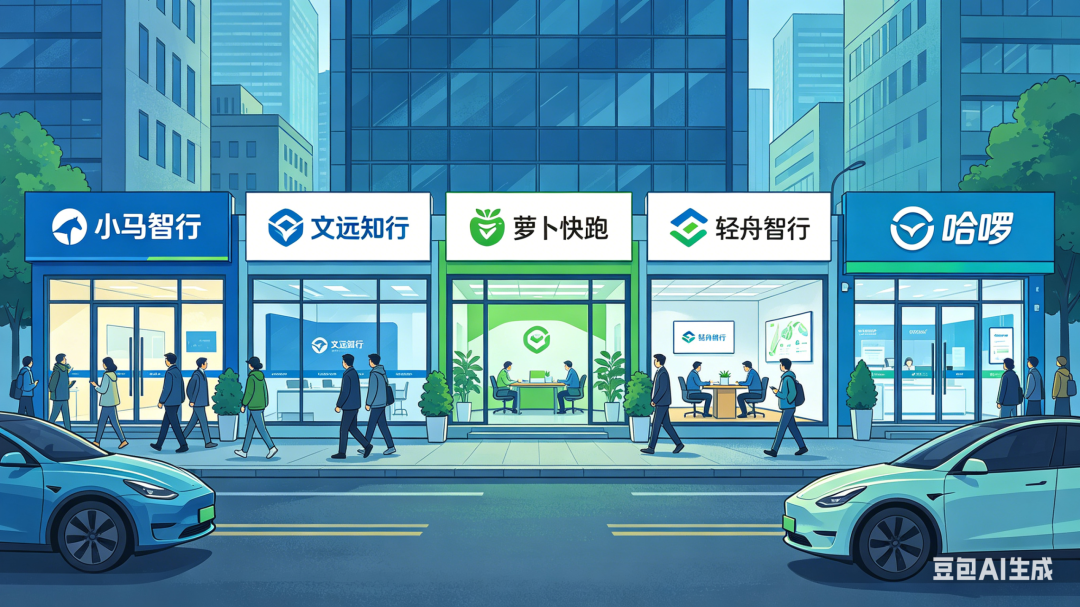
I. Why Now? The Challenge of "One National Strategy" and the Opportunity of "One City, One Policy"
This wave of local subsidiary establishments is no mere coincidence.
The early autonomous driving race was a contest for the "elite club."
Resources were heavily concentrated in a few first-tier cities and demonstration zones, with competition centered on algorithmic capabilities, funding scale, and top talent. However, as technology advances into the commercialization phase, the single-center model has reached its limits.
1. The challenge lies in China's "non-standardized" market.
Every city in China boasts vastly different traffic cultures, road conditions, industrial structures, and even varying levels of government understanding and support for innovation.
A model that succeeds in Guangzhou may require significant adjustments when deployed in Chongqing's complex 8D interchanges.
Manned testing that progresses smoothly in Beijing may encounter more intricate approval processes in another city.
Standardized replication across the nation is nearly impossible in autonomous driving, a field heavily reliant on localized data.
2. The opportunity lies in local governments' enthusiasm for "landing" projects.
Nearly all ambitious second- and third-tier cities view intelligent connected vehicles and low-altitude economies as key tracks for cultivating new quality productive forces.
They aspire to be more than just test sites—they aim to attract companies to localize R&D, operations, and even manufacturing, forming industrial clusters.
To this end, regions have offered "real money" and "exclusive policies": unique testing scenarios (e.g., Chongqing's mountainous terrain, Wuhan's lake districts), special subsidies and industrial funds, simplified commercial operation approvals, and even direct promises of government procurement orders.
Thus, establishing local subsidiaries has become the "golden key" to unlocking these opportunities.
3. Hunan, Shanghai, Taizhou, Chengdu, Qingdao, Shenyang, Wuhu—these new companies' registered locations are nearly all autonomous driving pilot cities or industrial hubs.
Each local subsidiary serves as a "bridgehead": it can undertake local government smart transportation projects, connect with local automakers' supply chain needs, and apply for local special subsidies and tax incentives.
An industry insider analyzed:
"Autonomous driving companies used to operate under a 'headquarters model,' with centralized R&D and operations. Now, they must 'localize' because every city has different traffic rules, road characteristics, and policy environments. Without localized teams, you can't deliver localized services."
II. Dissecting the "Sparrow": Strategic Calculations Behind Different Subsidiary Types
While all are registering companies, their focuses and paths have diverged, revealing clear commercial maps through subsidiary layouts.
1. Robotaxi leaders like Pony.ai and WeRide pursue a "matrix layout" of deep cultivation in core cities + strategic positioning in potential regions.
Pony.ai established companies in Shanghai ($100 million) and Hunan ($15 million).
Shanghai is a technology hub and international window, with massive investment aimed at frontier R&D and complex scenario breakthroughs.
Hunan, a key central market, may involve collaborations with local automotive industries (e.g., BYD, CRRC Electric) and the Chang-Zhu-Tan testing zone, marking a crucial move to expand operations in central China.
WeRide's capital increase in Taizhou to $100 million is striking. Taizhou is a manufacturing powerhouse with a vibrant private economy.
This move likely goes beyond operations—it may involve deep cooperation with local manufacturers, even laying the groundwork for producing, modifying, or exporting specific vehicle models.
This showcases its ambition to extend from pure technical operations to integrating manufacturing and supply chain "hard power."
(For further reading, click: "Guangzhou Autonomous Driving’s 'Group Roadshow': From the 'Big Three' Pony.ai, WeRide, XPENG to Didi Autonomous Driving, GAC Group, and Beyond—Unmanned Shuttles, 9Z Unmanned Vehicles")
2. Ecosystem players like HelloBike play a "full-coverage travel service network" combination.
Establishing network tech companies in Chengdu ($50 million) and Beijing.
HelloBike's core is two-wheeled shared mobility and ride-hailing, with its autonomous driving layout (Robotaxi) extending its "four-wheeled" strategy.
(For further reading, click: "HelloBike’s Autonomous Robotaxi Rolls into Changzhou, Jiangsu: From 'Two Wheels' to 'Four Wheels,' the Shared Mobility Giant’s 'Autonomous Driving Coming-of-Age Ceremony'?")
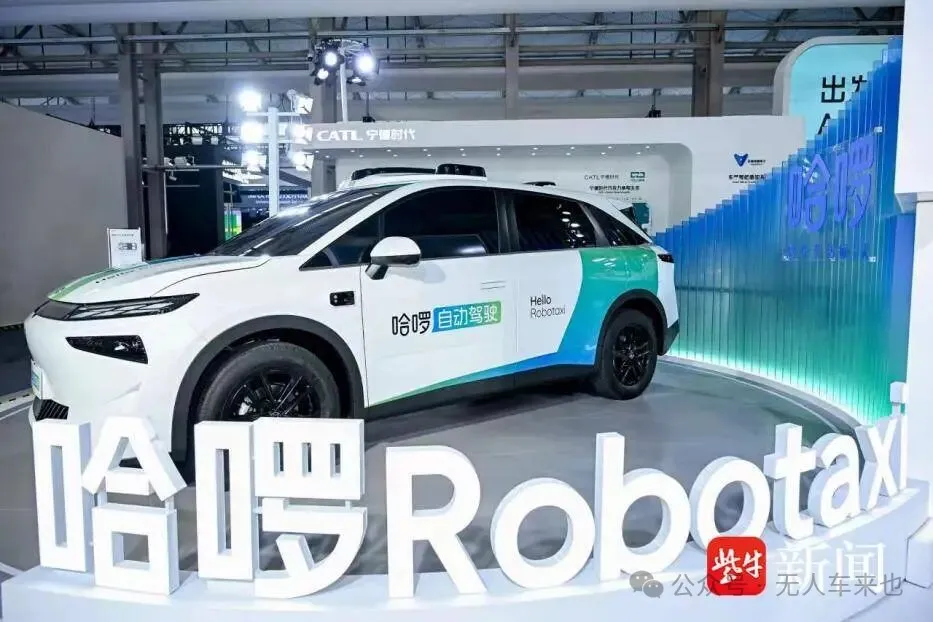
Heavy investments in Chengdu (Southwest hub) and Beijing aim to connect its massive user traffic with autonomous driving services, building a "two-wheeled + four-wheeled + autonomous driving" multi-dimensional mobility network.
Its business scope includes "micro/mini passenger car leasing," hinting at a possible asset-light model of "financial leasing + operations" for rapid scale-up.
3. Platform giants like Apollo Go adopt a "rapid sink, wide-spread" cellular strategy.
Quickly establishing companies in Heshan, Qingdao, Shenyang, and elsewhere with relatively small registered capital (1–10 million yuan).
These resemble "operational outposts," aiming to complete legal entity layouts nationwide at minimal cost, preparing "infrastructure" for rapid large-scale operations in policy-friendly cities at any time.
This is a highly Internet-style approach prioritizing speed and coverage breadth.
4. Tech solution providers like QCraft have a layout with distinct industrial synergy.
Establishing a tech company in Wuhu with 100 million yuan in registered capital. Wuhu is the headquarters of Chery Automobile.
QCraft and Chery already collaborate on unmanned logistics vehicles, and this localization signals deeper cooperation—aiming to create a joint R&D and production base for "OEM + intelligent driving solutions," achieving seamless technology-to-product translation.
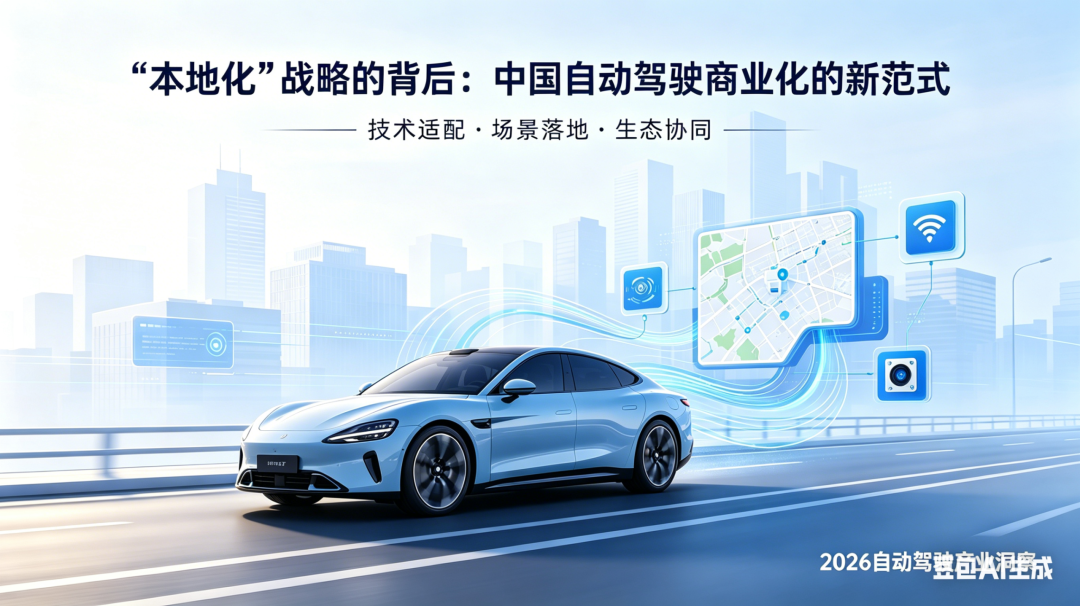
III. Behind the "Localization" Strategy: A New Paradigm for China’s Autonomous Driving Commercialization
This wave of "local strongman" localization marks China’s autonomous driving industry entering a new development stage, forming a unique "Chinese paradigm":
1. From "technology-driven" to "government-enterprise collaboration-driven"
Success is no longer measured solely by algorithmic rankings but by who can more efficiently understand local needs and design customized solutions aligned with local regulatory frameworks, industrial demands, and public pain points.
Government relations (GR) and localized operational capabilities have become as crucial as technological R&D.
2. From "product output" to "ecosystem co-construction"
Big companies no longer just sell or operate vehicles locally—they use subsidiaries as pivots to drive local supply chains, create jobs, contribute taxes, and grow with cities.
This builds deeper interest alignment and trust.
3. Diversified competition dimensions
Competition no longer hinges solely on algorithms and chips but extends to the depth of local data accumulation, tightness of integration with regional industrial resources, speed of adapting to complex local policies, and ability to secure city-level projects (e.g., smart sanitation, intelligent public transit).
This is a contest of comprehensive strength.
In spring 2026, the "local company rush" by Pony.ai, WeRide, Apollo Go, HelloBike, and QCraft is rewriting China’s autonomous driving industrial map.
From Shanghai to Hunan, Taizhou to Chengdu, Qingdao to Wuhu, these new companies are like chess pieces landing across China.
They signal not just corporate expansion but the shift of autonomous driving from "technology-driven" to "scenario-driven."
In short, the "Self-Driving Vehicle Insider" (WeChat Official Account: wurenchelaiye) argues:
When every city has a localized autonomous driving company, and every autonomous driving company can deeply integrate into local transportation ecosystems—that’s when autonomous driving has truly "landed."
And this "land grab" has only just begun.
What do you think?
#SelfDrivingVehicleInsider #AutonomousDriving #SelfDrivingCars #AutonomousVehicles
-
![]()
Raking in Big Profits Overseas! Chery’s Overseas Revenue Makes Up 70% in H1, with Gross Margin Climbing to 16.1%
-
![]()
Alibaba’s New Fiscal Quarter: 45% Revenue Surge in Alibaba Cloud, Enhanced Profitability in AI Cloud, but Widening Losses in the Application Layer
-
![]()
The AI Version of 'PayPal Mafia' Has Arrived: 20 AI Startups Raise Over $4.6 Billion in Funding
-
![]()
Wang Jian's Vision: Paving a Pathway for Alibaba Through AI
-
![]()
Hyundai Motor Workers Strike Today, Fearing Job Losses to Robots
-
![]()
Embracing 'Light': O-film Unveils Its 'Illuminating the Future' Strategy
-
![]()
SenseTime’s SenseNova U1.5 Lite Goes Open Source: Ushering in a New Era of Predictable AI Image Generation
-
![]()
Collaboration Initiated! Tesla Officially Welcomes Doubao Onboard