Changsha Paves the Way for Autonomous Driving with Dedicated Lanes, as Over Ten Cities Speed Up Legal Frameworks
 04/09 2026
 781
781

Source: Smart Vehicle Technology, Changsha Evening News, China Social Sciences News
On April 1, 2026, Changsha's "Regulations on the Development of Autonomous Vehicles" officially took effect, marking China’s first local regulatory framework specifically tailored to the advancement of autonomous vehicle technology. This move was approved by the local people’s congress.
From Beijing to Changsha, Shenzhen to Tianjin, and Wuhan to Ordos, a nationwide movement toward localized autonomous driving legislation is well underway. By the first quarter of 2026, over ten cities had either completed or were advancing specialized autonomous driving laws, with a "patchwork" of regional regulations now blossoming and showcasing unique local characteristics. At the national level, revisions to the Road Traffic Law have been earmarked in the 2025 legislative agenda of the Standing Committee of the National People’s Congress. Industry experts widely agree that the "15th Five-Year Plan" period will be pivotal for transitioning from fragmented to systematic autonomous driving legislation. Driven by local pilot programs, a long-anticipated unified national legal framework is gradually taking shape.

Changsha’s Pioneering Journey: From ‘Infrastructure Ready’ to ‘Legislation in Place’
The "Changsha City Regulations on the Development of Autonomous Vehicles" were passed by the 32nd session of the 16th Changsha Municipal People’s Congress Standing Committee on October 31, 2025, approved by the 19th session of the 14th Hunan Provincial People’s Congress Standing Committee on November 27, officially announced on December 28, and implemented on April 1, 2026.
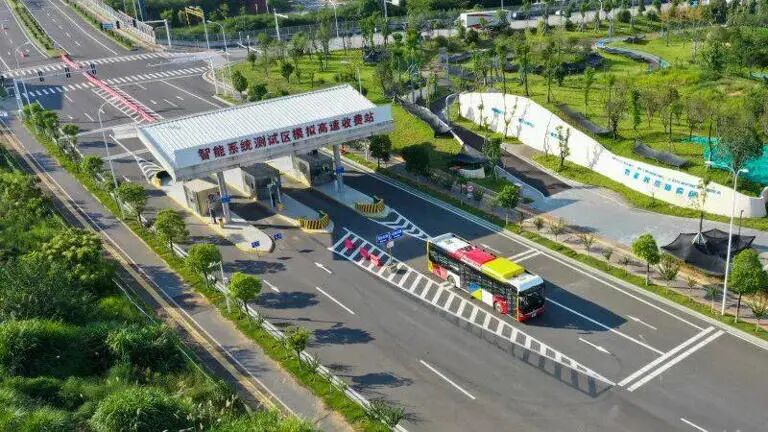
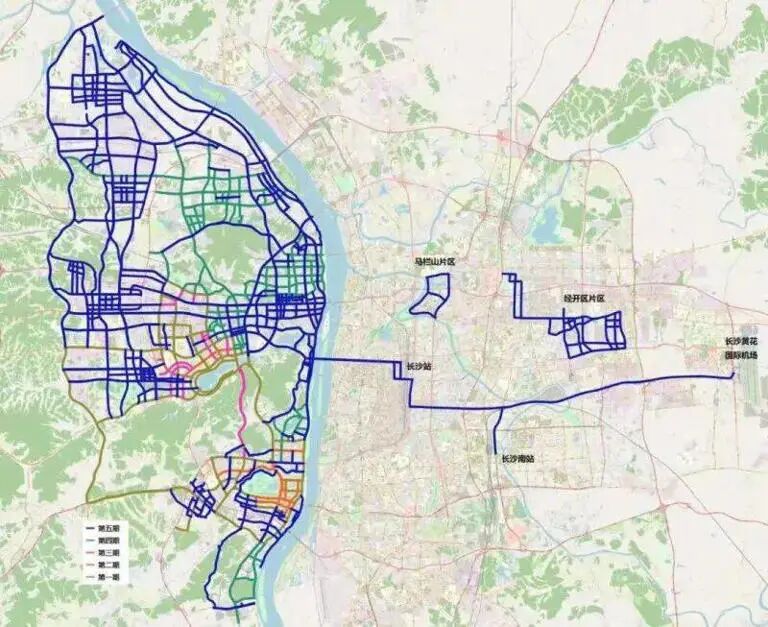
Changsha has been at the forefront of China’s intelligent connected vehicle (ICV) industry development. Since establishing the nation’s first National Intelligent Connected Vehicle (Changsha) Test Zone in 2018, the city has secured five national licenses. By February 2025, the total one-way mileage of ICV test roads in Changsha reached 1,107.1 kilometers, covering urban arterials, park roads, and other scenarios. In commercial operations, the Xiangjiang New Area has issued 121 functional unmanned vehicle codes. These regulations essentially codify well-tested policies refined through years of practical experience into binding local laws.
In terms of content, the "Regulations" establish a comprehensive institutional framework. Regarding liability, they provide clear guidelines: traffic accidents caused by human operation are the responsibility of the operator, while those caused by system failures fall under corporate responsibility. This "human-vehicle liability separation" principle is a crucial legal foundation for the commercial deployment of Level 3 (L3) and above autonomous vehicles. Li Quan, Deputy Chief of Changsha’s Traffic Police Brigade, further elaborated on safety mechanisms: "Autonomous vehicles must comply with road traffic safety laws while on the road. Vehicles must also have recording, storage, and online monitoring capabilities, along with prominent identification markings."
For industrial development, the "Regulations" adhere to principles of "market-led, government-guided, innovation-driven, and safety-ordered" growth. They specify that municipal and county-level governments will coordinate fiscal funds to support R&D and roadside infrastructure construction while encouraging private capital and financial institutions to participate in industrial investment. Regarding commercialization, the "Regulations" explicitly allow autonomous vehicles to carry personnel or goods for business model exploration during demonstration applications, paving the way for commercial operations in scenarios like Robotaxi and unmanned delivery services.
Notably, the "Regulations" clearly define scenario openness. Changsha will gradually open application scenarios such as urban buses, taxis, freight, shuttle services, and security patrols in phases and regions but explicitly exclude school buses and hazardous materials transport.
Additionally, the "Regulations" clarify a concept requiring public understanding: assisted driving ≠ autonomous driving. An official from Xiangjiang Smart explained: "Most private cars on the market currently feature cruise control, lane-keeping, and other functions belonging to assisted driving (L1-L2), where the driver remains the responsible party. The "Regulations" govern vehicles with L3-L5 autonomous driving technology." This conceptual distinction is both a prerequisite for legal application and a key step in disseminating scientific knowledge to the public.

National Landscape: From ‘Diverse Approaches’ to ‘Common Ground’
Shifting focus from Changsha to the national stage, a "bottom-up, multi-pronged" local legislative landscape is emerging.
Since the Ministry of Industry and Information Technology (MIIT), Ministry of Public Security, and Ministry of Transport jointly issued the "Administrative Provisions on Road Testing of Intelligent Connected Vehicles (Trial)", over 70 cities have conducted autonomous vehicle road testing and demonstration applications. Thirteen cities, including Beijing, Shanghai, and Shenzhen, have enacted autonomous driving promotion regulations or local laws. By 2025, China’s ICV sector transitioned from "pilot exploration" to full-scale commercialization.
In 2022, Shenzhen pioneered the "Shenzhen Special Economic Zone Regulations on the Management of Intelligent Connected Vehicles", becoming the nation’s first ICV management law, providing a preliminary legal framework for accident liability and data security. In February 2025, Guangzhou’s "Regulations on the Innovative Development of Intelligent Connected Vehicles" took effect, introducing institutional arrangements for insurance innovation. In January 2026, Tianjin’s "Regulations on Promoting the Development of Intelligent Connected Vehicles" were implemented. Beijing, in October 2025, released the "Beijing Autonomous Vehicle Safety Assessment Measures (Trial)" and "Beijing Autonomous Vehicle Road Application Pilot Vehicle Safety Inspection Measures (Trial)", further refining safety management norms for high-level autonomous driving.
Notably, the focus of local legislation is undergoing profound shifts. Comparing early regulations in Shenzhen and Shanghai with recent ones in Wuhan and Beijing, a new policy signal emerges: regulations are transitioning from testing activities to application promotion, entering a new phase of "encouraging use" rather than merely "allowing trials."
The diversity of local legislation ultimately requires unified national laws to set safety baselines and establish institutional frameworks. On this issue, experts provide clear guidance.
In December 2025, the Legislative Affairs Commission of the NPC Standing Committee stated in its Record Review Work Report (Filing and Review Work Report) that local regulations on emerging fields like autonomous driving are "necessary" but must adhere to legal principles and adjust promptly after higher-level laws are clarified. This sets the institutional tone for continued local legislative exploration and provides a time window for national legislation.
Su Kui, a first-level inspector at the Guangzhou Municipal Transport Bureau, argued that given China’s national conditions, the current approach should prioritize bottom-up exploration, with localities leading and the central government later coordinating. Zhang Jian, Deputy Director of the Traffic Power Strategy Research Center at Southeast University, likened central-local relations to "democratic centralism": local legislation acts as the "democratic" vanguard, feeding practical experience to the center, while central legislation represents the "centralized" final direction.
Zheng Fei, a professor at China University of Political Science and Law, further noted that central legislation’s core role is to set industry safety baselines, focusing on product access and liability allocation, while local legislation should emphasize specific industrial exploration, with both needing synergy. This division of labor provides a clear theoretical framework for future central-local legislative systems.
During the 2026 National People’s Congress sessions, multiple delegates reinforced this view. Xie Wenmin, a member of the National Committee of the Chinese People’s Political Consultative Conference and director of Hubei Shouyi Law Firm, pointed out in a proposal that the intelligent driving sector lacks a national "constitution", with local pilot laws having limited scope and no unified standards for cross-border data flow or algorithm security. Wu Qiong, Baidu’s Chief Expert on Autonomous Driving Safety and Policy, emphasized industry needs: "Our most urgent demand is higher-level legal approval to create a resilient innovation environment and provide local pilots with legal basis. Central legislation must offer framework-level, directional guidance."

Commercialization Accelerates: Navigating Institutional Challenges
The intensive breakthroughs in local autonomous driving legislation are backed by a solid national industrial foundation.
Take Beijing as an example. Since launching the nation’s first high-level autonomous driving demonstration zone in September 2020, Beijing has built the world’s first networked cloud-controlled high-level autonomous driving demonstration zone. To date, the zone has deployed eight application scenarios, including passenger vehicles, buses, unmanned delivery, and sanitation. Leveraging the zone’s traction, Beijing has fostered an integrated ecosystem of "vehicles, roads, clouds, networks, and maps", with automakers and tech firms accelerating collaboration from technical validation to large-scale commercialization.
Nationwide, testing scales continue to expand. By the end of 2025, public security authorities had issued 16,000 autonomous vehicle test plates and opened 32,000 kilometers of public test roads. In December 2025, the MIIT announced China’s first batch of L3 conditional autonomous vehicle access permits, marking the shift from "closed testing" to "regulated commercialization" for L3 autonomous driving. Chongqing had issued 48 L3 ICV special plates, with test vehicles accumulating 1.4 million kilometers zero-accident. Hangzhou granted Zeekr an L3 test license covering 9,224 square kilometers, the nation’s largest and longest L3 test area.
In commercial operations, by 2025, leading Chinese Robotaxi firms achieved breakthroughs in core cities like Beijing, Shanghai, Shenzhen, and Wuhan, expanding from limited zones to cross-regional connectivity and from daytime to 24/7 services. Currently, multiple cities, including Beijing, Chongqing, Wuhan, Changsha, and Shenzhen, allow autonomous vehicles to operate in specific areas and times, accelerating commercialization.
Despite rapid local legislation and deepening commercialization, autonomous driving legislation faces core challenges.
Conflicts in Legal Hierarchy. Local laws cannot breach higher-level legal frameworks. Professor Yu Lingyun argued for distinguishing based on "presence of a driver" to align technical standards with legal responsibilities and clarify institutional boundaries for large-scale autonomous driving applications. This classification involves fundamental legal adjustments—in "driverless" scenarios, AI systems replace humans as driving entities, requiring legal redefinition of liability chains.
Accident Liability and Insurance Mechanisms. Existing compulsory traffic insurance cannot fully cover autonomous driving. In L4/L5 scenarios, both occupants and external parties need protection, necessitating legislation for mandatory autonomous vehicle insurance to enable rapid claims. Four ministries have jointly issued guidelines to proactively adapt to intelligent driving trends and systematically study its mid-to-long-term impact on auto insurance.
Integration of Technical Standards and Legal Rules. China’s autonomous driving legislation generally follows a tiered governance approach, distinguishing conditional, high, and full autonomy for legal rule design, reflecting the trend of integrating technical and legal standards. However, converting "technical grading" to "legal grading" requires extensive standard-setting work.

Conclusion: Toward a ‘Chinese Solution’ in Legislative Progress
From Beijing to Changsha, Shenzhen to Guangzhou, local legislative explorations are accumulating valuable experience for national legislation. At the top level, Road Traffic Law revisions are imminent. The coming years will be critical for China’s autonomous driving legislation to transition from "fragmented" to "systematic". The industry does not seek a "perfect" law but a dynamic legal system that evolves with technological iteration and leaves room for innovation. As technology outpaces regulations, systems must accelerate to catch up, with local pilots providing key experience for a unified national "Chinese solution."
- End -
Disclaimer:
Works marked "Source: XXX (non-Smart Vehicle Technology)" in this public account are reprinted from other media, intended to disseminate information and do not represent this platform’s views or endorse their authenticity. Copyright belongs to the original authors. For infringement, please contact us for deletion.
-
![]()
Raking in Big Profits Overseas! Chery’s Overseas Revenue Makes Up 70% in H1, with Gross Margin Climbing to 16.1%
-
![]()
Alibaba’s New Fiscal Quarter: 45% Revenue Surge in Alibaba Cloud, Enhanced Profitability in AI Cloud, but Widening Losses in the Application Layer
-
![]()
The AI Version of 'PayPal Mafia' Has Arrived: 20 AI Startups Raise Over $4.6 Billion in Funding
-
![]()
Wang Jian's Vision: Paving a Pathway for Alibaba Through AI
-
![]()
Hyundai Motor Workers Strike Today, Fearing Job Losses to Robots
-
![]()
Embracing 'Light': O-film Unveils Its 'Illuminating the Future' Strategy
-
![]()
SenseTime’s SenseNova U1.5 Lite Goes Open Source: Ushering in a New Era of Predictable AI Image Generation
-
![]()
Collaboration Initiated! Tesla Officially Welcomes Doubao Onboard