Yunqi Conference Heralds Computing Power Growth: Alibaba Cloud’s Data Center Capacity to Surpass 20GW by 2032, T-Head Reveals AI Chip Zhenwu V900
 09/22 2026
 409
409
In-Depth Financial Review for September 22
Yunqi Conference Heralds Computing Power Growth: Alibaba Cloud’s Data Center Capacity to Surpass 20GW by 2032, T-Head Reveals AI Chip Zhenwu V900
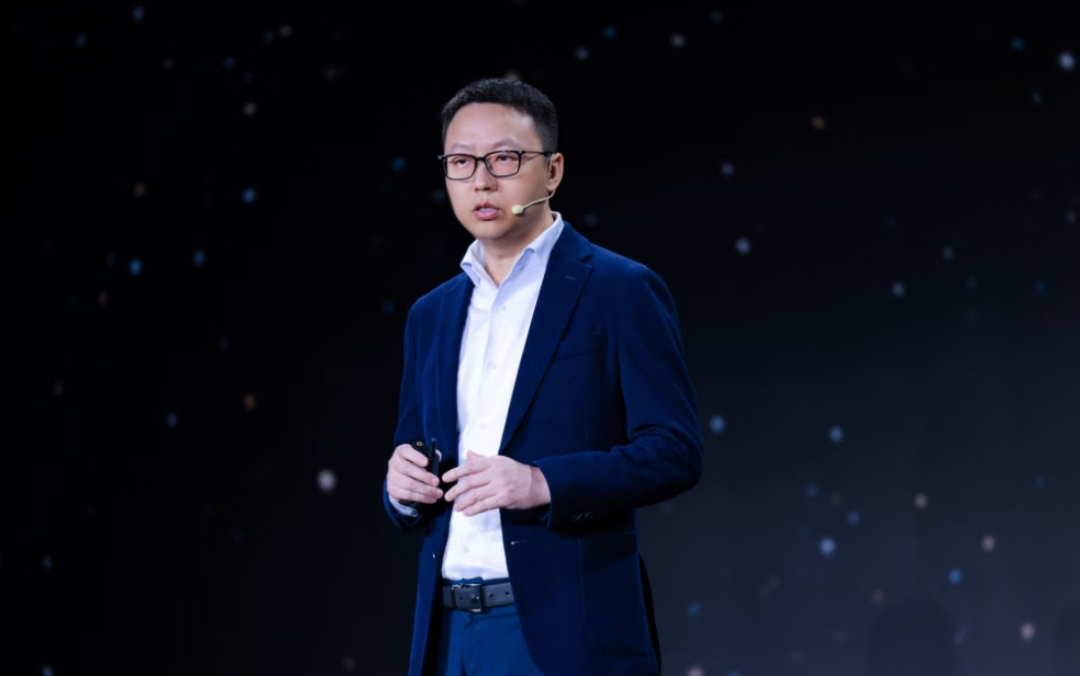
On September 22, Alibaba Group CEO Wu Yongming announced at the Yunqi Conference that Alibaba Cloud's global data center capacity is projected to exceed 20GW by 2032. On the same day, T-Head introduced its latest AI chip, Zhenwu V900, hailed as the most powerful domestically produced AI chip to date. This innovation is expected to significantly reduce costs for Alibaba Cloud's computing centers. Analysts suggest that, estimating annual revenue at $12 billion to $15 billion per GW, this expansion in computing power indicates that Alibaba Cloud could achieve its management’s 2030 target of $100 billion in external revenue ahead of schedule, with external revenue potentially surpassing RMB 1 trillion by 2032.
Chief Interpretation: This marks a pivotal development in China's tech sector, directly linking computing power investment to revenue potential. What does 20GW signify? With estimated annual revenues of $12 billion to $15 billion per GW, it translates to a revenue scale in the trillions of RMB, with the timeline now advanced to 2032. This signals a substantial acceleration in Alibaba Cloud's capital expenditures over the next seven years. Critically, the launch of T-Head's Zhenwu V900 suggests that if domestically developed chips can be widely adopted within Alibaba's cloud infrastructure and significantly cut costs, it will create a closed loop of self-developed chips, self-built computing power, and self-operated clouds, following the model of overseas hyperscale cloud providers.
The implications for A-shares are multifaceted: most directly impacted are Alibaba Cloud's domestic supply chain partners, including server systems, optical modules, liquid cooling and power supplies, and IDCs. Next is the supporting ecosystem for domestic chips, such as advanced packaging, memory, and IP. Risk warnings are also in order: achieving 20GW depends on three key constraints: power supply, chip availability, and demand fulfillment. Revenue projections are based on analysts' linear extrapolations, with uncertain timing for realization, so long-term goals should not be conflated with short-term performance.
Domestic AI Chip Financing Surges: GigaDevice Secures Nearly RMB 2 Billion, Xingyun Integrated Nearly RMB 800 Million
Recently, RISC-V cloud AI computing chip company GigaDevice completed a new financing round totaling nearly RMB 2 billion, with a post-money valuation nearing RMB 15 billion. Over twenty investors participated, including Huatai Innovation, SMIC Capital, and Zhongding Capital. On September 21, fully self-developed GPGPU company Xingyun Integrated secured nearly RMB 800 million in financing, led by Puquan Capital, an industrial investment platform under CATL. The funds will support product engineering, supply chain preparation, and customer delivery.
Chief Interpretation: Viewing these financings alongside the Yunqi Conference reveals that China's computing power narrative is shifting from the model layer to the infrastructure layer. Primary market capital preferences are clear: RISC-V architecture for cloud computing power, domestic GPGPUs, and inference-specific chips, all aiming to bypass NVIDIA's ecosystem barriers and find a foothold in domestic substitution and cost-sensitive scenarios. GigaDevice's valuation nearing RMB 15 billion and CATL's backing of Xingyun Integrated indicate that industrial capital is now directly investing in computing hardware, not just making financial bets.
For A-shares, this implies an upward shift in valuation benchmarks, as primary market pricing will transmit to the secondary market through industrial chain partnerships and comparable companies in the same sector. Advanced packaging, memory, IP licensing, and server systems are most likely to receive 'shovel-selling' premiums. However, caution is warranted: primary market valuations do not equate to commercialization capabilities, and the actual deployment volume of RISC-V architecture in domestic cloud data centers remains limited, representing more of a validation of industrial trends than earnings realization.
People's Bank of China Hosts Symposium with Foreign Financial Institutions, RMB Central Parity Rate Hits Highest Since July 2022
The People's Bank of China held a symposium with foreign financial institutions, stating its commitment to steadily expanding the two-way opening of the financial market. On September 21, the RMB's central parity rate against the USD was set at 6.7487, up 34 basis points from the previous trading day, with the onshore RMB closing at 6.6955, the highest since July 2022. The USD index closed up 0.21% at 100.42, with most non-USD currencies declining.
Chief Interpretation: Against the backdrop of a strengthening USD index, this development carries significant weight. With the USD index up 0.21%, the RMB broke below 6.70 and reached a three-year high, indicating that this RMB appreciation is not merely a passive response to USD weakness but is independently driven, synchronized with foreign capital inflows, settlement demand, and policy communication. The PBOC's timing in holding the symposium with foreign financial institutions and emphasizing two-way opening aims to stabilize foreign investor expectations and enhance the attractiveness of RMB assets. For A-shares, this means that exchange rate stability itself reduces risk premiums.
Historically, during RMB appreciation cycles, foreign investor-preferred large-cap blue chips, financials, and consumer sectors tend to receive more stable capital support, while export sectors face exchange rate pressures. The core challenge for RMB assets remains domestic profit expectations, with exchange rate and opening policies improving the lower bound of valuation multiples but not replacing earnings recovery. Subsequent focus should be on whether bank client settlement and sales data and net foreign capital inflows can sustain, as single-day exchange rate movements have limited indicative significance.
- END -
-
RSI: How Much Valuation Can It Support for Zhipu?
-
Young People Are Secretly Enjoying 4399 Game Suite on Xiaohongshu
-
![]()
China’s Premier Independent Token Factory: Secures 2.9 Billion Yuan in Funding
-
FAW and GAC Toyota: Collaborating Without Full Merger?
-
Honor Expands Partnership with Alibaba: Who Will Lead the AI Smartphone Revolution?
-
![]()
Yunqi Conference Heralds Computing Power Growth: Alibaba Cloud’s Data Center Capacity to Surpass 20GW by 2032, T-Head Reveals AI Chip Zhenwu V900
-
![]()
Singapore Hardware Veteran Creates an AI Golf Personal Trainer
-
![]()
Data Integration Throughout the Production Chain! Haomi Optics Initiates MES and ERP System Upgrade Project