Li Yanhong’s Good Looks Can’t Rescue Baidu AI’s Struggles
 09/23 2026
 452
452

PART 01: AI for Office Work: Struggling to Break into the Top Tier
The surge in popularity of AI office agents is evident from advertisements at major airports. From WorkBuddy, Doubao Office, and Qianwen Office to Baidu Partner, these products have taken over advertising spaces from waiting halls to corridors.
Overall, Baidu Partner’s advertising spaces appear less “premium.”
This aligns with the general perception of AI office agents. Baidu Partner was fully launched in March 2026—not too late a start—but its presence has faded amid fierce competition.
QuestMobile data reveals that in July 2026, the total monthly active users in the AI productivity office sector reached 102 million, with total usage increasing by 112.4% year-over-year. Among them, Tencent’s WorkBuddy and QClaw had 6.582 million and 2.259 million monthly active users, respectively, while ByteDance’s TRAE Work (merged into Doubao Work in August) had 1.904 million monthly active users. Thus, QuestMobile summarizes the current landscape of office agents as: Tencent leading, ByteDance catching up, and Alibaba adopting a multi-pronged approach.
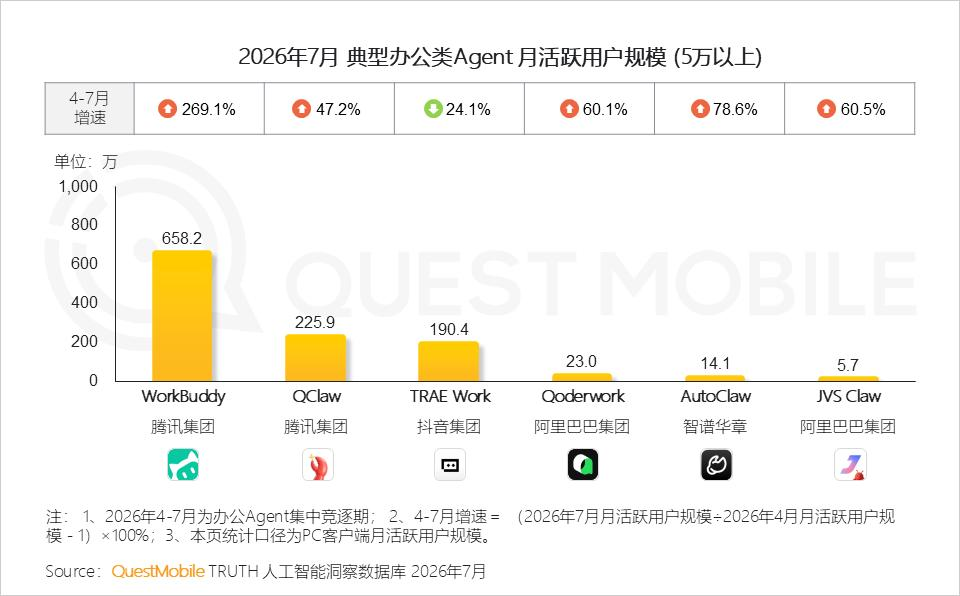
Baidu Partner is notably absent from this chart. Source: QuestMobile
For Baidu, this scenario is a familiar one—an “early bird but late arrival” narrative.
Baidu Hi, launched in 2008, marked the beginning of Baidu’s office product lineup.
It was an instant messaging product akin to QQ, also serving as Baidu’s internal remote office tool. Compared to DingTalk and Feishu, which officially launched in 2015 and 2017, respectively, Baidu Hi is a veteran. Twelve years after its inception, it underwent a brand upgrade and was renamed “Ruliu,” evolving into a new-generation intelligent work platform to compete with DingTalk, Feishu, and WeCom.
However, by 2026, when AI office agents have become a battleground for tech giants, Baidu is represented by Baidu Partner and Kuku AI.
Deploying newcomers for new tasks—this logic seems sound. Other tech giants are following a similar path. Tencent’s WorkBuddy, Alibaba’s “Qianwen Office,” and ByteDance’s “Doubao Work” are all new brands launched by integrating internal resources for the AI office business.
But this battle appears to be evolving into a “Three Kingdoms” showdown among the new BAT—Alibaba and Tencent remain unchanged, but Baidu has been replaced by ByteDance. Besides disappointing rankings, Baidu Partner’s popularity on social media is also low.
Baidu is actually putting in significant effort.
Since July this year, it has substantially increased its advertising efforts and launched an enterprise version priced at 189 yuan per month, with discounts for first-time purchases. In comparison, Qianwen Office’s enterprise standard version and WorkBuddy’s SaaS version both cost 198 yuan per month, while Doubao Work Partner’s basic plan costs 990 yuan per month or 9,900 yuan per year.
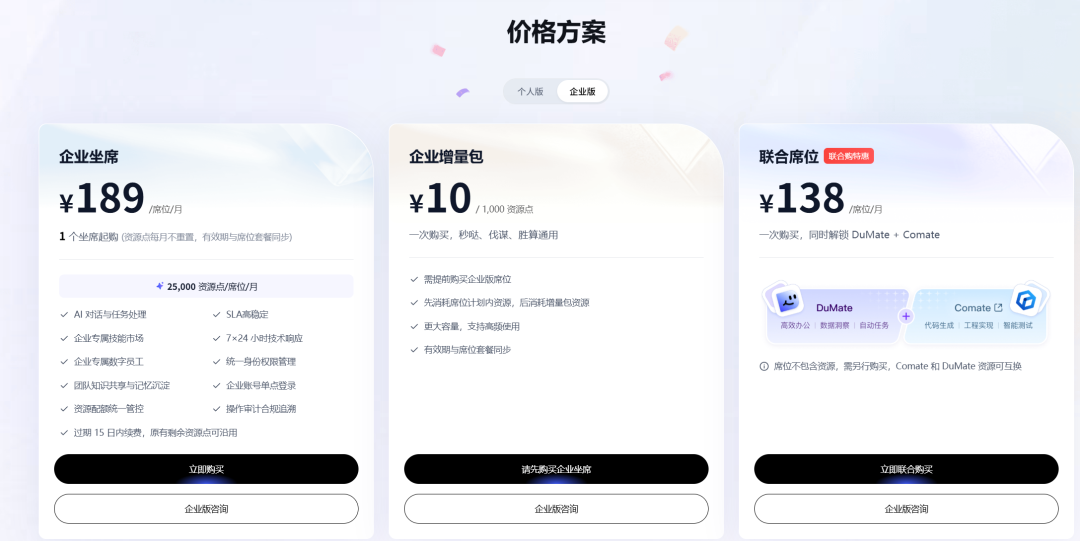
Pricing for Baidu Partner’s enterprise version
On some rankings, Baidu Partner performs well.
For instance, at its August new product launch, Baidu used data from the AI Product Rankings to demonstrate its continued relevance—in July 2026, Baidu Partner’s PC version had 6.743 million monthly active users, second only to WorkBuddy’s 11.1523 million, with a year-over-year increase of 1,063.79%, ranking first in growth in the AI office sector.
According to public information, the “AI Product Rankings” are operated by Beijing Zhibang Technology Co., Ltd., founded in early 2024. The rankings are primarily derived from third-party procurement data analysis, unlike QuestMobile and Analysys, which have first-party data. PC monthly active users are also difficult to cross-verify. Therefore, while this ranking can serve as evidence of Baidu’s external showcasing, there is some skepticism within the industry.
PART 02: In the AI Era, There Are No “Single-Front” Battlefields
To some extent, Baidu Partner’s inability to break into the top three is somewhat inevitable.
Because competition among tech giants in the AI era no longer revolves around a single front.
The success of most AI products is built on a system. This is why the new BAT have all chosen to consolidate and merge their organizations in the competition for AI office agents.
Tencent has incorporated CodeBuddy, WorkBuddy, and Qclaw into its cloud product division under Tencent Cloud; Alibaba has integrated QoderWork, Wukong, and MuleRun to form the new Qianwen Office Business Unit under the ATH Business Group; ByteDance has made the boldest move by merging its Feishu team into Doubao, along with the TARE and Coze teams, to form Doubao Work.
In comparison, Baidu’s AI efforts are not sufficiently concentrated.
Baidu Partner and Kuku AI are two key AI products Baidu has heavily promoted this year, but the former is a B2B product under Baidu Intelligent Cloud, led by Shen Dao, while the latter is a B2C product under the Personal Super Intelligence Business Group, led by Wang Ying. In other words, they have not yet formed a synergistic force.

Kuku AI’s official website promotes a download offer with free VIP access to Baidu Netdisk
AI office agents are tools on the surface, but they involve underlying large models, middleware frameworks, and upper-layer interfaces. A failure in any link affects the user experience.
Baidu, still engaged in dispersed warfare (scattered battles), struggles to leverage systemic advantages in the AI office sector. Moreover, it is clearly lagging in some areas, such as large models. QuestMobile data shows that in June 2026, the top three AI-native apps by monthly active users were Doubao, Qianwen, and DeepSeek, with Baidu’s ERNIE Bot not even in the top ten.
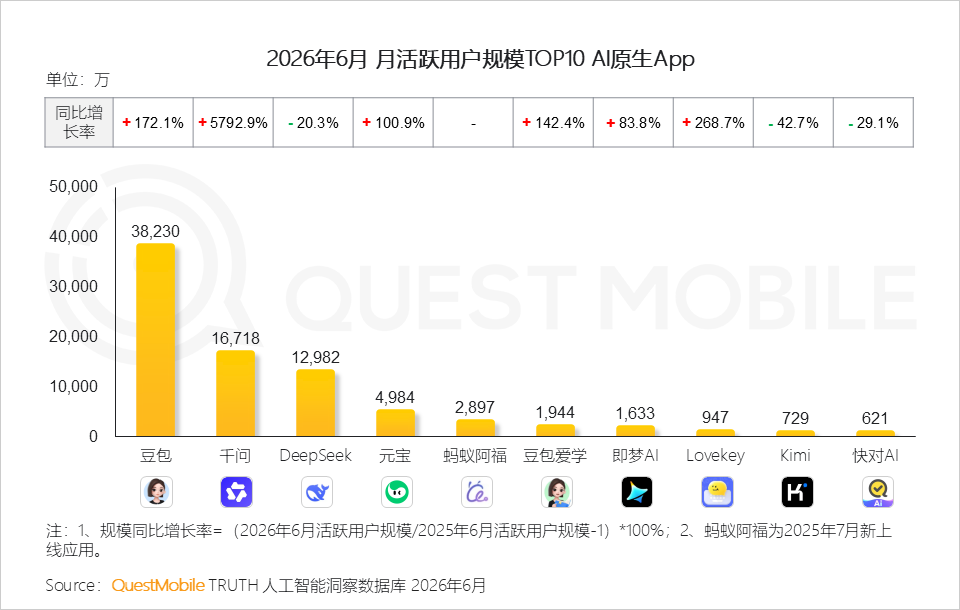
QuestMobile’s “2026 Mid-Year Report on AI Application Market Development”
Another key factor is entry points. Tencent has WeCom, ByteDance and Alibaba have Feishu and DingTalk, respectively, while Baidu’s Kuku AI is backed by Baidu Netdisk and Wenku, and Baidu Partner is supported by Baidu Intelligent Cloud.
In terms of monthly active users, Baidu Netdisk and Wenku combined have nearly 300 million users, but they are strongly utility-focused, and users may not necessarily use them in work scenarios. In contrast, the success of WeCom, Feishu, and DingTalk is fueled by the frustrations of office workers, making their transition to AI office more seamless as it is not a repositioning for them.
Before achieving sufficient scale and becoming “national products,” the precision of “entry points” is actually a more critical metric.
Similar issues arise with Baidu Partner. Backed by Baidu Intelligent Cloud, it can more easily reach B2B users in central enterprises, automotive companies, and financial institutions. However, as a B2C product, it ultimately must compete head-on with others in the broader market.
However, in mid-September, Baidu Intelligent Cloud announced its ambition to become an “industrial intelligent operating system,” essentially organizing general-purpose agents, professional agents, and customized agents into a collaborative system to “enable AI to truly integrate into enterprise operations.” In response, an industry AI researcher commented: This seems more like a concept Baidu created after failing to compete in the AI office market.
PART 03: Forward-Thinking Vision, Harsh Realities
“Early riser but late arrival” is the most prominent label for Baidu in the AI battlefield.
Its “early riser” status is largely due to Li Yanhong’s forward-thinking technological vision. For example, in a 2016 speech, he proposed that people could complete work using only natural language through a virtual assistant—identical to today’s AI agents. Going further back, he was also the first Chinese internet company founder to invest heavily in AI, both in terms of money and talent. Even Dario Amodei, founder of Anthropic, once worked at Baidu’s Silicon Valley AI Lab.
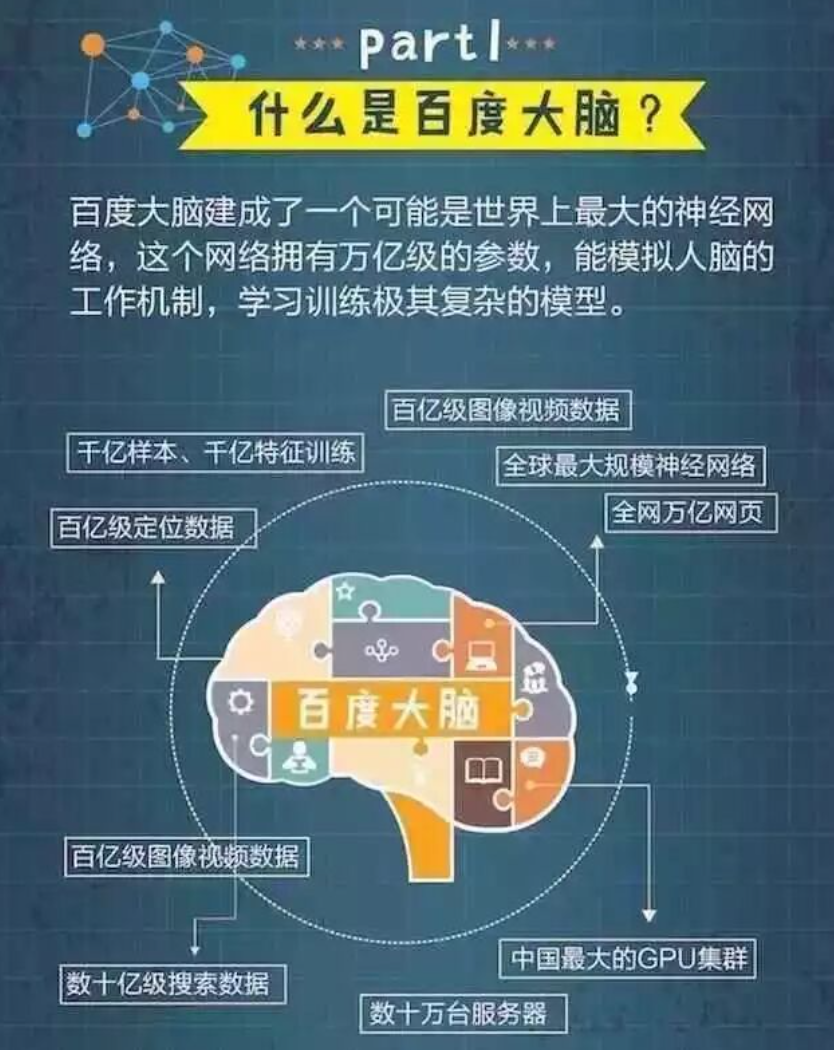
At the 2016 Baidu World Conference, Baidu proposed a concept similar to AI agents
This is one of the advantages of a founder-driven company. The company’s resources can be concentrated in the direction the boss favors, giving it more first-mover advantages in attracting talent and expanding businesses during the early stages of technological development. However, this is also a double-edged sword: if management is accustomed to waiting for the boss’s decisions, the boss’s cognition directly determines the upper limits of the company’s business.
Returning to Baidu’s AI business, the reasons for its “late arrival” are more complex.
Knowing is easier than doing. Betting on a new direction requires a company to adjust its organization, revenue structure, and talent pool accordingly.
At the organizational level, Baidu has made many moves around AI.
Especially from late 2025 to the present, Baidu has adjusted its organizational structure nearly every quarter.
It first split its Technology Platform Group into the Base Model Research and Development Unit (BMU) and the Applied Model Research and Development Unit (AMU), led by Wu Tian and Jia Lei, respectively, both reporting directly to Li Yanhong. It then separated Wenku and Netdisk from the Mobile Ecosystem Business Group (MEG) to form the Personal Super Intelligence Business Group (PSIG), led by Wang Ying, also reporting directly to Li Yanhong. In recent months, Baidu established the Model Committee (BMC) to unify the base model and applied model lines.
It is clear that the core logic is to elevate the status of key AI business lines. “Direct reporting to the CEO” has become a direct symbol of a business line’s importance. However, overall, Baidu’s organizational integration is less forceful than Alibaba’s and ByteDance’s. Alibaba launched the ATH Business Group to consolidate businesses related to models and AI office applications, with “Token” as the keyword; ByteDance adjusted around “Doubao” as its entry-point brand. Such consolidation facilitates internal resource allocation and external establishment of AI user mindshare.
From a financial perspective, Baidu’s AI has not yet generated significant revenue from B2C products, which aligns with the general public’s weak perception of Baidu AI.
Taking Baidu’s Q2 2026 financial report as an example, total AI business revenue was 12.5 billion yuan, accounting for 50% of general business revenue. At first glance, this is not bad, as traditional advertising revenue is gradually being replaced by newer AI revenue, a crucial signal for “shifting gears.”
However, breaking down the revenue structure, AI cloud infrastructure, AI applications, and AI-native marketing services generated 7.3 billion yuan, 2.5 billion yuan, and 2.6 billion yuan, respectively, with year-over-year growth rates of 50%, 3%, and roughly flat. Among them, GPU cloud revenue, the largest component of the 7.3 billion yuan in AI cloud infrastructure, grew by 283% year-over-year, maintaining triple-digit growth for four consecutive quarters.
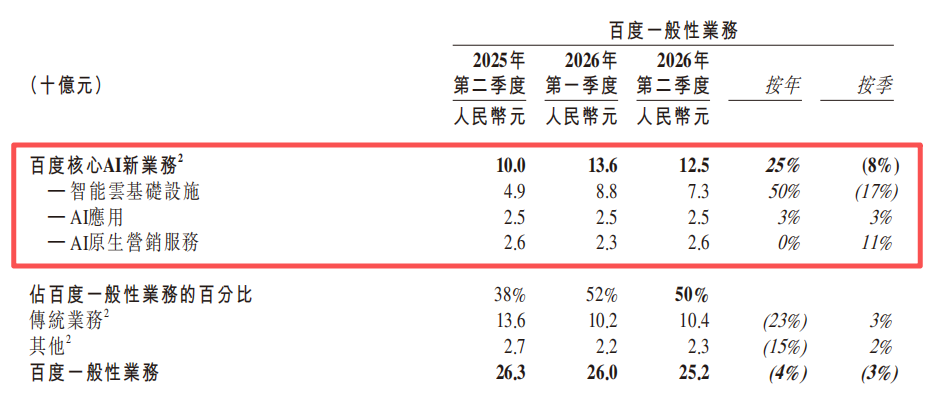
Source: Baidu’s Q2 2026 earnings announcement
In other words, Baidu’s AI revenue performance is primarily driven by enterprises paying for GPU computing power—a heavier business. Compared to B2C application businesses, it involves higher capital expenditures, and depreciation and amortization eat into profits.
To some extent, Baidu has no choice but to pursue this path.
Its AI business has fallen behind in the B2C sector, with no signs of catching up in the short term. Yet, B2C has always been the main battleground for AI, where daily real user scenarios and interaction data serve as fuel for model iteration and product insights. While Doubao is attempting to seize more entry-point dominance with AI phones, Baidu is still seeking validation in suspected customization (presumably “custom-made”) rankings.
PART 04: Founders on the Front Lines
Talent flow is often a barometer of a tech company’s business development.
Baidu established its Deep Learning Research Institute in 2013. Around its AI business, the company once boasted a wealth of talent. Later, Andrew Ng left, and Lu Qi left. After Baidu released ERNIE Bot in 2023, several technical leaders from its NLP team were poached. According to industry rumors, many were hired at double or even higher salaries.
The new BAT have become the preferred choices for top AI talent. Of course, they are also poaching from each other. Tencent has hired many from ByteDance’s Seed team, while ByteDance has secured Alibaba’s Zhou Chang and some team leaders. Additionally, they recruit from global top AI companies like DeepMind and OpenAI.
Amid this excitement, Baidu seems somewhat lonely. More often than not, it appears to be the one being poached.
However, after establishing the BMU in 2025, Baidu has accelerated its talent recruitment, welcoming former DeepSeek researcher Wei Haoran and Sun Tianxiang, who led the development of the MOSS large model. It is also rumored to have approached Lin Junyang and Guo Daya, but without success.
For the new generation of top AI talent, Baidu may not be able to fulfill their ambitions and dreams.
Baidu still has cards to play. For example, Kunlunxin filed for a Hong Kong IPO in January this year, with a reported valuation target of 50 billion USD; Apollo Go had accumulated over 23 million orders by June 2026, with some cities already achieving single-city profitability. However, in terms of AI system capabilities, funding, organizational structure, and talent density, the gap between Baidu and the new BAT remains significant.

Robin Li appears at Baidu’s Autumn Carnival
Lei Jun once adopted an “idol” persona, but his intentions were transparent: as a newcomer to the automotive industry, he aimed to attract a broader female audience, who often play a pivotal role in household consumption decisions. Prior to the high-speed car crash incident involving a female college student, this strategy significantly boosted Xiaomi’s car sales.
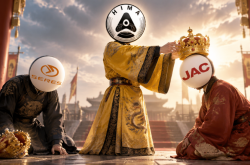
In contrast, Robin Li’s “idol” image seems to reflect the founder’s inner “prince dream.” He indeed once dressed as a prince at Baidu’s annual event.
Only in fairy tales do princes remain forever young.
Baidu is also making efforts to refresh its narrative about youth. This is a common strategy among major tech companies, which involves placing younger, more intelligent individuals in charge of the AI battlefield. At Baidu, Sun Tianxiang, born in 1997, has emerged as a typical representative of this youthful narrative. He previously led the development of the Fudan MOSS large language model and, after a brief entrepreneurial venture, joined Baidu in July this year to oversee BMU and become a member of Baidu’s Technical Strategy Committee.
However, the crux of Baidu’s AI pursuit still rests with Robin Li. He has chosen to take personal command. The new stories that these fresh faces at Baidu can tell will hinge on how effectively they collaborate with their boss.
A subtle shift is noticeable in the comment sections about Robin Li, where voices blaming him for the Wei Zexi incident have finally subsided. Time has eroded people’s anger, but from the perspective of a company founder’s influence, being forgotten is itself a form of punishment.
Those who follow AI developments now focus more closely on the new BAT (Baidu, Alibaba, Tencent) trio.
Robin Li’s genuine passions for technology and plants reveal a pure side of his personality. Some of the green designs on Baidu’s campus were crafted by Robin Li himself. He would take into account sunlight and wind to determine the optimal growing positions for his favorite magnolia grandiflora, a tree species primarily planted south of the Yangtze River. However, on Baidu’s campus, thanks to Robin Li’s preference, it thrives.
A boss’s personal will can enable a southern tree species to flourish in the north. But for a once-leading tech company to reclaim its glory in the AI race, it is clearly a far more daunting challenge.
-
![]()
The 'Original Data Sin' in the AI Industry: Unraveling the Zhipu ZCode Controversy
-
![]()
Li Yanhong’s Good Looks Can’t Rescue Baidu AI’s Struggles
-
![]()
JAC Motors: Is It the New 'Star Player' in the Eyes of Investors?
-
![]()
Hangzhou Beckons! Xinguang Optoelectronics Unveils 100 Million Yuan Investment for Precision Measurement Subsidiary
-
![]()
Largan Precision Secures Land for NT$8 Billion! What Are the Chances of Winning the CPO Bet?
-
![]()
Not Just 'Talking the Talk': AutoNavi Enhances AI's Understanding of the Physical World
-
![]()
Exclusive Interview with Xiong Guanhao from Sunny Optical: Reconstructing the Value of Light with 'Optics + AI'
-
![]()
More Than 50 Crashes: A Chinese Farmer Takes Flying Cars to the Emirates Palace in Abu Dhabi