More Than 50 Crashes: A Chinese Farmer Takes Flying Cars to the Emirates Palace in Abu Dhabi
 09/23 2026
 447
447
Produced by: #MarketCap Finance
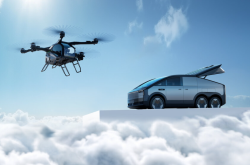
Can cars fly? This scenario, previously only seen in sci-fi movies, became reality above the Emirates Palace in Abu Dhabi on September 18th.
The UAE royal family witnessed the event firsthand as the Chinese-made XPENG Aeroht flying car completed a dual-aircraft formation flight, once again showcasing China's hard power in low-altitude scientific innovation to the world.
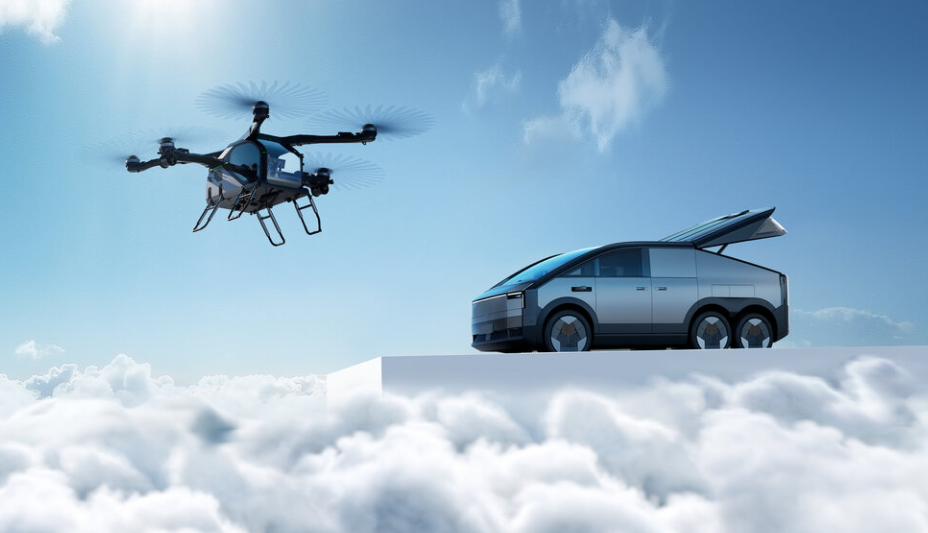 XPENG Aeroht 'Land Aircraft Carrier' flying car. Image source: XPENG Official Newsroom
The following day, XPENG Aeroht formally signed a strategic cooperation agreement with the Emirate of Ras Al Khaimah in the UAE. The two sides will jointly establish the UAE Air Traffic Regulatory Sandbox Platform.
PART 01 A Farmer's Dream of Flying Cars
01
Few know that the man who brought China's flying car dream to the UAE is a Chinese farmer—Zhao Deli. Born in Hanshou County, Changde, Hunan Province, his dream of flight began by the shores of Dongting Lake.
His home was separated from the county seat by Dongting Lake, and in earlier years, travel relied solely on ferries. As a child, he often imagined: How wonderful it would be to ride on a dragonfly's back and fly directly across the lake.
To pursue this dream of flight, he developed his own aircraft, enduring over 50 crashes, breaking three toes, selling his home, and seeing his team reduced to just himself and his nephew at one point.
Thirteen years after starting in 2013, the company he founded, XPENG Aeroht, has now grown into the flying car project with the largest order volume globally. Bloomberg, citing sources familiar with the matter, reported that XPENG Aeroht is preparing for a Hong Kong stock listing with the assistance of JPMorgan Chase and Morgan Stanley, having already submitted its application confidentially.
Orders are the most direct proof of XPENG Aeroht's strength: cumulative reservations have surpassed 7,000 units. Supporting this scale are XPENG Aeroht's two parallel product lines—the full-tilt fixed-wing flying car A868, positioned for medium-to-long-distance travel with multiple passengers, currently in test flight stage; and the modular flying car "Land Aircraft Carrier," which has progressed further along the path to mass production: On August 10th, the 1,000th electric propulsion unit for this model rolled off the production line; according to Reuters, large-scale deliveries are expected to begin in 2027.
As for pricing, Zhao Deli has stated publicly on multiple occasions: The "Land Aircraft Carrier" will be priced at no more than 2 million yuan.
PART 02 Can 7,000 Orders Translate to Profit?
02
However, these 7,000 orders still have a long way to go before converting into actual revenue. XPENG Aeroht's customer base is primarily domestic—over 6,000 of the 7,000 orders come from China. The timeline for when flying cars can operate in Chinese airspace ultimately depends on aviation regulatory approvals.
XPENG Aeroht's "Land Aircraft Carrier" is navigating regulatory ambiguity for modular aircraft. The entire product consists of a ground vehicle and a flying module: the ground vehicle handles transportation, storage, and recharging, while the flying module undertakes low-altitude flights; the two are equipped with automatic separation and reassembly mechanisms, allowing them to split and recombine within five minutes.
This "vehicle-flight separation" design places the ground module under traffic management and the flight module under civil aviation regulation—two systems that are difficult to simply separate.
For XPENG Aeroht's "Land Aircraft Carrier" to legally operate on roads and in the air, the ground vehicle must obtain motor vehicle product access, while the flight module must secure TC (Type Certificate), PC (Production Certificate), and AC (Airworthiness Certificate). The operator must also obtain OC (Operational Certificate) and continuously meet requirements for route approvals, airspace usage, takeoff and landing sites, personnel training, and emergency response.
Most of XPENG Aeroht's orders cannot be treated as effective revenue until airworthiness certification is completed and formal delivery occurs. Therefore, order conversion rate is the core variable determining XPENG Aeroht's performance.
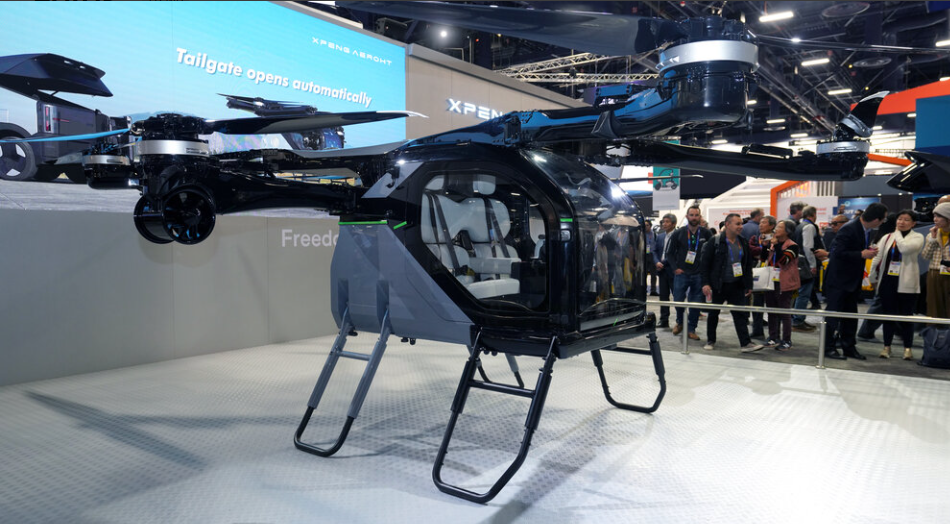
XPENG Aeroht 'Land Aircraft Carrier' flying module. Image source: XPENG Official Newsroom
The manned eVTOLs produced by XPENG Aeroht represent an entirely new category with few mature commercial precedents. Airworthiness approval thresholds for manned eVTOLs are higher than market expectations, with generally slow progress. While intention orders (tentative orders) are substantial, actual deliveries remain scarce, revenue scales are low, and R&D investment remains high—these are common traits across the entire manned eVTOL industry.
A more direct reference is EHang, whose EH216-S has obtained TC, PC, and standard airworthiness certificates from the Civil Aviation Administration of China (CAAC). Its operating entity has also secured OC and achieved commercialization first. In 2025, EHang delivered 175 eVTOLs, generating approximately 418 million yuan in revenue but still reporting a net loss of about 276 million yuan.
Beyond insufficient sales to support full commercialization, heavy R&D investment is the primary cause of EHang's losses. In 2025, EHang reported a gross profit of 257 million yuan but operating expenses reaching 586 million yuan, including 195 million yuan in R&D, 122 million yuan in sales, and 270 million yuan in general and administrative costs. As of late 2025, EHang employed 829 people, with 403 (48.6%) in R&D and product development. Even excluding R&D expenses, gross profit failed to cover sales and administrative costs.
By comparison, XPENG Aeroht faces even greater short-term profitability challenges. Beyond securing TC, PC, and standard airworthiness certificates from the CAAC, according to information disclosed publicly by He Xiaopeng in March 2025, XPENG Aeroht already had 1,400 R&D personnel for flying cars at that time; by early 2026, the team had grown to over 1,800 people, with masters and doctoral holders exceeding 40%. Its R&D team is roughly four times the size of EHang's, while advancing two product lines—"Land Aircraft Carrier" and A868—in parallel, along with constructing production facilities and flight test sites.
Therefore, while XPENG Aeroht has long-term potential to leverage higher pricing and automotive-style mass production for scale advantages, its probability of achieving stable profitability within the next three to five years is significantly lower than EHang, which has already entered commercial operation.
PART 03 Personal Sacrifice: Over 50 Crashes
03
But reaching the eve of commercialization already far exceeds what Zhao Deli, who risked his life for his flying dream, could have imagined.
Zhao Deli is a self-made entrepreneur who dropped out of high school. Initially, no one believed he could build aircraft—not even engineers. But Zhao Deli pressed on.
From 2013 to 2018, his team conducted over 1,500 test flights, enduring more than 50 crashes. Each crash required thousands or even tens of thousands of yuan in replacement parts. Costs spiraled beyond imagination, savings were exhausted, his house was sold, and debts mounted. His Huabei, Jiebei, and credit cards were all maxed out.
Twenty team members left one by one, until only his nephew remained.
He became a cautionary tale in his community:
"At that time, friends stopped contacting me, afraid I'd ask to borrow money. Even their families told them, 'You can start any business in the future, just don't follow Zhao Deli into aircraft.'"
Fortunately, perseverance paid off. In the summer of 2018, Zhao Deli's flying motorcycle finally completed its first manned test flight—with only a motorcycle helmet and knee pads as protective gear.
During the most severe test flight, Zhao Deli suffered compound fractures in three toes. He left the hospital after just one week, signing a waiver to discharge himself against medical advice and continuing his experiments.
After more than a decade of effort, the boy who once dreamed of riding a dragonfly across Dongting Lake finally propelled his aircraft onto the IPO track. But for commercialization, the story has just begun.
END
Disclaimer
MarketCap Finance hereby states that all information and content provided are objectively compiled and analyzed based on publicly available materials, but we cannot guarantee their absolute accuracy, completeness, or timeliness. Any opinions, analyses, or conclusions contained herein represent the independent views of MarketCap Finance at a specific point in time and do not constitute investment advice or strategies. Financial markets carry risks, and investors assume full responsibility for any decisions made based on this content. If you have questions or discover omissions regarding this publication, please contact us directly through our official channels, and we will verify and address them promptly.
-
![]()
More Than 50 Crashes: A Chinese Farmer Takes Flying Cars to the Emirates Palace in Abu Dhabi
-
Enterprises Embracing AI Truly Miss the 'Contextual' Mark
-
![]()
Chinese Brands Ascend to Dominance in Global Handheld Smart Camera Rankings: DJI and Insta360 Command 93% Market Share
-
![]()
Meta’s Market Value Rockets by Nearly $200 Billion Overnight, Cloud Town Conference Takes the Lead: AI Applications Begin to Boom, Six Key Beneficiaries Unveiled
-
![]()
World Model: The First Year of AGI for Robots
-
![]()
Is the Second-Generation Doubao Smartphone a Wise Purchase?
-
![]()
Is the Second-Generation Doubao Smartphone a Worthy Purchase?
-
Zhou Jingren Steps Down from Center Stage