Largan Precision Secures Land for NT$8 Billion! What Are the Chances of Winning the CPO Bet?
 09/23 2026
 436
436
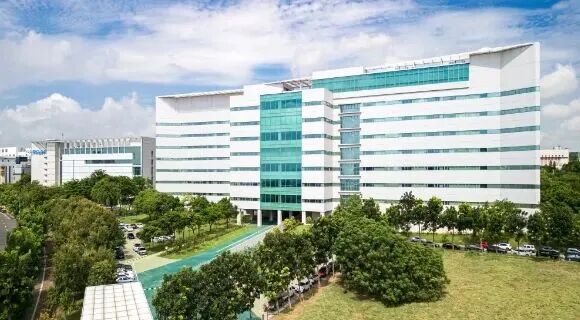
On September 17, Largan Precision made a significant move, purchasing approximately 2,259 ping (a traditional Taiwanese unit of area, roughly equivalent to 3.3 square meters) of land and 3,695 ping of buildings in Nantun District, Taichung City, for NT$1.172 billion.
This acquisition marks the seventh real estate transaction since late June, bringing the total cumulative investment to NT$8.078 billion. Known for its expertise in smartphone lenses, the company has aggressively expanded its land and factory holdings around Taichung's industrial zones in just three months—a pace of expansion rarely witnessed in Taiwan's optical industry history.
The purpose behind this land acquisition is clear: to pave the way for the mass production of fiber arrays (FA) by 2027. At a July earnings conference, Largan Precision Chairman Lin En-ping confirmed that the company had secured mass production specification orders for FA from its first customer and had completed sample deliveries that same month.
From a technical perspective, Largan's core competitive advantage in FA lies in its long-standing expertise in high-precision optical alignment and automated manufacturing. Lin highlighted that while the industry's V-grooves typically achieve only 0.5-micron precision and optical fibers reach 0.7 microns, Largan does not focus solely on improving the precision of these components. Instead, it enhances the overall alignment precision of FA products to below 0.3 microns through intelligent process control and compensation. This far exceeds the industry standard of 0.5 to 0.8 microns and directly addresses the key bottleneck in FAU supply chain yield that TSMC encountered during the development of its COUPE platform CPO packaging.
The industry's narrowing window of opportunity cannot be overlooked. NVIDIA announced in August 2026 that its Spectrum-X silicon photonics technology would enter full-scale mass production, with CPO technology expected to see widespread deployment by 2027. TrendForce projects 2026 as the inaugural year for CPO mass production, with large-scale procurement set to occur between 2027 and 2028. Largan's timeline for FA mass production, targeting the first half of 2027, aligns precisely with this industry scaling.
However, market opinions on Largan's CPO strategy remain sharply divided. U.S. foreign institutions significantly raised their target price for Largan from NT$3,423 to NT$6,231, arguing that the company's expansion into CPO lenses will drive a restructuring of its valuation. Conversely, European foreign institution UBS downgraded its rating from "Buy" to "Sell," citing an already inflated price-to-earnings (P/E) ratio. With CPO still in its early development stages, UBS calculated a fair target price of just NT$5,000 based on a 15x P/E base case scenario—representing a discount of over 30% from the early September closing price of NT$7,400.
The crux of this disagreement lies in Largan's current earnings profile, which remains heavily reliant on smartphone lenses. In the first half of 2026, consolidated revenue reached NT$29.209 billion, with a gross margin of 49.41% and earnings per share of NT$82.35, demonstrating stable profitability but moderate growth. While the FA business prospects appear promising, the segment had not yet entered mass production as of the earnings conference. Lin admitted that setting up the production line would require at least 1-2 years, creating a timing gap before actual revenue contribution.
During this period, when NT$8 billion has already been invested in land acquisition while FA revenue remains pending, the market's choice of valuation anchor essentially seeks a balance between Largan's identity as an "optical leader" and its emerging role as an "AI optical interconnect player."
Largan's seven land acquisitions reflect a strategic choice by a traditional optical giant to reprice its technological assets in the AI computing era. The land purchases themselves do not constitute insurmountable barriers; whether FA products can pass customer validation and achieve yield ramp-up as scheduled in 2027 will determine whether this NT$8 billion investment represents foresight or recklessness.
-
![]()
The 'Original Data Sin' in the AI Industry: Unraveling the Zhipu ZCode Controversy
-
![]()
Li Yanhong’s Good Looks Can’t Rescue Baidu AI’s Struggles
-
![]()
JAC Motors: Is It the New 'Star Player' in the Eyes of Investors?
-
![]()
Hangzhou Beckons! Xinguang Optoelectronics Unveils 100 Million Yuan Investment for Precision Measurement Subsidiary
-
![]()
Largan Precision Secures Land for NT$8 Billion! What Are the Chances of Winning the CPO Bet?
-
![]()
Not Just 'Talking the Talk': AutoNavi Enhances AI's Understanding of the Physical World
-
![]()
Exclusive Interview with Xiong Guanhao from Sunny Optical: Reconstructing the Value of Light with 'Optics + AI'
-
![]()
More Than 50 Crashes: A Chinese Farmer Takes Flying Cars to the Emirates Palace in Abu Dhabi