Capital Sets Sights on New Model Pathway: Matrix Partners, Shunwei, and Legend Capital Jointly Invest in DiffuSpace
 10/10 2026
 522
522
Chao Yong AI Editorial Team
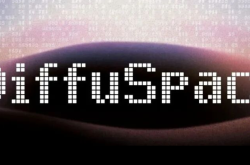
On October 9, diffusion language model company DiffuSpace announced the completion of two consecutive funding rounds, totaling nearly RMB 500 million. The rounds were jointly led by Matrix Partners China, Shunwei Capital, and Legend Capital, with participation from CAS Star, Huawei Hubble, and Horizon Robotics. Gaohe Capital served as the exclusive financial advisor.
This marks the largest financing round in the global diffusion language model (dLLM) sector to date.
Founded in Shenzhen in May 2026, DiffuSpace was co-established by Professor Lingpeng Kong, co-director of the Natural Language Processing Laboratory at the University of Hong Kong, along with PhD candidates Shansan Gong and Jiacheng Ye.
The team began researching diffusion language models in 2022 and was among the first globally to systematically explore this pathway, subsequently releasing research outcomes such as DiffuSeq, RDM, and DiffuLLaMA.
The Dream 7B model, released in 2025, outperformed autoregressive models of the same parameter scale across mathematical, coding, and planning tasks, with some capabilities rivaling those of the 671B-parameter DeepSeek V3. The core difference between diffusion language models and mainstream models like GPT lies in their generation methods.
Autoregressive models generate tokens sequentially from left to right, while diffusion models simultaneously generate content at multiple positions and refine it iteratively, supporting parallel decoding and global iteration.
This characteristic holds more direct significance in edge scenarios: In September, DiffuSpace completed adaptation testing with the agent computing platform Acrab, with dLLM boosting the operational speed of edge-side agents by approximately fivefold.
Co-founder Shansan Gong stated that the team is currently training a 30-billion-parameter diffusion language model, emphasizing that their focus remains on developing foundational models rather than single applications.
The simultaneous presence of Huawei Hubble and Horizon Robotics on the shareholder list points to the potential for deploying diffusion language models on edge hardware, rather than in general-purpose conversational scenarios.
Inference speed is the most scarce resource for edge-side agents, and dLLM's parallel generation capability precisely meets this demand.
However, the public performance metrics of Dream 7B are primarily focused on academic benchmarks. Transitioning from these metrics to stable deployment on edge chips requires engineering adaptation and power consumption control.
The use of the nearly RMB 500 million in financing is directed toward training and open-sourcing larger-parameter models. Whether model scale can continue to scale under the diffusion architecture will be a key validation for this pathway in the next phase.
-
![]()
Manus Caught Between Tech Giants
-
![]()
Starting at 329,800 Yuan! BAIC Unveils New Car: Official Launch on September 28 with an Impressive 1,456 km Range!
-
![]()
Starting at 80,800 Yuan! Volkswagen Unveils New Car Model: Official Release in October, with Top Variant Priced at Only 99,800 Yuan
-
![]()
Design Verification of Auto Parts Using Traditional Methods: How Traditional Automakers Develop, Verify, and Release a 'Brake Pedal'
-
![]()
Defying Expectations! Xiaomi Pengcheng's Locked-In Orders Soar During National Day, Alongside HiCar Smart Travel's Order Surge Over the Holiday
-
![]()
Capital Sets Sights on New Model Pathway: Matrix Partners, Shunwei, and Legend Capital Jointly Invest in DiffuSpace
-
AI: Pioneering New Horizons for Smartphones
-
![]()
China Successfully Orbits 27 Satellites for Its Internet Constellation: Long March 12’s 671st Mission