7 Million DAU! ByteDance's Free CEO Romance Short Dramas Are Driving Foreigners Wild
 10/16 2026
 579
579
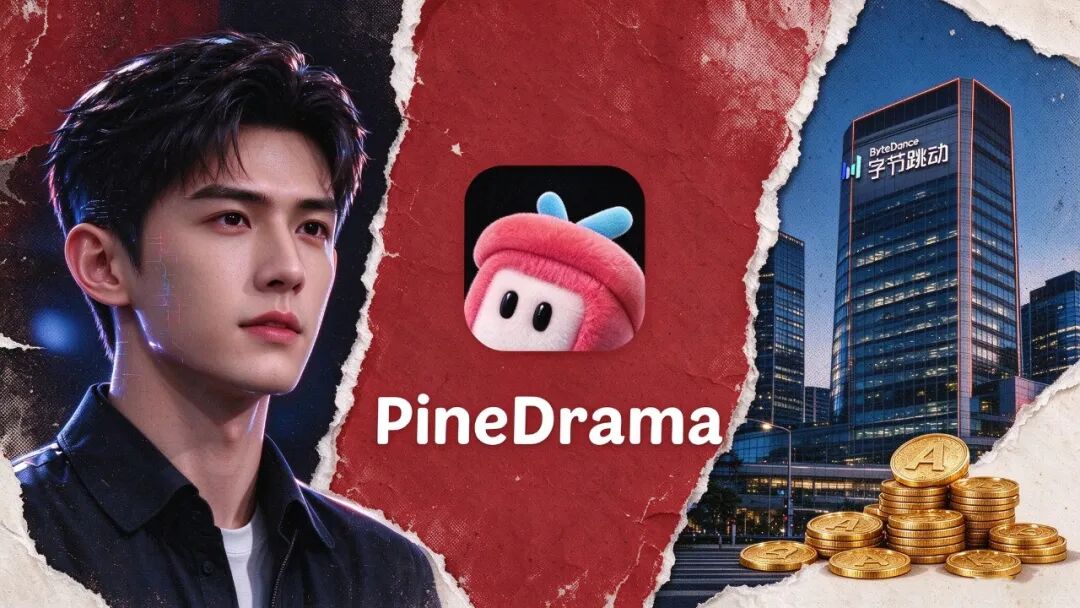
100 Million Downloads in 9 Months: ByteDance Creates Another Blockbuster.

ByteDance Launches Another Blockbuster App!
Today, the most aggressive dark horse in the global app expansion race is a short drama app called PineDrama, a creation of ByteDance.
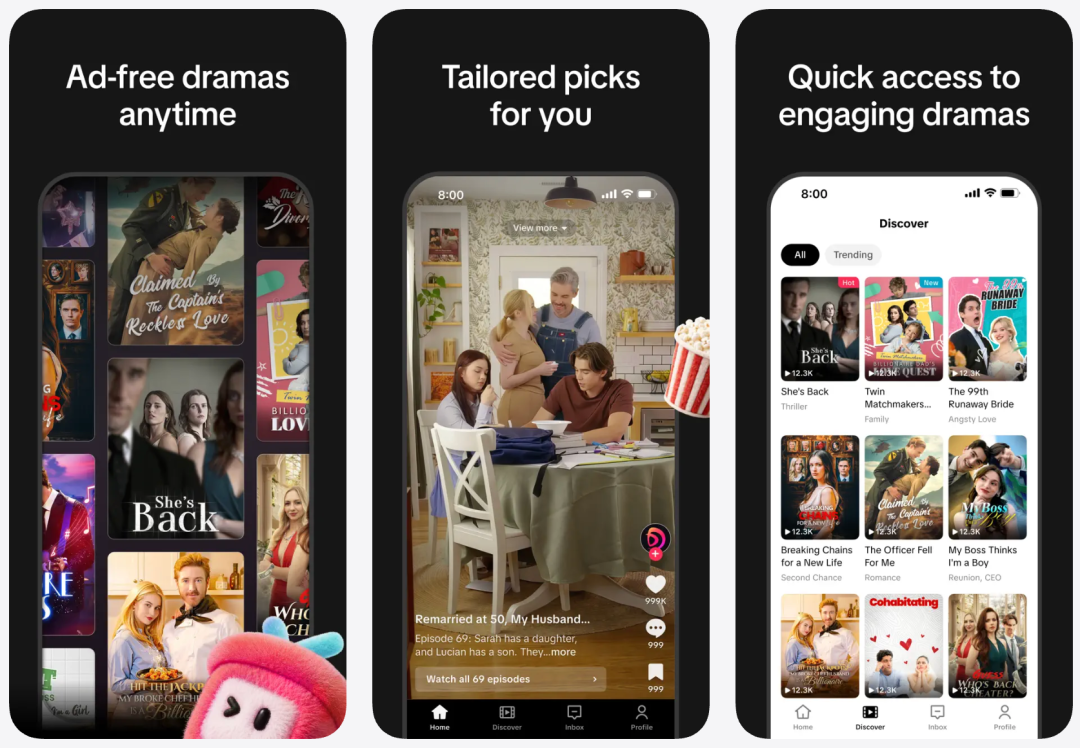
According to data from mobile app analytics firm Sensor Tower, PineDrama has surpassed 100 million cumulative downloads just around nine months after its launch, with approximately 7 million daily active users. In September alone, downloads exceeded 12 million, while August saw over 17 million downloads. Among the seven standalone short drama apps with over 100 million cumulative downloads globally, PineDrama is the only newcomer launched within the past year.
Notably, Tencent recently introduced the "Green Bubble Short Dramas" mini-program within WeChat, positioning it as a rival to "Hongguo Short Dramas."
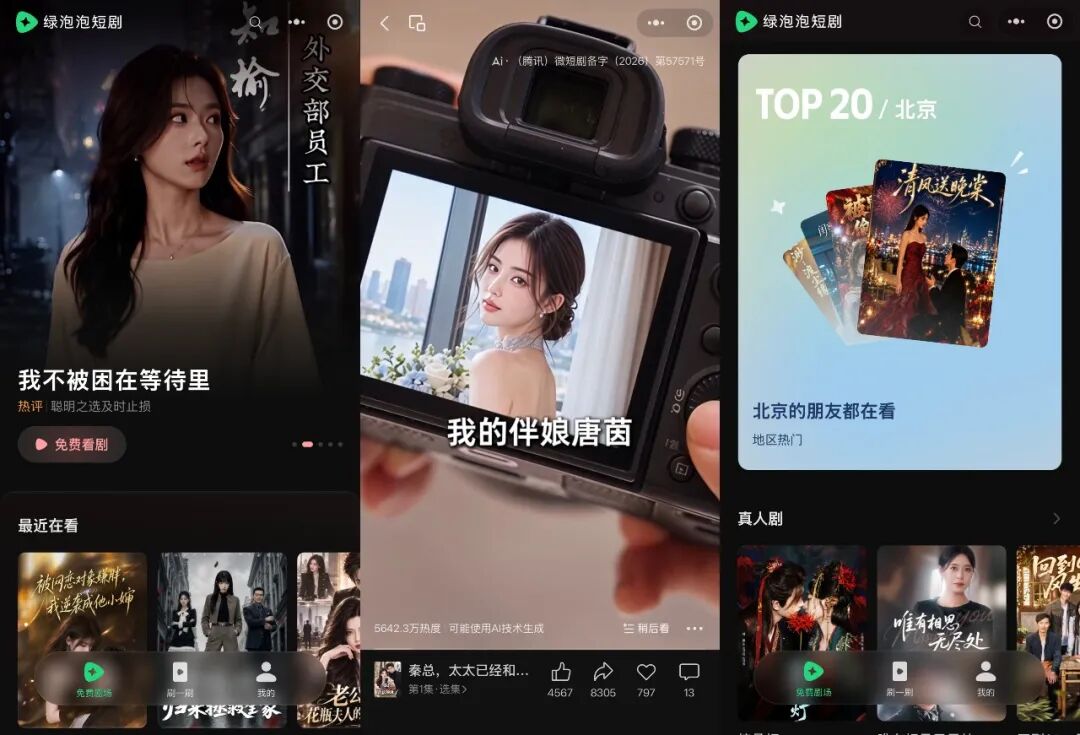
One is ByteDance's standalone app launched overseas, and the other is Tencent's short drama entry built within the WeChat ecosystem. These two internet giants have set their sights on the same business.
But questions arise: Can free short dramas continue to generate profits? Will models that work domestically also succeed overseas?

The Growth Formula Behind PineDrama
Unlike other short drama players, PineDrama adopts a new business model: instead of selling episodes individually, it exchanges free content for user time.
For years, the overseas short drama market has been dominated by players like Maple Leaf Interaction 's ReelShort and Dianzhong Technology 's DramaBox.
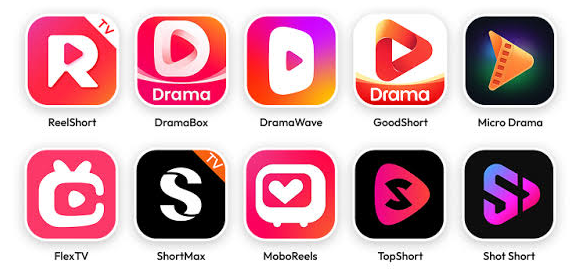
These pioneers employ a "pay-per-episode unlock" model. Users watch a few episodes for free, and once the plot reaches a climax, the app prompts payment. Want to know if the female lead turns her life around or if the CEO recognizes his true love? Please pay up.
In high ARPU (Average Revenue Per User) markets like North America, this model proves profitable, with users spending tens of dollars weekly and average revenue per download six times higher than other markets. However, in emerging markets such as Southeast Asia and Latin America, pay-per-view acts as a significant barrier, highlighting a key drawback of paid short dramas.
ByteDance chose a different path, directly applying the Hongguo template. Users watch episodes for free, unlocking content through ads, while the platform boosts engagement with light incentives like coins. ByteDance shifts its revenue source from users' wallets to their attention.
Under the paid model, platforms prioritize which dramas users are willing to pay for; under the free model, platforms also consider how long users watch, how many times they open the app daily, and whether ads effectively reach them. The former resembles selling movie tickets, while the latter operates more like managing a content traffic pool.
Leveraging synergy with TikTok is another ByteDance advantage. TikTok has amassed a vast overseas user base and developed sophisticated recommendation algorithms and content dissemination mechanisms. Short drama clips first attract users in the short video space, then direct interested viewers to the standalone app for longer viewing sessions. Supporting TikTok account logins also reduces friction for new user registration.
This mirrors the synergy logic between Douyin and Hongguo in China. Short videos discover content, standalone apps handle viewing, and ads drive monetization. This approach remains effective overseas, yielding impressive results.
Sensor Tower data shows PineDrama achieved approximately 6.84 million downloads in Q1 2026, with a 460% quarter-over-quarter growth in Q2.
Indonesia and Brazil directly contributed 82% of PineDrama's downloads. These regions boast large young populations with low willingness to pay but abundant fragmented time.
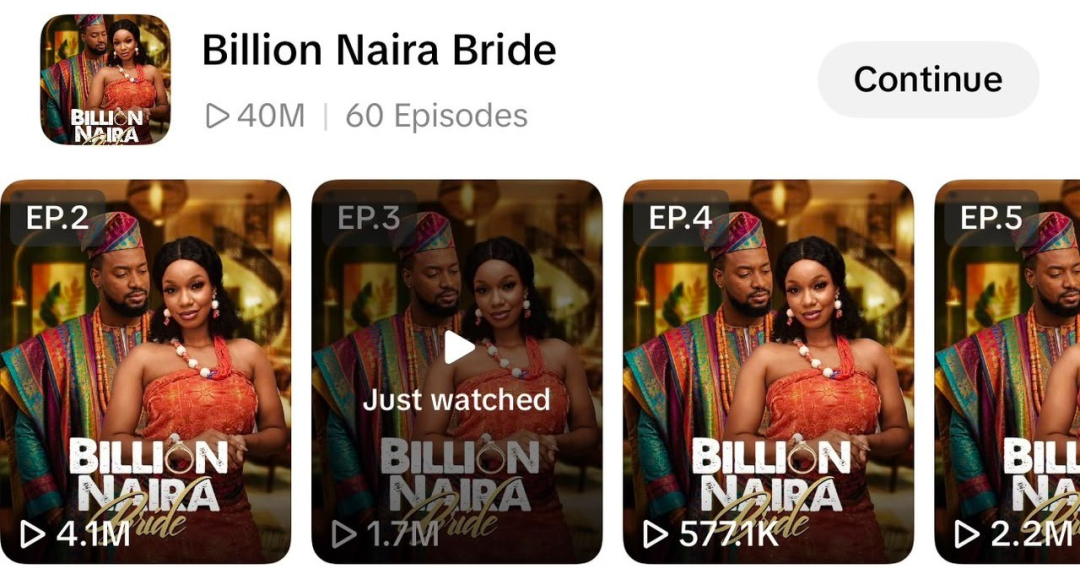
To cater to local tastes, PineDrama even established local production networks overseas, hiring native actors and crafting stories around local elite dramas. A short drama titled "The 1 Billion Naira Bride," produced by a Hong Kong team with a Nigerian setting, surged to 40 million views within a week of its release.
However, surpassing 100 million downloads does not equate to profitability.
Sensor Tower reports that global short drama app downloads reached 850 million in Q1 2026, yet in-app purchase revenue totaled just $750 million during the same period. Streaming agency Owl & Co. data reveals that user time spent on free, ad-supported short dramas soared from 15% to 83%, but the vast majority of revenue still flows to paid platforms like ReelShort and DramaBox.
Even with 7 million DAU, whether low ad monetization efficiency can cover localization, production, and operational costs remains a significant question mark.

The "Hongguo Era" Sparks a Race Against Time for Big Tech
To understand PineDrama's explosive success overseas, one must first examine Hongguo Short Dramas.
Hongguo Short Dramas proved that free short dramas could achieve massive user scale. According to QuestMobile, Hongguo reached 168 million DAU in July 2026, up 107% year-over-year, with users spending an average of 125 minutes per day.
What does 168 million DAU signify? Tencent Video has around 50 million DAU, iQIYI 45 million, Youku 30 million, and Mango TV 30 million, totaling approximately 155 million. This means short dramas are no longer a niche content category but an independent gateway competing with major video platforms for user time.
Traditionally, long-form video platforms relied on copyrights, production capabilities, and exclusive content. Platforms purchased popular dramas, and users bought subscriptions, forming a closed content-payment loop. Hongguo chose a different path: lowering viewing barriers, intensifying plot stimuli, and accelerating content updates to retain users, then monetizing through ads.
ByteDance leverages its content ecosystem to double down on this track ( track : niche market), creating a virtuous cycle. It interconnects products like Fanqie Novels, Douyin, and Hongguo: web novels provide story material, short videos offer dissemination channels, and the short drama platform handles viewing and monetization. This synergy creates multiple touchpoints from content discovery to user consumption.
Simultaneously, user decision costs decrease. To watch a drama, users no longer need to judge whether it's worth paying for upfront; they simply open the app and start watching, continuing if they enjoy the content. This gives platforms more opportunities to experiment with different genres and test user preferences.
However, this doesn't mean subscription models will disappear. Instead, the competitive dimension for content platforms is expanding. Whoever can consistently provide content users want to consume at lower costs has a better chance of capturing traffic.
AI is accelerating this competition.
Long-form dramas and traditional live-action short dramas require actors, locations, shooting, and post-production; AI-generated dramas and animated dramas have the potential to reduce costs in some production areas and speed up content iteration. DataEye statistics show that in August 2026, Douyin's native platform added approximately 46,800 AI-generated and animated dramas.
As production barriers lower, the industry may face a paradox: more content yet fewer breakout hits, easily overshadowed by a flood of homogeneous and low-quality content.
Not just ByteDance, other tech giants are also taking action.
In September 2026, Tencent launched "Green Bubble Short Dramas" on WeChat. Unlike Hongguo's standalone app, Green Bubble operates as a mini-program, requiring no download or installation—users watch directly within WeChat. Its homepage, similar to WeChat Channels, features a "Friends Are Watching" recommendation section, emphasizing social attributes. WeChat's Open Platform also introduced incentive policies for short drama co-publishing to attract more creators and content providers.
Tencent aims to aggregate short drama users previously scattered across numerous mini-programs using WeChat's social virality and low access barriers.
Meanwhile, traditional long-form video platforms like iQIYI, Tencent Video, Youku, and Mango TV are also embracing short dramas to compete for user time. While their approaches differ, their goals converge: whoever keeps users engaged longer each day gains an additional monetization opportunity.
However, Hongguo's free model requires a sufficiently large user base to support ad revenue and sustained content supply to maintain retention. If customer acquisition costs soar, ad loads become excessive, or users leave after watching one hit, scale advantages may fail to translate into profits.

ByteDance's Overseas Ventures: A Mixed Bag
PineDrama isn't ByteDance's first overseas experiment. Before it, ByteDance launched multiple apps attempting to replicate domestic successes, with mixed results.
Lemon8, ByteDance's overseas version of Xiaohongshu (Little Red Book), is a lifestyle community app covering beauty, fashion, travel, and food. Its product design clearly features a visual community: users browse content for inspiration and share their own life experiences.
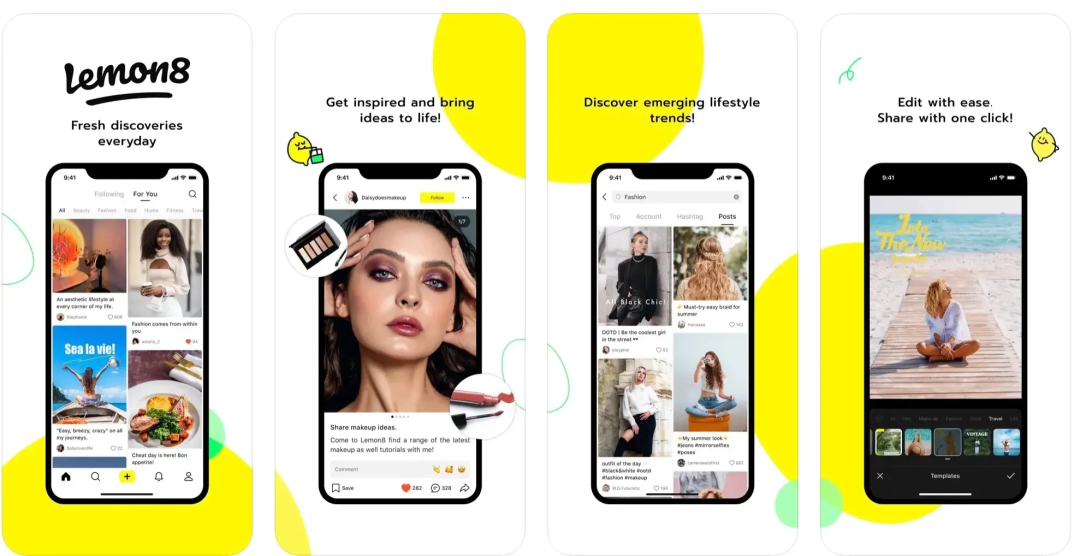
In 2023, Shou Zi Chew took over Lemon8, indicating strategic importance. The app achieved certain results, with downloads growing approximately 190% to reach around 3.4 million in December 2024. In early 2025, a user migration wave triggered by the U.S. TikTok ban temporarily boosted Lemon8 downloads.
However, short-term traffic doesn't equal a stable community.
The core of a lifestyle community isn't just recommending content to users but motivating them to continuously produce content, build relationships, and form long-term habits on the platform. Users can find inspiration on Instagram, Pinterest, or other communities and might share their lives elsewhere.
Lemon8 faces critical questions: Why should users open a separate app? Why should creators place premium content here? How can the platform convert these behaviors into sustainable revenue?
Lemon8 wasn't adequately prepared, boasting a retention rate of just 8%—far below Instagram's and Pinterest's 30-40% and Xiaohongshu's 25-45%. Users criticized "repetitive content" and "heavy influence marketing resembling ads."
Music streaming app Resso took a different approach. Operating in markets like India, Indonesia, and Brazil, it attempted to combine music playback with social interaction. Music naturally transcends language and geography, but success for music platforms depends on more than just product experience—copyright licensing, catalog completeness, subscription pricing, and local competition all play decisive roles.
Resso's journey illustrates this point.
In 2023, ByteDance shut down Resso in Brazil and Indonesia, replacing it with TikTok Music, which closely followed Qishui Music's operational logic and tightly integrated with TikTok. However, less than a year later, TikTok announced it would discontinue TikTok Music on November 28, 2024.
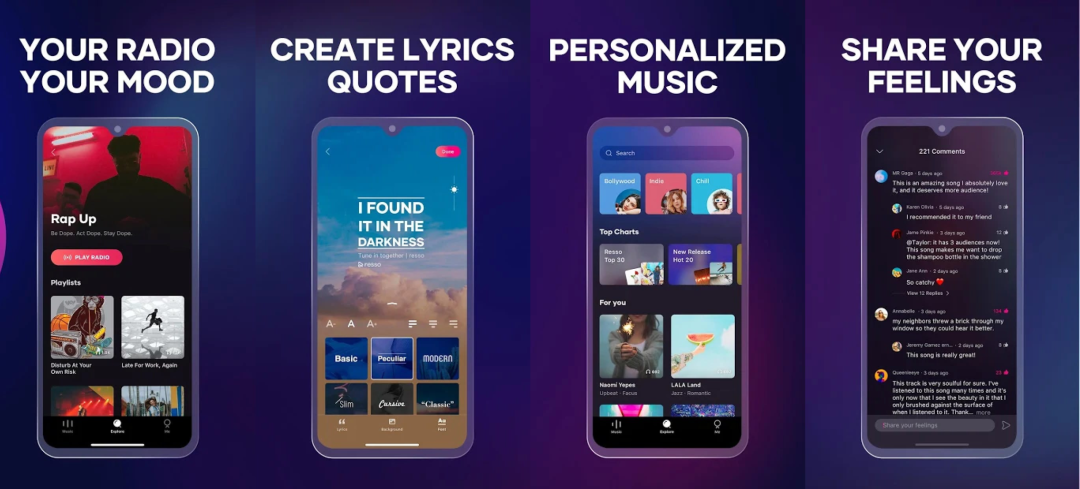
The reasons for shutdown were straightforward: strained relationships with copyright holders (Universal Music Group pulled approximately 3 million songs), intense market competition (Spotify, Apple Music, and Amazon Music dominate over 90% of the U.S. market), and low music subscription penetration in emerging markets where the app primarily thrived.
Even in the field of short dramas, ByteDance has tried twice, with Melolo in Southeast Asia and PikoShow in Japan. The former was criticized for its 'weird dubbing' due to the misuse of Chinese-subtitled dubbed dramas, while the latter failed to adapt due to its forced production of urban emotional dramas that did not suit the tastes of the Japanese public.
After two attempts at going global and several rounds of struggles, ByteDance seems to have understood that while traffic can be amassed, user retention must be nurtured through localized content.
For ByteDance, the competition in the next phase is not just about bringing more users into PineDrama, but about making them willing to come back repeatedly and converting this attention into sustainable revenue. After all, while surpassing 100 million downloads can prove that people want to try the product, only long-term profitability can prove that the business is truly viable.
References:
"Another Blockbuster from ByteDance Goes Viral," Cailian Press;
"ByteDance Unveils Another Blockbuster App with 100 Million Users," 21st Century Business Herald;
"The Never-Stopping Efficiency Factory: ByteDance Creates Hongguo, Transforming the Film and Television Industry," LatePost;
"Hongguo Short Dramas Hold the Lifeblood of Producers," Caijing Tianxia WEEKLY.
THE END
Special Disclaimer: This article is for reference only and does not constitute any investment advice. It may not be reproduced without permission.
-
![]()
Thousand-Kilometer Range BMW i3, Ioniq V Priced Under RMB 100,000: Chinese Automakers Must Guard Against Joint Venture Encroachment in Global Expansion
-
![]()
Competition Among Cities Enters the Second Half: The Outcome Lies Beneath the Surface
-
![]()
AI-Generated Comic Drama Concept Stocks Surge: Is ByteDance the Sole Profit-Maker?
-
iPhone 18 Pro Series Sees Price Reductions—Apple Can't Afford to Stay Idle During Double 11
-
![]()
A Whopping 550 Million Yuan Investment! Fanchuangwei’s High-Transparency Optical AR Lens Project Takes Root in Taizhou
-
![]()
Domestic Triumph in Glass Substrate Lithography! Optical Firm Lands Major Orders
-
![]()
AI-Powered Alternatives Offer Free Substitutes, Posing Threat to Adobe's 'All-in-One' Suite
-
![]()
McKinsey Report: AI Inference to Account for 60% of Computing Power by 2030