Thousand-Kilometer Range BMW i3, Ioniq V Priced Under RMB 100,000: Chinese Automakers Must Guard Against Joint Venture Encroachment in Global Expansion
 10/16 2026
 511
511
Original content from New Energy Outlook (ID: xinnengyuanqianzhan)
Full text: 2,963 characters | Estimated reading time: 8 minutes
For a quick summary, watch our video. For in-depth analysis, keep reading.
Recently, China's domestic new energy vehicle (NEV) sector has encountered some "growing pains."
Several models experienced brake pedal bracket fractures during media tests, prompting authorities to establish a joint investigation team. Some automakers faced production monitoring lapses, leading to insufficient welding strength on vehicle rear axles and a large-scale recall in Malaysia. Issues such as severe battery degradation, reduced driving range, cell swelling, and leakage have also surfaced, with 45,900 complaints recorded on a single platform, Che Zhi Wang.
Additionally, the Ministry of Finance and the State Taxation Administration recently announced that starting April 1, 2027, the export tax rebate rate for NEVs will decrease from 13% to 9%. This policy change represents a tangible profit loss for automakers aggressively expanding overseas markets.
In contrast, joint venture brands are making a strategic comeback with renewed vigor.
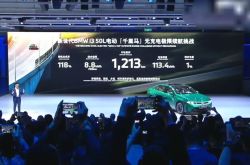
BMW's sixth-generation power battery has officially rolled off the production line. The new BMW i3, equipped with this advanced technology, completed an extreme real-world road test by traveling 1,213 kilometers without recharging, earning it the nickname "Electric Thoroughbred."
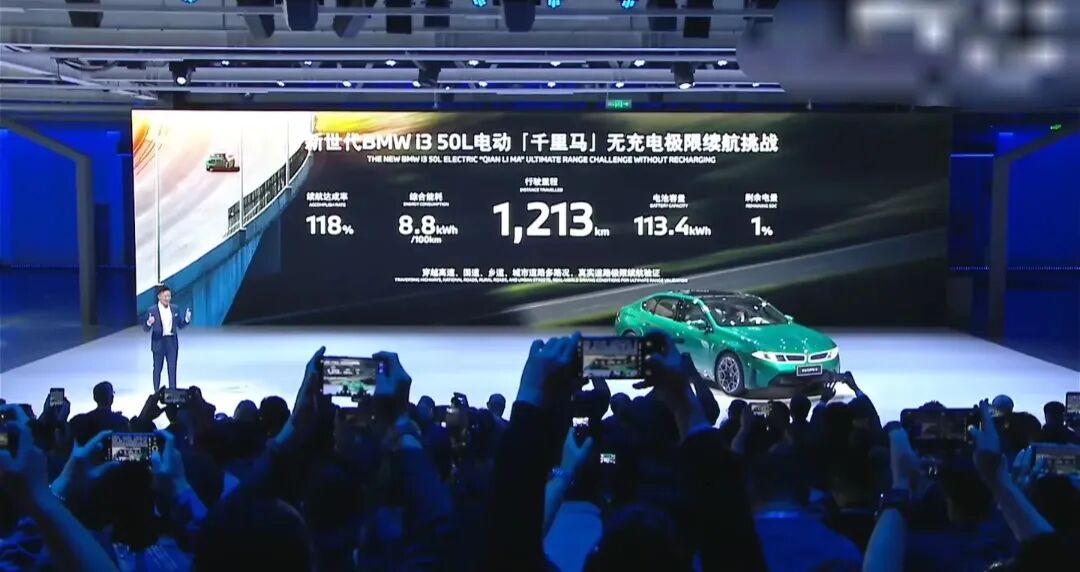
Figure: New-generation BMW i3's extreme real-world road test challenge
Source: Internet, screenshot from New Energy Outlook
Hyundai Motor's premium NEV brand, Ioniq, launched its first model, the Beijing Hyundai Ioniq V, entering the pure electric coupe market with a limited-time promotional price of RMB 99,900. The model comes standard with an 800V high-voltage fast-charging system, CATL batteries, and Momenta's intelligent driving technology, demonstrating a comprehensive technological approach.
This indicates that the first-mover advantage enjoyed by Chinese brands in the NEV sector is being diluted by a "hybrid" strategy from joint ventures. More alarmingly, as domestic automakers accelerate their overseas expansion, joint venture brands may quietly "encroach" on the domestic market.
1. Enhanced Joint Venture NEVs Make a Strategic Comeback
The core logic behind this round of counterattacks by joint venture brands can be summarized in seven words: leveraging China's supply chain.
Previously, when joint venture vehicles ventured into the NEV market, they simply brought global models to China, resulting in poor performance in areas such as in-car systems, intelligent driving, and batteries. Some models were even converted from internal combustion engine vehicles, leaving them no match for domestic competitors. Now, they have adopted a smarter approach by assembling teams in China and leveraging their traditional strengths in manufacturing quality and chassis tuning to disrupt the market.
Take BMW as an example. The company invested RMB 10 billion in its sixth-generation power battery project in Shenyang, covering a planned area of 240,000 square meters—five times the existing production area for power batteries—and achieving large-scale application of large cylindrical battery cells.
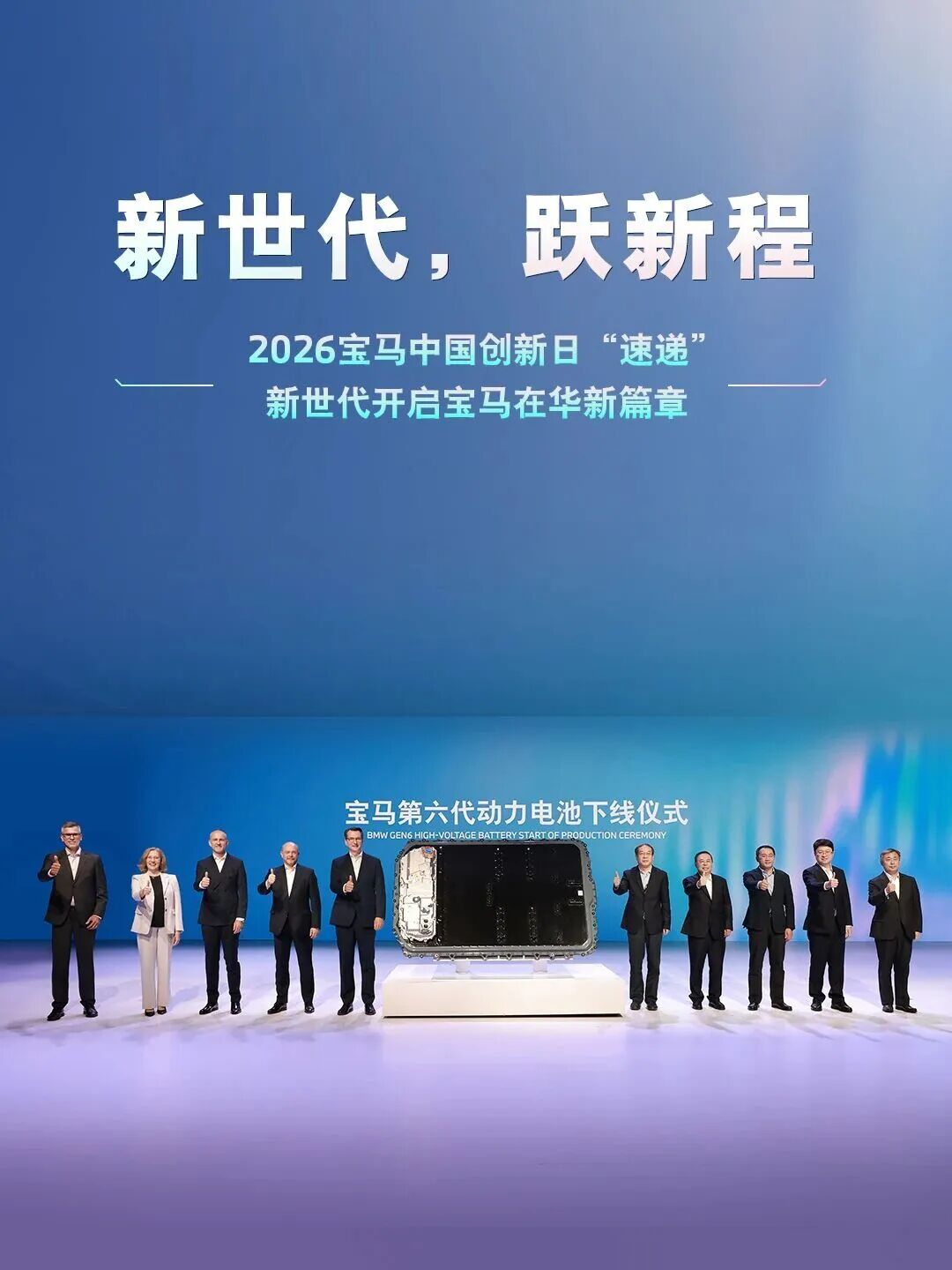
Figure: BMW's sixth-generation power battery
Source: Internet, screenshot from New Energy Outlook
The real focus, however, is on the supply chain, with leading domestic companies like CATL, EVE Energy, Fuyao, Alibaba Cloud, and Momenta playing key roles. BMW sets global standards, while Chinese suppliers provide technology and speed. This combination of "German engineering + Chinese speed" is far more potent than simply importing technology.
BMW plans to launch nearly 20 new-generation technology platform models in the Chinese market by 2027 and aims to increase the localization rate to over 95% by 2030.
Meanwhile, the Ioniq V was fully led by Hyundai's China Design Center, with over 1,500 local team members participating. Built on the E-GMP global platform, it features two LFP battery packs (53.5kWh and 66.8kWh) from CATL and an L2+ intelligent driving system co-developed with Momenta.
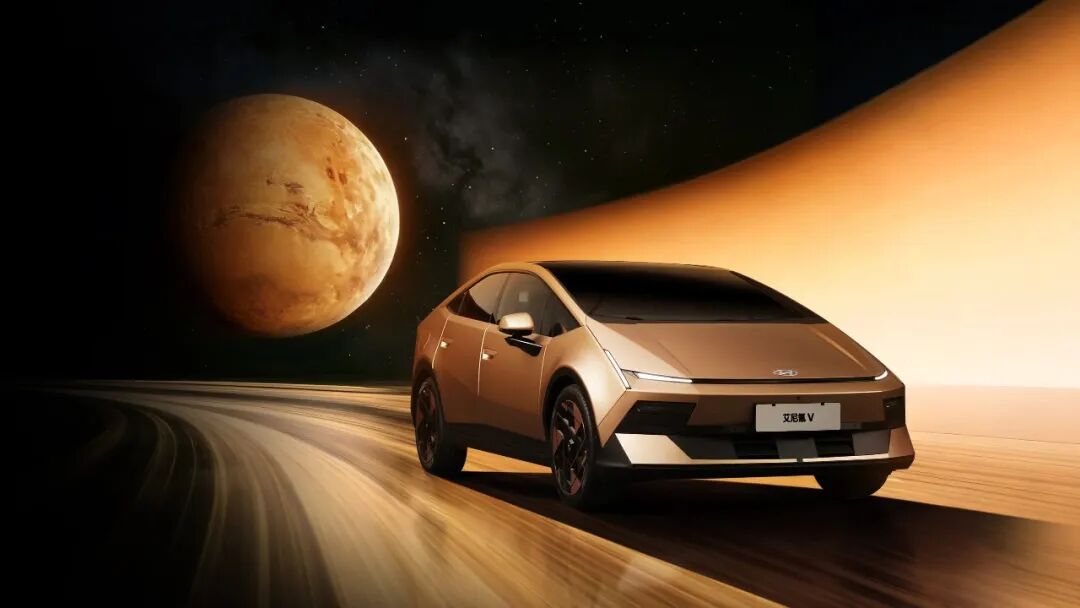
Figure: Ioniq V
Source: Internet, screenshot from New Energy Outlook
Hyundai Motor President and Global CEO Jae Hoon Chang has a clear strategy: "In China, for China, to the world," integrating Hyundai's global top-3 quality with China's first-class manufacturing through localized technology, talent, and brand-building.
This is no longer just "joint venture localization"—it's a Chinese team leading product definition, with plans to export globally in the future.
Other joint venture brands are also active. For example, SAIC Volkswagen's ID.ERA 9X debuts with Momenta's R7 reinforced learning world model, featuring a 192-line LiDAR, supporting 800V high-voltage fast charging, and adding 210km of range in just 10 minutes of charging. Buick's Zhijing L7 comes standard with an 800V architecture and 6C ultra-fast charging, offering a CLTC range of 702km, an 80.6kWh CATL battery, and Momenta's R6 intelligent driving solution.
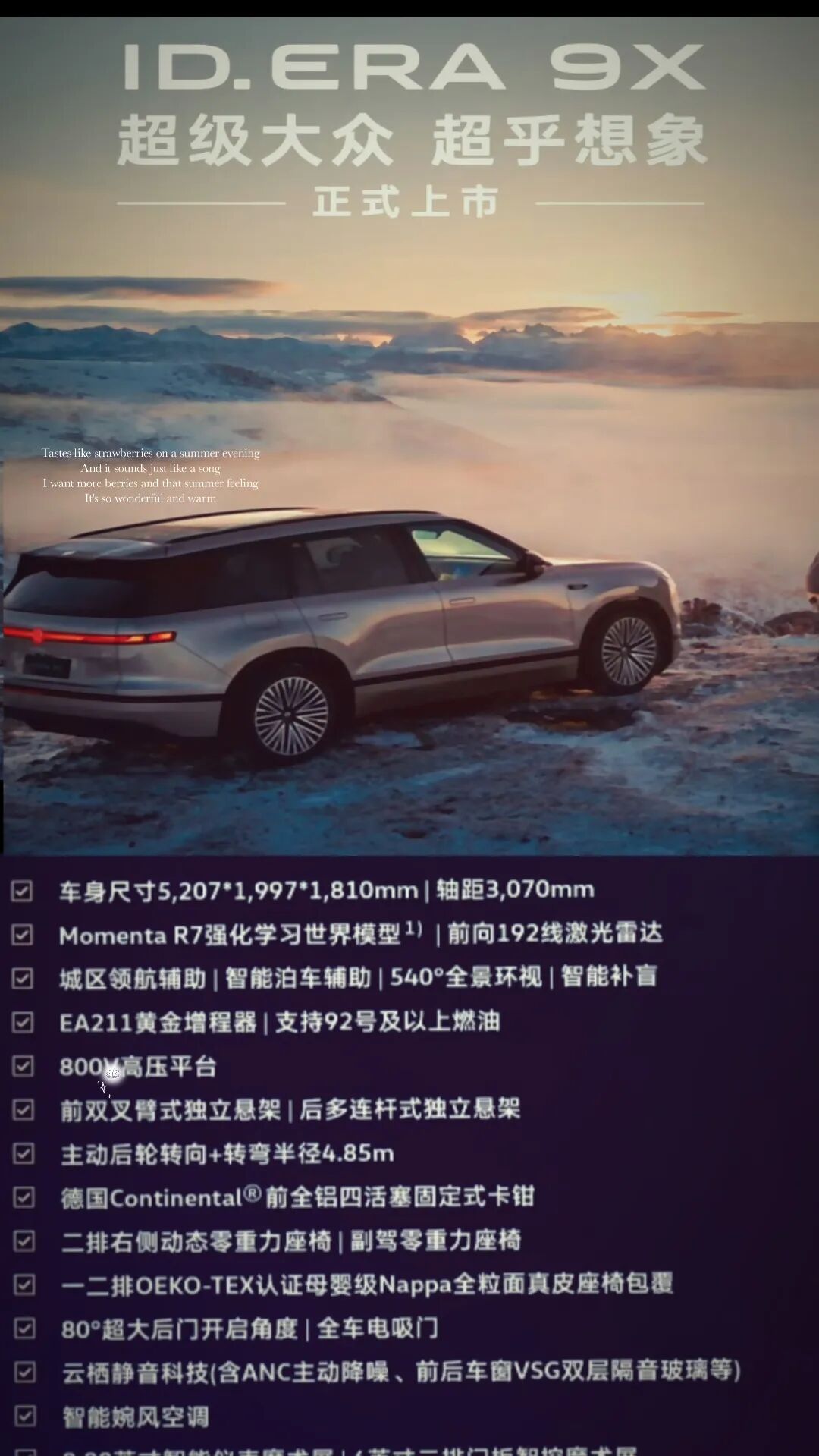
Figure: SAIC Volkswagen's ID.ERA 9X debuts with Momenta's R7 reinforced learning world model
Source: Internet, screenshot from New Energy Outlook
This evolution is reflected in the data. In the first seven months of 2026, the NEV penetration rate among joint venture brands rose from 16.5% to 25.1%, an 8.6 percentage point increase. Meanwhile, the latest data from the China Passenger Car Association shows that in September 2026, retail sales of NEVs from mainstream joint ventures grew by 36% year-on-year, while domestic brands saw a 19% decline.
Clearly, the pressure is mounting for domestic NEVs.
2. Domestic NEVs Face Pressure from All Sides
The steady recovery of joint venture brands domestically is not the biggest headache for domestic automakers—it's the frequent issues in overseas markets.
From January to September 2026, China exported 4.006 million NEVs, a 1.3-fold increase year-on-year. BYD, SAIC, Chery, and Leapmotor registered over 520,000 new vehicles in the EU, up about 110% year-on-year.
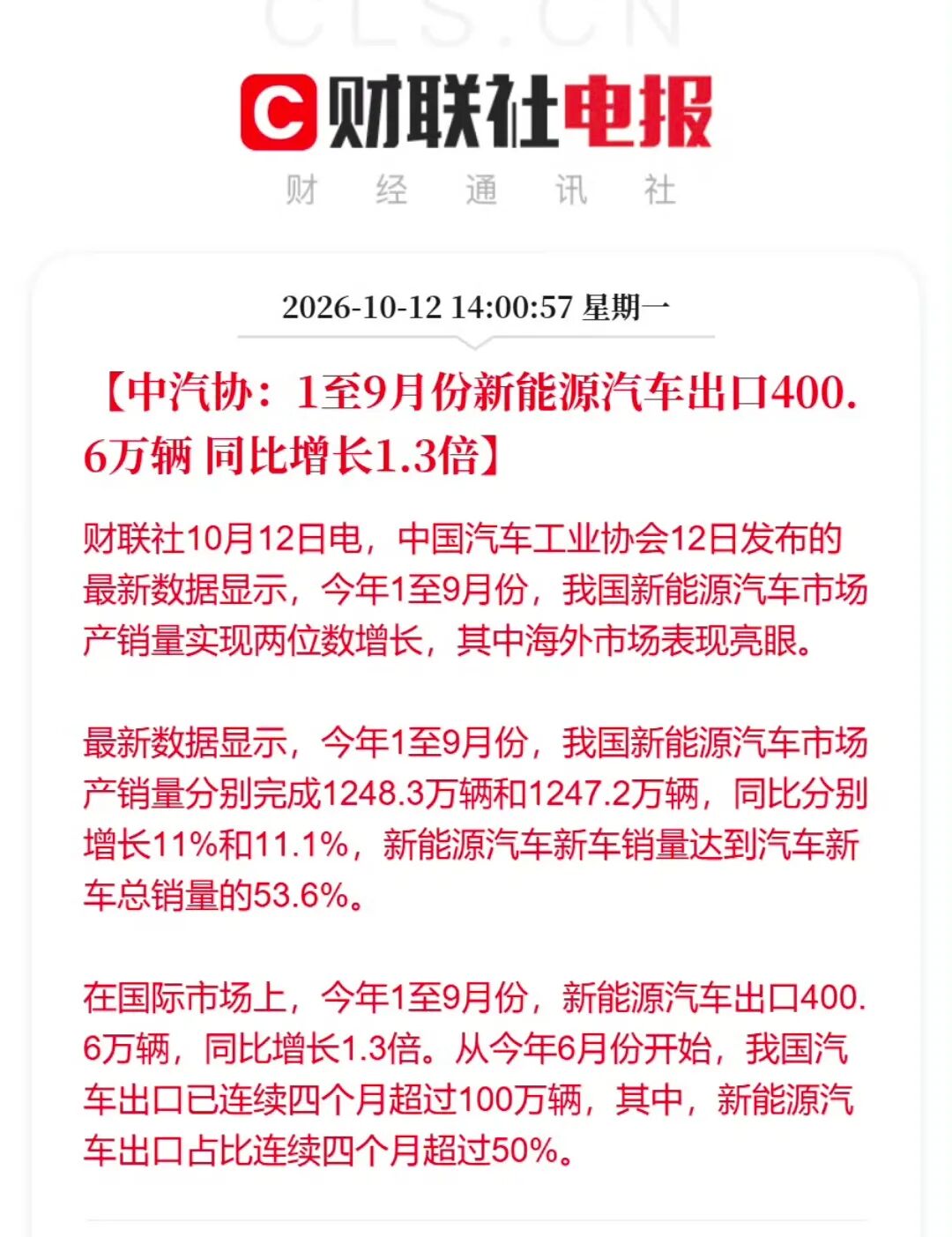
Figure: China exported 4.006 million NEVs from January to September 2026
Source: Internet, screenshot from New Energy Outlook
But behind this rapid growth, concerns are emerging.
In October 2026, Chery recalled 8,878 OMODA 5 vehicles in Malaysia due to rear axle defects. Overseas media seized on this, lumping it in with the Zunjie V800 brake pedal fracture as examples of "rushed" vehicles, sparking systemic doubts about the fundamental reliability of Chinese cars.
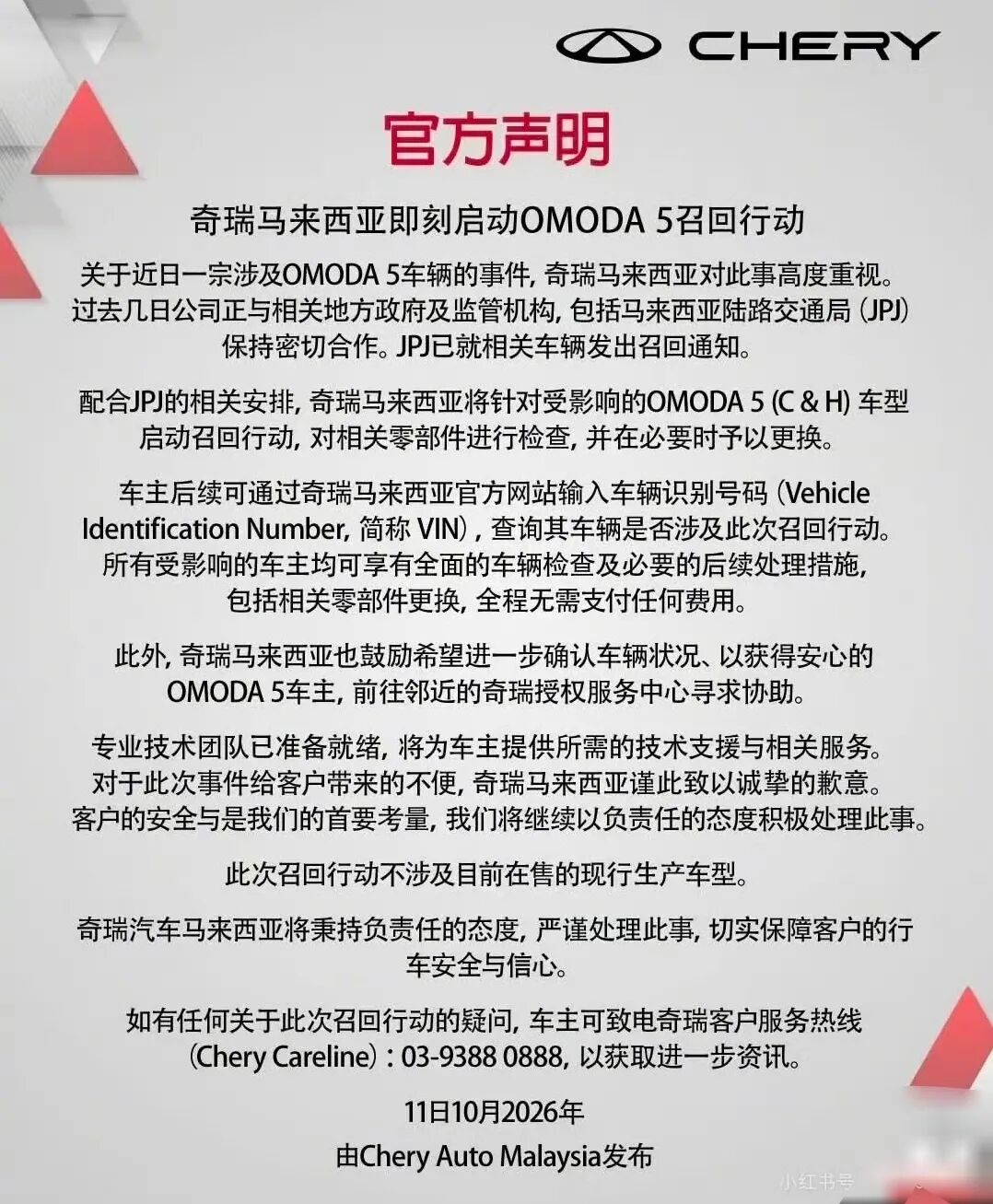
Figure: Chery recalls OMODA 5
Source: Internet, screenshot from New Energy Outlook
Policy barriers overseas are also tightening. Since October 2024, the EU has imposed a five-year anti-subsidy tariff on Chinese-made pure electric vehicles, with additional rates of 17.0% for BYD, 18.8% for Geely, and 35.3% for SAIC. Combined with the 10% base tariff, SAIC faces a total tariff of 45.3%.
More troublingly, hybrid models, initially seen as a way to bypass pure electric tariffs, are also facing restrictions. The EU plans to use trade safeguard measures to halve the expected import volume of Chinese hybrids. Negotiations were based on the 302,000 hybrid imports from China to the EU in 2025, with multiple rounds of consultations leading to an upward adjustment and subsequent fixed growth.
However, the EU's claim of "halving" is based on linear projections of past growth, not actual negotiation grounds. This underscores that Chinese automakers face not just tariffs but also proactive tightening of rules overseas.
Additionally, domestic policy incentives are waning. The Ministry of Finance and the State Taxation Administration clarified that starting April 1, 2027, the export tax rebate rate for NEVs will drop from 13% to 9%. This 4-percentage-point cost increase will hit low-margin, budget models the hardest.
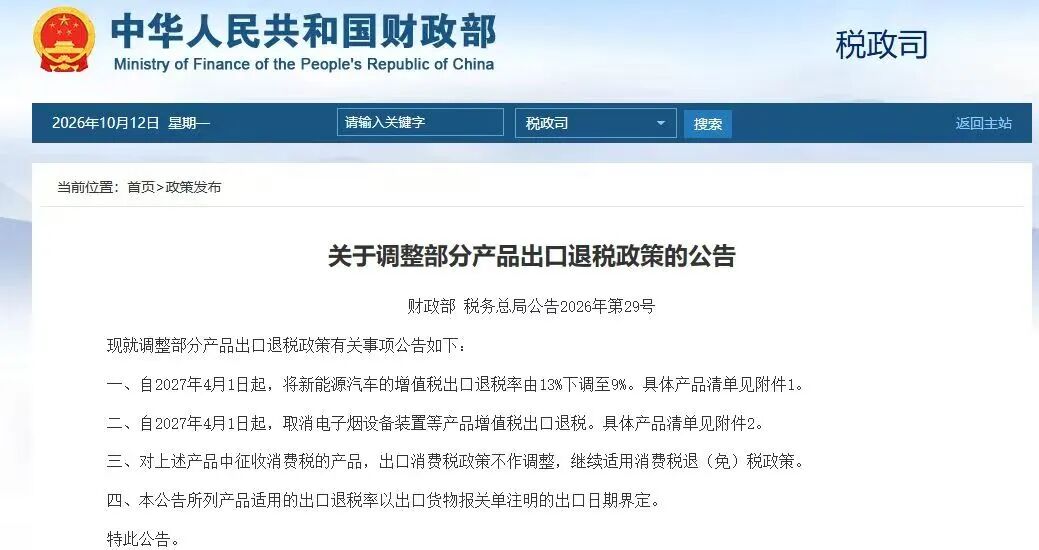
Figure: Notice on export tax rebates for some products
Source: Internet, screenshot from New Energy Outlook
Faced with these pressures, Chinese automakers must shift from exporting products to exporting production capacity. But whether they can establish themselves abroad depends on a more fundamental question: When domestic automakers face quality trust crises, policy barriers, and shrinking cost advantages overseas, can the old strategy of "piling on features and competing on price" still work? This is the real question for China's NEV exports.
Put simply, Chinese automakers are iterating technology and launching products too quickly, leaving engineering validation, supply chain quality control, and after-sales responsiveness lagging behind expansion. An automaker launching five or six new models in two years, with drastically reduced road testing miles and validation cycles, will inevitably see quality issues surface with users.
3. Can Joint Venture Vehicles Threaten Domestic Automakers?
So, can the counterattack by joint venture brands truly threaten the market position of domestic NEVs?
Our conclusion: The threat is limited in the short term because China's NEVs currently have deep "moats." These manifest in three areas: technological superiority and full-industry-chain advantages, intelligent experiences, and user recognition.
Take charging speed, for example. Data shows that the fastest-charging models in the U.S. market take about 18 minutes to charge from 10% to 80%, while most Chinese automakers have reduced this to under 10 minutes, with some batteries reaching 98% charge in just 6 minutes and 27 seconds.
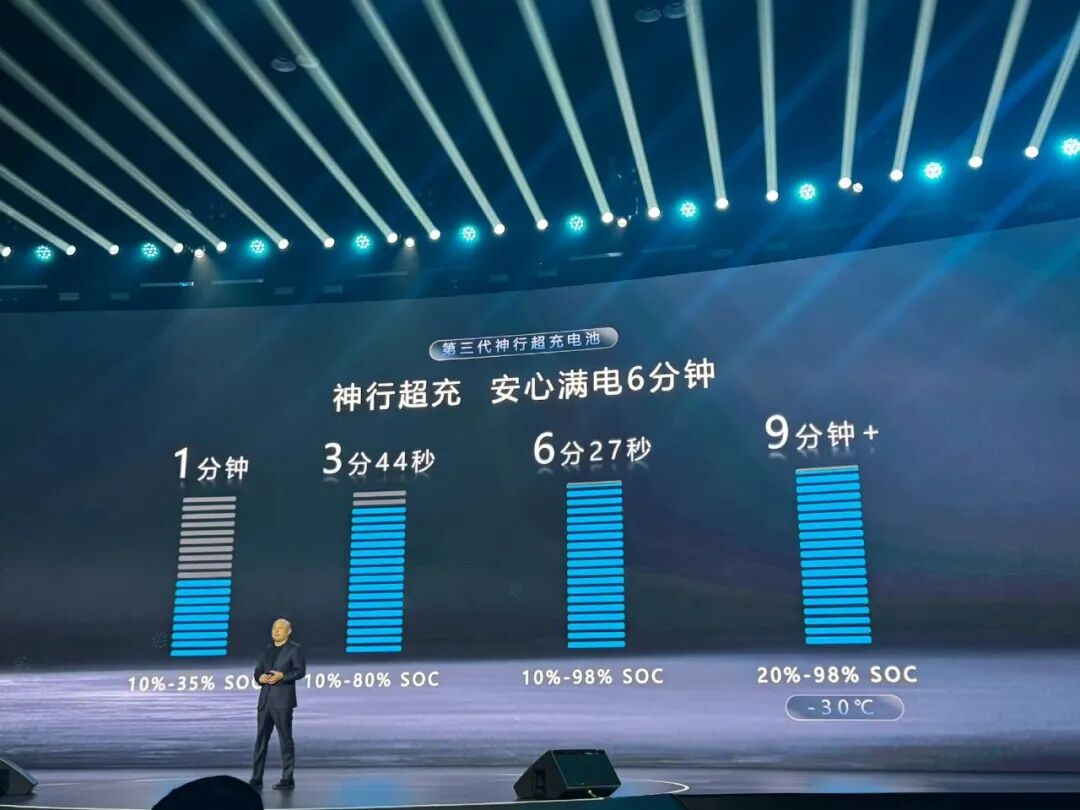
Figure: Some batteries reach 98% charge in just 6 minutes and 27 seconds
Source: Internet, screenshot from New Energy Outlook
In terms of intelligent experiences, systems like Huawei's Qiankun Intelligent Driving have achieved map-free, all-scenario navigation, while solutions like Momenta's lag in data accumulation and iteration speed.
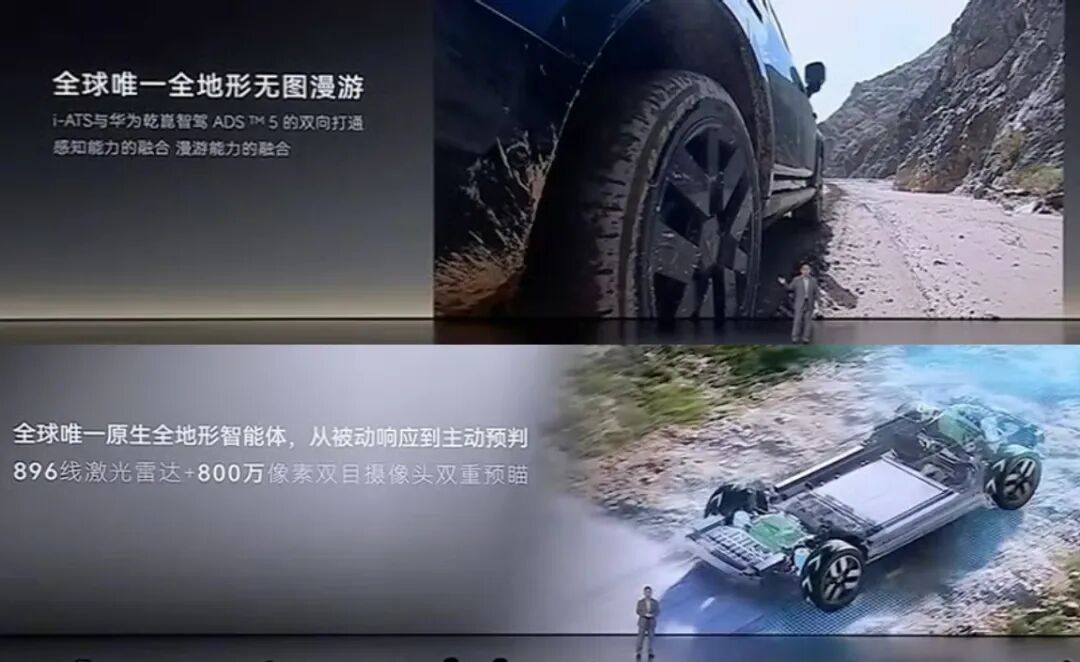
Figure: Huawei's Qiankun Intelligent Driving achieves map-free, all-scenario navigation
Source: Internet, screenshot from New Energy Outlook
Additionally, the brand premium of joint venture models is no longer widely recognized, with young consumers even showing a declining sense of identification with joint venture brands.
Thus, domestically, NEVs still dominate. In September 2026, the retail penetration rate of NEVs among domestic brands reached 84.5%, with a retail market share of 64.5%.
But looking at trends, the threat from joint venture brands is becoming real.
Joint venture brands have used "China's supply chain + global platforms" to address their biggest weaknesses in in-car systems, intelligent driving, and batteries, while retaining traditional strengths in chassis tuning, safety redundancy, manufacturing quality, and after-sales networks. Over time, the gap may narrow.
The Ioniq V is a case in point. It uses a MacPherson strut front and torsion beam rear suspension, making cost trade-offs in the chassis to focus resources on 800V fast charging and the 8295 chip. This "do some things, don't do others" product definition shows that joint venture brands have learned the rules of competition in the Chinese market.
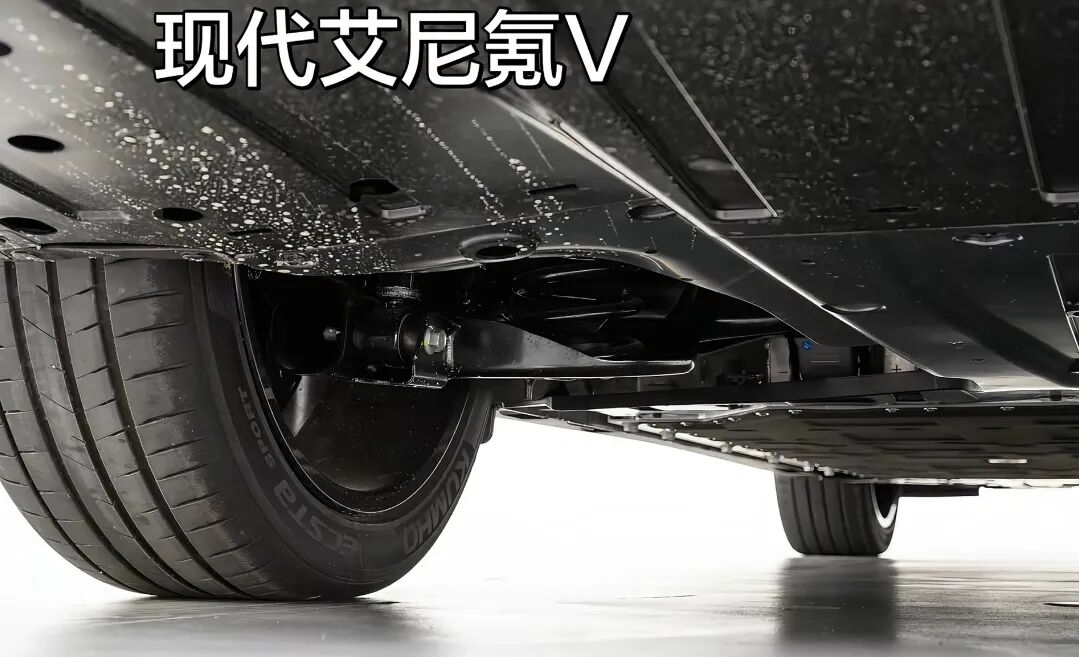
Figure: Ioniq V chassis
Source: Internet, screenshot from New Energy Outlook
More critically, in terms of brand trust, as domestic NEVs frequently face battery failures, range inflation, and intelligent driving accidents, consumers skeptical of new forces may turn back to joint venture brands. Wang Qian, Deputy General Manager of Sales at Dongfeng Nissan, stated that in the NEV sector, speed matters, but endurance matters more. They will adhere to joint venture verification standards, avoid rushed products, and ensure families can buy and use cars with peace of mind.
Of course, channel advantages are also a trump card for joint venture brands. For example, Beijing Hyundai plans to add 181 dealers by 2030 and upgrade its direct sales and exclusive service systems. For consumers in the sub-RMB 150,000 price range, after-sales convenience and repair costs are often decisive.
China's lead in the NEV sector over the past five years has been one of the most inspiring industrial stories, but leading does not mean being safe, and speed does not mean quality. When joint venture brands humble themselves, arm themselves with China's supply chain, define products with Chinese teams, and control quality with global standards, they become even tougher opponents.
As domestic automakers push overseas, they face tariff barriers, trust hurdles, and localization challenges. Meanwhile, their domestic stronghold may be eroded bit by bit by joint venture NEV products. The real competition has only just begun.
[Header image generated by AI]
-
![]()
Thousand-Kilometer Range BMW i3, Ioniq V Priced Under RMB 100,000: Chinese Automakers Must Guard Against Joint Venture Encroachment in Global Expansion
-
![]()
Competition Among Cities Enters the Second Half: The Outcome Lies Beneath the Surface
-
![]()
AI-Generated Comic Drama Concept Stocks Surge: Is ByteDance the Sole Profit-Maker?
-
iPhone 18 Pro Series Sees Price Reductions—Apple Can't Afford to Stay Idle During Double 11
-
![]()
A Whopping 550 Million Yuan Investment! Fanchuangwei’s High-Transparency Optical AR Lens Project Takes Root in Taizhou
-
![]()
Domestic Triumph in Glass Substrate Lithography! Optical Firm Lands Major Orders
-
![]()
AI-Powered Alternatives Offer Free Substitutes, Posing Threat to Adobe's 'All-in-One' Suite
-
![]()
McKinsey Report: AI Inference to Account for 60% of Computing Power by 2030