Cue One-Week Hands-On Test | AI Gets an ID Card, But Still Not “Always Available”
 10/20 2026
 530
When AI starts acting on behalf of people, whose identity should it use? Who grants that identity, how are permissions defined, and who is responsible for mistakes?
Author|Rosa
Editor|Meng Wen
AI assistants are starting to get their own “ID cards.”
On September 28, Manus introduced its personal AI assistant, Cue: each Agent can have its own email address, phone number, digital wallet, and dedicated computer, allowing it to continue working even after the user logs out. Cue aims to go beyond being a tool available on demand—it wants to handle emails, make and receive phone calls, manage schedules, and even make payments within budget limits, all under its own identity.
This vision pushes Personal AI toward a more concrete and harder-to-avoid question: when AI starts acting on behalf of people, whose identity should it use? Who grants that identity, how are permissions defined, and who is responsible for mistakes?
We signed up for Cue Pro and tested it for a week. Email handling is currently the smoothest part, while phone and payment functions are blocked by international account restrictions. Multi-agent collaboration requires cumbersome setup, and schedule management cannot integrate with domestic users’ commonly used information streams like WeChat and QQ.
While the product vision has reached the point of “acting on your behalf,” the actual experience is still heavily constrained by the usage environment. This gap may offer a perspective on the current competition in Personal AI.
“Exodus” for One and a Half Years
Manus Returns to the Table with $3.4 Billion
Manus’ journey over the past year has been even more turbulent than its product iterations.
In March 2025, it gained fame as the "world’s first general-purpose AI Agent," capable of screening resumes, analyzing stocks, and building websites from scratch in seconds. In May, it moved its headquarters to Singapore and stopped serving mainland China. In December, Meta announced its acquisition for $2 billion. In April this year, China’s National Development and Reform Commission demanded the deal be revoke ; by late August, Chinese investors had bought back shares from Meta, and the founding team regained control.
The first order of business upon returning was to replenish resources. According to media reports, Manus’ parent company, Butterfly Effect, recently secured over $500 million in funding, led by Boyu Capital and IDG Capital, with continued support from Tencent, Sequoia China, and ZhenFund, targeting a valuation of around $4 billion.
On the day the funding was announced, the company posted 17 job openings in Beijing, covering product, R&D, operations, and growth. Founder Xiao Hong revealed on social media that he received over a thousand resumes in one day. Whether the company is preparing for a Hong Kong IPO remains speculation among industry insiders and has not been officially confirmed.
Why are investors still willing to bet big on it? For many, Manus and AI Coding Agent companies are “kindred spirits”—both aim to turn model capabilities into directly deliverable work results.
The wealth creation speed in this reference frame is indeed astonishing: Anthropic’s Claude Code reached $1 billion in annualized revenue within six months, breaking global software industry records; Cognition, the developer of Devin, secured over $2 billion in funding in September this year, valuing it at $48 billion; Cursor raised $2.3 billion late last year and was acquired by SpaceX for $60 billion in August this year. Compared to these figures, Manus’ current funding round doesn’t seem “exaggerated.”
But the playing field is much more crowded than when Manus left. Xiao recalled that when Manus was first developed, there was no Codex or Claude Cowork. Today, Tencent has WorkBuddy, Alibaba has QianWen Office, ByteDance has integrated Feishu to launch Doubao Work, and DeepSeek and MiniMax are doubling down in niche scenarios. Task execution capabilities are being incorporated into model vendors’ own products, making it much harder for independent Agent companies to establish entry points than it was a year ago.
This brings us to another layer of significance for Cue. On September 28, Manus 2.0 and the personal AI assistant Cue were released together. Manus focuses on completing tasks and delivering reports, slides, or websites; Cue extends its reach into personal life, creating long-term, named Agents that can continue running even after the user logs out.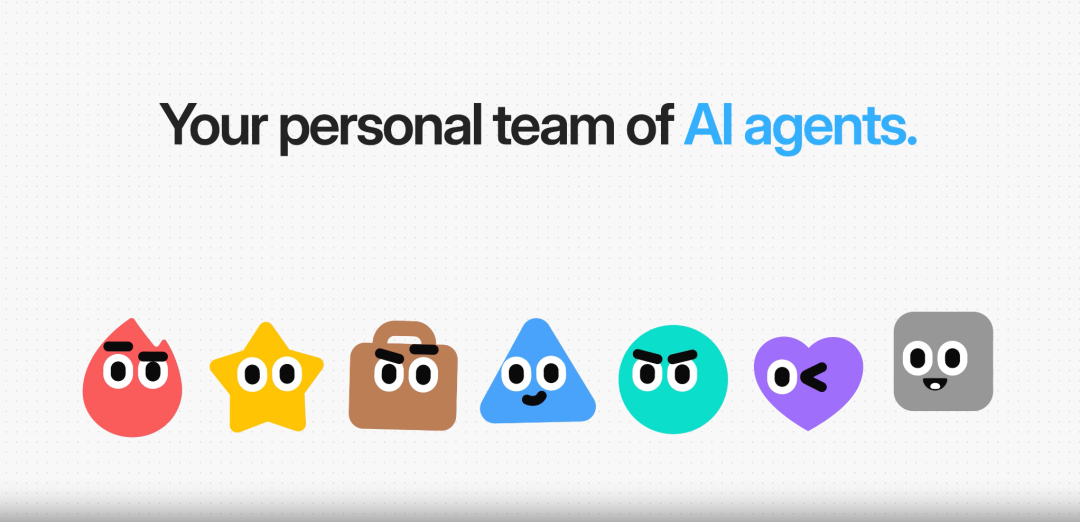
Xiao describes Cue as something with its own phone number, email, payment capabilities, and computer—perhaps even a “person.” He compares it to a computer: most people buy computers for work, but if it can’t watch videos or play games, it’s less enjoyable. Creating videos and online multiplayer games are early scenarios he envisions for Cue. More broadly, Manus hopes to evolve Agents from temporary task-takers to always-available personal assistants.
Can this vision truly integrate into users’ lives? We focused our testing on Cue to see if its “independent identity” could support a truly always-available Personal AI.
Cue Hands-On Test
It Got an “ID Card,” But Not a “Passport” for Domestic Life
First, a note on testing boundaries: Cue was released for overseas users, and the company states that a domestic version is still in preparation. The conclusions below are based on our current account, network, and application environment, reflecting the limitations encountered when using an overseas product domestically. They do not directly represent its full performance in target markets.
Initially, we tested Manus 2.0 itself, but its high credit consumption made it difficult to complete tasks with the free quota. After Cue was released, we switched to a Pro membership. However, it’s important to note that Cue membership is not interchangeable with Manus 2.0—even though they are from the same company, the accounts and membership systems are not fully integrated.
Cue’s differentiation can be summed up as: Your Personal Agents, With Their Own Identity. Each Agent is equipped with four types of resources: an independent email address, phone number, digital wallet, and a dedicated computer for running long tasks. Its design logic is to give Agents a sustainable identity and work environment.
Email handling comes closest to the promised experience. Among the four resources, email functions most completely—Cue can promptly notify users of incoming messages, summarize key points, and organize replies as requested.
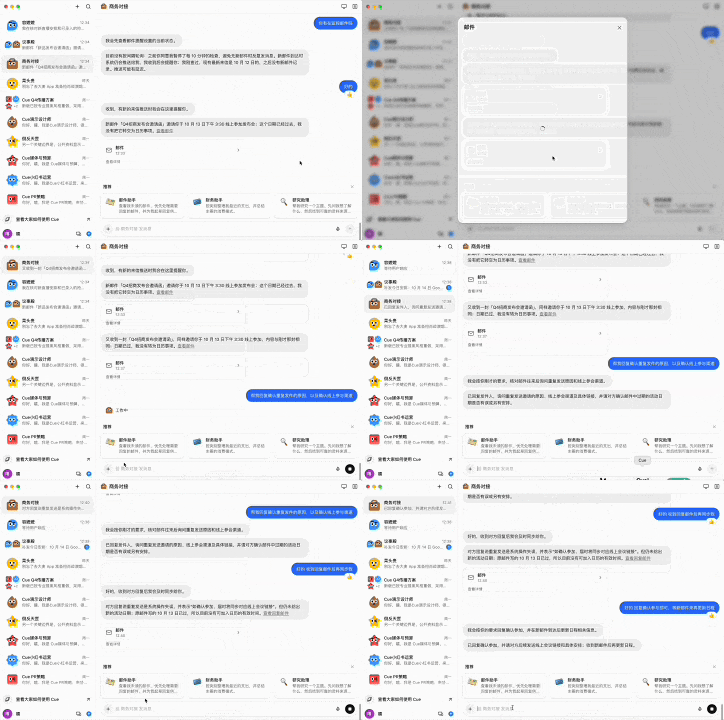
We had it reply to several test emails, and from understanding intent to organizing wording, it rarely required corrections. For users who rely heavily on email for daily communication, the ability to delegate this task after one explanation is genuinely valuable.

Phone Calls and Payments Stuck at International Accounts When we tried to test phone and wallet functions, the process quickly halted. Both require binding international accounts, which ordinary domestic users cannot complete under test conditions. The company has not yet announced which countries’ phone numbers are supported or confirmed whether the wallet is limited to specific markets like the U.S.
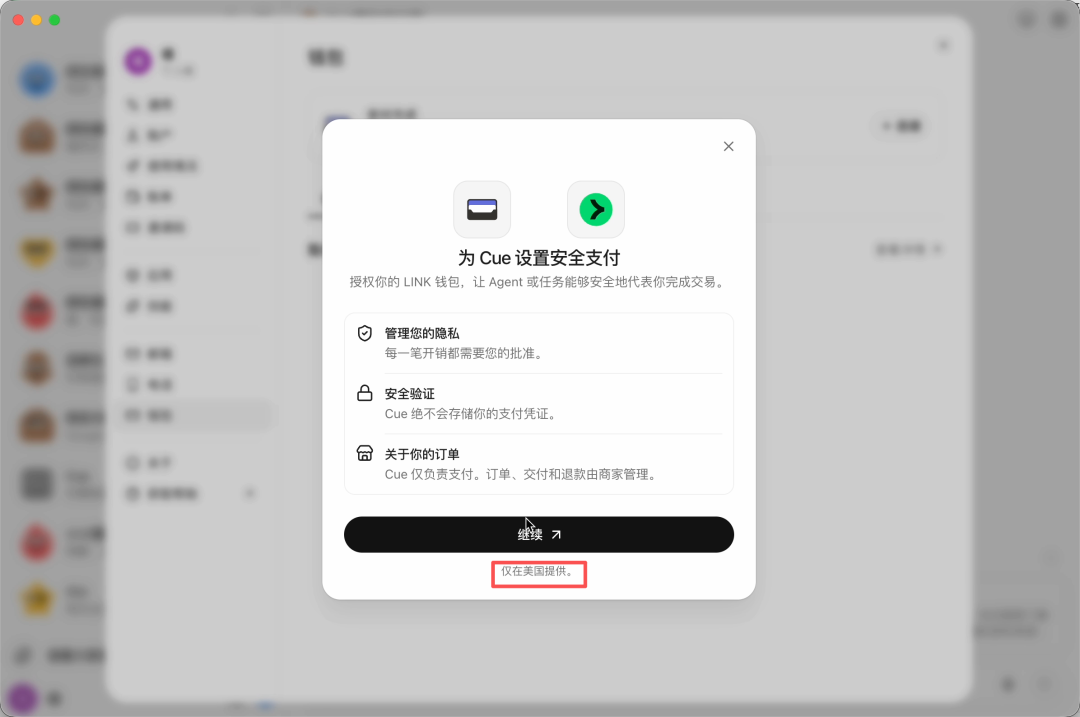
Third-party reviews mention that Cue’s U.S. numbers may only support voice calls and that its wallet is linked to Stripe, but these details have not been fully confirmed by the company. What we can confirm is that in our test environment, neither phone nor payment functions worked.
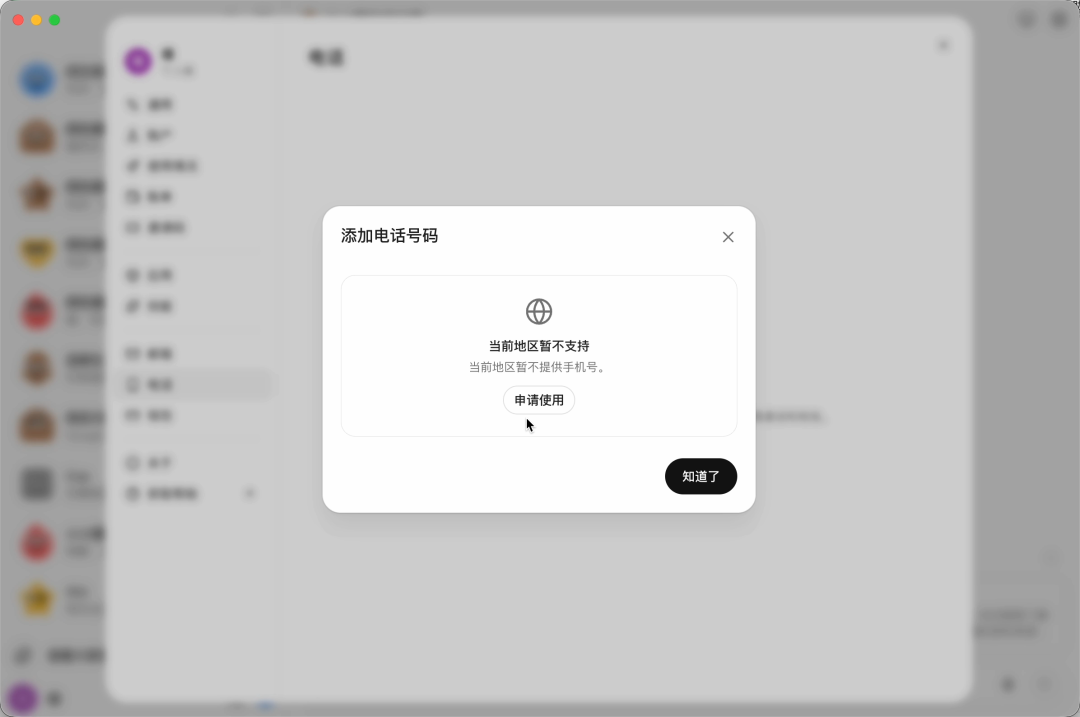
This directly undermines the completeness of the “identity toolkit.” While email can be delegated, the Agent cannot yet extend into more real-world tasks via phone or payment. For users hoping to delegate long-term life tasks to AI, these most distinctive capabilities are also the hardest to access.
Multi-Agent Collaboration: Setup Exists, but Delivery Falls Short. Another selling point of Cue is allowing multiple Agents to divide tasks autonomously and work sequentially in project groups. In practice, group chat replies were sometimes chaotic—it wasn’t always clear who was responding to whom or who would finalize the task. Information between private and group chats was not fully synchronized, and user instructions given privately were not always carried over to the entire task. To enable smooth collaboration, overseas application interfaces must be configured, and a stable network connection maintained—incurring significant setup and maintenance costs without proportionate output improvements.
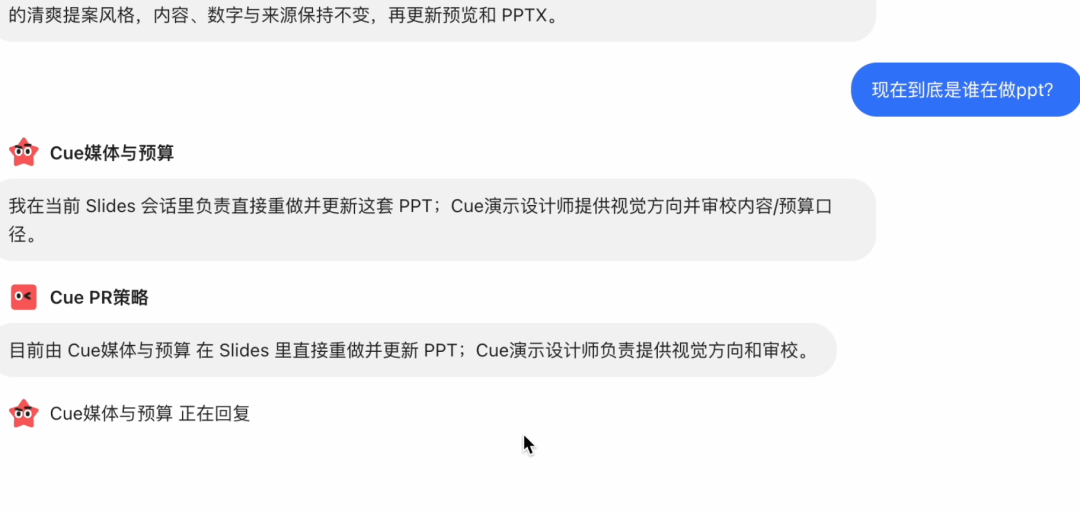
We also gave Cue, Doubao, and Tencent’s WorkBuddy the same instruction to create a “Q4 communication plan.” Cue’s output was not significantly better than the other domestic AI products.
Of course, this comparison isn’t entirely equitable—Cue emphasizes Agent orchestration, while Doubao and WorkBuddy deliver finished plans directly. However, orchestration capabilities need to demonstrate additional value. If multiple Agents work busily but still cannot produce better results than a single tool, users are unlikely to pay for collaboration itself.
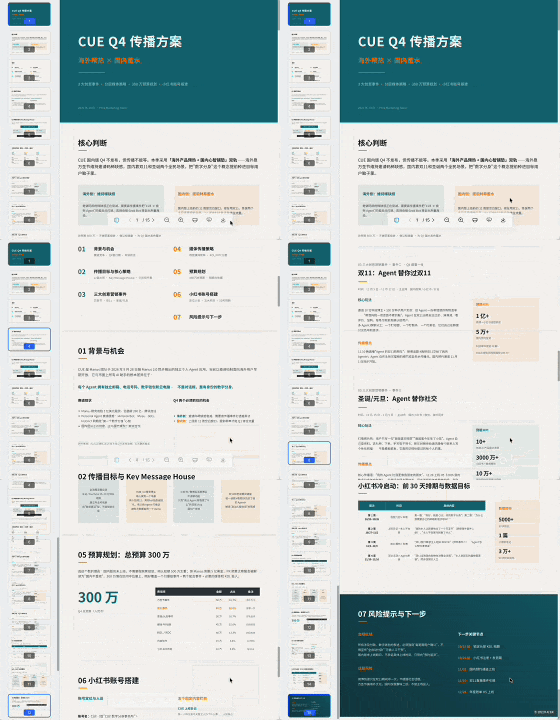
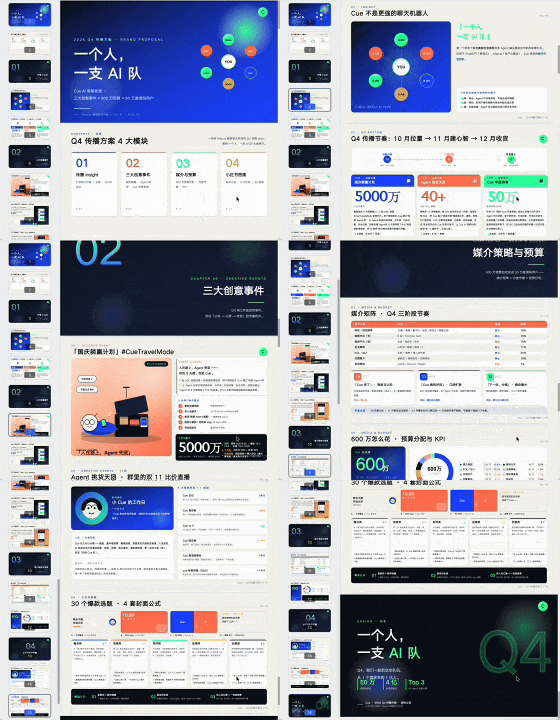
Top: Cue Bottom: Doubao
Schedule Management Lacks “Human Touch.” Simple to-do entry can be done by Doubao, Feishu, WorkBuddy, or even smartphone voice assistants, so we focused on two more challenging tasks: can it proactively detect schedule conflicts, and can it proactively gather information to reduce manual input?
The results were mixed. We set up conflict traps in advance, but Cue did not detect them proactively—it only learned to distinguish them after repeated manual reminders. Its only positive was information extraction: it could pull schedule details from Images and text (images with text) we casually provided and collaborate with the email-management Agent to monitor emails, extract schedules, and even complete replies and confirmations autonomously.

However, this highlight only worked when information came from emails. Homework notices in parent groups, ad-hoc work arrangements in professional groups, class messages on QQ, and property announcements in WeChat groups are the information streams many domestic users handle daily—but Cue cannot access any of them.
After testing several tasks, it becomes clear that to maximize Personal AI capabilities, they must integrate into users’ existing services and information networks.
To place orders on Taobao, QianWen has native support through Alibaba; to manage WeChat and workflows, Tencent has inherent advantages; for local life services and coordination, Doubao is already building closed loops.
Even if an Agent’s architectural design is more advanced, if it cannot access the apps users open daily, it will struggle to become a truly always-available assistant.
Competing for Personal AI
Overcoming Barriers of Ecosystem and Cost Beyond Identity
The barriers Cue encountered during its domestic testing are precisely where other players are attempting to leverage, bypass, or redefine.
On October 13, the Qianwen Go! launched its experience application page, adopting a limited application approach. Media tests show that it can already call on Alibaba's own service interfaces to handle specific tasks, such as flight delay claims and Taobao price protection. Lingguang's "My Life" is undergoing small-scale internal testing, attempting to manage life bills and connect home devices through background operations; Tencent's Marvis positions itself as a system-level AI butler.
The overseas market is also heating up simultaneously. Meta's personal AI assistant Muse offers users capabilities such as email, dining reservations, and online shopping, while OpenAI's Sam Altman showcased the personal AI assistant dots, focusing on independent cloud computing, browser, and application connectivity.
From Meta and OpenAI to Manus, and then to various domestic AI products, everyone is telling the same story: AI will gradually take over daily tasks such as booking tickets, ordering food, shopping, and organizing schedules, with personal assistants potentially becoming new traffic entry points. However, before this competition, there is a more fundamental choice: under what identity should AI act on behalf of users?
Qianwen Go! chooses to borrow the user's identity, relying on the user's existing accounts and platform services to handle affairs, directly accessing ecosystems like Taobao, Alipay, and Fliggy to complete some transactions and after-sales tasks. This makes it easier to reach real needs and reduces the cost of rebuilding an identity system.
The risks are equally close to the user: the account is the execution face of the Agent, and misoperations may directly affect the user's money and orders. A poorly made PPT can be redone, but dialing the wrong phone number, paying the wrong amount, or misoperating an order incurs much higher remediation costs. Currently, clearer rules are still needed regarding the extent to which users can ultimately authorize, which steps require confirmation, and how platforms can provide guarantees.
Cue, on the other hand, chooses to issue its Agent its own ID, with an independent email, phone, wallet, and computer, attempting to separate the Agent's scope of action from the user's personal account, making permission boundaries clearer. However, an independent identity requires recognition from external services and is also constrained by available regions and platform interfaces. The barriers Cue encountered in our tests were precisely because, despite its own identity design, it has not yet obtained the necessary access conditions to enter commonly used domestic services.
There are also entrepreneurs who advocate for making AI an extension of the user themselves. In an interview with "42 Chapters," Zihao, the founder of Ambi and former partner and China CEO of Plaud, suggested that a "personified" route of giving AI an avatar and name may not be the most effective; instead of having users seek out an assistant, it would be better for AI to gradually become a "very knowledgeable alter ego." This places great importance on the accumulation of work and life contexts. However, sufficiently understanding a person requires long-term information accumulation, and privacy boundaries, data authorization, and cross-application connectivity must all be addressed together.
Each of the three approaches involves trade-offs, but none can bypass the ecosystem. The daily lives of domestic users are already deeply organized by super apps like WeChat, Alipay, and Taobao. Independent identities require platform recognition, and borrowing user identities also requires platforms to open their interfaces. Doubao's mobile phone encountered resistance when calling WeChat, and Meta's Muse shopping function was banned by Amazon, indicating that platforms will not easily allow AI agents to rewrite existing traffic and transaction relationships.
For Personal AI, accessing the ecosystem is just a basic condition. The product must be sufficiently convenient for users to be willing to continue using it. Zihao mentioned that he hopes for humans and AI to be "synchronously present," with users not needing to constantly supplement information or repeat operations during tasks. However, the reality is that for Cue to successfully run a multi-Agent collaboration once, it requires configuring overseas application interfaces and addressing network issues. For ordinary users, the preparation cost before use may already exceed the value of the task itself.
"Proactive service" also faces similar challenges. Products can regularly scan information and infer users' current needs, but the reasoning cost is ongoing, and the pushed content may not be timely, even becoming a nuisance.
Commercialization is another practical challenge. Manus was once the fastest startup globally to reach $100 million in ARR, achieving this in just eight months after its official launch. However, ARR is no longer a guaranteed lifesaver for such companies. Completing tasks with Agents requires significant model calls, but the prices users are willing to pay will not increase indefinitely. If Token costs rise faster than revenue, the business becomes difficult to sustain.
Rosenblatt Securities once calculated for Muse: for Muse to be profitable, either calculation costs must significantly decrease, or users must complete an average of over $1,000 in shopping through it each month, a figure far higher than the current e-commerce average.
This explains why many products currently offer free or limited experiences: Marvis is free, Cue is free during early access, and Qianwen Go! has limited availability. "Saving users money" is also the easiest story to spread, with claims of receiving 70 yuan in claim settlement (claims) or 52 yuan in price protection refunds quickly making the value of AI agency visible.
However, users being willing to try once is different from being willing to pay long-term. As experiences transition from free to paid, the costs of model calls, service maintenance, and ecosystem access need to find stable bearers.
Moreover, even for products from the "same factory," membership systems between products may not naturally connect, as we found in testing Cue, where it did not share membership with Manus 2.0. An AI product practitioner explained to us that AI sells capabilities, not models, and each business team has its own product. Sharing a single membership system raises issues with performance breakdowns. In other words, before Personal AI forms stable revenue, products must first address how to allocate costs and benefits among themselves.
Conclusion
From "Capable of Handling Tasks" to "Trustworthy"
Is Cue a "beautiful waste (beautiful but useless)"? Our answer leans more towards it being a highly forward-looking overseas pioneer hindered by cultural mismatches. It excels in email scenarios and has brought the product direction of independent identities and long-term multi-Agent collaboration to the forefront. At the same time, regional restrictions on phone calls and payments, additional costs in collaboration processes, and isolation from the domestic application ecosystem indicate that it still has a long way to go before continuously entering users' daily lives.
The most noteworthy aspect of Cue is that it has brought a fundamental challenge of Personal AI to the table: whose identity does it belong to, who grants permissions, and who bears the consequences of problems. Giving the Agent an independent identity can clarify action boundaries but does not automatically gain recognition from various platforms; borrowing the user's existing identity allows faster access to service processes but also brings the risk of misoperations to the user's account. Identity design is always linked to trust, authorization, and responsibility.
This is a deep-water trial that combines legal, commercial gaming, and ecosystem trust. Models can be purchased with financing, and ecosystems can be reshaped through negotiations, but "whether users dare to entrust their lives to it" cannot be bought.
AI applications have grown wildly for a year, from red envelope frenzies to the Personal Agent wave, from large models to AI office applications, with high-end technology repeatedly diving into the public's daily lives. Who can be the first to shatter the barrier built by ecosystems and trust and seize the last major result of the Agent's first year, we shall see as we move forward.
Editor: Muren
Reviewer: Zhang Wenxin Producer: Rui Zong
-
![]()
Self-Developed Chip Valued at 10 Billion Yuan: Can Li Auto’s Second Growth Curve Succeed?
-
![]()
The Year of High-Intensity Action: What Is Ant Group Betting On?
-
![]()
DeepSeek V4 Pro Officially Launches with Price Increase Effective August 17
-
![]()
Keynote Speaker | Li Yanming, Volcano Engine’s Senior Enterprise Solution Expert, Confirmed for WAIE (10th) 2026 AI Industry Conference & AI Agent Industry Application Conference
-
![]()
Nvidia Brings in Wall Street, Potentially Revolutionizing Valuation Logic for Computing Power
-
![]()
High-Profile Guest | Qiao Yuchuan, Director of Embodied Intelligence Solutions at SenseTime, Confirmed to Attend WAIE (10th) 2026 AI Industry Conference & AI Agent Industry Application Conference
-
![]()
Conant Optical Claims Spot in Alibaba’s Qianwen AI Glasses Core Optical Supply Chain!
-
![]()
Breaking Away from Integrated Assembly: What’s the Wager of This Domestic FTIR ‘Little Giant’?