The Year of High-Intensity Action: What Is Ant Group Betting On?
 10/20 2026
 540
Written by Luo Xia
Edited by Zhang Xiao
In the age of AI, anxiety is pervasive, and Alipay, with over 1 billion users worldwide, is no exception.
Today, Alipay has evolved into a super app, encompassing payment and settlement, financial management, lifestyle services, government services, and public utilities. Yet, it remains fundamentally a tool. Users may spend more than 10 hours a day on content and social platforms like WeChat, Xiaohongshu, and Douyin, but their time on Alipay may be less than 30 minutes.
As AI agents become capable of orchestrating various Alipay services, the platform risks becoming akin to basic telecom operators—an indispensable infrastructure with minimal direct user interaction.
Regaining user attention has become the central focus of Ant Group’s strategic shifts in recent years. At the start of this year, Han Xinyi emphasized Ant’s commitment to AI, stating, "In the AI era, major companies are making significant investments. Ant is back in the game."
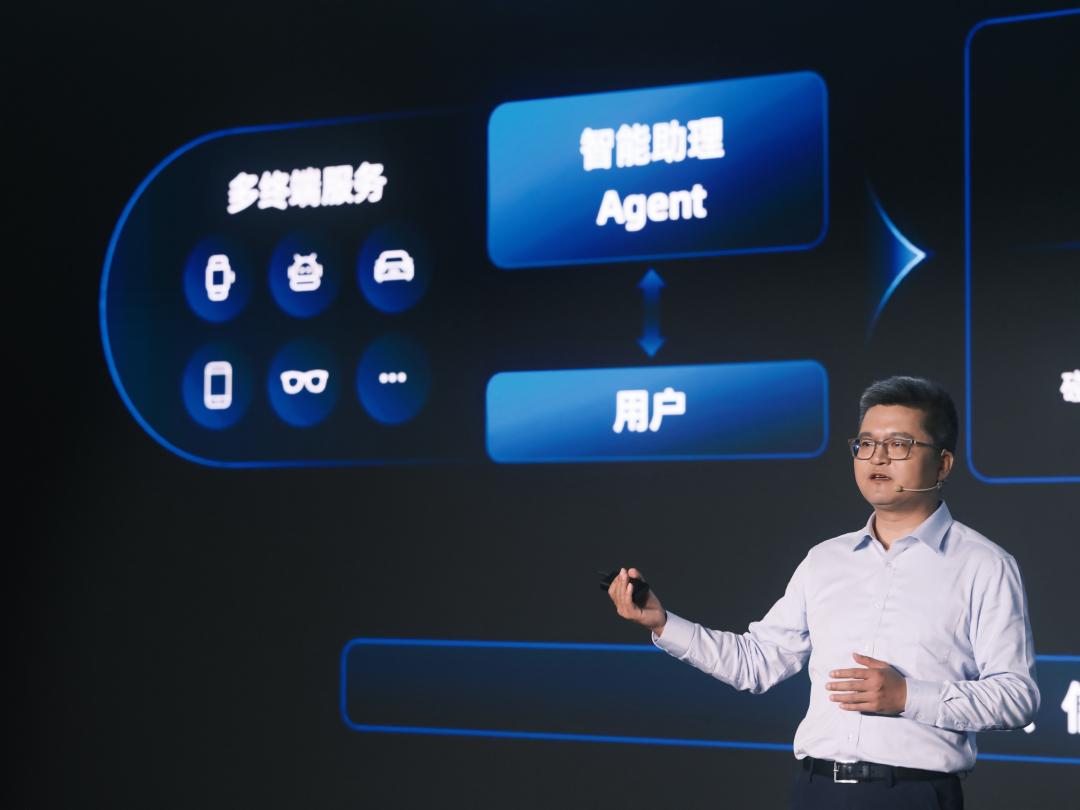
Han Xinyi stated during his speech at the Alipay AI Ecosystem Conference that intelligent agent commerce is poised for explosive growth within the next 6 to 12 months. Photo/Ant Group's Official Account
In June, the AI-driven version of Alipay, named "Abao," commenced internal testing. Meanwhile, Ant’s Afu launched an S-level marketing campaign, "Scientific Weight Loss for 100 Million Pounds." In July, Ant International secured $1.2 billion in Series A funding, while Ant Digital Technologies was reported to be preparing for a pre-IPO. Early August saw Ant’s embodied intelligence product, Lingbo, initiate its first funding round. In September, the Alipay Business Group, Digital Payment Business Group, and Sesame Credit Division merged, with Group Chief People Officer Wu Minzhi appointed as the new president of the Alipay Business Group.
Financing, restructuring, leadership changes, and product overhauls—all these actions signal one thing: Ant is seeking its next growth engine, with AI as the core driver.
01 AI Application Strategy: Who Is Succeeding? Who Is Fading?
For leading tech companies, AI applications have become a competitive arena, and Ant is no exception.
However, unlike its peers, Ant has avoided the fiercely competitive general-purpose large model arena. Instead, it has focused on deploying AI applications in vertical scenarios.
Lingguang, Ant’s first C-end AI product, was launched in November 2025. Within six days, it surpassed 2 million downloads and topped the App Store’s free tools chart.
Yet, Lingguang once again highlighted Alipay’s tool-like nature. Designed to generate lightweight mini-applications in 30 seconds with a single sentence, users tended to "use it and leave," making it difficult to achieve stable user retention.
According to a QuestMobile report, by March 2026, Lingguang had fallen out of the top ten domestic AI applications in terms of monthly active users. In June 2026, market reports indicated that Lingguang’s lead developer, Hanluo, was reassigned to support Afu, with some team members also redirected to enhance Afu’s features. Ant did not officially respond.
This year in October, Lingguang repositioned itself as a personal intelligent agent AI assistant and initiated a small-scale internal test. The new Lingguang features long-term memory and can proactively advance tasks, drawing industry comparisons to the overseas product Muse.
The second major focus of Ant Group’s AI strategy is the AI transformation of the main Alipay app itself.
On June 16 this year, the AI version of Alipay, "Abao," began invited testing. Officially described as the most significant underlying reconstruction of Alipay since its launch 22 years ago, users can access a minimalist page by swiping right on the Alipay interface, which retains only the Abao chat window and assets section. Users can access tens of thousands of lifestyle services on the platform using natural language.
Li Jiajia, co-president of Ant’s Digital Payment Business Group, stated at the AI Payment Ecosystem Conference in May this year that AI payments are not currently evaluated based on commercial returns, revenue metrics, or industry competition. The primary goal is to expand the ecosystem scale. As of September, AI payments have completed a cumulative total of 300 million intelligent agent transactions.
On the other hand, Afu has emerged as Ant’s only AI product to achieve large-scale success.

Photo/Ant Group's Official Website
Afu began as the AI health assistant "AQ" embedded within Alipay in June 2025. On December 15 of the same year, it was independently launched as an app, surpassing 30 million monthly active users upon its debut.
At the 2026 Bund Conference, Zhang Junjie, president of the Health Business Group, disclosed that Afu had accumulated 150 million users, with nearly 20 million daily health consultations. The product adheres to an ad-free, membership-free, and paid-content-free model, with Zhang stating that commercialization is not currently a priority.
Named personally by Jack Ma, Afu is described by Han Xinyi as a project Ant "must win." QuestMobile data shows that in June 2026, Afu had approximately 28.97 million monthly active users, firmly ranking first among domestic vertical health AI applications.
These investments are ultimately reflected in financial statements. Han Xinyi mentioned in an interview that from 2024 to 2025, Ant invested billions of yuan annually in its health business. After Afu’s independent launch, monthly market spending reached the hundred-million-yuan level. Alibaba’s financial reports also note that significant investments in new businesses, such as Afu’s promotion, are a major factor contributing to profit pressure.
The health business, represented by Afu, has been elevated to a strategic level by Ant Group. In November 2025, Ant upgraded its original Digital Medical Health Business Department to the Health Business Group, on par with its payment and financial sectors. Zhang Junjie, the group’s head, reports directly to Han Xinyi.
Ant has accumulated over a decade of experience in medical digitization, launching online registration and payment services and electronic medical insurance codes as early as 2014. Capital deployment has progressed simultaneously: in September 2024, it fully acquired Haodf.com; in March 2026, it formed a strategic partnership with Meinian Health; in July, it strategically invested in Bohu Health, acquiring over 28% of its shares after the transaction; on August 18, it acquired TPA service provider Fengshi Health, which connects with over 1,500 private hospitals and international departments of public hospitals, filling gaps in commercial insurance direct payments.
The underlying business logic is simple: the platform first builds user trust through free health Q&A, then links long-term health behavior data with financial services such as insurance and risk control. Han Xinyi has set a goal for Afu: when over half of domestic users encounter health questions, their first instinct should be to turn to Afu.
Against the backdrop of an aging population, this health entry point holds significant potential. However, real-world challenges are equally daunting. The medical and health sector is heavily regulated, with AI health consultations facing professional boundaries and compliance risks. The free model continuously consumes funds, and finding a sustainable commercialization path without undermining user trust remains a challenge.
02 Organizational Restructuring: How Is Ant Group Preparing for the Agent Battle?
Ant Group’s full commitment to AI necessitates deep adjustments to its organizational structure.
On September 21, Han Xinyi issued a company-wide letter announcing the merger of the Alipay Business Group, Digital Payment Business Group, and Sesame Credit Division to form a new Alipay Business Group, with Ant Group CPO Wu Minzhi serving as its president.
After the adjustment, Ant’s primary business groups were reduced from five to four. In addition to the new Alipay Business Group, there are the Credit, Financial Protection, and Health Business Groups. The official stance is to "further consolidate technology, product, and ecological capabilities while strengthening merchant service systems," pointing toward intelligent agent commercial entry points.
Interestingly, this merger comes just 21 months after the previous split. In December 2024, Ant split Alipay and Digital Payment into two separate business groups, implementing a rotating president system.
The underlying logic of the split at the time was to separate C-end user operations from payment infrastructure development into two independent fronts under the traditional internet business framework, enabling separate competition and efficiency improvements to adapt to the refined competition environment of the existing payment market.
However, 21 months later, the industry’s underlying logic has shifted. Agent-led intelligent agent commerce is taking shape. In AI transaction chains, user intent recognition, service invocation, payment execution, and risk trust verification are no longer segmented actions but a coherent closed loop. If multiple independent business groups continue to manage separate segments, departmental silos and fragmented links will slow product iteration.

Organizational changes extend beyond the business group level.
In June 2026, Ant Consumer Finance’s technology line was fully integrated into the Grand Security System, unified under Grand Security CTO Junyi for horizontal alignment. In July, Alipay’s Experience Technology Department ceased to exist as an independent entity, with members reassigned to various business lines. Job titles changed uniformly from "front-end engineers" to "Agent development full-stack engineers." Testing personnel within the MyBank Business Group were also reassigned to R&D, with front-end, back-end, and testing roles unified as "R&D engineers."
Behind these actions lies a single trend: in the AI era, technology mid-platforms are disintegrating, and interactions are shifting from button clicks to conversations with intelligent agents. The front end now requires full-stack understanding and engineering implementation capabilities.
Earlier this year, Han Xinyi also sent a company-wide email introducing the "AI Credit" special incentive program, demanding full AI transformation of businesses and organizations. R&D investment has also increased simultaneously: in 2025, R&D investment reached 35.03 billion yuan, a 49.38% year-on-year increase, setting new historical highs in both scale and proportion of revenue. Since 2022, Ant’s annual R&D investment has exceeded 10% of its revenue.
From merging business groups to restructuring job systems, from incentive programs to R&D investment, Ant is transforming its organization into a force better suited for the Agent battle.
03 Promoting Independent Financing for B2B Business: What Is Ant Group’s Strategy?
Rewinding to March 19, 2024, Ant issued a company-wide letter announcing the establishment of independent boards for Ant International, OceanBase, and Ant Digital Technologies, each facing the market independently. At the time, this was widely seen as a routine organizational adjustment, but more than two years later, the market has begun to assign valuations to these businesses.
Ant International was the first to receive a valuation. On July 21, Ant International announced the completion of a $1.2 billion Series A financing round, with a post-money valuation of approximately $10 billion.
Ant International oversees the group’s global business. Alipay+ connects over 50 international wallets, covering more than 2 billion accounts. It also operates global merchant acquisition service Antom, cross-border corporate account WorldFirst, and embedded inclusive financial service Bettr. Operationally, Ant International achieved approximately $3.75 billion in revenue in 2025, a year-on-year increase of about 25%, and has achieved adjusted profitability for two consecutive years.
Market rumors have repeatedly suggested that Ant International may go public in Hong Kong as early as this year, but the company has never officially confirmed this. The real obstacles lie in regulatory compliance, geopolitical factors, and intense competition from local wallets, which will determine its globalization ceiling.
Compared to Ant International’s well-defined global outline, OceanBase faces a different question: how to turn technological assets into a sustainable business.
OceanBase, born from Alipay’s core transaction system, is Ant’s 100% self-developed financial-grade distributed database, now transitioning into an "AI data platform." According to Bloomberg, its annualized revenue exceeded 1.4 billion yuan in 2026, a year-on-year increase of about 70%.
Also in late July this year, reports indicated that OceanBase was negotiating a Series A financing round of 2 to 3 billion yuan, with the official response being "continuous open communication with the capital market."
OceanBase remains a top-tier player in the industry: reports from Frost & Sullivan and Omdia show that OceanBase ranks first in China and the Asia-Pacific region in terms of market share for distributed transactional databases, with 20.2% and 15.5%, respectively. However, being first in share does not equal scale security—it must also contend with pressure from cloud vendor databases and domestic innovation competitors like Dameng and Renmin University’s Kingbase.
When it comes to database infrastructure sales, OceanBase takes the stage, while Ant Digital Technologies steps closer to the forefront of Ant's AI capability commercialization. It encompasses financial large models, intelligent agents, blockchain, and Web3, acting as the primary tech commercialization sector (a Chinese term meaning a specific business area) of the group.
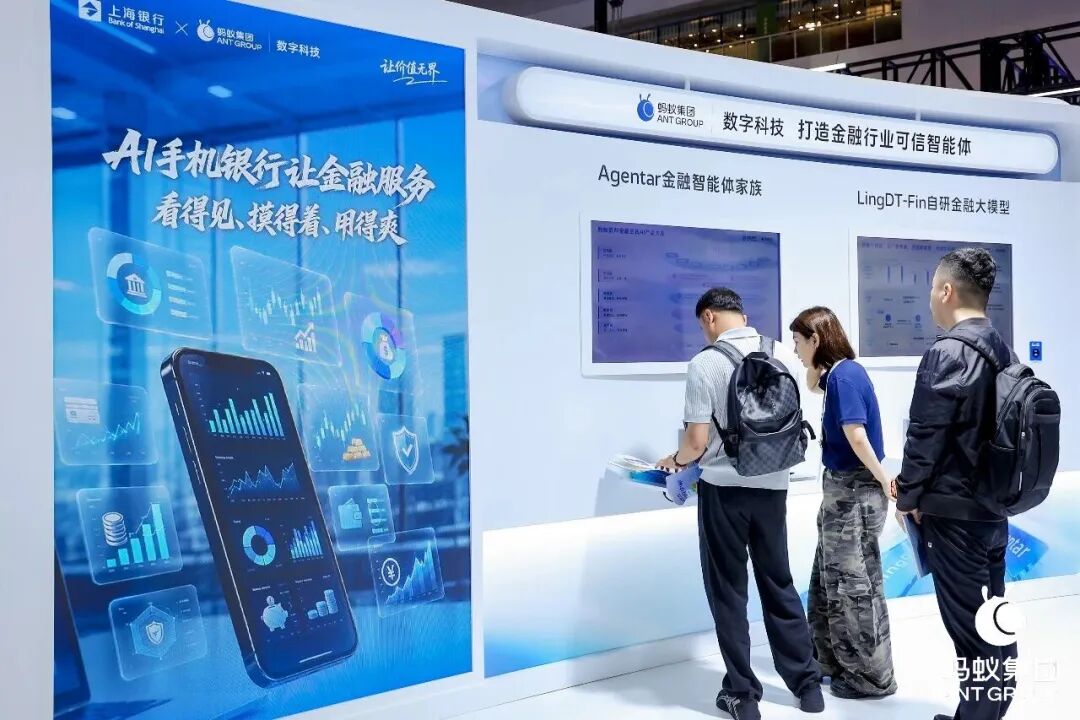
Photo sourced from/Ant Digital Technologies' Official Account
According to an IDC report, in 2025, Ant Digital Technologies secured the top spot in China's financial large model, intelligent agent application, and service market, boasting a 13.3% market share. Market projections indicate that its revenue in 2025 was around 5 billion yuan, with an ambitious target of 8 billion yuan set for 2026. When questioned about the reported preparations for a Pre-IPO, CEO Zhao Wenbiao clarified, "There's no set timeline for going public. Our foremost priority is to achieve our business objectives."
When we view these actions within the framework of the group's comprehensive AI strategy, it becomes evident that independent financing is not merely about securing funds. Externally, it serves as a phased market validation of the effectiveness of the independent operations initiated in 2024, aligning with Ant's post-rectification positioning as an autonomous tech entity. Internally, it leverages independent capital and strategic investors to dilute group investments, thereby easing the financial burden associated with substantial AI investments.
A research report released by CITIC Securities in September concluded that "AI forms the central theme for reevaluating Ant." However, this theme remains unproven: Afu and Abao "prioritize cost over profitability," with commercialization timelines still up in the air; the implementation of intelligent agent commerce is progressing slower than anticipated; and the financing and IPO progress of subsidiaries continue to be unpredictable.
Ant's most formidable assets remain the users, merchants, scenarios, and trust it has amassed over two decades. Whether AI can effectively capitalize on these resources and ultimately translate them into revenue will be the key determinant of the company's value.
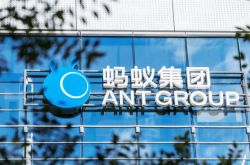
Header Image sourced from/Ant Group's Official Website
-
![]()
Self-Developed Chip Valued at 10 Billion Yuan: Can Li Auto’s Second Growth Curve Succeed?
-
![]()
The Year of High-Intensity Action: What Is Ant Group Betting On?
-
![]()
DeepSeek V4 Pro Officially Launches with Price Increase Effective August 17
-
![]()
Keynote Speaker | Li Yanming, Volcano Engine’s Senior Enterprise Solution Expert, Confirmed for WAIE (10th) 2026 AI Industry Conference & AI Agent Industry Application Conference
-
![]()
Nvidia Brings in Wall Street, Potentially Revolutionizing Valuation Logic for Computing Power
-
![]()
High-Profile Guest | Qiao Yuchuan, Director of Embodied Intelligence Solutions at SenseTime, Confirmed to Attend WAIE (10th) 2026 AI Industry Conference & AI Agent Industry Application Conference
-
![]()
Conant Optical Claims Spot in Alibaba’s Qianwen AI Glasses Core Optical Supply Chain!
-
![]()
Breaking Away from Integrated Assembly: What’s the Wager of This Domestic FTIR ‘Little Giant’?