Liang Wenfeng's Embodied Strategy | iResearch Insights
 10/20 2026
 460
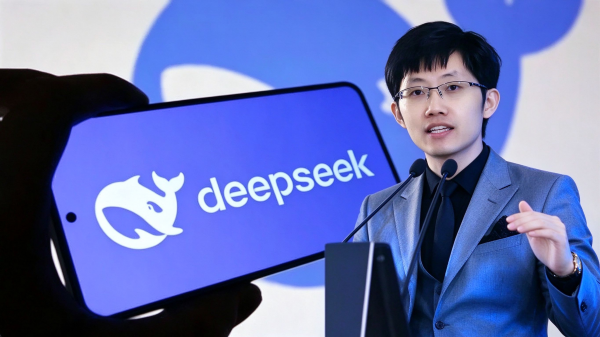
The boundaries between foundational models and embodied intelligence are blurring. In Liang Wenfeng's R&D roadmap, embodied intelligence is placed last, but DeepSeek's investment Layout (layout) has already taken the lead.
Previously, DeepSeek invested in Unitree Robotics and now plans to lead an investment in Winverse AI, founded by Hu Han, former head of multimodal understanding at Tencent's Hunyuan. One excels in robotics hardware and motion control, while the other explores embodied intelligence. DeepSeek's R&D focus remains on foundational models, but its investments are already reaching into the physical world.
These two moves are not contradictory. In Liang Wenfeng's envisioned path, first enabling AI with continuous learning and self-iteration capabilities, then leveraging stronger AI to develop robots, is a better sequence. The more adept AI becomes at programming, reasoning, and handling more tasks during R&D, the fewer detours it will take when entering the embodied realm. Conversely, if these capabilities are insufficient, more effort will be needed in robot R&D to overcome challenges one by one.
Thus, embodied R&D can wait, but Layout (preparation) can proceed in advance. DeepSeek continues to concentrate on advancing foundational models while, through investments, gaining early access to robotics hardware, research talent, and development and testing resources. When it truly enters the field, it may not need to catch up from scratch.
For embodied companies, this is what warrants vigilance. Their future rival could be a cross-border player that has already accumulated stronger capabilities in foundational models and prepared in advance. Today an investor and potential partner, tomorrow it may compete with you for the core intelligence of robots.
01 Focusing on General AI Without Missing Out on Embodied Layout (Preparation)
Bringing AI into the physical world requires more than just models. Whether a model can understand its environment and execute appropriate actions ultimately depends on testing on robots. Unitree provides the foundation for such work.
Unitree is known for its robotic dogs and humanoid robots, but its product range also includes robotic arms, dexterous hands, and key components like joints and motors, along with corresponding software and development interfaces. For model teams, this means they can start testing their ideas without first building a robot from scratch.
Testing brings new questions. Will the robotic arm collide with something? Why didn't it grip firmly even when the position was correct? Some of these issues stem from the model, others from control or hardware, requiring repeated debugging together.
Unitree's years of accumulated robotics R&D experience become valuable here. Investing in Unitree provides DeepSeek with an entry point to this hardware, toolset, and development experience.
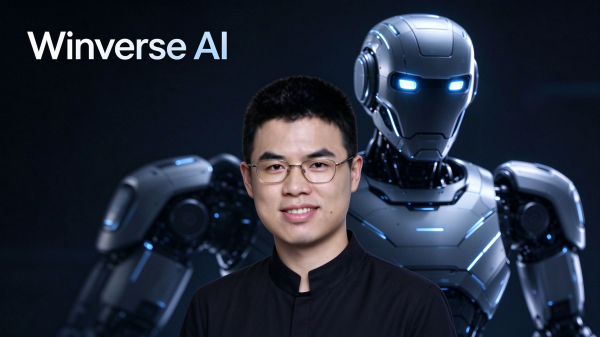
Winverse, on the other hand, connects to another type of accumulation: how to enable models to understand the physical world and learn to act.
Founder Hu Han also has research ties to DeepSeek. He and DeepSeek researcher Xie Zhenda collaborated on studies like SimMIM and Swin Transformer V2, working together on visual models and large-scale training. Thus, this proposed investment not only gains access to an embodied intelligence team but also continues existing research connections.
With these two investments, hardware, talent, and collaborative relationships are prepared in advance. DeepSeek keeps its main R&D force on foundational models while retaining the opportunity to delve deeper into the embodied field.
The advantage of this arrangement is that Liang Wenfeng doesn't need to bet on which route will prevail now. If progress in foundational models can drive robot R&D, DeepSeek can accelerate its entry through these collaborations; if embodied exploration remains a long-term independent endeavor, it is already involved. Focusing on foundational models and preparing early for embodied Layout (preparation) can proceed simultaneously.
02 Competition from Action Decision-Making to Training Systems
Liang Wenfeng's judgment is not isolated; Anthropic CEO Dario Amodei has shared similar visions.
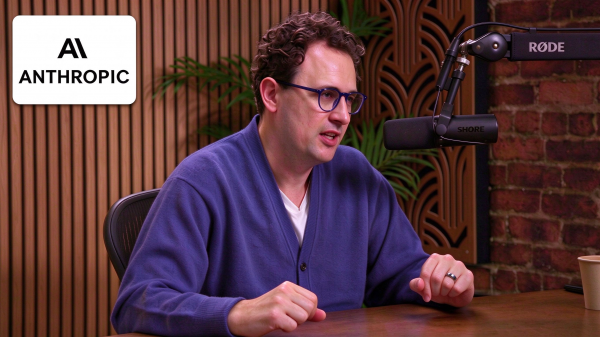
In Machines of Loving Grace, Amodei describes powerful AI that may lack its own body but can operate robots and experimental equipment via computers, even designing robots for its own use. A key overlap in their judgments: the stronger the foundational model, the more likely it is not only to manipulate robots but also to help people develop them.
Google is already advancing in this direction. Its Gemini Robotics system includes Layout (layouts) for understanding physical environments, generating actions, and running models locally on robots. This shows that general model companies have long been seriously addressing how robots should act.
OpenAI's recent release of GPT-6 Astra makes this cross-border shift more visible. In a RoboDojo study, researchers provided Astra with images, robot states, and task instructions, letting it decide where to move a robotic arm next, what orientation to adjust to, and how the gripper should act, then handed it over to control software for execution.
Astra was not fine-tuned for these evaluation tasks, yet it achieved an average success rate of 22.48% across 42 simulated tasks and 2,100 trials; as a reference, two robotic policy models in the same study, DM0.5 and π0.5, scored 19.34% and 6.91%, respectively. Input conditions were not identical, but the results are sufficient to make embodied companies take notice: foundational models are beginning to show competitiveness in robotic action decision-making.
Deciding the next move for a robotic arm is precisely the core problem embodied models aim to solve. Now, foundational models can compete for this role.
How did this capability arise? A common misconception is that Astra could only handle tasks in the digital world before suddenly learning to operate robots. In reality, not being specifically trained for these evaluations doesn't mean it hadn't learned relevant content before; industry insiders generally believe Astra was trained with extensive robotic data.
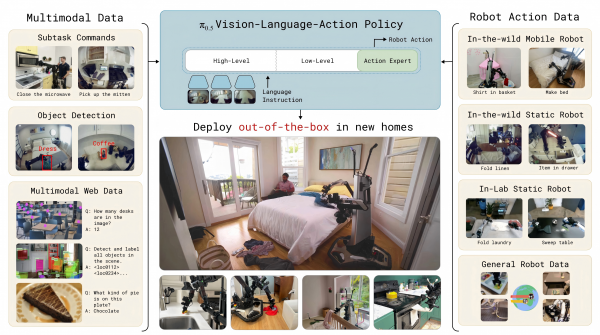
Embodied company Physical Intelligence (PI) conducted an experiment that helps clarify this relationship. When training π0.5, it used both robotic action data and online image-text data. In a test where robots manipulated unfamiliar objects, the average success rate for subtasks with the full training combination was 94%; removing the online image-text data dropped the score to 74%.
Teaching robots to perform tasks doesn't necessarily rely solely on repeated demonstrations of actions. Online image-text knowledge can also help them better understand objects in front of them and tasks assigned by humans, enabling better performance.
This introduces a new competitive issue. Previously, the focus was on who collected more embodied data or who trained actions better. Now, it also matters who can combine this data with broader knowledge. The capabilities accumulated by foundational model companies over the years may prove particularly useful here. Embodied companies can certainly adopt this method, but they now face competition of a different scale and approach.
Another path aligns more closely with Liang Wenfeng's and Amodei's visions: letting AI assist in robot R&D.
In another experiment from the aforementioned study, Astra wrote code to control a dexterous hand playing the piano, then modified the code based on simulation results, participating in the design and debugging of control schemes. Here, it took on part of the research and development work.
An earlier study, Eureka, also had GPT-4 design training rules for robots, telling the training system which actions performed well and which should be avoided. The subsequent DrEureka went further, having language models design simulation training conditions to help robots transfer skills learned in simulation to the real world.
These attempts don't yet allow AI to handle all robot R&D, but they demonstrate that programming, reasoning, and tool-using capabilities can enter the robot development process. Later entrants, leveraging stronger AI, may write control programs, design training schemes, and continuously identify and adjust issues in simulation and testing more quickly.
This is where Liang Wenfeng's strategic priority on advancing foundational models holds significance: first improve AI's ability to solve R&D problems, then use it to lower the barrier to entering the embodied field. Accumulated experience by pioneers may be quickly surpassed by latecomers.
03 Embodied Companies Must Meet Challenges at the Foundational Model Layer
Of course, AI's ability to help write code and design training schemes doesn't mean robots can perform tasks well in the real world.
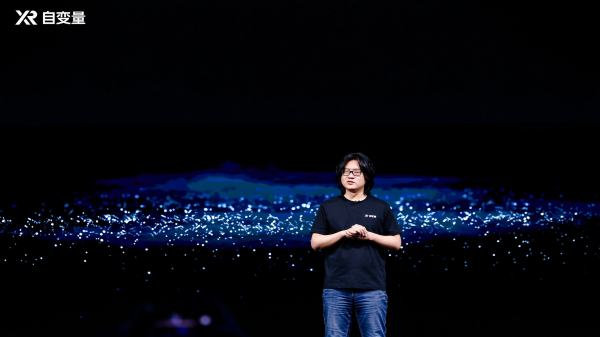
Wang Qian, founder of Zibianliang, reminds that foundational model companies entering the embodied field must also solve data collection, simulation, evaluation, and hardware issues. How a robot adjusts its force when touching an object, how it reacts when an object suddenly slips, and whether it can maintain stability after hours of continuous operation all require repeated exploration in real environments.
Astra still faces a very practical issue: slowness.
NVIDIA's Astranomy research tested Astra in a simulated environment, including the wait time for model-generated actions in the testing process. In direct action generation mode, Astra averaged about 18.56 seconds per inference call, including network latency.
Simulation environments can pause to wait for model results, but the real world won't. A robot reaching out to catch a slipping cup doesn't have a dozen or so seconds (dozens of seconds) to think.
Thus, completing tasks in experiments and doing so timely and reliably in reality are still worlds apart. This gap is where embodied companies' years of accumulation may prove valuable.
Embodied companies are not waiting for foundational models to catch up. Generalist chooses to train its own foundational model through physical interaction, hoping robots will learn more general capabilities by touching and manipulating objects. Deng Taihua, chairman of Zhiyuan, puts it bluntly: "Embodiment first, then intelligence—not intelligence first, then embodiment."
This sequence differs from Liang Wenfeng's choice. Liang hopes to strengthen foundational models first, then use them to reduce the difficulty of robot R&D; Zhiyuan emphasizes first getting robots into real environments, accumulating experience through use, then driving intelligence improvements. Both aim to create stronger models but start from different places.
Thus, viewing the entry of foundational models as a simple, all-encompassing "dimensionality reduction attack" underestimates what embodied companies are doing. They are also building foundational models and can leverage them to improve training and R&D.
Physical experience is an advantage for embodied companies, but being early doesn't guarantee they can hold their ground. The key is whether they can use accumulated experience to improve models, enabling robots to learn new tasks with less data and fewer adjustments. Only by doing so can they confidently face foundational model companies.
04 Safeguard Core Intelligence or Cede More Value
Figure has already made a choice: ending its collaboration with OpenAI and turning to self-development.

In an April 2026 interview, Figure founder Brett Adcock explained that robot training, debugging, repair, and quality control need to advance together in coordination. If the core model is controlled by an external company, these tasks become difficult to improve collectively as needed.
Ultimately, Figure doesn't want its robots' core capabilities constrained by someone else's model.
But deciding to build in-house is just the beginning. If a robot needs a new batch of data and repeated engineer debugging for every new task it learns, even a self-developed model may be overtaken by latecomers. The true moat is turning today's problems and accumulated experience into tomorrow's ability to learn new tasks faster.
Embodied companies can also leverage foundational models to accelerate this process. AI that helps foundational model companies write code, conduct simulations, and analyze test results can do the same for embodied companies. Combining existing physical experience with increasingly capable AI tools may also enable pioneers to move faster.
Thus, this competition is more likely to divide embodied companies.
Some will establish themselves in foundational models, competing with foundational model companies for robots' core intelligence. Others will excel in hardware, system integration, and actual delivery. They can still be excellent robot companies, but who manufactures the robots and who imbues them with intelligence may no longer have the same answer. The most valuable parts may not all remain with embodied companies.
If a company can't build a competitive model and lacks clear advantages in hardware and delivery, times will be tough. With foundational model companies entering, stronger embodied peers alongside, and advantages from early financing and entry difficult to sustain, the outlook is challenging.
Looking back at DeepSeek's Layout (layout), Liang Wenfeng has left himself more options. Internally, he continues to focus on foundational models; externally, he gains early access to embodied talent, hardware, and development and testing resources. Whether foundational models gradually learn physical tasks or training for foundational and embodied models further fusion (fuses), DeepSeek is positioned to participate.
This is Liang Wenfeng's embodied strategy: R&D can proceed in stages, but Layout (preparation) needn't wait until the end. First strengthen foundational models, then use stronger AI to enter the physical world; meanwhile, prepare potential partners and conditions in advance.
For embodied companies, such an opponent is harder to handle. It can collaborate with you or incorporate the tasks you're tackling into its own model training. When it truly enters the field, it may bring not just capital but a new set of solutions.
-
![]()
Self-Developed Chip Valued at 10 Billion Yuan: Can Li Auto’s Second Growth Curve Succeed?
-
![]()
The Year of High-Intensity Action: What Is Ant Group Betting On?
-
![]()
DeepSeek V4 Pro Officially Launches with Price Increase Effective August 17
-
![]()
Keynote Speaker | Li Yanming, Volcano Engine’s Senior Enterprise Solution Expert, Confirmed for WAIE (10th) 2026 AI Industry Conference & AI Agent Industry Application Conference
-
![]()
Nvidia Brings in Wall Street, Potentially Revolutionizing Valuation Logic for Computing Power
-
![]()
High-Profile Guest | Qiao Yuchuan, Director of Embodied Intelligence Solutions at SenseTime, Confirmed to Attend WAIE (10th) 2026 AI Industry Conference & AI Agent Industry Application Conference
-
![]()
Conant Optical Claims Spot in Alibaba’s Qianwen AI Glasses Core Optical Supply Chain!
-
![]()
Breaking Away from Integrated Assembly: What’s the Wager of This Domestic FTIR ‘Little Giant’?