Revenue Hits 18.1 Billion, Yet Net Loss After Non-Recurring Items Reaches 762 Million: iFLYTEK's Performance Swings to Extremes
 10/20 2026
 578
Text/Yang Jianyong
For an extended period, iFLYTEK's profitability has sparked considerable debate, as the company has predominantly relied on government subsidies to turn a profit. In the first half of 2026, its revenue soared to 18.187 billion yuan, marking a 7.05% year-on-year increase, with a profit of 21.88 million yuan. However, government subsidies included in this period amounted to 470 million yuan. Excluding non-operating gains and losses, such as government subsidies, the net loss after non-recurring gains and losses expanded further to 763 million yuan.
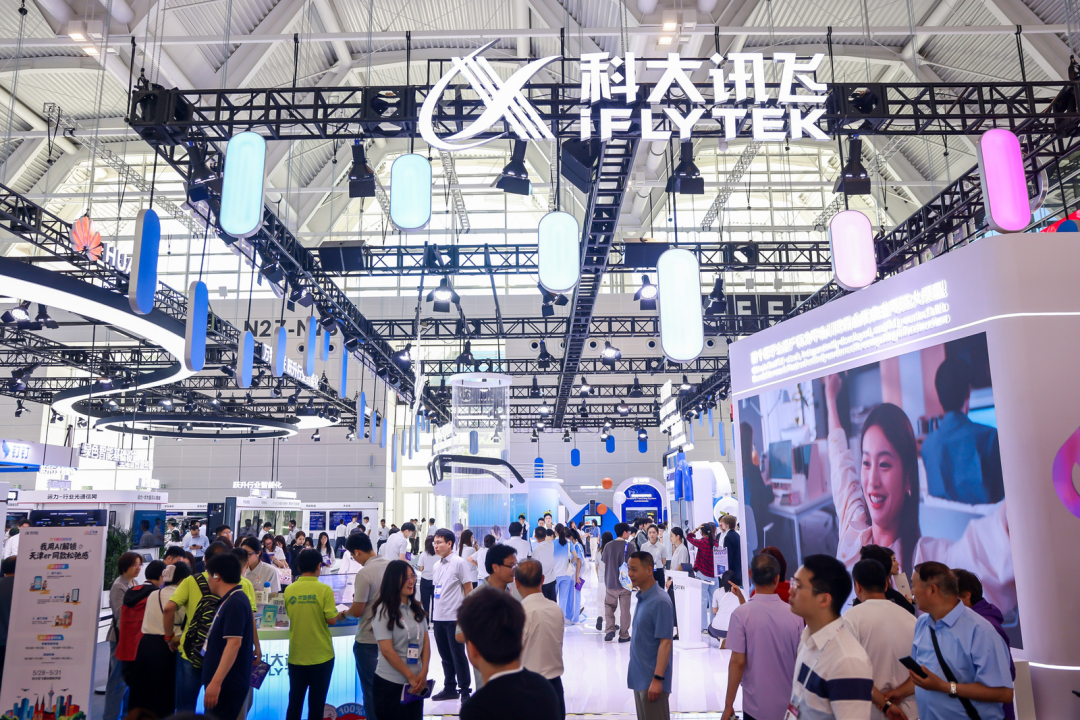
It is worth noting that iFLYTEK, as a frontrunner in the AI sector, has long been deeply entrenched in artificial intelligence. Capitalizing on the industry opportunities presented by AI large models, it was among the first to launch the Spark Large Model. Amid the large model boom, its market value once neared 200 billion yuan, but has since dwindled to 88 billion yuan, a decrease of 100 billion yuan from its historical peak.
This decline reflects both broader market environment factors and concerns over its profitability, given its heavy reliance on government subsidies for net profit.
In 2025, iFLYTEK reported a net profit of 839 million yuan, with government subsidies for that year totaling 636 million yuan, constituting 75.8% of the net profit. In the first half of 2026, despite revenue approaching 20 billion yuan, profit stood at merely around 21 million yuan, and a net loss after non-recurring gains and losses was recorded, indicating feeble profitability in its core business.
Certainly, large models represent a typical technology- and capital-intensive industry, heavily reliant on AI infrastructure for model training. As large models continue to evolve, the demand for computing power escalates. In response, iFLYTEK not only persists in investing in model development but also ramps up its investment in computing power, resulting in short-term profitability challenges.
In the third quarter of 2026, iFLYTEK's R&D investment surpassed 1.7 billion yuan, a year-on-year increase of nearly 400 million yuan, accounting for over 25% of revenue.
It is commendable that, thanks to sustained R&D investment, iFLYTEK has established four major commercialization systems: AI open platform, AI industry applications, AI enterprise-level applications, and AI consumer applications, enabling it to maintain a competitive edge in the artificial intelligence market.
In particular, the open platform has emerged as the largest business segment, generating revenue of 3.7 billion yuan in the first half of 2026, a 36% year-on-year increase, with its revenue share rising further to 31.87%. As of June 2026, the iFLYTEK AI open platform had amassed 11.53 million developers, including 3.219 million large model developers, a year-on-year increase of 111%.
As an AI vendor with over two decades of experience in the artificial intelligence sector, iFLYTEK has been at the forefront of promoting AI applications. The commercialization of its Spark Large Model is gradually accelerating, and on October 22, it will unveil a new "cloud+endpoint" iFLYTEK Spark Large Model, leveraging "Token+Agent" to drive the Spark ecosystem's upgrade from capability openness to value co-creation.
However, as large model technology continues to advance, the essence of industry competition has shifted to a computing power race in AI infrastructure. To this end, iFLYTEK has raised nearly 4 billion yuan through the market this year. Of this, 2.4 billion yuan will be allocated to computing power platform construction to support the continuous iteration and upgrading of large models.
It should be emphasized that although the computing power platform does not yield direct economic benefits, it serves as the technical backbone and foundation for the sustained growth and competitiveness of R&D and various business lines. Through the continuous closed-loop iteration of the model foundation—industry models—intelligent agent applications, the technological advantages of full-stack autonomous control will be progressively transformed into industrial advantages in application implementation, converting the first-mover advantage and industrial opportunities of artificial intelligence into large-scale commercial implementation outcomes.
An additional 800 million yuan will be earmarked for the Spark Education Large Model and typical product development projects, upgrading the Spark Education Large Model to bolster its competitive edge in the education market. Meanwhile, to address the working capital needs arising from the continuous expansion of business scale, 780 million yuan from this round of fundraising will be utilized to supplement working capital.
Finally, in the era of generative AI, large models represent the pinnacle of technology, with all industries embracing them and integrating large model services into their systems. As the capabilities of large models become increasingly formidable, their applications are transitioning from the initial knowledge Q&A mode to Agent AI intelligent agents, beginning to execute tasks and ushering in a new phase in Agent applications.
For vendors deeply involved in the artificial intelligence sector, this also signifies greater development opportunities, fully unlocking the value of technology to achieve the industrial development dividends of artificial intelligence.
The views expressed herein are solely personal opinions. This article focuses on in-depth observations of technology sectors such as AI large models, artificial intelligence, industrial robots, IoT, cloud computing, and smart hardware.
-
![]()
Self-Developed Chip Valued at 10 Billion Yuan: Can Li Auto’s Second Growth Curve Succeed?
-
![]()
The Year of High-Intensity Action: What Is Ant Group Betting On?
-
![]()
DeepSeek V4 Pro Officially Launches with Price Increase Effective August 17
-
![]()
Keynote Speaker | Li Yanming, Volcano Engine’s Senior Enterprise Solution Expert, Confirmed for WAIE (10th) 2026 AI Industry Conference & AI Agent Industry Application Conference
-
![]()
Nvidia Brings in Wall Street, Potentially Revolutionizing Valuation Logic for Computing Power
-
![]()
High-Profile Guest | Qiao Yuchuan, Director of Embodied Intelligence Solutions at SenseTime, Confirmed to Attend WAIE (10th) 2026 AI Industry Conference & AI Agent Industry Application Conference
-
![]()
Conant Optical Claims Spot in Alibaba’s Qianwen AI Glasses Core Optical Supply Chain!
-
![]()
Breaking Away from Integrated Assembly: What’s the Wager of This Domestic FTIR ‘Little Giant’?