Anthropic Also Eyes Cloud Provider Partnerships
 10/28 2026
 400
Revenue Growth Begins, but Future Costs Loom Large
Author: He Jian
Editor: Jiang Jiao
Cover: AI-Generated
After months of media speculation, document leaks, and transparent investor communications, nearly all of Anthropic's critical financial data has been laid bare.
We learned early on about Anthropic's revenue figures for the first half of the year, including its achievement of quarterly profitability in the second quarter. The company's commitments to spend over $500 billion on computing power with six cloud service providers over the next decade, with approximately 80% of these commitments being non-cancellable, have also been disclosed.
This makes Anthropic's prospectus, released just last night, seem somewhat dated. Even previous news reports provided a more current snapshot of the company's operational status than the prospectus, which only updates financial data through the first half of this year. Media reports had already indicated a significant slowdown in Anthropic's revenue growth during the third quarter, prompting investors to adjust their valuation expectations downward.
Nevertheless, this nearly 400-page prospectus marks Anthropic's formal entry into the capital markets. The company's last funding round raised $65 billion, surpassing the scale of most initial public offerings (IPOs). Now, Anthropic aims to raise $100 billion through its IPO, potentially setting a record for the largest IPO in history.
Much like the internet IPO boom of years past, numerous large model companies are poised to follow Anthropic to the public markets. These companies share similar products, services, business models, and revenue structures, and are equally reliant on substantial investments in computing power.
Anthropic's IPO may be just the beginning of a large model craze, but hopefully, it won't mark the peak.
Billion-Dollar Quarterly Revenue, Top Five Clients Contribute 25%
From a purely revenue perspective, now is indeed an opportune time for Anthropic to pursue an IPO.
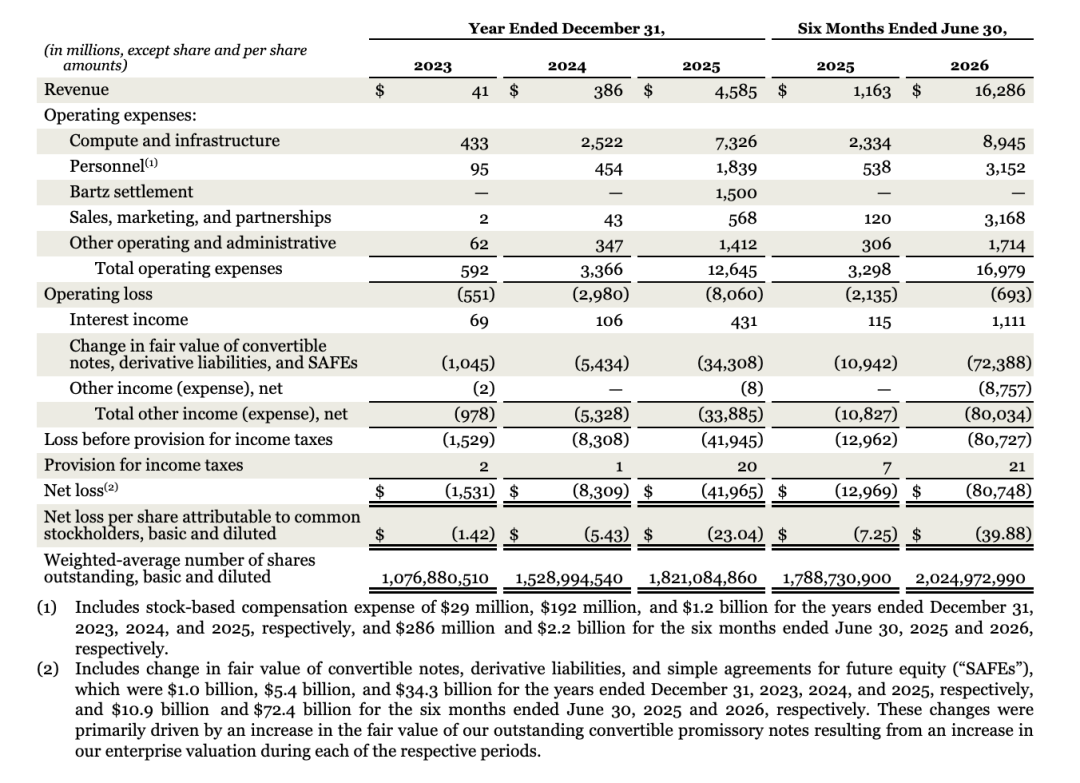
In 2023, Anthropic's annual revenue stood at just $41 million, surging to $386 million in 2024 and reaching $4.585 billion in 2025. Such growth is remarkable, but in the first half of this year, Anthropic's revenue soared to $16.286 billion, a nearly 13-fold increase year-over-year, exceeding the total revenue of the past three years by more than three times.
Particularly noteworthy is the second quarter of this year, when Anthropic's quarterly revenue hit $11.555 billion, a 144% increase from the previous quarter and a nearly 14-fold increase year-over-year. By comparison, Salesforce, the world's largest CRM software company, reported quarterly revenue of only $11.3 billion.
Anthropic Prospectus
Unlike companies with complex revenue structures, Anthropic's impressive growth is driven by the simplest Token business model in the large model industry. Similar to China's already-listed Zhipu and MiniMax, Anthropic's revenue primarily comes from Tokens, or what it terms 'paying for intelligence.'
Specifically, Anthropic offers two pricing models: pay-as-you-go, where clients utilize the Claude model via APIs and pay based on actual Tokens consumed; and subscription services, including Claude Pro, Max, and enterprise subscription plans.
In the first half of this year, Anthropic's pay-as-you-go revenue reached $13.064 billion, a nearly 12-fold increase year-over-year, accounting for 80.2% of total revenue. Subscription revenue amounted to $3.222 billion, a nearly 17-fold increase year-over-year, with its share rising from 15.5% in the same period last year to 19.8%.
Pay-as-you-go primarily targets enterprise clients using the model via APIs, while subscription services cater to a broader range of individual users. Anthropic anticipates in its prospectus that pay-as-you-go will continue to dominate revenue for the foreseeable future.
The rapid growth of enterprise clients supports this expectation. By the end of the third quarter this year, over 11,900 clients had generated at least $100,000 in revenue for Anthropic over the past 12 months, compared to just over 950 in the same period last year. Additionally, over 1,900 clients contributed more than $1 million annually, and around 250 contributed over $10 million.
Anthropic also disclosed that its net revenue retention rate reached 900% by the end of the third quarter this year. This means that the revenue generated by the same group of enterprise clients each quarter has now reached nine times that of the same period last year. The prospectus emphasizes that Anthropic's penetration into large enterprises is still in its early stages. By the end of the third quarter this year, revenue from its top five clients had reached all-time highs, collectively accounting for about 25% of its revenue.
Anthropic's proprietary applications, such as Claude Code, have also made significant contributions. The prospectus reveals that by the end of the third quarter this year, among clients generating at least $100,000 in revenue over the past 12 months, more than half simultaneously used the Claude model platform and Anthropic's proprietary applications like Claude Code and Cowork. At the end of last year, this proportion was only about 30%.
However, Anthropic's revenue growth has started to decelerate. According to investor materials previously disclosed by the media, Anthropic's third-quarter revenue was approximately $16.8 billion, a roughly 45% increase quarter-over-quarter, significantly lower than the 144% increase in the second quarter.
The prospectus has not yet updated detailed financial data for the third quarter. Anthropic previously stated that it tightened control over distillation in the third quarter, leading to a reduction in some revenue. The prospectus reveals that by the end of the third quarter this year, this portion of revenue accounted for 5% to 7% of Anthropic's total revenue.
Revenue Growth Begins, but Future Costs Loom Large
In stark contrast to its rapid revenue growth, Anthropic's losses are equally substantial.
The prospectus shows that Anthropic's net loss for the entire year of 2025 reached $41.965 billion, soaring to $80.748 billion in the first half of 2026, more than five times the $12.969 billion loss in the same period last year. In just six months, Anthropic's net loss approached 18 times its total revenue for the entire previous year.
However, this massive loss primarily stems from changes in the book value of financing instruments. In the first half of this year, Anthropic recognized a $72.388 billion loss due to fair value changes in financing instruments such as convertible notes, derivative liabilities, and SAFEs, accounting for nearly 90% of the net loss during the same period.
Excluding these book accounting impacts, Anthropic's operating conditions have actually improved significantly. In 2025, Anthropic's annual operating loss was as high as $8.06 billion, nearly twice its revenue for the same period. In the first half of this year, this figure narrowed to $693 million, a reduction of about two-thirds from $2.135 billion in the same period last year.
Especially noteworthy is the second quarter of this year, when Anthropic achieved quarterly operating profitability for the first time, with a profit of $974 million and an operating profit margin of 8.4%. In the same period last year, Anthropic had a quarterly loss of $1.2 billion and an operating profit margin of negative 152.5%. However, compared to traditional software giants, Anthropic's profitability still lags behind, with Salesforce's operating profit margin around 20.5% in the second fiscal quarter of this year.
The persistent high losses among large model companies are often related to soaring computing power costs. Taking Zhipu as an example, in 2025, Zhipu's annual revenue was only 724 million yuan, but its R&D expenditure was as high as 3.18 billion yuan, with about 2.283 billion yuan spent on computing power. In the first half of this year, Zhipu's revenue increased to 954 million yuan, but its R&D expenditure still reached 2.131 billion yuan, with a net loss of 2.072 billion yuan.
The same applies to Anthropic. In 2023, Anthropic's annual revenue was only $41 million, but its computing power and infrastructure costs reached $433 million, more than ten times its revenue. In 2024, computing power expenditures further increased to $2.522 billion, reaching $7.326 billion in 2025.
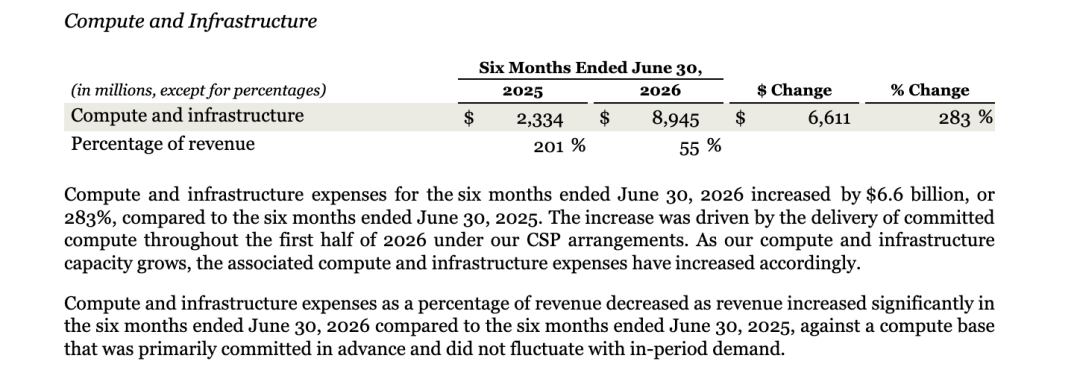
In the first half of this year, Anthropic paid $8.945 billion for computing power and infrastructure, an increase of $6.611 billion from the same period last year, soaring by 283%. Half-year spending already exceeded the total for the entire previous year, accounting for more than half of the company's total operating expenses.
However, Anthropic's revenue growth has far exceeded the growth in computing power costs. In the first half of this year, Anthropic's revenue increased nearly 13-fold year-over-year, while computing power costs only increased about 2.8-fold. The proportion of computing power costs to revenue dropped from 201% in the same period last year to 55%.
 Anthropic Prospectus
More critically, these computing power resources are often locked in advance, and costs do not grow proportionally with revenue. Anthropic explained in the prospectus that they usually procure computing power 12 to 18 months in advance, and these costs are basically fixed in the short term and do not change with demand during the period. In other words, as long as revenue grows fast enough, Anthropic can gradually dilute computing power costs and improve profits.
However, the computing power Anthropic has locked in for the next decade is far more alarming than the money already spent.
The prospectus discloses that as of the end of June this year, Anthropic's fixed or minimum procurement commitments had reached $265.6 billion, with contract terms extending up to 20 years. Subsequently, the company signed or expanded computing power agreements with several tech giants. According to data previously disclosed by the media, Anthropic's computing power and infrastructure expenditure commitments for the next decade have exceeded $500 billion, with about 80% being irrevocable.
Just with Google and Microsoft alone, Anthropic has committed to paying at least $114.5 billion and $44.9 billion respectively by 2033. A five-year equipment leasing contract with Broadcom involves total payments of about $125.2 billion. As of the end of June this year, Anthropic held only $131.7 billion in cash and short-term investments, with cumulative financing of about $141.1 billion.
These cloud service giants sell computing power to Anthropic while also helping it sell Claude through their cloud platforms and collecting channel fees.
In the first half of this year, Anthropic's sales, marketing, and partner expenses reached $3.168 billion, compared to just $120 million in the same period last year, a 2540% increase year-over-year. Among them, fees paid to channel partners such as cloud platforms increased by about $2.7 billion.
Currently, AWS, Google Cloud, and Microsoft Azure have become the main sales channels for Claude. In 2025, revenue obtained through these cloud platforms accounted for 47% of Anthropic's total annual revenue, increasing to 48% in the first half of this year.
Who Runs Anthropic?
U.S. large model companies are always keen to promote their non-profit visions, with OpenAI being the most well-known example. The same applies to Anthropic. Although this company has already achieved the largest funding scale and highest valuation in business history, it emphasizes in its prospectus that 'we are first and foremost a research laboratory,' aiming to 'responsibly develop and maintain advanced AI for the long-term benefit of humanity.'
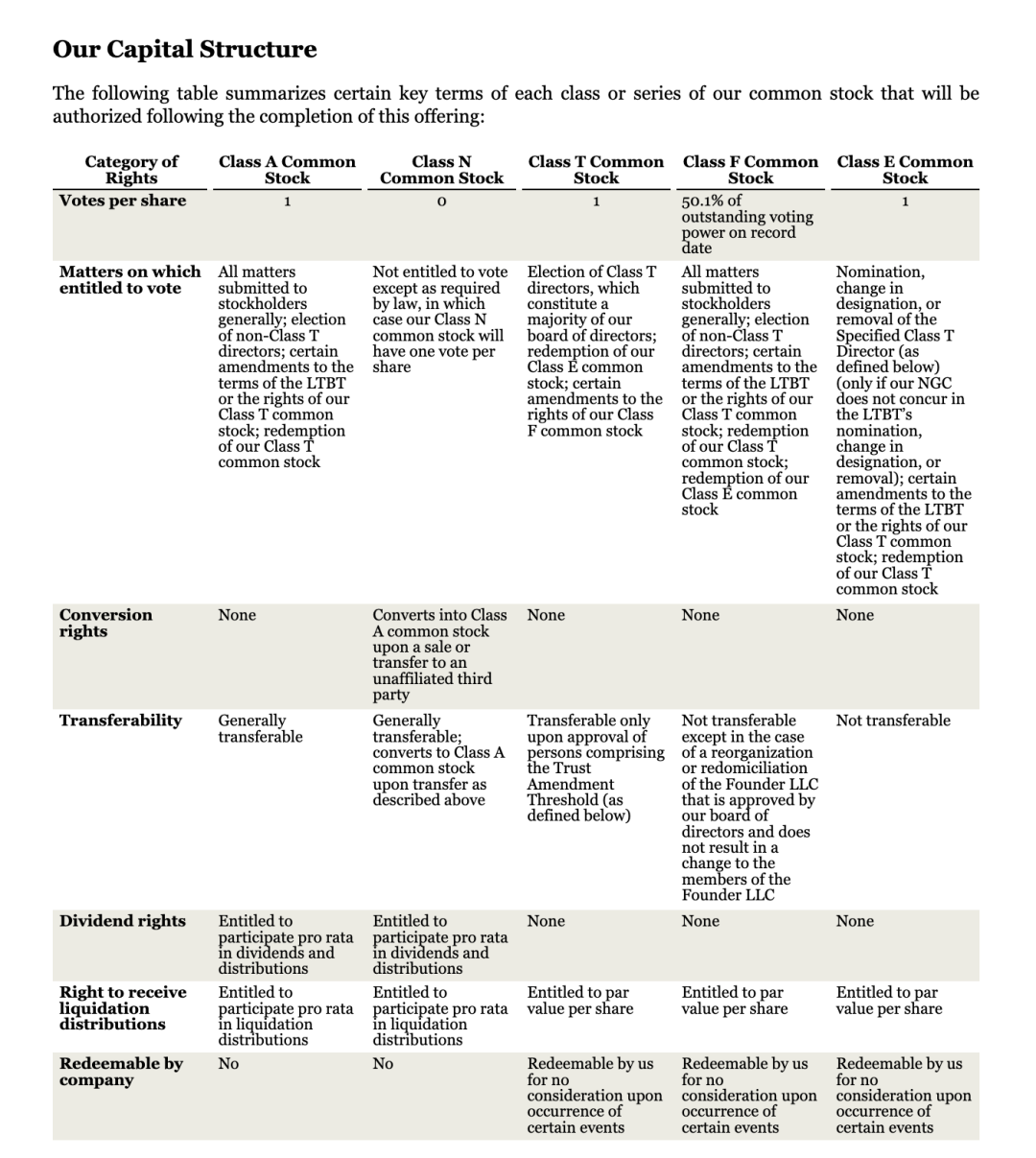
To this end, they have established an extremely complex corporate governance structure. In addition to the conventional board structure, Anthropic has also set up an independent body called the Long-Term Benefit Trust (LTBT), composed of five trustees with professional backgrounds in AI safety, national security, public policy, and other fields.
The LTBT holds Class T shares and has the right to elect and remove a majority of Anthropic's board members. However, the trust itself does not participate in the company's daily operations nor has the right to directly determine the company's business strategy.
Meanwhile, Anthropic's seven co-founders will jointly establish a limited liability company (Founder LLC) holding special Class F shares. Class F shares have no economic rights but possess 50.1% of the company's voting rights.
Anthropic's Shareholding Structure Design
According to the prospectus design, the Long-Term Benefit Trust and the founders jointly control the election rights for all seats on the board. Even after Anthropic goes public, ordinary investors will find it difficult to influence the company's major decisions through shareholder voting. Anthropic reminds investors in the prospectus that this governance structure may lead the company to make decisions that do not align with shareholders' economic interests.
Anthropic's seven co-founders each hold approximately 230 million to 250 million Class A common shares, with their shareholdings being quite close. Among them, CEO Dario Amodei holds about 245 million shares, President Daniela Amodei holds about 241 million shares, and the seven co-founders collectively hold about 1.69 billion shares.
Based on Anthropic's current valuation of US$2 trillion, the combined equity value of the seven founders is approximately US$200 billion, averaging about US$28.5 billion per person. They have pledged in the prospectus to allocate 80% of their personal equity to charitable causes, though these pledges are revocable and not legally binding.
What's particularly fascinating is that even if the founders opt to continuously reduce their shareholdings in the future, their control over the company will remain intact. As per the prospectus's outlined arrangements, as long as the founders maintain at least 2% of their personal shareholdings at the time of the Initial Public Offering (IPO), they can stay within the Founder LLC and continue to wield 50.1% of the company's voting power.
Anthropic has also earmarked a substantial portion of its shares for philanthropic endeavors. In October of this year, the company unveiled the establishment of a Public Interest Fund, allocating approximately 5% of its shares to this cause. Should the future stock price surge by 50% from the previous target, the board of directors retains the discretion to issue additional shares to the fund, up to an amount equivalent to 2% of the company's total outstanding shares.
Nevertheless, this charitable initiative has not been immune to skepticism (using "skepticism" instead of "question" for a more precise and contextually appropriate term). The so-called Public Interest Fund is, in reality, a limited liability company wholly owned by Anthropic, rather than an independent charitable foundation. Consequently, the utilization of funds and the transparency surrounding the fund's operations remain ambiguous.
Critics of Anthropic often accuse the company of hypocrisy. On one hand, it relentlessly accuses other AI companies of plagiarizing Claude's technology. On the other hand, Anthropic itself has been known to purchase a significant number of printed books in secret, dismantle and scan them indiscriminately, and subsequently destroy them.
Previously, Anthropic faced a collective lawsuit from authors who alleged that the company had utilized pirated books to train its models. The prospectus revealed that Anthropic consented to pay a settlement of US$1.5 billion in September 2025, an amount equivalent to one-third of Anthropic's revenue for that year.

All rights reserved by Shanshang. Any unauthorized reproduction is strictly prohibited.
-
Could the Three-Row, All-Electric Flagship SUV BMW iX7, Equipped with an 8K Giant Screen and Produced in North America, Become a Bestseller?
-
![]()
WorkBuddy Ignites the AI Office Ecosystem Battle
-
![]()
Second Working Conference on Drafting the Group Standard “Test Method for Optical Parameters of Optical Waveguide Sheets” Held in Suzhou!
-
![]()
Q3 Net Profit Rises by Just 6%! Has Lante Optics Hit the Zenith of Prism-Driven Profits?
-
Hurun Rich List Released: AI Starts Creating Wealth - 1 in Every 10 Billionaires Owes Their Fortune to AI
-
![]()
Top 10 Provinces by GDP in the First Three Quarters of 2026: Diverging Growth Models
-
![]()
Why Is Mobile Phone RAM Shrinking?
-
![]()
Who is Investing in Anthropic?