WorkBuddy Ignites the AI Office Ecosystem Battle
 10/28 2026
 536

By breaking down capabilities into three paths—hardware, industry applications, and developers—WorkBuddy's ambitions extend beyond desktop office intelligence.
The moment a button on the microphone is pressed, a voice command is issued from the collar—transcription, summarization, and to-do organization occur in WorkBuddy's cloud, with results delivered back to the user. On display are nine co-branded smart hardware devices: MOMA's wireless microphone, Rokid's smart glasses, Plaud's recording card, and cameras from Insta360 and Ulanzi—none manufactured by Tencent.
This was Tencent's WorkBuddy Ecosystem Launch Event on September 2. Liu Yi, Vice President of Tencent Cloud and head of CodeBuddy & WorkBuddy, positioned it the same day: "We aim to build WorkBuddy into an operating system for the Agent era—not just a stronger tool, but a platform that can host all tools."
That day, the WorkBuddy Open Platform officially went live, with over 100 ecosystem partners onboarded in the first batch.

Image source: Jiahe Culture
A product launched just six months ago announces its ambition to become the foundation for "hosting all tools," with the first batch of integrated tools residing in hardware made by others. What to open up, why now, and who gets impacted first are the three questions this launch aims to answer.
Three Layers of Openness
WorkBuddy is a desktop AI agent developed by Tencent Cloud, allowing users to assign tasks in natural language. WorkBuddy autonomously breaks down steps, invokes tools, reads and writes local files, and delivers outcomes like documents and spreadsheets. At the September 2 event, Tencent announced the external opening of these Agent capabilities—encapsulating understanding, planning, execution, and memory into interfaces for three target groups: hardware manufacturers, industry partners, and developers.
Explaining the three-path breakdown, WorkBuddy's ecosystem lead stated in a post-event interview: "By separating capabilities into hardware, industry applications, and developers, every industry and partner can integrate Buddy into their own scenarios."
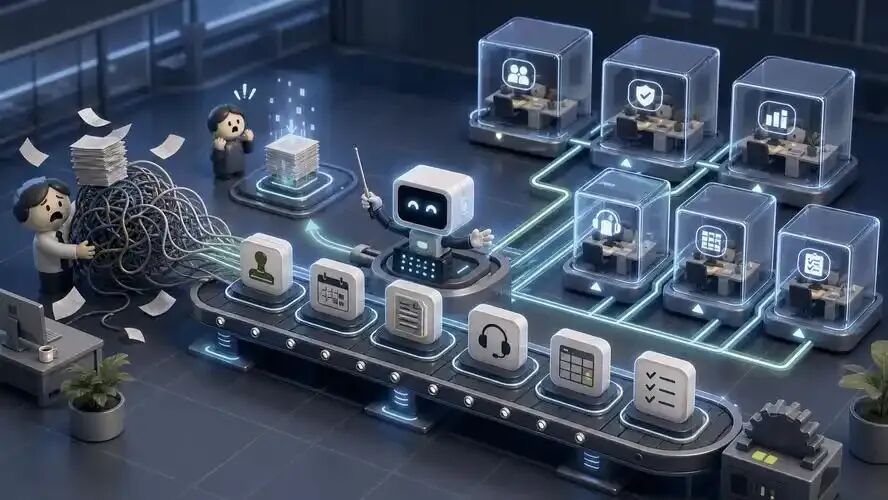
Image source: Niutou Society
For hardware manufacturers, the focus is on five touchpoints: listening, viewing, recording, chatting, and collaborating. Tencent claims integration with over 30 brands across a dozen categories, including smart glasses, recording cards, microphones, headphones, desktop companions, keyboards/mice, PCs, and tablets. Nine co-branded devices, mostly first-time Agent integrations in their categories, were demonstrated: a smart glasses prototype in a conference room captured audio and video via onboard microphone and camera, with WorkBuddy handling transcription, summarization, to-dos, and follow-up emails in the cloud. Accounts, tasks, memories, and outputs synced across glasses, phones, PCs, and web.
Manufacturer integration and monetization models are detailed in the concurrently released *Smart Hardware Integration White Paper*. Four integration options exist: OEM pre-installation, Cloud Agent integration, strategic integration, and Connector integration, with development cycles ranging from 3–6 months for system-level pre-installation to 2–4 weeks for lightweight API docking (API integration). Revenue paths include membership/points systems, compute resource sharing, and brand licensing, with specific ratios negotiated case-by-case. The white paper clarifies WorkBuddy's boundaries: no hardware manufacturing or sales, only AI infrastructure provision. It argues the AI industry's competition is shifting from "whose model is stronger" to "who enters real-world scenarios first." Event speakers explained the priority on voice-enabled hardware: large language models can now interpret intent and plan tasks from a single sentence, making language-based interactions a natural fit for voice hardware. Tencent believes hardware will become a critical Agent peripheral.
For industry partners, the newly introduced "Buddy Apps" portal debuts. As Tencent explains, partners integrate their domain-specific workflows, business contexts, tooling, and branding onto WorkBuddy's Agent foundation, creating turnkey, branded AI workstations for specific industries. Initial apps span 20+ fields like finance, law, healthcare, education, public welfare, and design, with 30+ co-builders including Tongdaxin, GF Securities, E Fund, PKULaw, Weimob, Beisen, Fanruan, and Meitu Design Studio.
Industry partners integrate domain-specific processes. Tongdaxin, for example, encapsulates investment research methodologies into its app, with 26 built-in experts and 14 Skills. When real-time market data, financial metrics, or sector information is missing, the system flags gaps as "to be supplemented" instead of auto-filling. Beisen decomposes and integrates 16 HR modules and 50+ scenarios like approvals, recruitment, and employee services. Tencent Public Welfare's "Public Welfare Buddy" consolidates 11 scenario capsules and 42 practical capabilities, powered by 15 Collaborative operation (collaboratively operating) agents, with generated content reviewed by institutional staff.
For developers, the platform exposes three interface types: Skill, Expert, and Connector. Tencent states the Expert marketplace supports both Agent-type and Team-type modes, while Connectors Compatible (are compatible with) MCP and CLI schemes for arbitrary external service integration. Developers gain full Agent capabilities via standard APIs without needing to build execution environments in-house. The integration process itself is standardized: previously requiring manual negotiation, development, and scheduling over one-month cycles, the open platform now handles certification, submission, review, evaluation, and release entirely online.
Products Must Prove Themselves Before Ecosystem Opening
From its March 9 beta launch to the September 2 platform debut, WorkBuddy's evolution has been remarkable.
In six months, WorkBuddy first dominated as a desktop agent before externalizing its foundation. Tencent explains the sequence: ecosystems are outcomes, requiring product success first.
Built by Tencent Cloud's CodeBuddy team, WorkBuddy positions itself as an "all-scenario workplace AI agent." Its humble beginnings—according to public reports, the 0.01 prototype was built in a weekend by the team lead and a few engineers, then company-wide tested that night—belied its trajectory. Over the next half-year, the product expanded from a personal edition to enterprise and Agent Suite versions, with personal subscriptions tiered into three levels. On the day of Hunyuan Hy3's release, WorkBuddy became its first integrator. Officially disclosed updates exceed 50 versions, with deployments across 50+ industries like government, education, retail, finance, media, and transportation.
Third-party data provides context. Analysys data shows 20.97 million monthly desktop visits in June, ranking WorkBuddy first among domestic AI office agents. QuestMobile's July figures reveal Tencent's ecosystem (WorkBuddy + QClaw) exceeding 8.84 million MAUs in AI productivity, versus ~1.9 million for ByteDance and ~230,000 for Alibaba. Financial disclosures and earnings calls report July revenue of RMB 119 million from 7,300+ paying enterprises.
This rapid growth stems from Tencent's strategic realignment. On July 20, Tencent merged QClaw's product center into WorkBuddy's cloud division—previously, CodeBuddy and QClaw operated as parallel tracks. Multiple reports note Pony Ma's near-constant attendance at WorkBuddy product meetings, with internal voices calling it "Tencent's third strategic product after QQ and WeChat," justifying company-wide resource allocation for rapid user acquisition. Tencent's Q1 2026 earnings report first disclosed WorkBuddy as China's most popular efficiency AI agent service by DAUs.
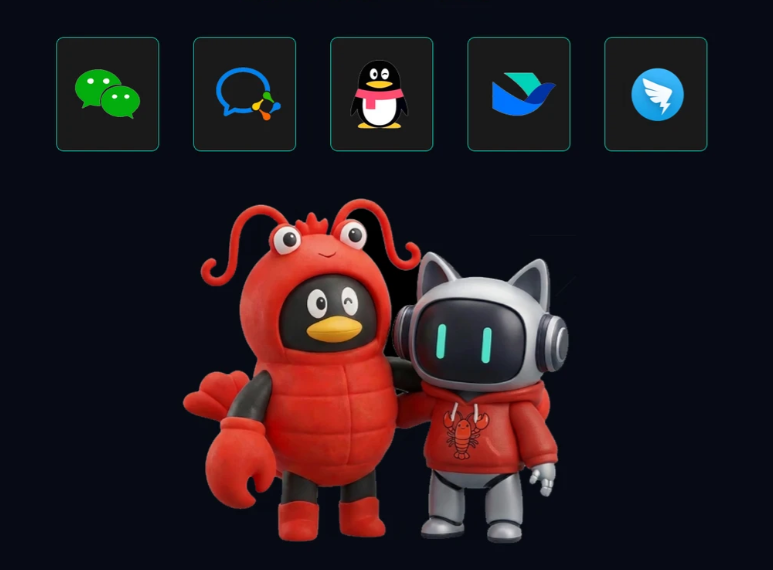
Image source: Internet
Why wait for product validation before ecosystem opening? The answer lies in a common misconception: models ≠ Agents. Some analysts describe Agent OS as an "operating system for context": models are stateless, generating outputs from inputs without awareness of time, open files, or installed tools. Dialogue history, memory, and task progress must be maintained externally. Agent utility hinges on accessing rich, coherent, real-time context—which only real-world product usage can accumulate. WorkBuddy first verified this accumulation internally before externalizing its foundation, ensuring the opened capabilities weren't hollow shells.
The "product first, ecosystem later" sequence feels unique today. Huawei's June developer conference unveiled HarmonyOS 7, making "moving toward the Agent era" a core strategy and opening GUI control capabilities to developers for the first time. Apple's WWDC introduced next-gen Apple Intelligence, evolving Siri toward Agent capabilities. Google launched Gemini Intelligence across phones, watches, and cars. Honor proposed the Agentic OS concept at MWC Shanghai. All follow a top-down path: announce an Agent-ized system first, then populate capabilities layer by layer.
Analysts attribute the divergence to "where standards originate": traditional OSes encapsulate deterministic hardware behaviors, which can be specified clearly. Agent OSes encapsulate non-deterministic intelligent behaviors, whose reliability emerges only through real-task iteration. Top-down risks include premature architecture without sufficient real-task density to fill it. Bottom-up costs include appearing slower, but benefits include verifying every opened capability through real-world usage rather than documentation.
However, the open platform's payment and distribution channels remain under construction, meaning commercial loops aren't yet closed. Opening first and monetizing later bets on revenue-sharing potential at scale. Whether this model succeeds depends on how the first partners calculate value—and which competitors feel pressure first.
AI Office Enters Ecosystem Warfare
Around WorkBuddy's platform launch, competitors consolidated product lines.
On July 20, Tencent merged QClaw's product center into WorkBuddy's cloud division. On July 30, ByteDance integrated its Feishu and Doubao product teams. On August 3, Alibaba merged QoderWork, MuleRun, and Wukong into "Qianwen Office" for beta testing. On August 4, Baidu consolidated internal office agents into "Baidu Dazi." Mobile data agencies summarized the July landscape as "Tencent leads, ByteDance pursues, Alibaba diversifies."
The three companies' product strategies have diverged. Industry analysts summarize using "where AI grows": ByteDance's Doubao grows within Feishu, leveraging organizational collaboration and knowledge bases. Alibaba's Qianwen Office grows within DingTalk, embedding conversations into approvals, meetings, and documents. Tencent's WorkBuddy grows on the OS desktop, directly reading/writing local files and orchestrating tasks across applications. QuestMobile interprets this as The three surface architectures are converging towards (all three converging superficially on) "trigger Entrance (entry point)—execution—outcome," with differences in ecological anchors: connection, organization, and collaboration.
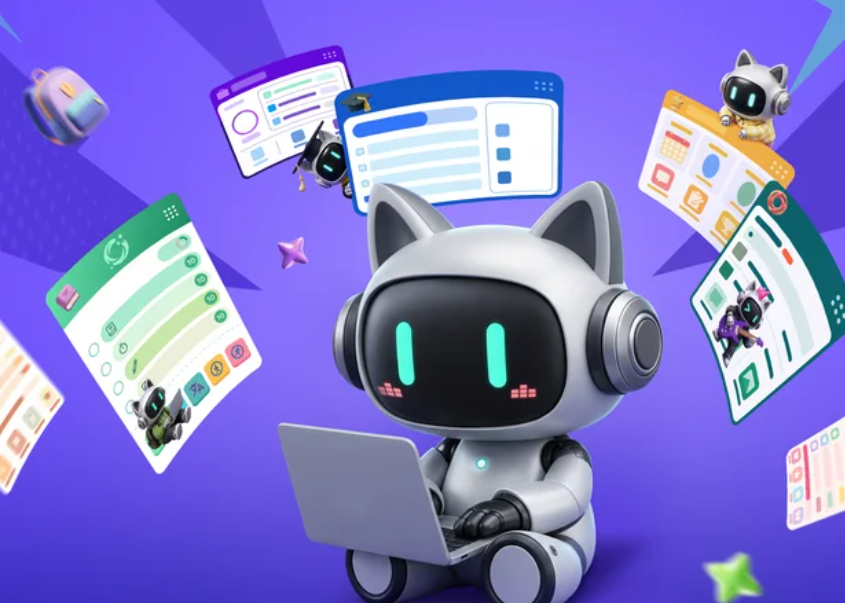
Image source: Internet
WorkBuddy's opening shifts competition from product features to ecosystem breadth. Previously, the race was about whose Agent worked harder; now, it's about who integrates more hardware, industry expertise, and developers—and thus accesses richer context. Tencent's move leverages unique distribution entry points. QuestMobile highlights WorkBuddy's differentiated advantage: "rapid scale through national-level connection Entrance (entry points like WeChat), frequency pull from enterprise collaboration infrastructure, and depth penetration via native desktop integration (WorkBuddy)." The binding of WeChat and workflow entry points is hard for rivals to replicate short-term. The next entry-point battle will involve waking Agents without app launches—on September 2, Meizu announced MYVU smart glasses collaboration with WorkBuddy, with co-branded products from Insta360, MOMA, and Ulanzi launching onsite. Tencent's GM of Marketing and PR, Zhang Jun, compared this opening to Tencent's 2011 QQ platform openness, calling it "the same thing."
Yet as the first partners join, two questions linger unanswered: how much capability to surrender, and how revenue gets split.
Capability surrender is partner-driven. Officials clarified partners needn't migrate all scenario capabilities to WorkBuddy: "Developers and partners will judge which capabilities enable more natural language interactions, automated operations, and better outcomes for users."
Revenue splits remain undefined. The open platform disclosed that payment and distribution channels are under accelerated construction—meaning current partners trade "user value" for future shares. The industry has precedents: OpenAI's GPT Store once hosted 3M+ custom GPTs, but developers soon found limited traffic, delayed payouts, and rampant spam/infringement, preventing it from becoming what the world expected. Analysts caution that open platform success hinges not on app counts but distribution—and whether partners fear long-term dependency on another's foundation, risking platform reverse-engineering, remains to be seen.
-
Could the Three-Row, All-Electric Flagship SUV BMW iX7, Equipped with an 8K Giant Screen and Produced in North America, Become a Bestseller?
-
![]()
WorkBuddy Ignites the AI Office Ecosystem Battle
-
![]()
Second Working Conference on Drafting the Group Standard “Test Method for Optical Parameters of Optical Waveguide Sheets” Held in Suzhou!
-
![]()
Q3 Net Profit Rises by Just 6%! Has Lante Optics Hit the Zenith of Prism-Driven Profits?
-
Hurun Rich List Released: AI Starts Creating Wealth - 1 in Every 10 Billionaires Owes Their Fortune to AI
-
![]()
Top 10 Provinces by GDP in the First Three Quarters of 2026: Diverging Growth Models
-
![]()
Why Is Mobile Phone RAM Shrinking?
-
![]()
Who is Investing in Anthropic?